Fire door fails inspection is never ideal, but it is something building managers, strata managers and compliance teams deal with from time to time. When it happens, the main thing is to act quickly and follow the right process. A failed inspection does not always mean the entire door needs replacing, but it does mean the issue must be taken seriously.
A fire door is designed to slow the spread of fire and smoke. It helps protect people, supports safer evacuation and limits damage to other parts of the building. If the door, frame, seals or hardware are not working properly, the door may not perform as required in an emergency.
Common Reasons a Fire Door Fails
Why Fire Doors Matter
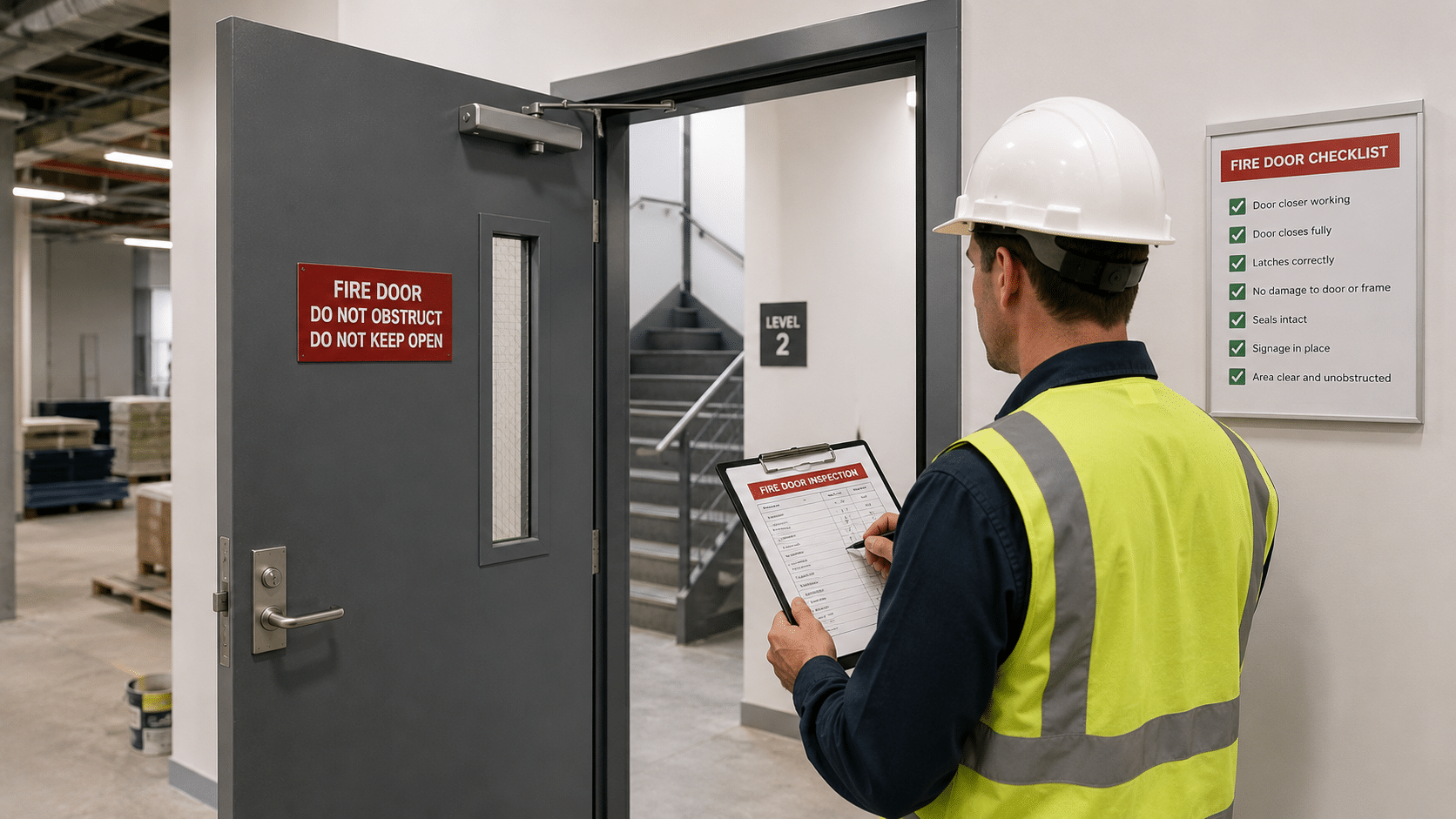
When fire door fails inspection, the first step is to identify exactly why. Common reasons include damaged smoke seals, gaps that are too large, loose hinges, faulty door closers, missing signage, non-compliant hardware or doors that no longer close and latch properly. Sometimes the fault is obvious. Other times, it comes down to small changes that have affected compliance over time.
What the Inspection Report Means
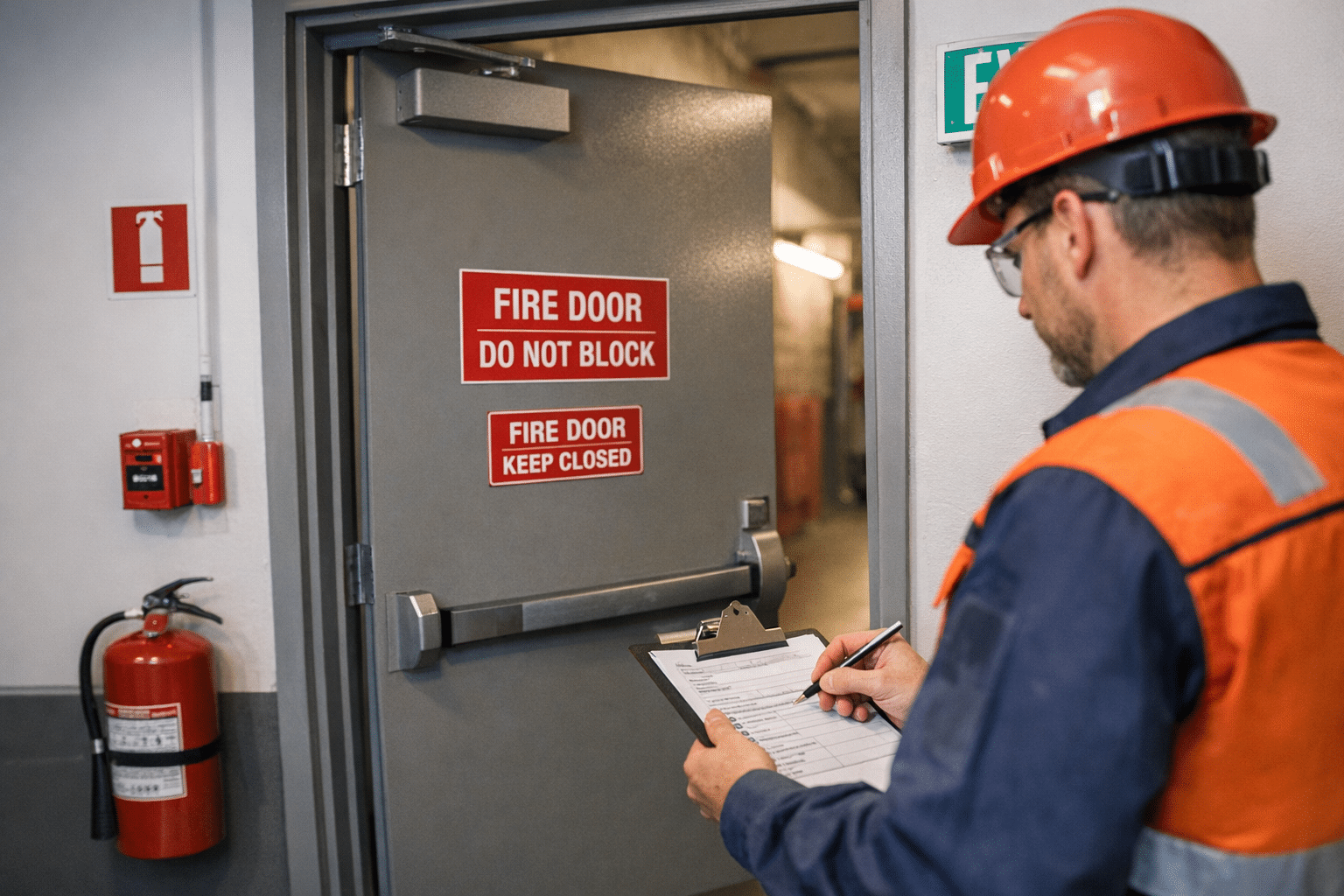
If fire door fails inspection, the inspector will usually document the problem and note what needs to be fixed. This report gives the building owner or manager a practical checklist. It can also help determine whether the issue is minor, urgent or likely to require more extensive work.
Compliance Impacts
For many property professionals, compliance is the biggest concern. Fire doors are part of a building’s passive fire protection system, so they are essential to overall safety. If fire door fails inspection, it may affect annual fire safety obligations and create risk for the building if the issue is left unresolved.
Repair or Replace?
The good news is that some failures can be rectified without replacing the full door set. If fire door fails inspection because of worn seals, faulty closers or incorrect hardware, compliant replacement parts may solve the problem. In more serious cases, such as major damage or unapproved modifications, a full replacement may be needed.
Why Specialist Help Matters
This is why specialist advice matters. Fire doors are not like standard doors, and repairs must be carried out correctly. Using the wrong hardware or making informal changes can create more problems and may lead to another failed inspection later.
Why Fast Action Saves Trouble
When fire door fails inspection, timing matters. Delays can lead to ongoing non-compliance, repeat call-outs, added costs and unnecessary stress for building managers. A prompt response is often the simplest and most cost-effective option.
Keeping Occupants and Stakeholders Informed
Communication is also important. If the affected door is in a common area or high-traffic space, tenants, staff or contractors may need clear updates. A calm and practical message usually works best. Explain what was found, what is being done and when the issue is expected to be resolved.
What a Failed Inspection Can Reveal
Sometimes, fire door fails inspection because the building’s broader maintenance approach needs improvement. Fire doors are often propped open, knocked, painted over or altered without anyone realising the compliance impact. A failed inspection can be a useful warning sign that routine checks need tightening.
The Importance of Proper Records
Documentation should also be completed properly once the work is done. If fire door fails inspection, the follow-up records matter almost as much as the repair itself. Service reports, defect close-outs and details of any compliant parts used should all be kept up to date. Good paperwork supports future inspections and helps show that the issue was handled correctly.
How to Prevent Repeat Failures
Prevention is always easier than scrambling after a failed check. Regular inspections, planned maintenance and quick action on small faults can reduce the chance that fire door fails inspection again in future. It also helps when staff and occupants understand that fire doors should never be wedged open or modified for convenience.
Final Thoughts
If fire door fails inspection, it does not need to become a major headache. In most cases, the right response is straightforward. Review the report, engage a qualified fire door specialist, fix the issue properly and keep clear records. That approach helps restore compliance, improve safety and avoid ongoing disruption.
How Comprehensive Fire Services Can Help
At Comprehensive Fire Services, we help strata managers, building managers and commercial property teams respond when Fire Door Fails Inspection and quick action is needed. From inspections and repairs to replacements and compliant hardware, CFS provides practical support to help keep buildings safe, compliant and running smoothly.