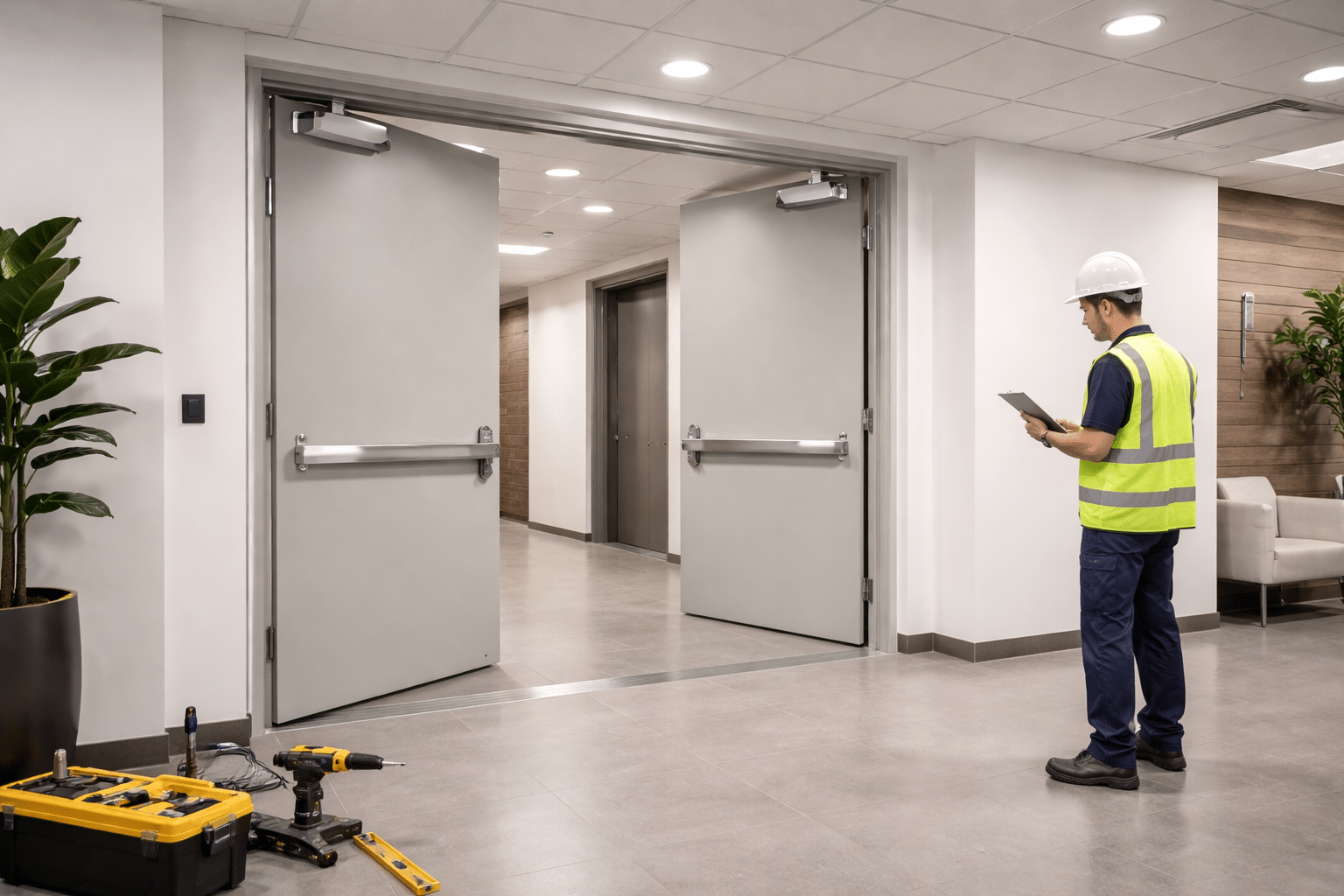
Fire Door Positioning for Full Wall Openings
Fire door positioning plays a bigger role in compliance than many people realise. When a fire door is installed within a full wall opening, the exact location of the door…

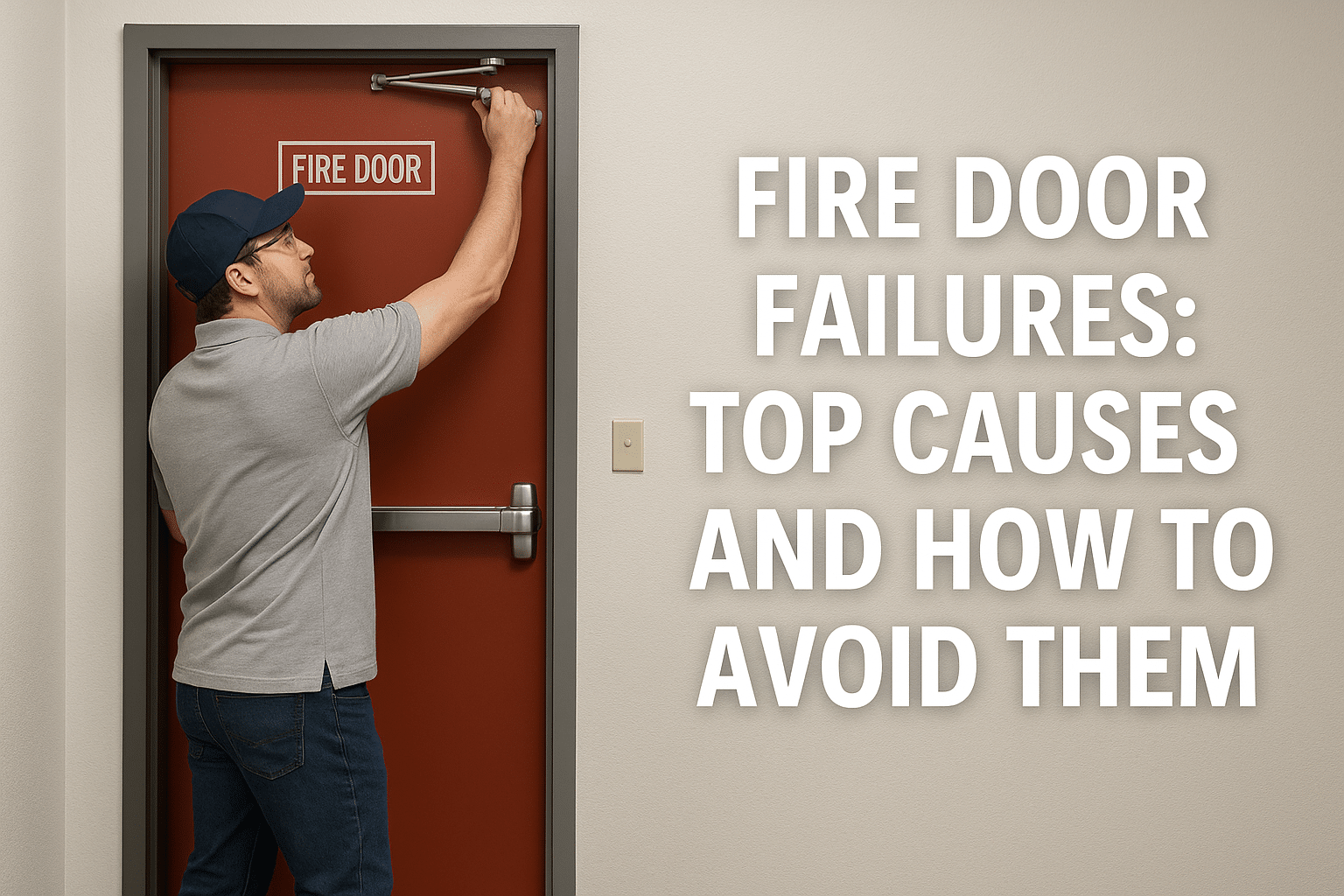
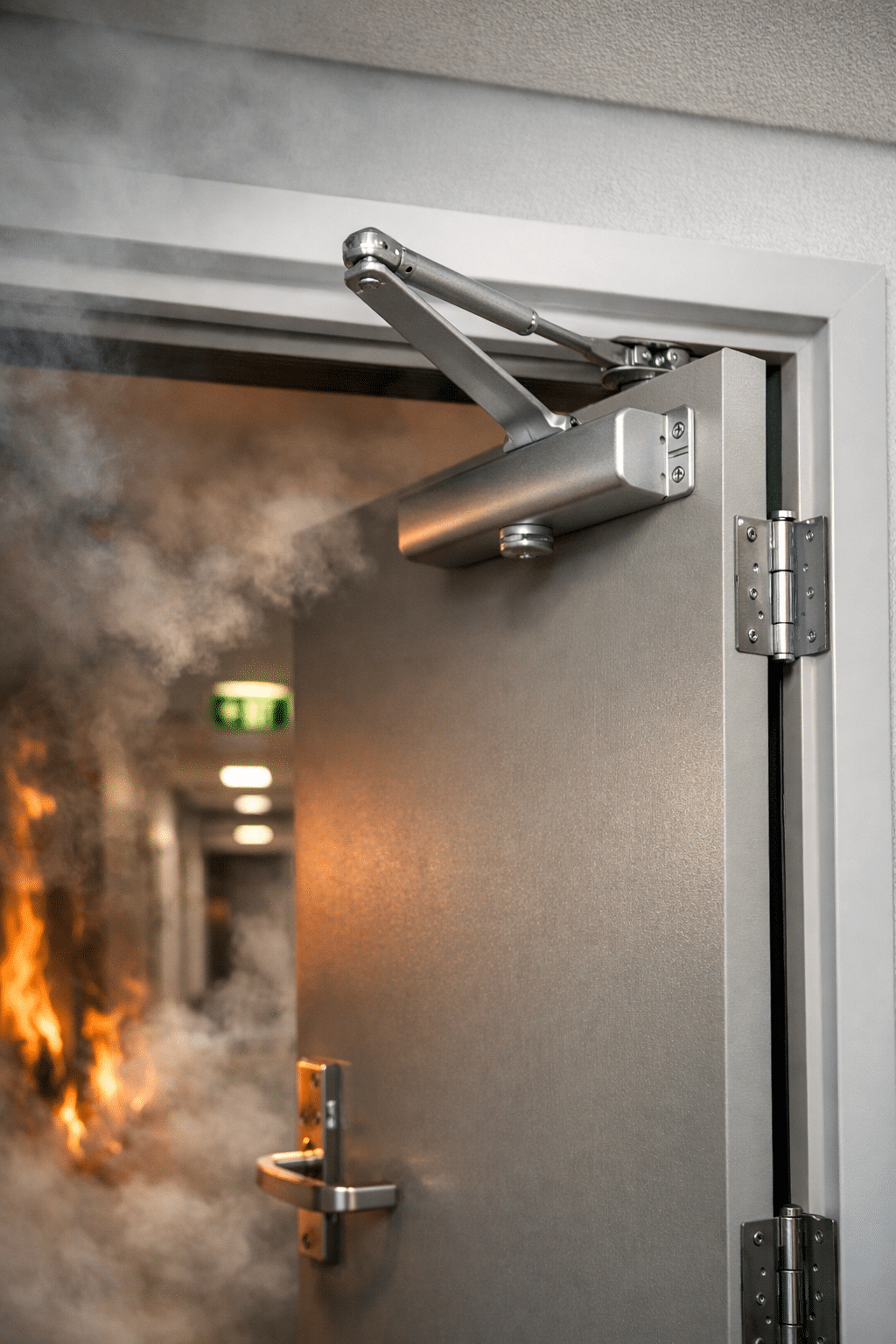
Fire door failures can have devastating consequences. Not only do they put lives at risk, but they also leave property owners exposed to costly fines and legal issues. Fire doors are designed to slow the spread of flames and smoke, giving occupants more time to evacuate and emergency services time to respond. When these doors don’t work as they should, the results can be tragic.
In this guide, we’ll unpack the most common causes of fire door failures and share practical ways you can prevent them. Whether you’re a strata manager, building owner, or part of a property maintenance team, this article is packed with helpful insights to keep your fire doors compliant and functional.
A major cause of fire door failures is incorrect installation. Even if you’re using certified fire-rated doors and hardware, a dodgy install can render them useless. If a door doesn’t close properly, leaves gaps around the edges, or hasn’t been aligned correctly in the frame, it won’t contain fire effectively.
Prevention Tip: Always engage a licensed and experienced professional to install fire doors. Ensure the installer understands AS1905.1 standards, which govern fire door requirements in Australia.
Fire doors rely on more than just the door slab. Hinges, seals, locks, and closers all work together to maintain the door’s fire-resistance. If any of these parts are damaged, missing, or not fire-rated, it increases the risk of failure during a fire.
Prevention Tip: Schedule regular inspections to check that all components are intact and functional. Replace damaged hardware promptly and always use certified fire-rated parts.
One of the simplest yet most dangerous reasons for fire door failures is when doors are wedged open. We’ve all seen it – a door propped open for airflow or convenience. But in an emergency, a fire door left open is useless.
Prevention Tip: Use automatic closers or electromagnetic hold-open devices that release during a fire. Train occupants and tenants about the importance of keeping fire doors closed.
Like any safety system, fire doors require ongoing maintenance. Without it, seals wear out, closers fail, and doors can become misaligned. Lack of maintenance is a leading cause of fire door failures, especially in busy commercial or residential buildings.
Prevention Tip: Implement a routine maintenance schedule with professional fire door technicians. They’ll spot and fix issues early, helping you stay compliant and safe.
Cutting into a fire door to install a peephole, pet door, or non-rated hardware might seem harmless, but it can completely compromise the door’s integrity. These alterations can allow fire and smoke to bypass the barrier.
Prevention Tip: Never modify a fire door unless it’s done by a certified professional using approved materials and techniques. Any modification must still meet the original fire rating.
It’s not uncommon for property owners to install doors thinking they’re fire-rated, only to discover they don’t meet Australian Standards. These types of fire door failures often occur when labels are missing or incorrect, or when the door itself has not been properly tested or certified.
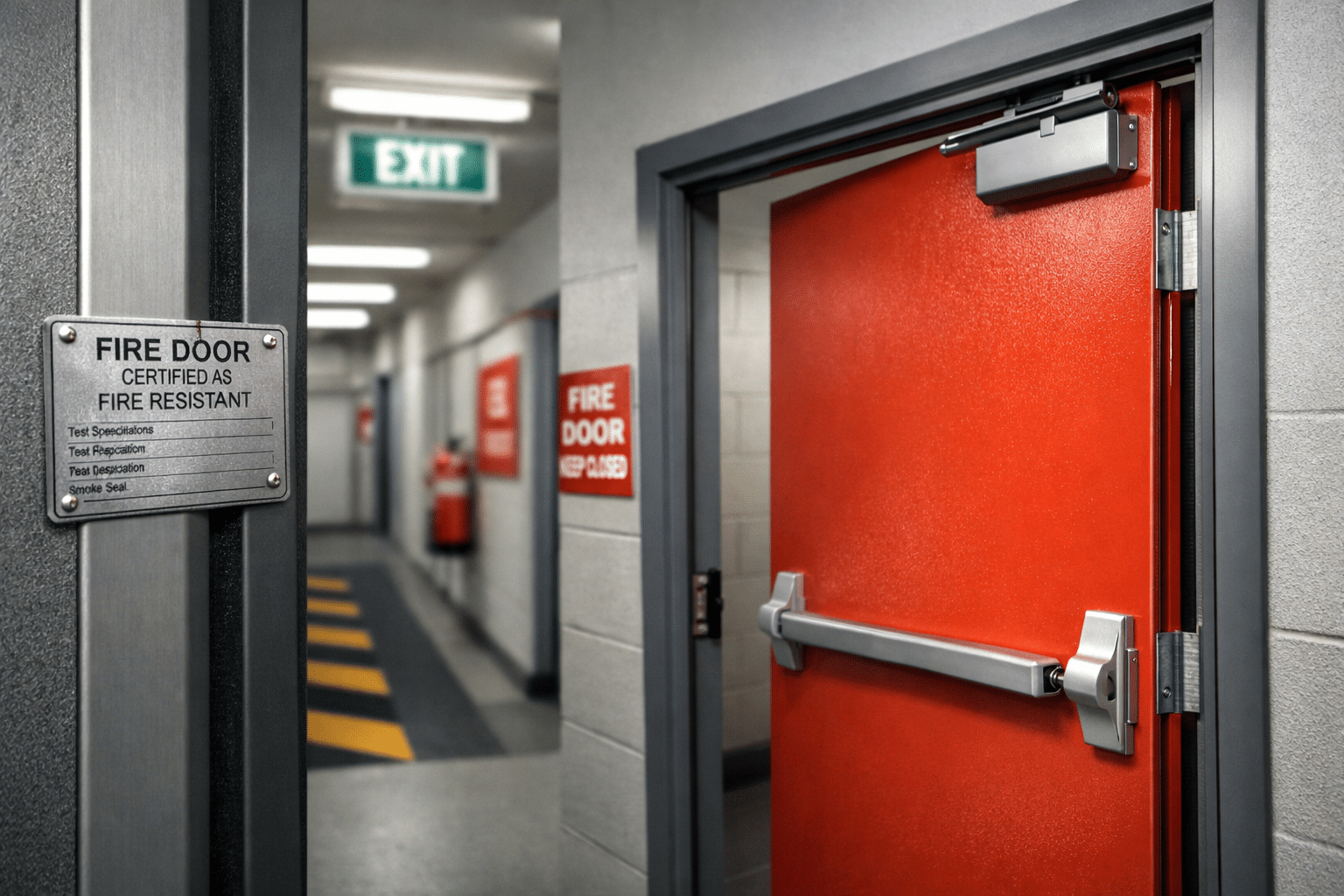
Prevention Tip: Verify certification before installation. A compliant fire door will have a label or tag showing the fire rating and compliance with AS1905.1. Keep documentation on hand for inspections.
Daily wear and tear, especially in high-traffic areas, can take a toll on fire doors. Chips, dents, and even graffiti can compromise the fire-resistant core or seals, leading to fire door failures over time.
Prevention Tip: Regularly assess the physical condition of your fire doors. Damaged doors should be repaired or replaced immediately. Protective kick plates can help in busy areas.
For a fire door to work, it must sit snugly within its frame. Gaps that are too large can allow smoke and flames to escape. This is a common problem in buildings where doors have shifted or been poorly maintained.
Prevention Tip: Ensure clearances meet compliance standards – typically no more than 3mm at the top and sides, and 10mm at the bottom (or 3mm if there’s no threshold). Check these during regular inspections.
Having no proof of inspections or maintenance can be just as bad as having no inspections at all. In many cases, fire door failures are linked to poor documentation. In the event of an audit or incident, you must be able to demonstrate that your fire doors are compliant and have been properly maintained.
Prevention Tip: Maintain clear records of all fire door inspections, repairs, and certifications. This is especially important when it’s time for your Annual Fire Safety Statement (AFSS).
Sadly, many fire door failures come down to a simple lack of awareness. Building managers and tenants may not understand the purpose of fire doors or their role in fire safety. Without proper knowledge, mistakes are easy to make.
Prevention Tip: Educate staff and residents on the importance of fire doors. Include basic fire safety training as part of your building’s onboarding or induction process.
Preventing fire door failures doesn’t have to be complicated. With regular inspections, proper installation, and a bit of education, you can dramatically reduce your fire risk and ensure your building remains safe and compliant.
At Comprehensive Fire Services (CFS), we specialise in fire door inspections, maintenance, and compliance for commercial and strata-managed buildings across Sydney. Our team ensures every door meets Australian Standards and is ready to perform in an emergency.
Need a fire door inspection or maintenance check?
Contact CFS now or call 0418 749 488 for expert help.



FPAS Accreditation Number: F055161A
We are committed to delivering the highest level of professionalism and compliance in the fire protection industry. As part of this commitment, our team holds accreditation under the Fire Protection Accreditation Scheme (FPAS) — the national accreditation framework developed by Fire Protection Association Australia (FPA Australia).

Phone: 0418 749 488
Fax: 02 4648 5386
Email: [email protected]
© 2026 Comprehensive Fire Service - Website by BSharp Tech