NCC and BCA Updates are front of mind for anyone responsible for building safety, and fire door signage is one of the simplest areas to get right. In this guide we unpack what these terms mean, what has changed, and how to make sure the signs on your fire doors pass inspection without fuss.
What do the acronyms actually mean?
Before diving into NCC and BCA Updates, let’s clear up the basics. The National Construction Code, or NCC, is Australia’s primary set of technical design and construction provisions for buildings. The Building Code of Australia, or BCA, forms Volumes One and Two of the NCC and covers most building classes. Together, they set the rules used by certifiers, fire safety practitioners and councils. If your fire door signage does not line up with those rules, you risk non compliance notices, delays with your Annual Fire Safety Statement and potential safety issues for occupants.
Why signage matters on fire doors
When people see a door, they want to use it. Proper signage tells them what to do and when, so the door can perform its life safety role. NCC and BCA Updates continue to emphasise clear, durable and consistent signs so that occupants and first responders get the right message every time. Good signage also helps cleaners, trades and tenants avoid damaging fire door hardware.
The core requirements in plain English
Here is what most buildings need to get right. These points reflect long standing rules plus clarity added by NCC and BCA Updates in recent cycles.
- Wording
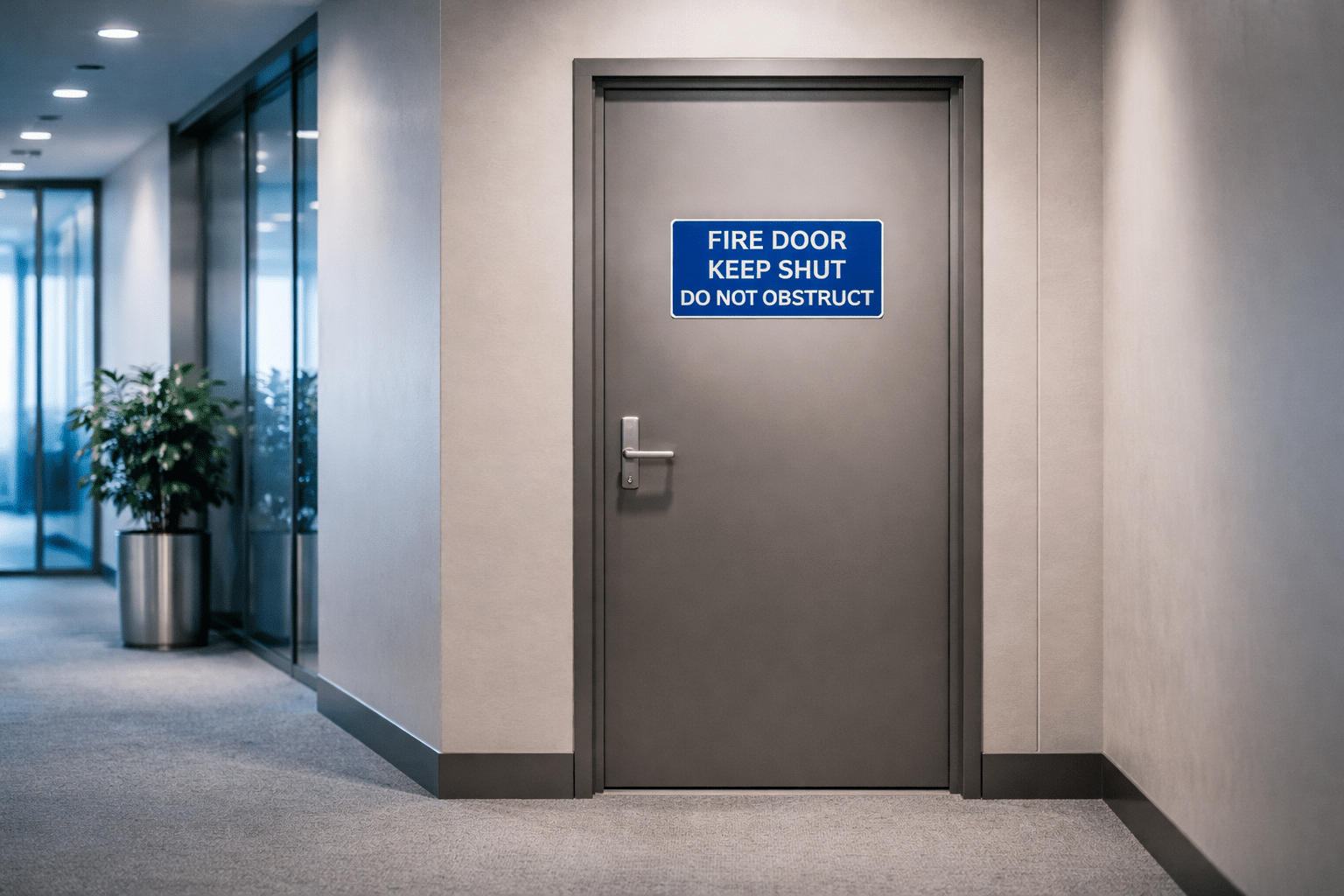
The classic message is along the lines of:
- Fire Door Keep Shut
- Do Not Obstruct
- Do Not Keep Open
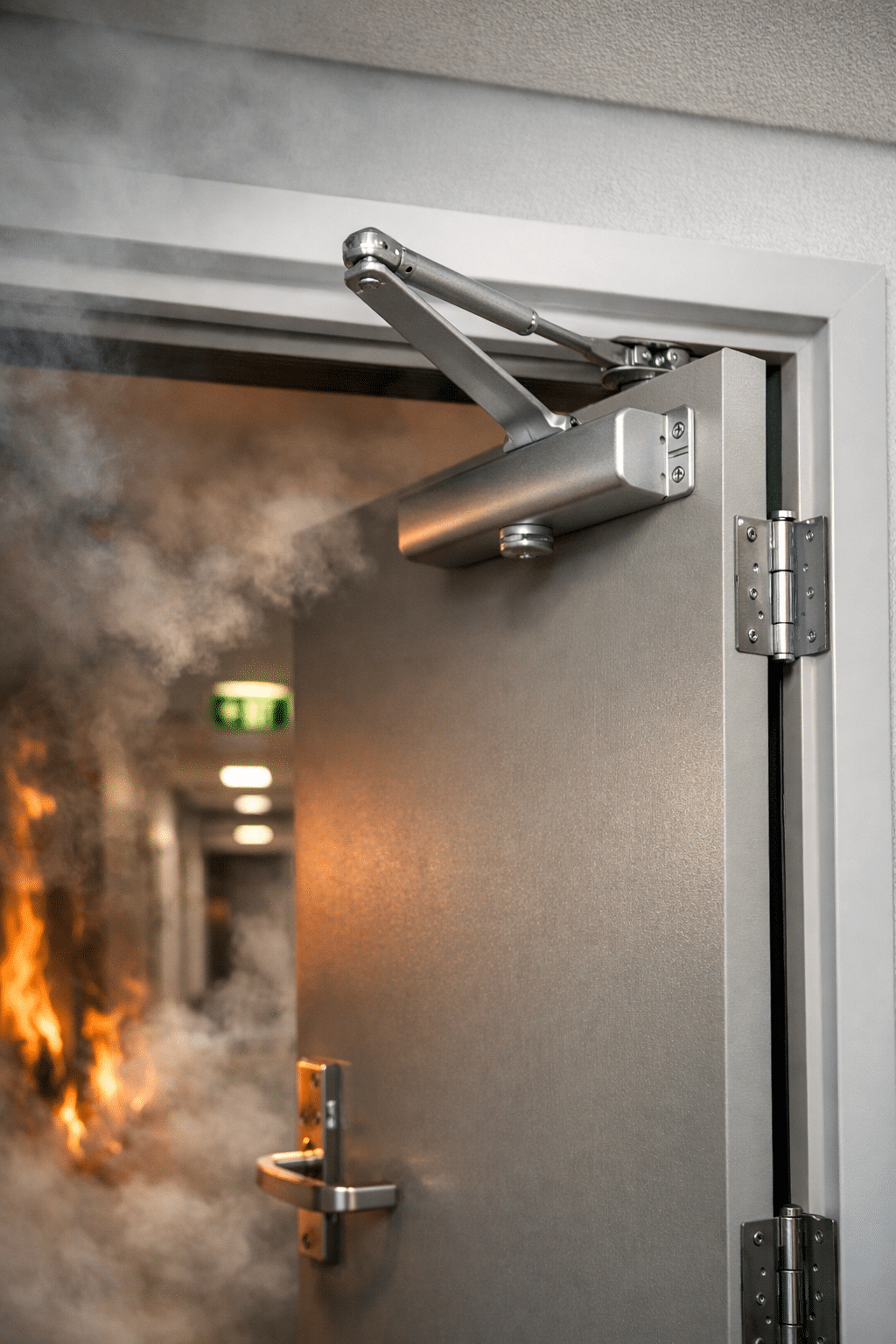
The exact phrasing can vary based on your state or performance solution, but the intent is the same. The door must be able to close and latch during a fire. NCC and BCA Updates consistently push for unambiguous wording that ordinary people understand at a glance.
- Placement
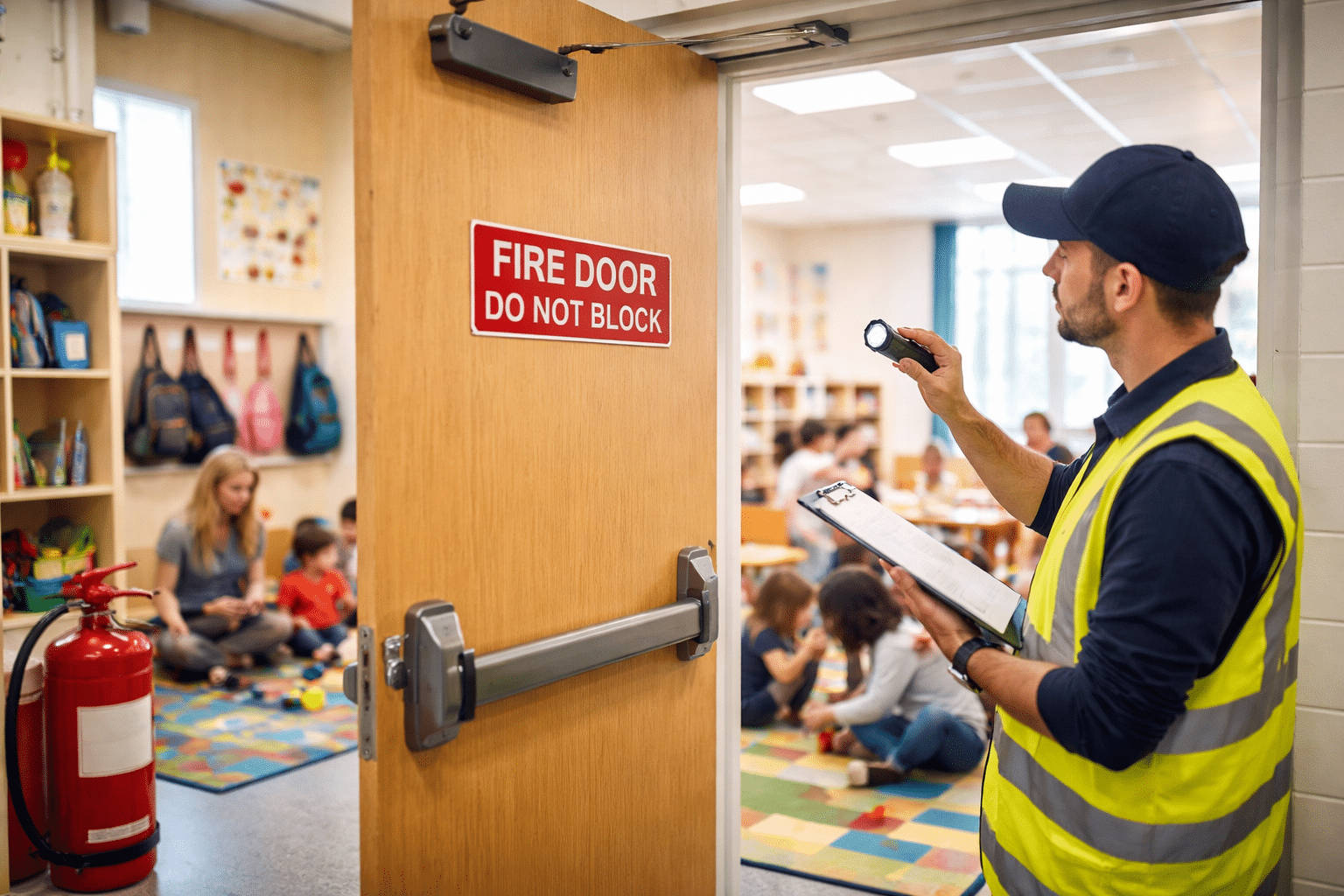
Signs should be on the door leaf at eye level, readable from the approach side. Plant rooms, stair doors and corridor fire doors should all have signs placed so that a person walking up can read them without moving around. Corner or skirting placement is not acceptable. If there are double doors, each active leaf needs a sign. Again, NCC and BCA Updates have focused on consistency so inspectors do not need to guess.
- Size and visibility
Large enough to be seen from normal approach distance, typically with a clear sans serif font. High contrast is essential. Glare free finishes help under harsh corridor lighting. Where photoluminescent wayfinding systems are installed, the sign should not compete, but must still be obvious. NCC and BCA Updates encourage practical legibility rather than decorative designs.
- Durability
Signs must withstand daily knocks, cleaning chemicals and UV exposure near glazed lobbies. Use quality adhesive or mechanical fixings that do not compromise door integrity. Peeling vinyl stickers fail inspections. NCC and BCA Updates reinforce that a damaged or faded sign is treated as non compliant.
- No conflicting messages
Do not mix a fire door sign with a general exit sign or tenant wayfinding that suggests propping the door open. Remove old labels when updating. NCC and BCA Updates make it clear that conflicting instructions create risk during evacuation.
What has changed recently
The fundamentals have not been flipped, but there are practical refinements seen on site as teams respond to NCC and BCA Updates:
- Clarity around keep open devices
Doors held by approved electromagnetic hold opens must still carry clear keep shut messaging, because the device releases on alarm. Inspectors are looking for the correct combo of compliant hardware and signage so that the door behaves correctly in a fire.
- Better alignment with accessibility
Where Braille or tactile signs are used in path of travel, placement rules must not interfere with the fire door’s safety message. NCC and BCA Updates encourage coordination so both accessibility and fire safety are respected.
- Consistency across tenancies
In multi tenant floors, landlords are standardising sign style and position. This avoids a patchwork of fonts and sizes after fit outs. NCC and BCA Updates are often the driver for these refresh programs.
Common mistakes that lead to failed inspections
Even diligent managers can trip up. Here are errors we fix most often, all of which run against the intent of NCC and BCA Updates:
- Miniature stickers that cannot be read until you are on the handle
- Signs on frames, not on door leaves, which people miss as they approach
- Decorative or branded plaques that look great but reduce contrast and clarity
- Missing signs on secondary leaves in pairs, especially in lobbies
- Contradictory notices, for example a cleaner’s taped note telling staff to wedge the door for airflow
A quick self check you can do today
Walk your site with this simple checklist. It lines up with what a competent fire door inspector will look for based on NCC and BCA Updates:
- Is every fire door clearly labelled on the approach side at eye level?
- Is the message short, direct and consistent across the building?
- Is the sign on the door leaf, not the frame, and not obstructed by hardware?
- For double doors, is there a sign on each active leaf?
- Is the sign undamaged, high contrast and not faded or peeling?
- If there is a hold open device, will the door close on alarm and does the message still make sense?
- Are any old or conflicting labels removed?
- Do the signs align with accessibility features without causing confusion?
If you answered no to any of these, your next AFSS could be at risk.
Strata and facility manager tips
Budgets are tight and tenants are demanding. Here is how our strata, commercial and industrial clients in Sydney stay on top of NCC and BCA Updates without blowing the schedule:
- Standardise a sign pack across all properties you manage, including size, font, finish and fixings.
- Bundle signage with routine door maintenance so techs replace any damaged signs during closer or seal checks.
- Keep a floor by floor photo log. It speeds up AFSS evidence and helps you spot drift over time.
- Educate cleaners and trades. Most sign damage comes from trolleys and equipment.
- Plan for fit out churn in office buildings. Re inspect signage after tenancy works.
Frequently asked questions
Do I need photoluminescent fire door signs?
Not usually. Photoluminescent systems are great for wayfinding in low light, but your fire door sign just needs to be visible and durable. If your building uses a full photoluminescent scheme, choose a compatible finish that still meets the intent of NCC and BCA Updates.
Can I put the sign on glass?
If the door is a glazed fire door, the sign still belongs on the door leaf and should not block vision panels used for safety. Use products rated for glass adhesion that do not interfere with the fire rating label or certification plates.
What about heritage buildings?
You can use sympathetic finishes, but legibility and placement come first. Most heritage consultants will accept discreet but clear signage that aligns with NCC and BCA Updates.
How CFS can help
Comprehensive Fire Services works with strata managers, building owners and facility teams across Sydney to supply, install and maintain compliant fire door signage as part of a broader fire door service. We replace damaged or non-compliant signs during scheduled maintenance, bring sites into line with NCC and BCA Updates, and provide photo documentation you can file with your AFSS.