Prevent smoke spread by making sure every fire door in your building has the right seals, is correctly fitted, and closes as it should. It might sound like a small detail, but seals do a big job in a fire. When smoke starts moving through corridors, stairwells, plant rooms, and tenancy entry points, it can affect visibility, breathing, evacuation, and damage far more quickly than flames alone.
That is why building managers, strata teams, and property owners cannot afford to treat fire door seals as an afterthought. If your goal is to prevent smoke spread, you need to understand what these seals do, how they work with the rest of the door set, and what can happen when they are missing, damaged, or painted over.
What are fire door seals?
Fire door seals are specially designed strips fitted around the edges of a fire door or frame. Some are smoke seals, some react to heat, and some combine both jobs. In everyday conditions, they sit quietly in place and do not ask for much attention. In an emergency, they become a very important part of the door’s performance.
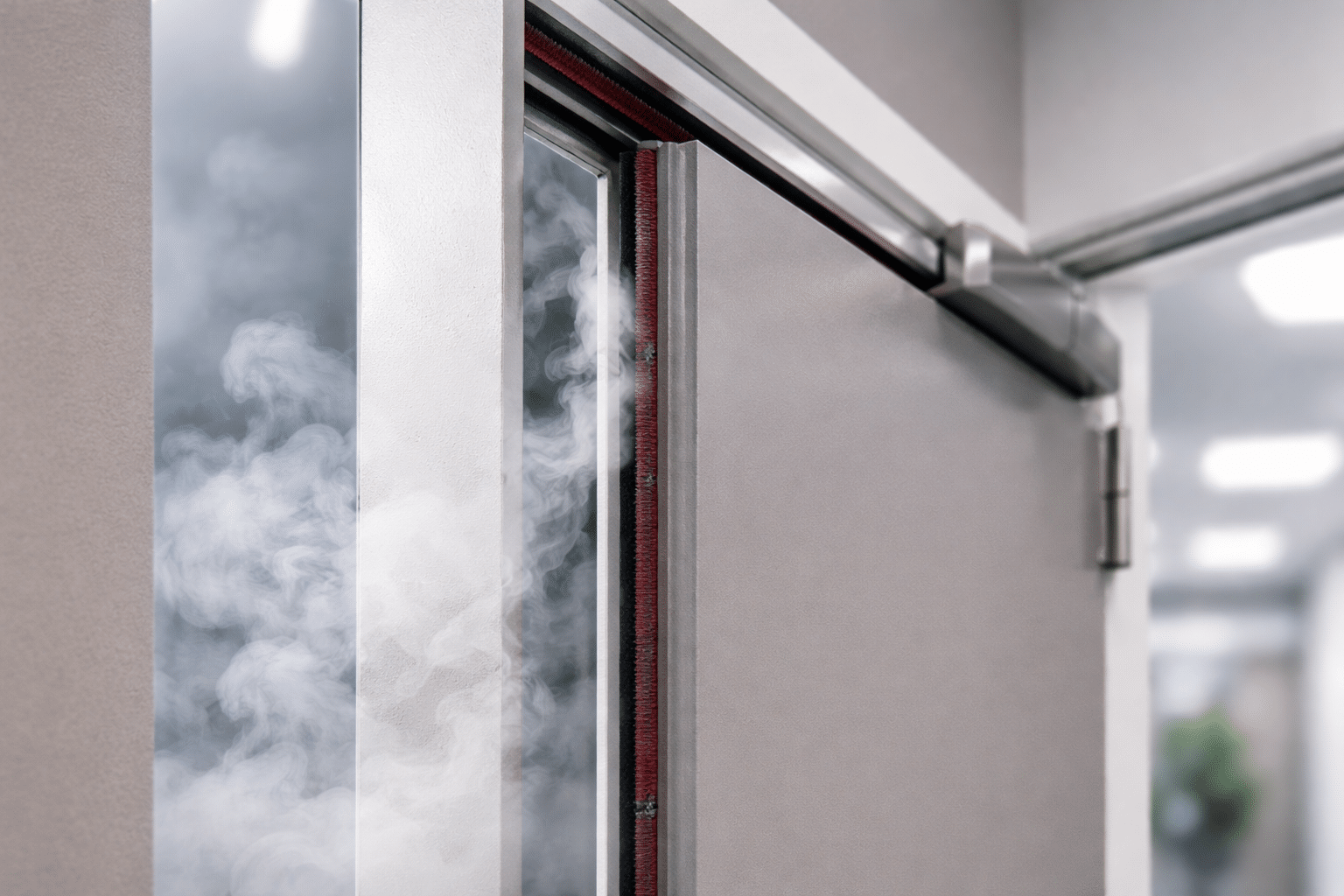
Put simply, they help prevent smoke spread by reducing the gaps around the door leaf. Those tiny gaps might not look like much, but smoke does not need a large opening to travel. It can slip through small spaces quickly and move into exit paths, common areas, and rooms that should stay protected long enough for people to get out safely.
Why smoke is often the bigger problem
When people think about a fire, they usually picture flames. In reality, smoke is often the more immediate danger. It can reduce visibility within moments, make breathing difficult, and create panic during evacuation. It also spreads through buildings fast, especially in multi storey or multi tenancy properties where doors, service areas, and shared corridors create plenty of pathways.
A certified fire door set is designed to prevent smoke spread as part of a broader compartmentation strategy. In simple terms, compartmentation means dividing a building into sections so fire and smoke are slowed down instead of moving freely from one area to another. Fire doors, frames, hardware, and seals all work together to support that goal.
How fire door seals do their job
Smoke seals are usually fitted around the perimeter of the door or frame. Their role is to limit smoke leakage through the clearance gaps when the door is closed. Some seals also expand when exposed to heat, helping close off the opening even more tightly as temperatures rise.
In real buildings, smoke almost always looks for the easiest path, so even a small gap can undermine your effort to prevent smoke spread. A door might look fine at a glance, but if the seal is cracked, loose, missing in sections, or no longer sitting correctly, performance can drop quickly.
This is also why seals should never be treated like a decorative extra. They are not there to make the door look finished. They are there because the fire door system depends on them. Without the right seal, the whole door assembly may not perform the way it was intended to.
Seals only work if the whole door works
A fire door seal is important, but it cannot do its best work on a faulty door. The door needs to close fully, latch properly, and sit within acceptable clearances. If it sticks, drags, slams, or stays ajar, the seal may not engage the way it should.
That pressure is one reason seals are used to prevent smoke spread, but they rely on the basics being right first. Hinges, closers, locks, frames, and door alignment all matter. If one part is off, the seal may not make proper contact, leaving smoke an easy path through.
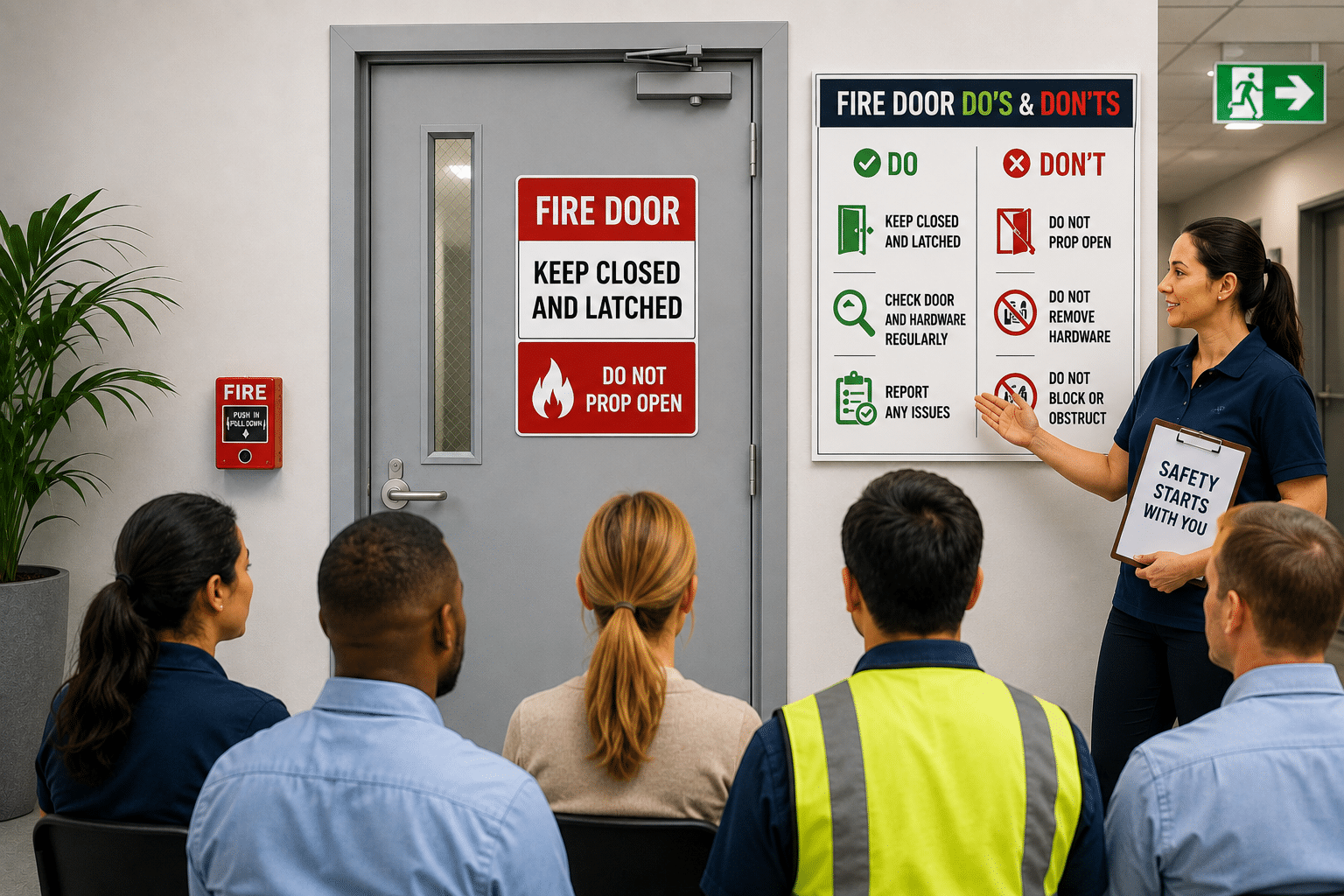
This is where many buildings get caught out. A door is propped open for convenience. A closer is disconnected because it is annoying. A seal is painted over during refurbishment. A damaged section is ignored because it seems minor. None of these issues looks dramatic on its own, but together they can seriously weaken the door’s ability to contain smoke.
Common problems that reduce seal performance
In commercial, strata, and industrial settings, fire doors take a fair bit of daily wear. Trolleys bump them, tenants force them, contractors modify them, and cleaners work around them. Over time, that adds up.
Regular inspections are essential if you want to prevent smoke spread consistently across your property portfolio. Some of the most common issues include worn or brittle seals, gaps caused by door movement, damage from impact, non compliant hardware changes, and general neglect.
Paint is another surprisingly common problem. A thick coat can harden the seal or stop it from functioning properly. Likewise, replacing hardware without checking compatibility can affect how the door closes and whether the seal still sits as intended. Fire doors are not standard doors with tougher materials. They are tested systems, and every part matters.
Why inspections matter for compliance and safety
For building managers and strata professionals, the challenge is not just safety. It is also compliance, documentation, and reducing risk across multiple properties. A faulty fire door seal may seem like a small maintenance item, but it can become a serious issue during an inspection or after an incident.
A door that does not latch properly cannot reliably prevent smoke spread, even if the seal itself is technically still there. That is why routine inspection should look at the full picture, not just whether the door appears presentable.
Good inspection and maintenance programs help identify problems early, before they turn into failed compliance checks, emergency repairs, or tenant complaints. They also make life easier when records are needed for annual fire safety requirements and ongoing building maintenance planning.
The bigger benefit for property owners and managers
For strata complexes, shopping centres, warehouses, and office buildings, the ability to prevent smoke spread can support safer evacuation, reduce damage to unaffected areas, and help protect people who are not near the fire source. It can also reduce disruption after an incident by limiting how far smoke travels through the property.
That makes fire door seals one of those unsung heroes of building safety. They are not flashy. They do not attract much attention. But when properly installed and maintained, they quietly support one of the most important jobs in passive fire protection.
Final thoughts
The smartest approach is simple: treat every fire door as a working safety system whose job is to prevent smoke spread, not just as another door in the building. Small gaps, damaged seals, poor closing action, and unapproved modifications can all compromise performance.
If you manage a property and want confidence that your fire doors are in good condition, professional inspection and maintenance is the safest path forward. Comprehensive Fire Services helps clients across Sydney inspect, maintain, repair, and install compliant fire door systems so they continue to do the job they were built to do and prevent smoke spread when it matters most.