Underground car parks may seem straightforward, but fire safety is more complex. Because they are enclosed and connected to lifts, stairs and service areas, smoke can spread quickly. That is why compliant fire doors are essential for protecting exits, slowing fire spread and meeting NCC requirements.
Why fire doors matter in Underground Car Parks
A car park fire in underground car parks is not always dramatic in the movie sense, but it can be stubborn, smoky and dangerous. Vehicles, stored items, service penetrations and constant traffic all add complexity. In enclosed basement areas, smoke control and protected exits become especially important. Recent ABCB research into fire safety in carparks also highlights the ongoing need to assess how modern vehicles and enclosed layouts affect fire safety planning in Australia..
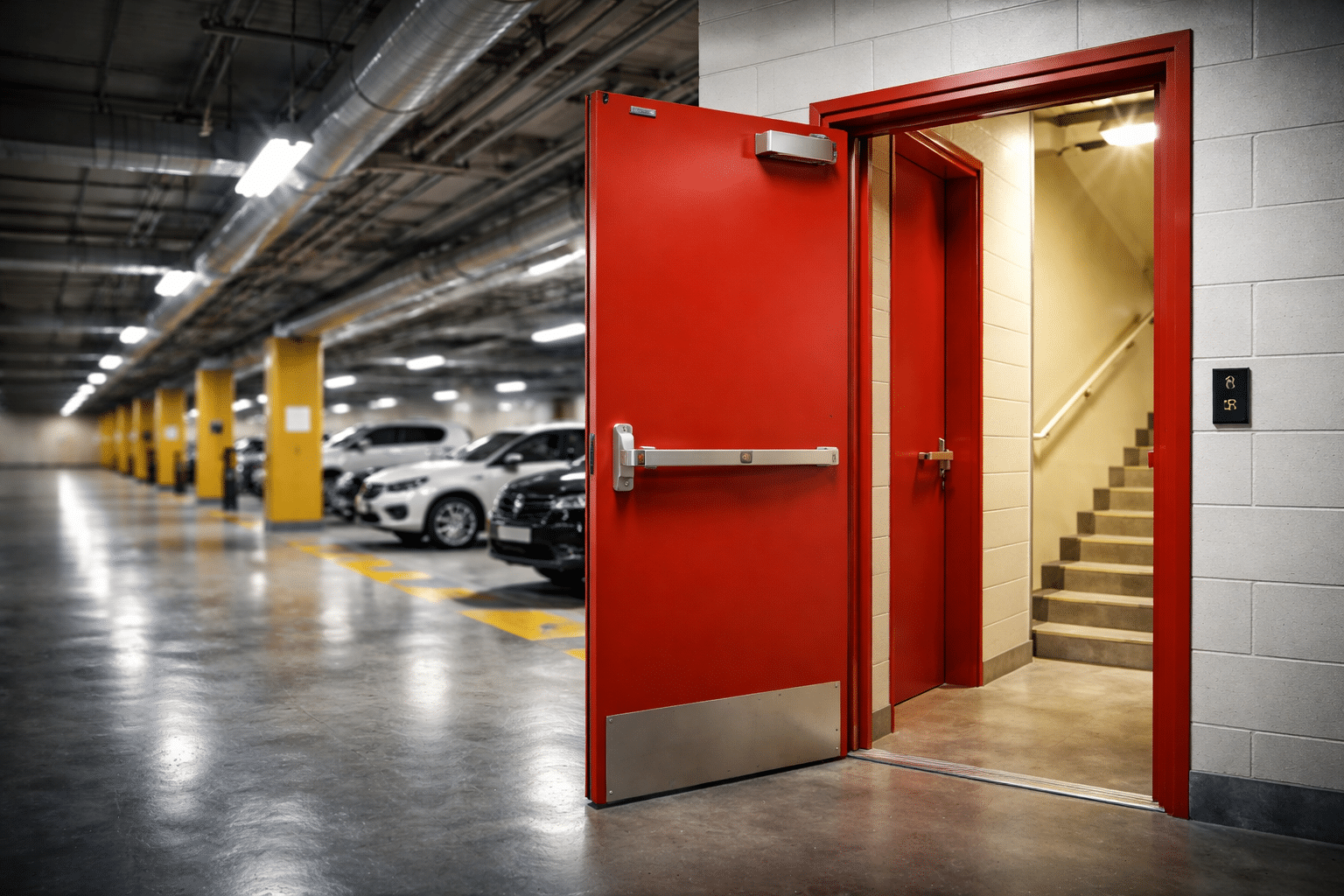
In underground car parks, a fire door is typically there to protect a fire-rated wall, a fire-isolated exit, a service room boundary or another part of the compartmentation strategy. In plain English, that means the door helps keep fire and smoke in one area for longer, giving people more time to leave and reducing the chance of damage spreading through the building. The NCC’s fire resistance and compartmentation provisions are built around exactly that outcome.
Australian rules that shape fire doors in Underground Car Parks
For underground car parks, the NCC is the starting point. In many buildings, basement car parks fall under Class 7a, and the code sets requirements for exits, fire separation and protection of openings. Where a fire door is required, Specification 12 of NCC 2022 says it must comply with AS 1905.1, which is the main construction standard for fire doors. ABCB guidance also notes that these doors are tied to fire test requirements through AS 1530.4.
That sounds technical, but the takeaway is simple. In underground car parks, a fire door cannot be treated like a standard door. The leaf, frame, seals, glazing, hardware and closer must all work together as a tested, compliant system. Changing hardware, trimming the door, altering the frame or adding unapproved openings can affect performance and compliance. That is why certified installation and repair matter. CFS supports business clients with compliance inspections, installation and ongoing maintenance, backed by reliable documentation and minimal disruption.
Another important point is door operation. In underground car parks, doors in a required exit, forming part of a required exit, or in the path of travel to a required exit must allow people to get out without fuss. ABCB guidance explains that latch operation must support safe evacuation, including single-hand downward action where a pushing action is not used. That matters in basement areas where visibility can drop quickly and no one wants to wrestle with awkward hardware during an emergency.
Common fire door risks in Underground Car Parks
In many underground car parks, the biggest issue is not that the wrong door was installed on day one. It is that a compliant door slowly becomes non-compliant over time. A closer fails, the latch no longer engages, a wedge gets used for convenience, seals are missing, or the frame is damaged by trolleys, bins or vehicles.
Another common problem in underground car parks is poor coordination between trades. Electricians, security contractors and maintenance teams may add access hardware or modify doors without checking whether the full assembly remains compliant. It is rarely done with bad intent and is usually done in a hurry. Still, a fire door does not get a free pass because someone was busy on a Tuesday.
Queensland Fire Department guidance gives a useful plain-English reminder here: in underground car parks, fire doors are required to be self-closing and latching. If the door does not close properly, the protection it is meant to provide may be compromised. That is the kind of basic fault that can become a major headache during inspection time.
What managers should check in Underground Car Parks
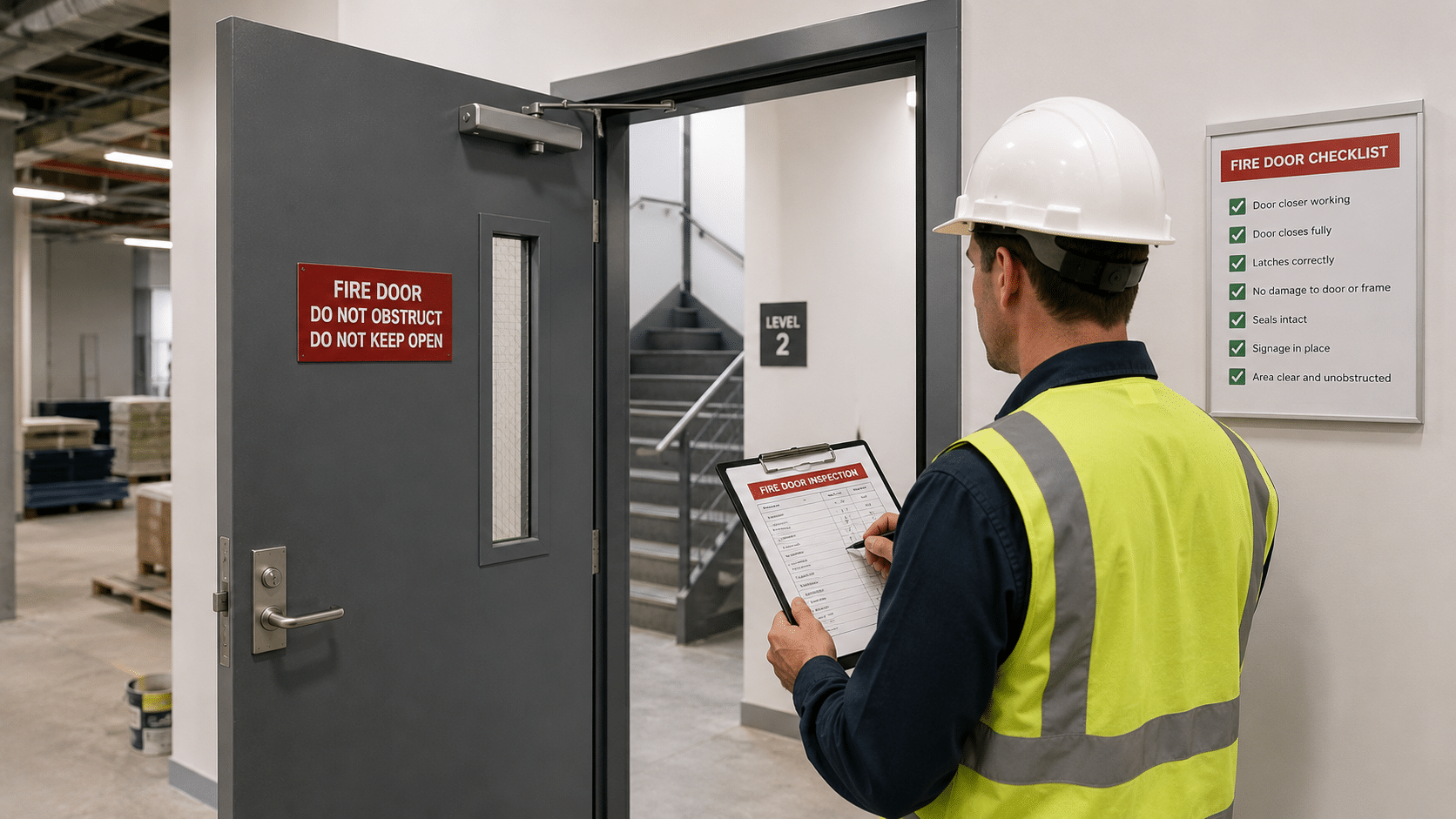
If you manage underground car parks, it helps to think in terms of a short routine checklist.
First, check whether the door closes fully from an open position. Second, make sure it latches properly. Third, look for visible damage to the leaf, frame, hinges, glazing and seals. Fourth, confirm the door has not been propped open or altered. Fifth, make sure records are current and defects are being tracked through to rectification.
In NSW, annual fire safety statements require essential fire safety measures to be assessed, inspected and verified, with exit systems also needing confirmation of compliance with the Regulation. For strata and commercial buildings, that makes documentation just as important as the physical door itself. You do not want to discover missing reports or unresolved defects the week an AFSS is due.
When upgrades are needed in Underground Car Parks
Not every door problem means a full replacement is needed. Sometimes a closer adjustment, approved hardware replacement, seal repair or frame rectification is enough. Other times, the existing door set has been altered too much, damaged too badly or mismatched with non-compliant components, and replacement is the smarter option.
A practical rule of thumb is this: if the door’s certification, hardware compatibility or closing performance is in doubt, do not guess. Get it assessed properly. That is especially true in high-use basements where doors are opened thousands of times each month and wear builds up quietly.
A practical approach to compliance in Underground Car Parks
The best compliance plans are the boring ones. They are documented, scheduled and repeatable. Instead of waiting for an inspection panic, good property teams build fire door checks into their normal maintenance rhythm. That usually means regular visual reviews, prompt repairs and periodic specialist inspections so faults are picked up early.
This approach fits the needs of CFS’s ideal clients as well: strata managers, building managers, compliance officers and construction teams who need dependable service, clear reporting and long-term support across multiple properties. Those customers are usually not chasing drama. They are chasing certainty, safety and fewer nasty surprises.
If you manage Underground Car Parks in Sydney, CFS can help with compliant fire door supply, installation, inspections, maintenance and practical advice that keeps your site safer and inspection-ready. When the goal is protecting exits, controlling smoke spread and keeping paperwork in order, having the right fire door specialist on your side makes life a whole lot easier.