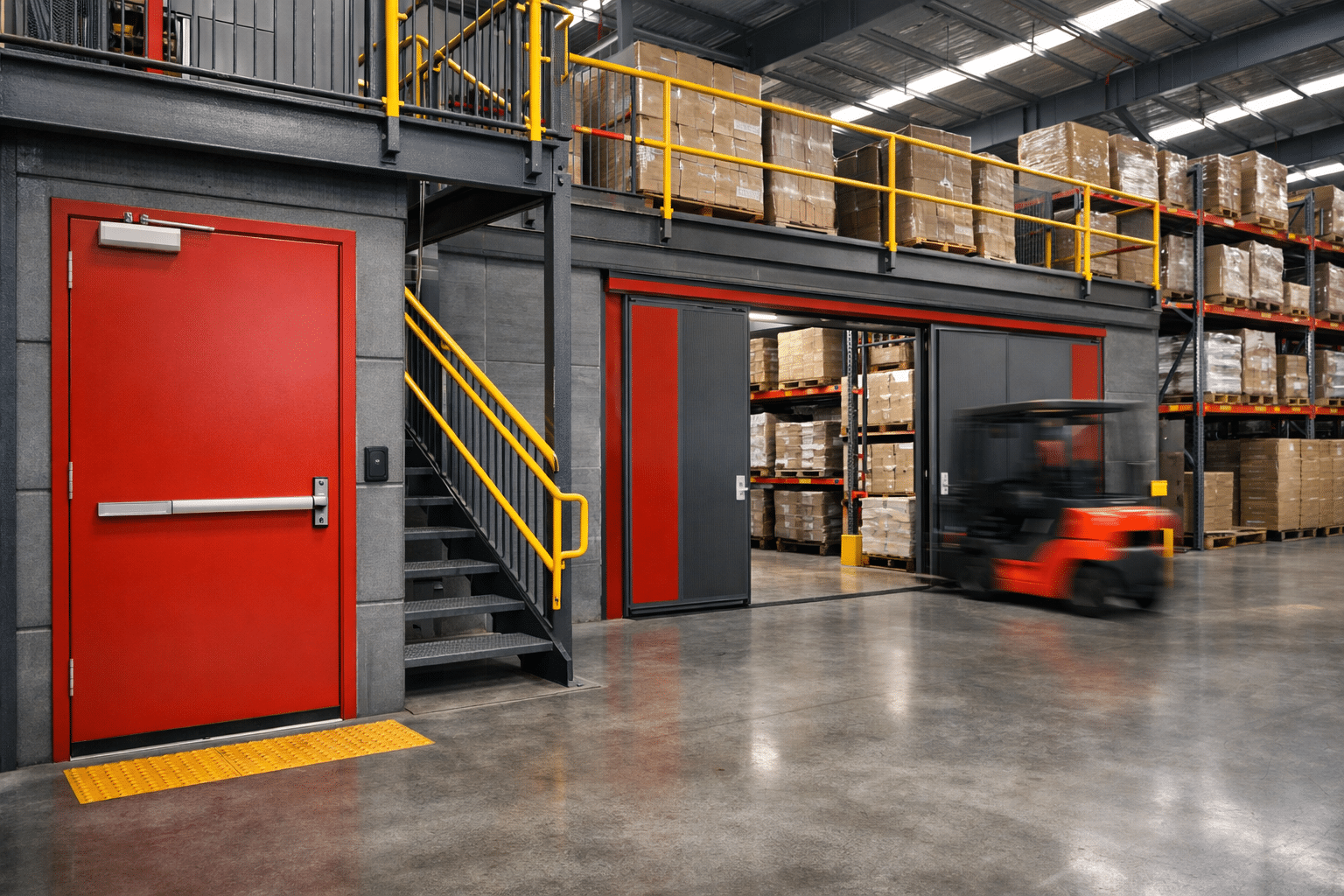
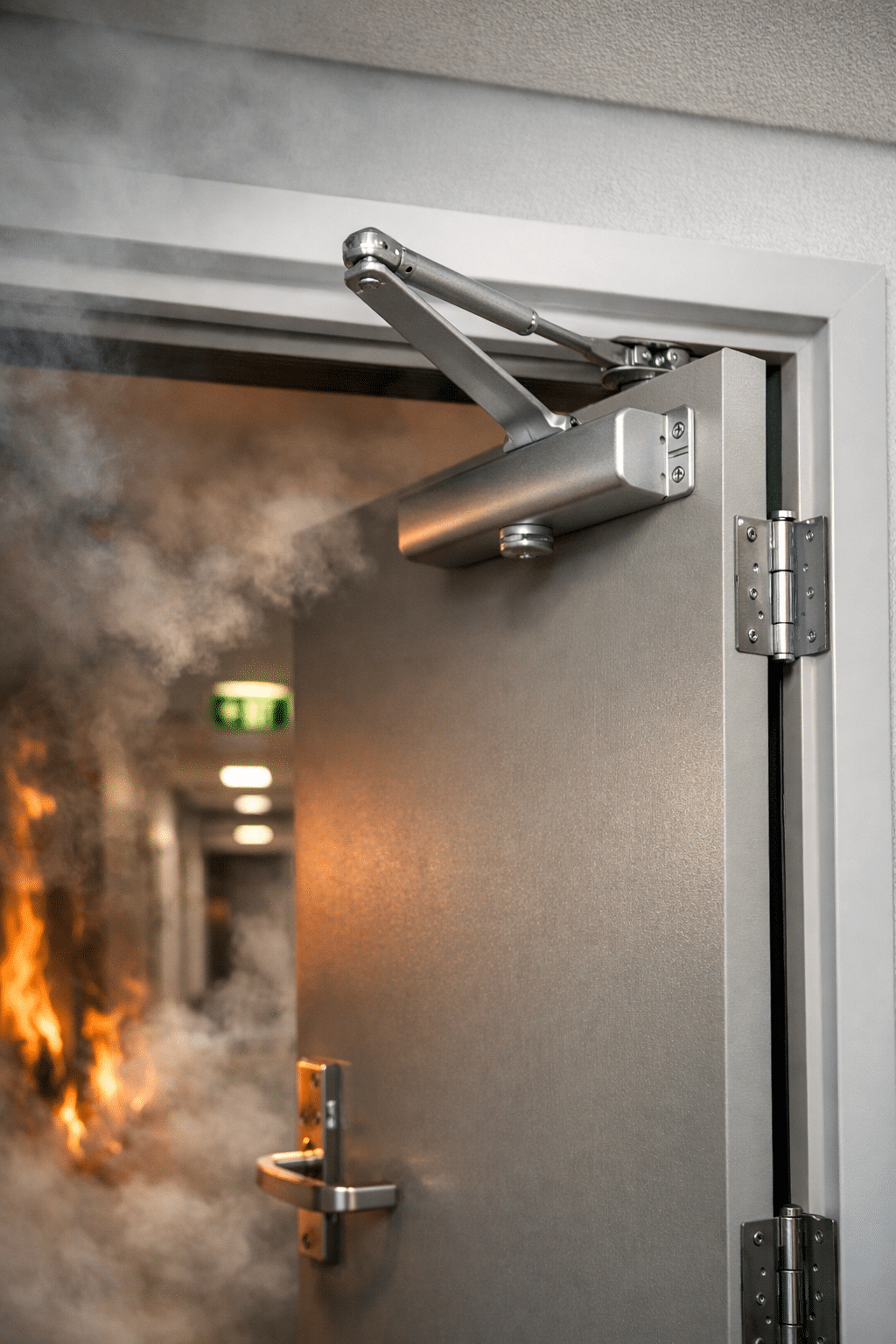
Warehouse and mezzanine sites have a lot going on. Forklifts, pallet racking, stairs, goods lifts and people all moving at once. Picking the right fire doors is not just about a metal slab in an opening. It is about how your space is used hour by hour and how people get out quickly if something goes wrong. This practical guide explains the choices so you can plan with confidence and stay compliant in Sydney.
Why fire doors matter on multi level floors
In a typical warehouse and mezzanine layout you have storage below, light assembly or offices above, and service penetrations between. Fire doors help keep fire and smoke in the compartment where they start, giving time for evacuation and keeping escape routes tenable. When matched with the right frames, seals and closers, certified fire doors slow heat, block smoke and close reliably behind occupants.
Start with your risk map
Walk the site and sketch a quick plan. Mark every stair, lift, ramp, walkway and conveyor that links levels. On many warehouse and mezzanine sites, these are the pressure points. Ask three simple questions for each:
- Is this an escape route that must stay usable during a fire
- What is the fire load nearby, such as timber pallets or packaging
- How often is the door used in day to day work
This gives you a shortlist of door locations that matter most.
Know your ratings and standards
In Australia, fire doors are certified to AS1905.1. Ratings like -/60/30 or -/120/30 describe how long the complete assembly resists fire and controls smoke. For warehouse and mezzanine connections, aim for ratings that match your building’s fire strategy and the compartments on each level. Internal tenancy doors often use solid core leaves, while high traffic service doors may need tougher facings and edge protections.
Swing, sliding or double action
Door type should follow how the opening is used.
- Swing doors are common for stairs and corridors. They are simple, reliable and easy to maintain.
- Sliding fire doors can be ideal when you have a wide opening near racking where a swinging leaf would get in the way. Choose a certified track, hold open device and closer mechanism designed for fire conditions.
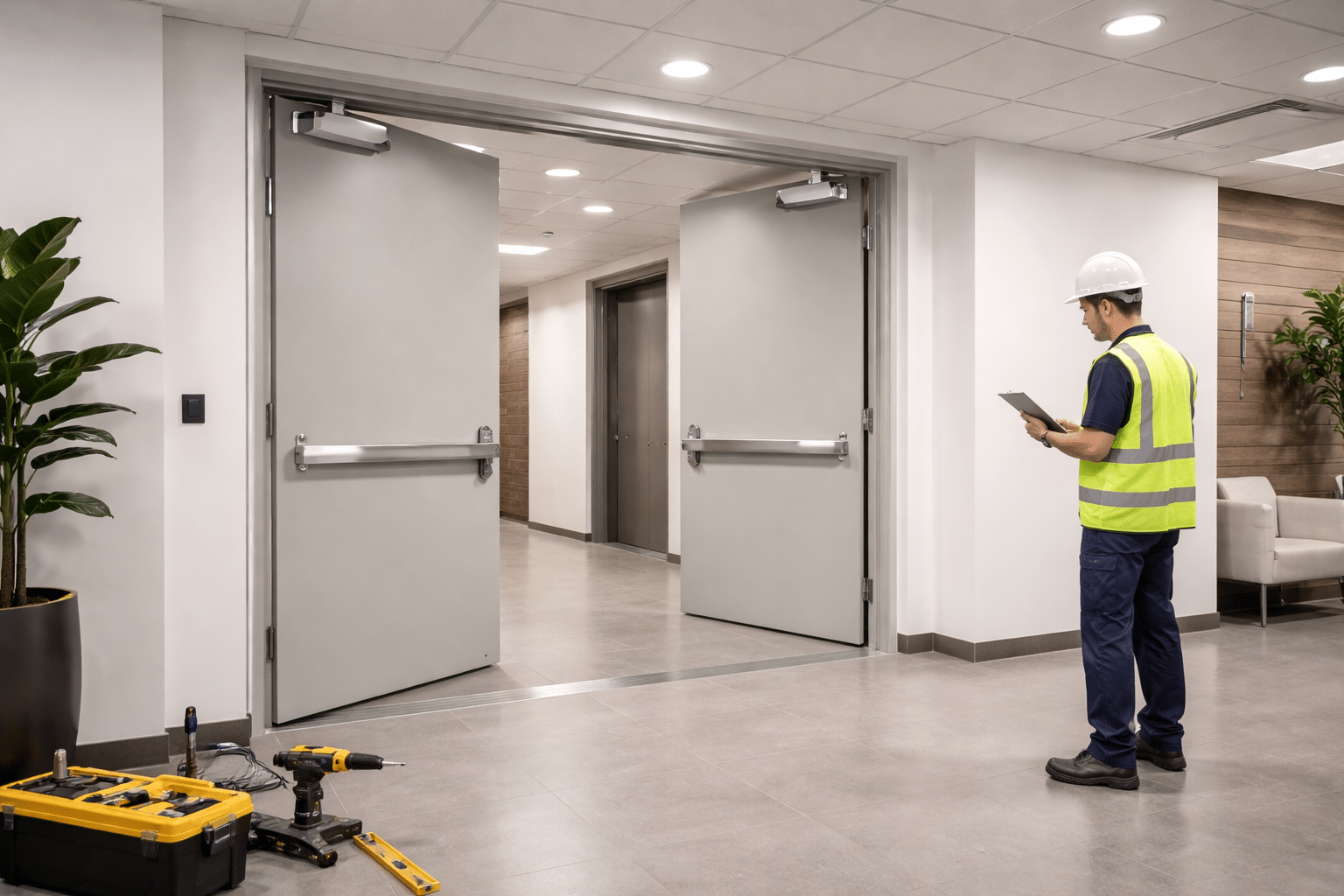
- Double action is rare for fire doors but self closing single or pair leaves with appropriate hardware can handle two way traffic where trolleys and people share space.
If your warehouse and mezzanine circulation relies on a wide path for pallets, a sliding fire door with a compliant hold open unit can prevent congestion and keep productivity up.
Smoke is the silent risk
Many incidents show smoke does more harm than flames. In any warehouse and mezzanine corridor or stair, make sure perimeter seals, meeting stile seals and threshold seals are specified. Intumescent strips expand in heat, while smoke seals reduce cold smoke leakage during early stages of a fire. Ask for test evidence that the exact door set and seals have been certified together.
Hardware that works when it counts
Hardware brings the system to life. Choose:
- Door closers that are power adjustable and suited to your door weight and frequency of use
- Fire rated locks or exit devices that allow quick egress without a key
- Hinges or pivots rated for the door’s mass and cycle count
- Hold open units that fail safe and release on alarm
On warehouse and mezzanine stairs, delayed egress is rarely suitable. Keep operation simple so staff and visitors can exit with one action.
Steel frames and tough finishes
Frames matter as much as the leaf. For busy warehouse and mezzanine openings, steel frames resist impact from trolleys and pallets. Consider wraparound frames fixed to masonry or stud walls with fire rated packers and sealants. Finish doors with durable laminates or metal skins where abrasion is expected. A small investment in edge guards and kick plates saves repeated repairs.
Integrate with passive fire stopping
Every cable tray, sprinkler line or duct that passes between levels needs compliant fire stopping. It is common to find a good door next to an unsealed penetration. That weak link defeats the whole point of compartmentation. Bundle your warehouse and mezzanine door works with passive fire stopping so both are certified together and documented for your Annual Fire Safety Statement.
Access control and alarms
If you use access control on warehouse and mezzanine doors, ensure the lockset is fire rated and the door will default to safe egress on power loss. Connect hold open devices to the fire alarm loop so they release on activation. Test this connection during routine maintenance, not just during annual certification.
People flow and productivity
Fire safety choices should not slow the job. Place doors so the natural path of travel aligns with them. On busy warehouse and mezzanine lines, pairs of doors with centre mullions can separate inbound and outbound traffic. For noisy zones, acoustic seals on a certified fire door can improve comfort without affecting the rating. The right closer setting avoids slamming while still closing firmly every time.
Common pitfalls to avoid
- Using a non certified leaf with a certified frame
- Replacing a closer with a non rated model after damage
- Removing a hold open to stop nuisance beeping rather than fixing the detector link
- Installing carpet or thresholds that stop the door closing fully
- Forgetting to adjust seals after seasonal movement
Any of these can put your warehouse and mezzanine compliance at risk. A quick routine inspection catches them early.
Maintenance keeps certificates meaningful
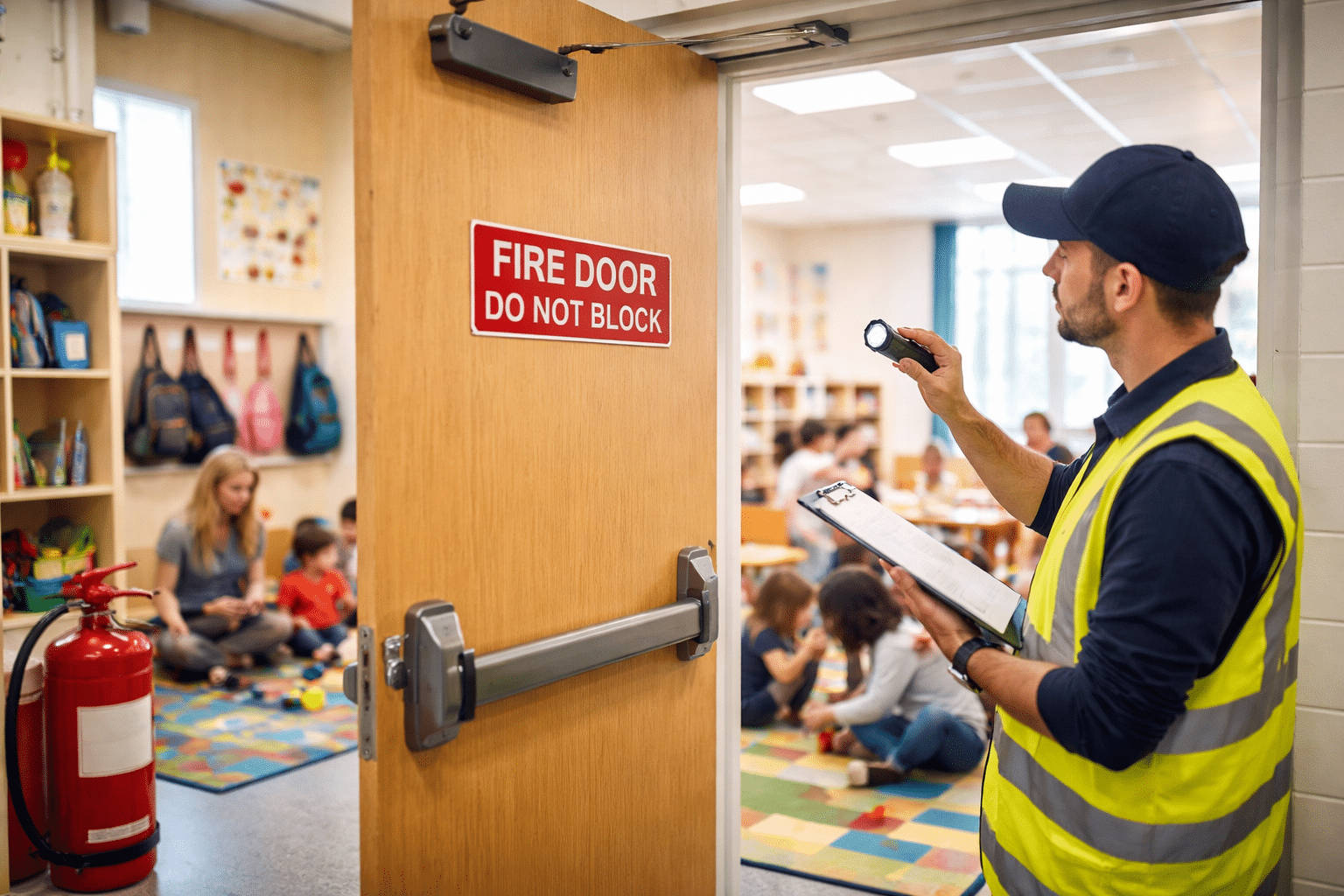
Fire doors are living assets. On warehouse and mezzanine stairs and corridors, plan inspections at least annually and after any building works. Check clearances, closer action, latch engagement and seal condition. Keep records with photos so you can show due diligence. If an opening is damaged by forklifts, prioritise repairs. A door that does not latch is not a fire door in practice.