Cost guide for fire doors is one of the most practical tools a Sydney building manager or strata committee can have. Fire door compliance is a legal requirement under the National Construction Code (NCC) and the Environmental Planning and Assessment Act, yet many building owners have no clear picture of what services actually cost until they receive an invoice. This cost guide sets out realistic price ranges across every fire door service that Comprehensive Fire Services (CFS) provides, so you can plan your compliance budget with confidence.
Why a Cost Guide Matters for Sydney Building Owners
Fire safety budgets are frequently underestimated because building owners treat inspections, repairs, and replacements as separate line items rather than a coordinated compliance program. A cost guide helps you understand what a complete fire door program involves, sequence the work in a way that avoids emergency call-out premiums, and compare quotes from contractors on an apples-to-apples basis. For strata managers juggling levies and council AFSS deadlines, having cost guide figures in front of the committee early prevents shortfalls mid-year.
Supply and Installation Cost Guide: What to Expect
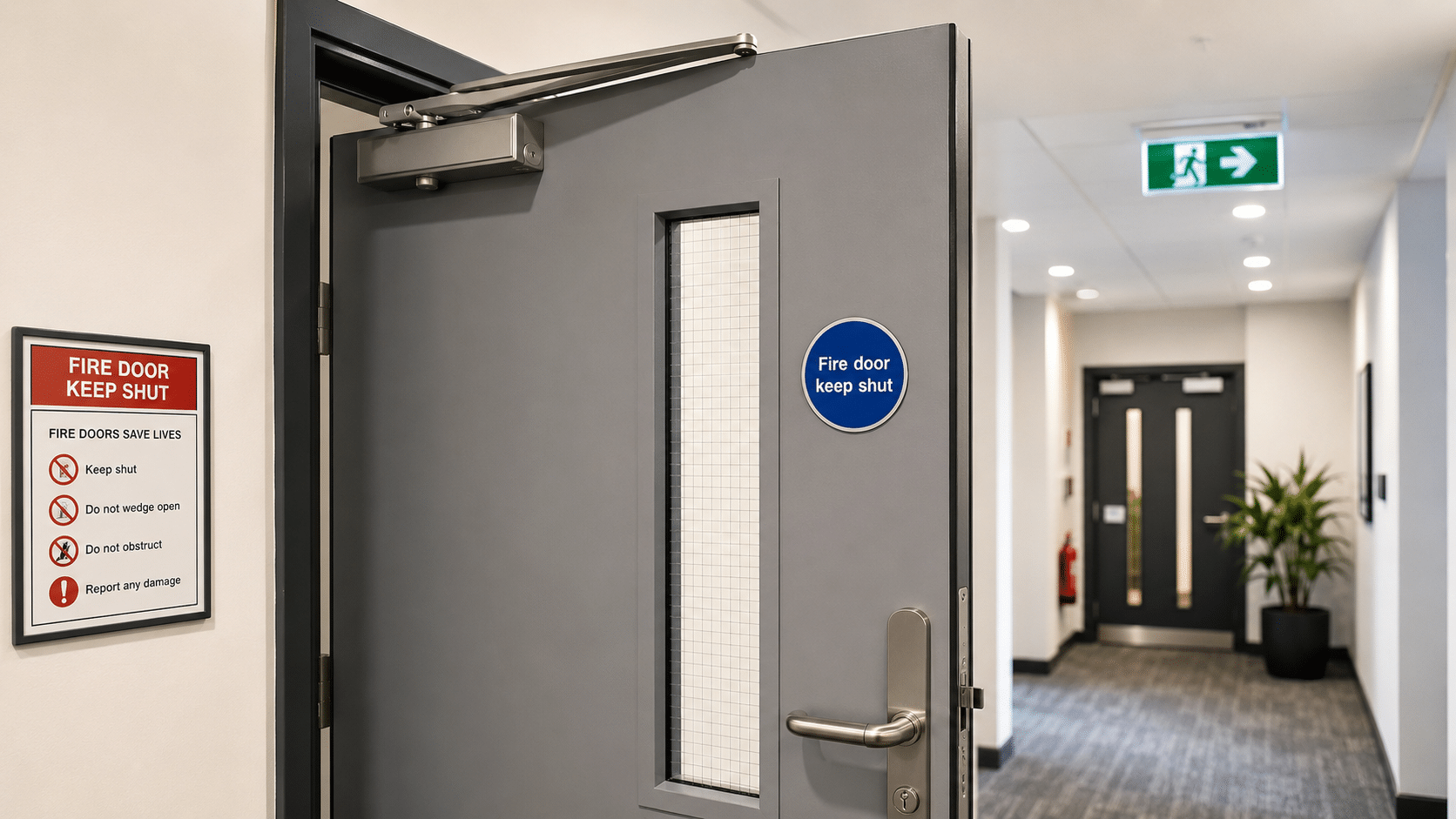
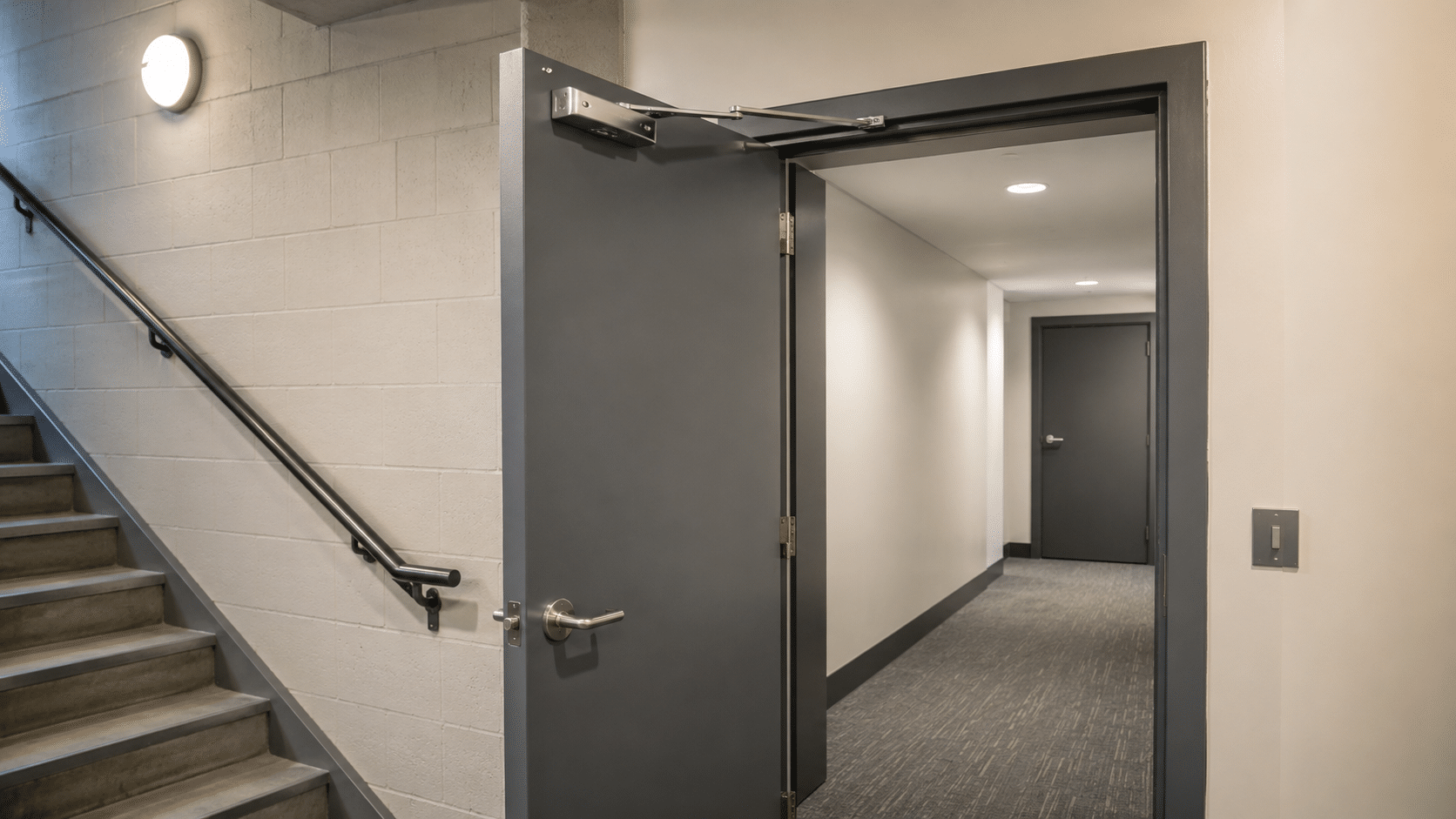
Supply and installation is typically the largest single item in any fire door cost guide. In Sydney, a standard single-leaf solid-core fire door with a rated steel frame, compliant hardware, and intumescent seals generally falls in the range of $1,800 to $3,500 fully installed, depending on the door leaf rating (FRL -/60/30 versus -/120/60), the frame type, and access conditions within the building. Sliding fire doors, which are common in warehouses, aged care facilities, and hospital corridors, attract a higher cost guide figure, typically $3,500 to $7,000 per opening, reflecting the complexity of the track system and the heavier door leaf.
Custom or acoustic-rated fire doors for heritage buildings or recording studios will sit at the higher end of the range or above it. For multi-door projects across a strata building or commercial fit-out, volume pricing typically reduces the per-door cost guide figure by 10 to 20 percent.
Fire Door Inspection and Certification Cost Guide
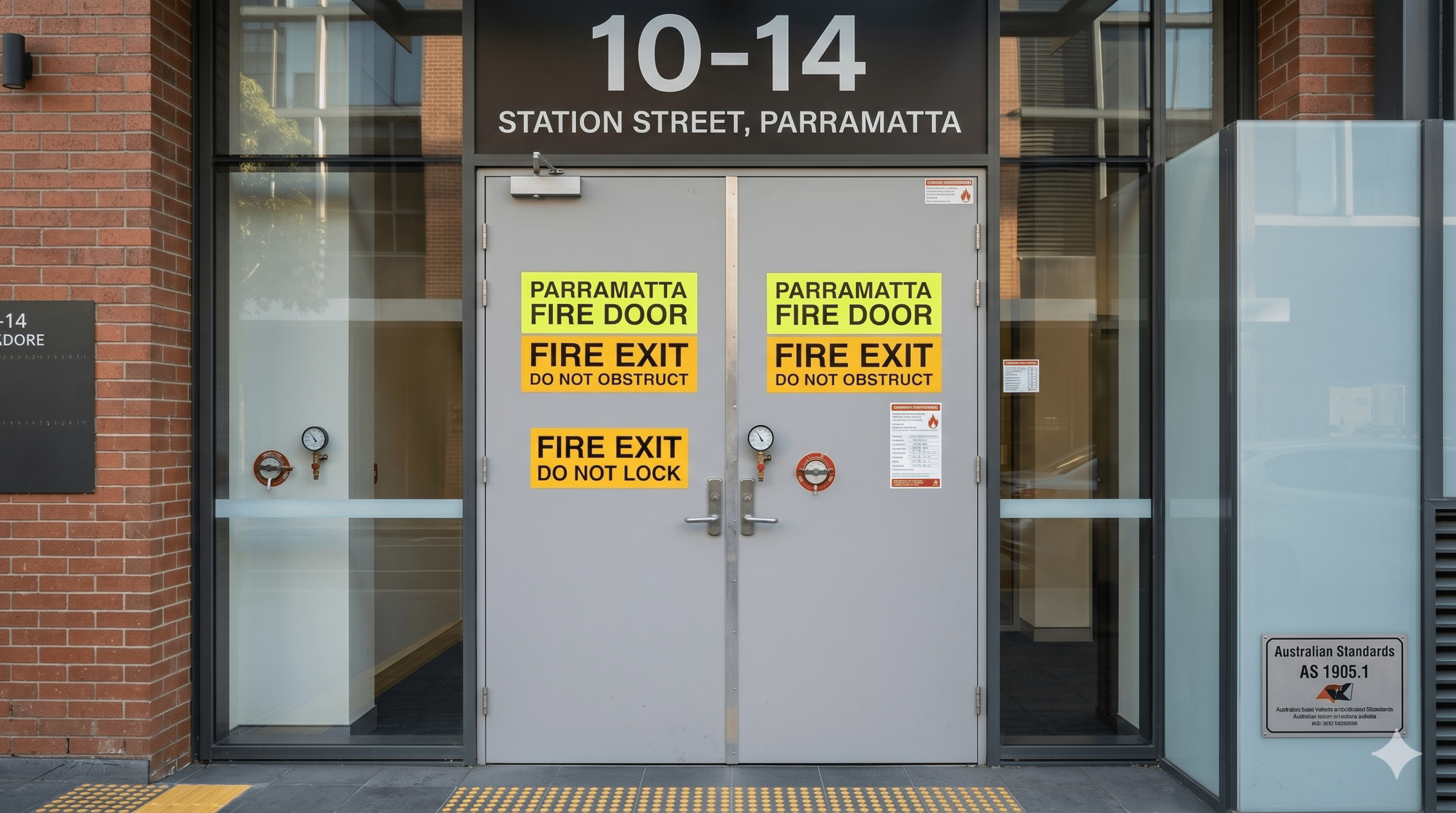
A fire door inspection and certification cost guide differs from installation pricing because inspection is a recurring expense tied to your AFSS obligations. Under AS 1905.1, all fire doors must be inspected at least annually by an accredited inspector. CFS holds FPAS accreditation (F055161A), which is a legal requirement for certification in NSW.
Single building inspections in Sydney for buildings with 10 to 30 fire doors typically range from $600 to $1,400, inclusive of the inspection report and FPAS certification tag. Larger strata complexes or commercial sites with 50 or more fire doors attract a per-door rate that usually sits between $25 and $45 per door for the inspection component, with the certification documentation charged separately. Your cost guide for inspections should also include the cost of any minor adjustments made on the day, such as gap corrections or seal replacements, which many contractors charge at an hourly rate of $120 to $180.
Repair and Replacement: A Cost Guide for Building Managers
Repairs represent the most variable line item in any fire door cost guide because the cost depends on the nature and extent of the defect. Common repair categories and their typical Sydney price ranges are as follows.
Door closer replacement sits between $250 and $550 supply and install. Intumescent seal replacement for a standard single-leaf door runs from $150 to $350. Hinge replacement for a fire door, which requires rated hardware, is typically $180 to $400 per set. Frame rectification, such as correcting warp or re-setting a misaligned frame, ranges from $300 to $800 depending on the extent of the work. Full door leaf replacement without the frame typically falls between $900 and $1,800.
Where multiple defects are identified on the same door, the combined repair cost guide figure per door can reach $1,200 to $2,000, at which point replacement of the complete doorset is often more cost-effective.
Passive Fire Stopping Cost Guide
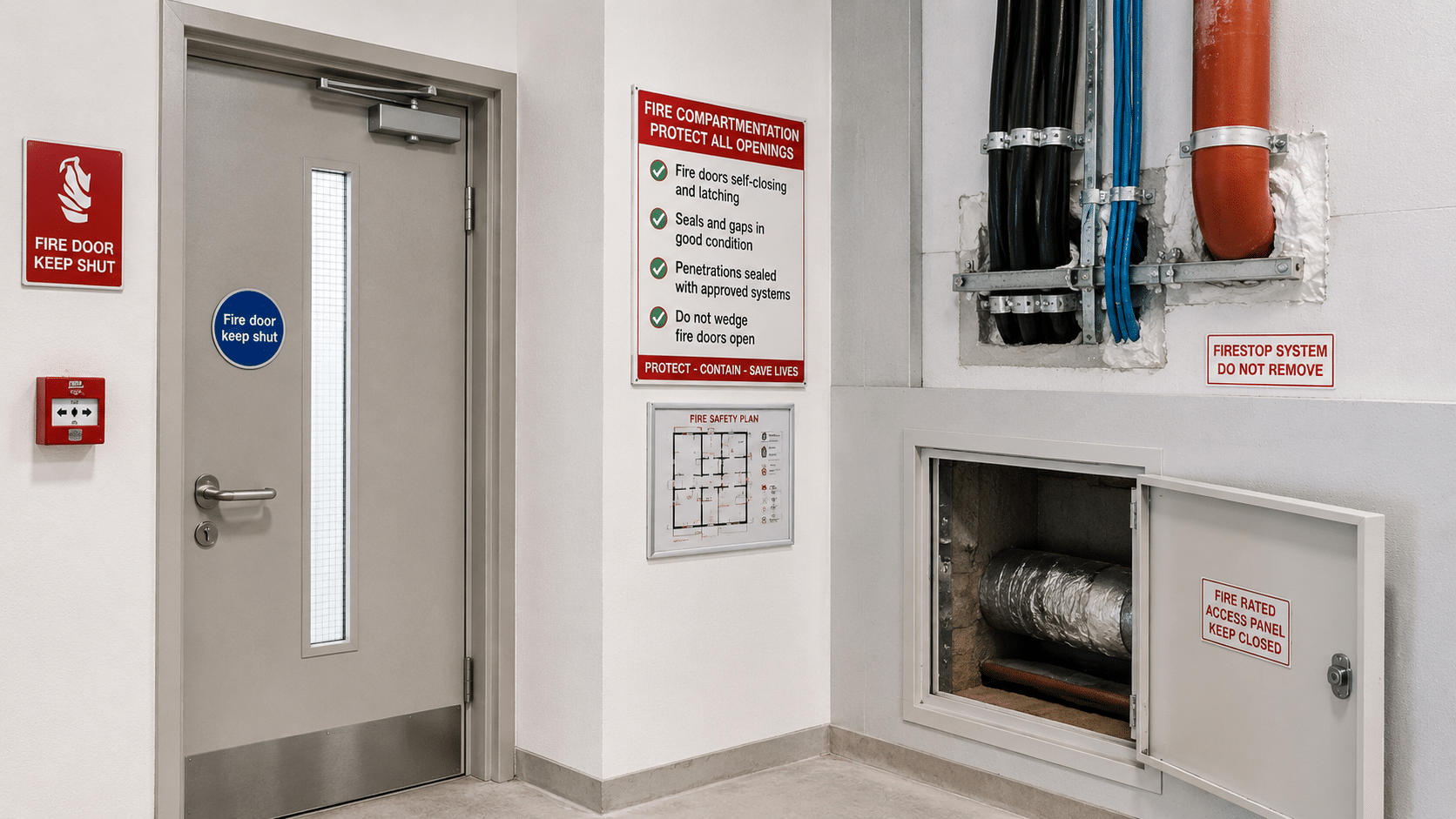
Passive fire stopping is a separate scope of work to fire doors, but it appears on the same AFSS and is increasingly audited by councils across Sydney. The passive fire stopping cost guide covers penetration seals around pipes, cables, and conduits that pass through fire-rated walls and floors, as well as intumescent collars and cavity barriers.
A single penetration seal using a rated sealant product for a standard pipe or cable penetration is typically $150 to $400, depending on the penetration size and the rated wall system it passes through. Intumescent pipe collars for PVC pipes in fire-rated walls range from $200 to $500 per collar installed. For buildings that have had extensive unauthorised penetrations made during fit-outs or maintenance works, a full passive fire stopping remediation scope can run into several thousand dollars. CFS can provide a site assessment to produce an accurate cost guide for your specific building before work begins.
Strata Buildings: Cost Guide for Common Areas
For strata committees, the cost guide for fire door compliance in common areas is shaped by building age, the number of storeys, and the history of maintenance. Older Sydney apartment buildings constructed before the mid-1990s often have non-compliant door hardware, missing intumescent seals, or doors that have been damaged by tenant or contractor activity over the years.
A practical cost guide for a mid-size strata building of 40 to 60 apartments in Sydney would budget $3,500 to $7,000 per year to cover annual inspections, minor repairs, and one or two door replacements. Buildings that have deferred maintenance for several years should budget significantly higher for the first year, as a backlog of rectification work often surfaces during the initial inspection.
What Affects Your Cost Guide Figures
Several factors can shift a cost guide estimate up or down significantly. Building access is one of the most common variables: doors in fire stairs, plant rooms, or basement car parks require additional time and sometimes equipment to service safely, which increases labour costs. The fire resistance level (FRL) required by the NCC for the specific location of each door also affects product cost, as higher-rated doorsets carry a higher supply price.
The urgency of the work is another factor. Emergency rectification following a failed inspection or a council notice will attract a call-out premium compared to scheduled work. Engaging CFS on an annual maintenance programme rather than on a reactive basis is one of the most effective ways to keep your cost guide figures predictable and avoid premium charges.
Getting an Accurate Cost Guide for Your Building
The price ranges in this article are indicative figures for Sydney buildings based on typical project scopes. The only way to produce a precise cost guide for your building is through a site inspection, which CFS offers as a no-obligation assessment for strata, commercial, and industrial properties across Greater Sydney.
During the assessment, a CFS technician will document the number, condition, and compliance status of all fire doors and passive fire stopping elements on site. You receive a written report with a clear scope of works and itemised pricing, giving you everything you need to present to a strata committee, prepare a maintenance budget, or meet an AFSS deadline. Contact Comprehensive Fire Services to arrange your building assessment and get a cost guide tailored to your property.