Parramatta fire door compliance is a legal obligation that applies to every strata committee, commercial building manager, and facilities team operating in the Parramatta CBD and surrounding suburbs. The area has grown dramatically over the past decade, with new commercial towers, mixed-use developments, and apartment blocks joining the older building stock that already requires ongoing fire safety maintenance. Across all of them, the obligations are the same: fire doors must be installed correctly, inspected annually by an accredited practitioner, and kept in a compliant condition at all times.
Despite the clear regulatory requirement, many managers find Parramatta fire door compliance difficult to track, particularly when they are responsible for multiple buildings or large strata complexes with dozens of fire doors spread across several floors. This article explains what the rules require, what inspectors check, and how to build a practical compliance program that keeps your building safe and your Annual Fire Safety Statement ready to submit on time.
Why Parramatta Fire Door Compliance Matters
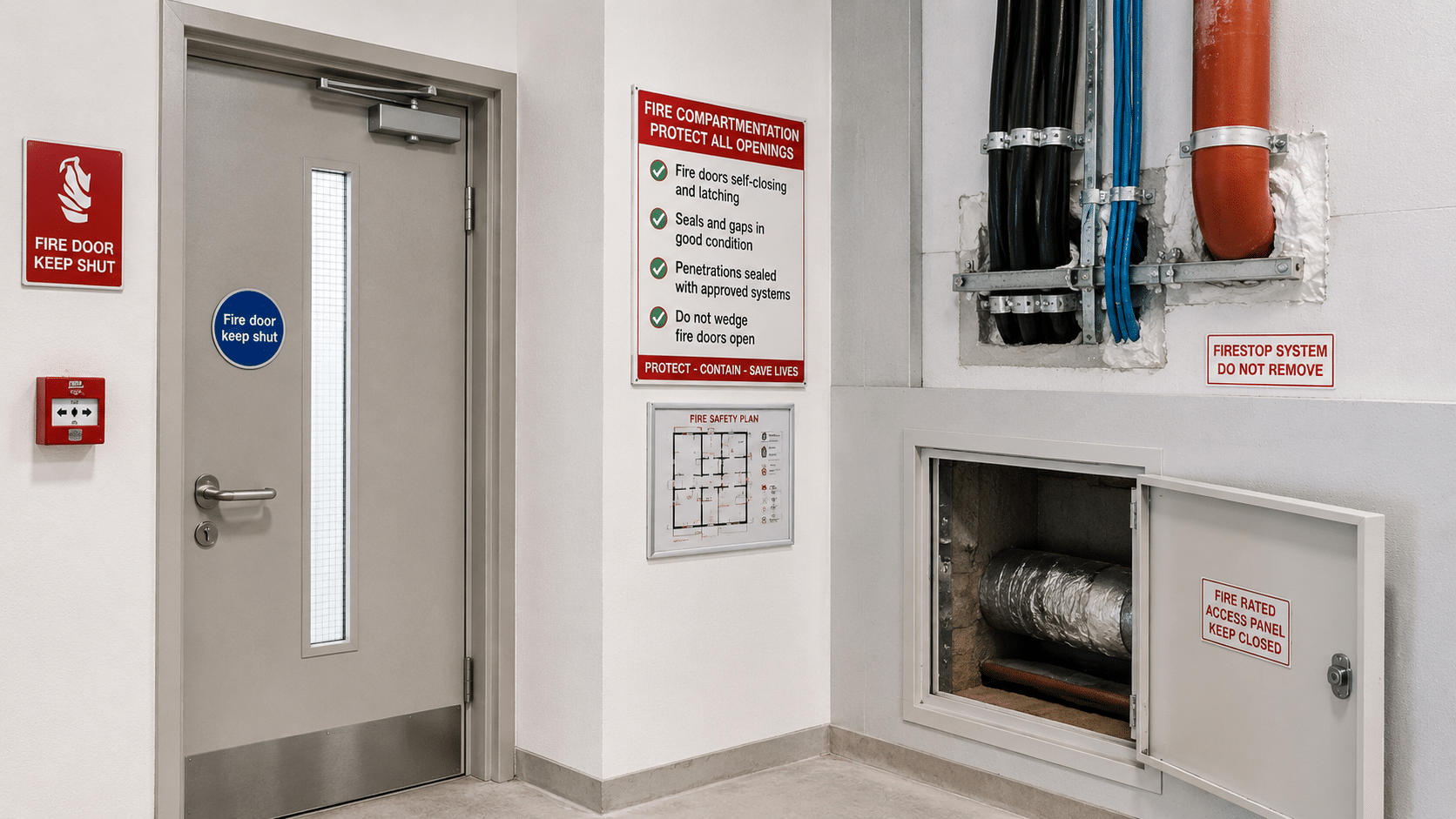
Parramatta fire door compliance is not simply a box-ticking exercise. Fire doors are a critical element of a building’s passive fire protection system. They are engineered to hold back fire and smoke for a defined period, typically 60 to 120 minutes, giving occupants the time they need to evacuate safely and allowing emergency services to enter and operate. When a fire door is propped open, has a faulty self-closing mechanism, or is fitted with non-rated hardware, it provides no meaningful protection at all.
The consequences of non-compliance extend beyond the safety risk. Council inspectors and Fire and Rescue NSW can issue building owners with orders requiring rectification within a set timeframe, and failure to comply can attract substantial fines. Where non-compliance contributes to injury or loss of life in a fire, the personal liability exposure for building managers and owners corporation members can be significant. Staying on top of compliance is both a practical and a legal priority.
Parramatta Fire Door Inspection Requirements
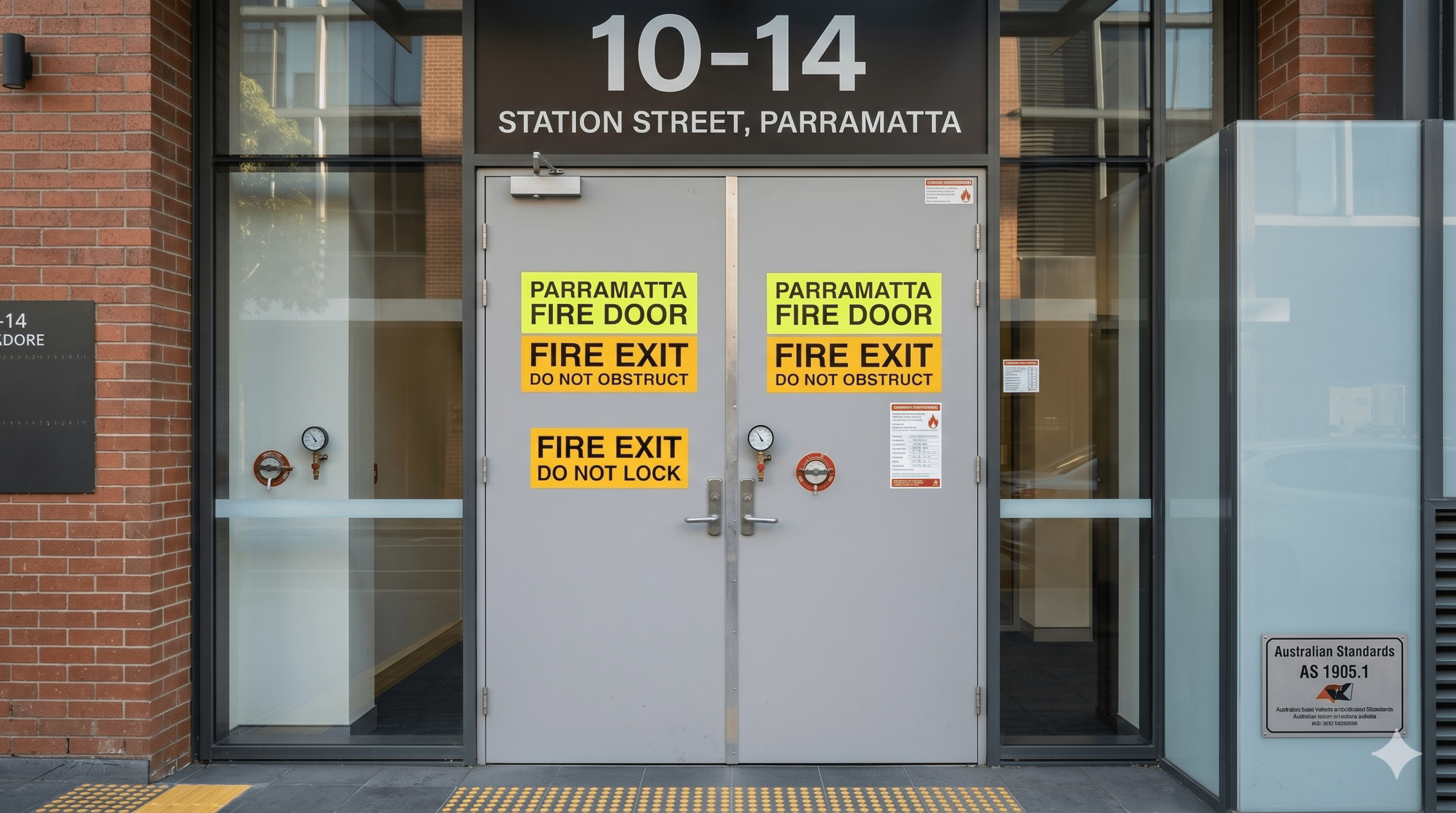
A Parramatta fire door inspection must be carried out by a practitioner accredited under the Fire Protection Association Australia (FPAA) scheme, which is the FPAS program. Comprehensive Fire Services holds FPAS accreditation F055161A and services buildings across Parramatta and Greater Western Sydney. The inspection covers every fire door in the building and assesses each one against the requirements of Australian Standard AS 1905.1.
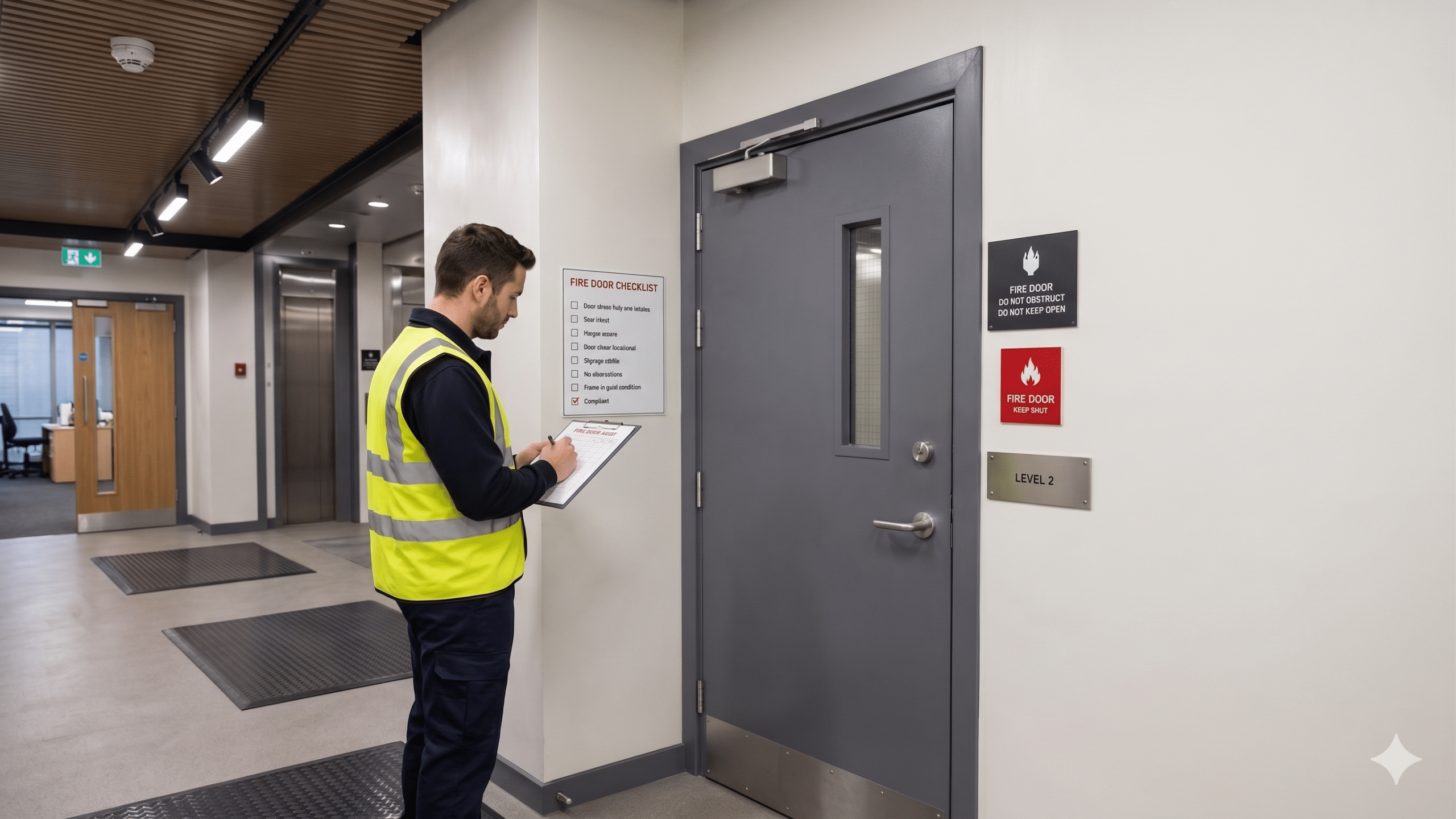
Inspectors assess the door leaf and frame for damage, warping, and condition of the surface finish. They check gap tolerances around all four sides of the door, verify that the self-closing mechanism operates correctly and that the door latches on every closure, inspect the intumescent and smoke seals for damage or missing sections, confirm that the door hardware including hinges, locks, and hold-open devices is compliant, and check that the certification label is present and legible. Every door that passes is tagged with a new FPAS certification label. Every door that fails is documented with the specific defect noted, so rectification work can be scoped and priced accurately.
The Parramatta Fire Door Certification Process
The Parramatta fire door certification process is completed in two stages. The first is the physical inspection described above. The second is the issuing of an inspection report that documents the compliance status of every door on the premises, together with the FPAS certification tag applied to each passing door. This report forms part of the evidence pack required to support your Annual Fire Safety Statement, or AFSS, which must be submitted to Parramatta City Council each year.
Where doors fail the inspection, the report will set out the nature of each defect. Rectification must be completed before the AFSS can be certified. In many cases, minor defects such as seal replacements or closer adjustments can be resolved on the day of the inspection by the same team, avoiding the need for a return visit. Where door replacements or frame rectification are required, a separate scope of works is provided and scheduled at a time that suits the building’s operational requirements.
Parramatta Fire Door Issues Found in Local Buildings
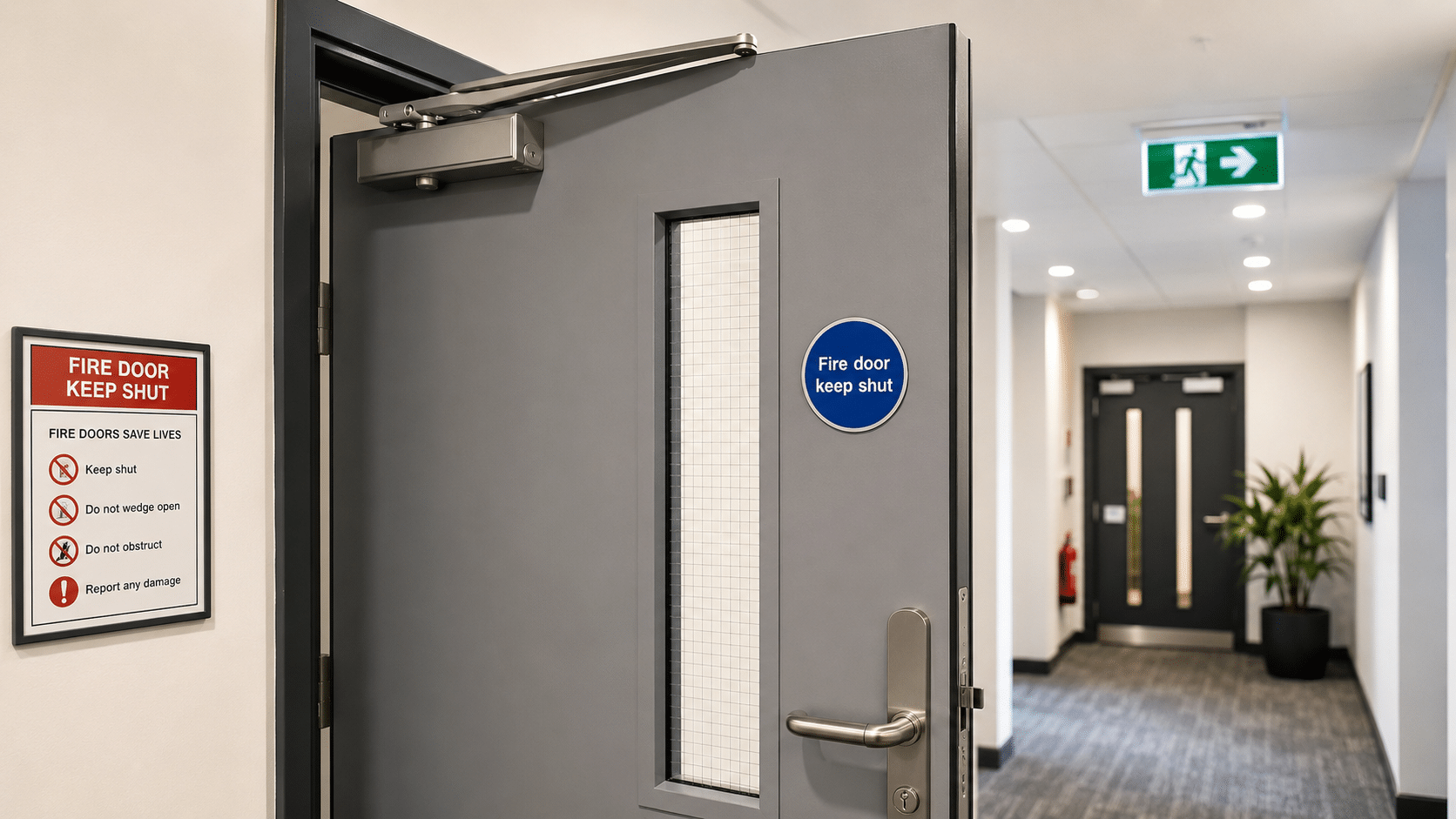
Parramatta fire door inspections consistently reveal a small set of recurring defects, regardless of building age or type. The most common is propping: doors are wedged open with doorstops, heavy objects, or pieces of timber by occupants who find the self-closing mechanism inconvenient. This immediately defeats the purpose of the fire door and constitutes non-compliance from the moment the wedge is in place.
The second most common issue is worn or disconnected door closers. Self-closing mechanisms have a service life, and in high-traffic areas such as stairwells and fire exits they can wear out within a few years if not maintained. Gap tolerance failures are also common, particularly in older buildings where the door frame has shifted over time or the door leaf has expanded or contracted with seasonal changes. Missing or damaged intumescent seals are found regularly, often because the seals have been painted over during internal refurbishments, which renders them non-functional. Each of these defects is straightforward to address when caught early.
Parramatta Fire Door Rules for Strata and Commercial Buildings
The Parramatta fire door obligations for strata buildings and commercial properties differ in how they are administered, but the technical requirements are the same. For strata buildings, the owners corporation is legally responsible for maintaining all essential fire safety measures in common areas. This includes apartment entry doors that open onto a common corridor, lobby and foyer doors, fire stair enclosures, and basement access doors.
For commercial tenancies, the building owner is typically responsible for base-build fire doors, while tenants may have obligations for any fire doors installed as part of a fit-out. Managers overseeing mixed-use buildings in Parramatta need to be clear on who is responsible for which doors to avoid gaps in the compliance program. CFS can assist in mapping all fire doors in a building and allocating responsibility clearly before inspection, which avoids disputes and delays when the AFSS deadline approaches.
How to Set Up a Parramatta Fire Door Maintenance Program
A Parramatta fire door maintenance program removes the reactive stress of compliance by scheduling inspections, minor repairs, and preventive servicing on a regular calendar. The most effective programs combine an annual FPAS inspection with a mid-year visual check carried out by the building manager using a simple checklist. Between these formal steps, any defects reported by occupants are logged and addressed promptly rather than allowed to accumulate.
Building managers who set up a maintenance program with CFS receive a scheduled inspection each year, a detailed report after each visit, and a clear scope of any rectification work required. Pricing is agreed in advance for standard repair items, which removes the uncertainty of reactive call-out pricing. For larger strata buildings with 30 or more fire doors, the cost of an ongoing program is almost always less than the cost of emergency rectification when a council order lands with a tight deadline attached.
Choosing a Parramatta Fire Door Specialist
Selecting the right Parramatta fire door specialist comes down to three criteria: accreditation, local experience, and the ability to carry out both inspections and rectification work. FPAS accreditation is non-negotiable. Only accredited practitioners can certify fire doors and provide the documentation required for the AFSS. Contractors who carry out inspections without accreditation cannot provide valid certification, which means the building owner may still be exposed to non-compliance despite having paid for a service.
Local experience matters because Parramatta’s building stock spans a wide range of ages, uses, and fire door configurations. A specialist familiar with the area’s older commercial buildings and newer residential towers will move through a building more efficiently and is more likely to recognise defects that are specific to particular door systems and frame types. Comprehensive Fire Services operates across Parramatta and the wider Greater Western Sydney region, offering inspections, certification, supply and installation of new doorsets, passive fire stopping, and ongoing maintenance programs under a single point of contact.
To arrange a fire door inspection, get a compliance assessment for your building, or set up an ongoing maintenance program, contact Comprehensive Fire Services. Our team services Parramatta, Westmead, Merrylands, Granville, Rydalmere, and all surrounding suburbs across Greater Western Sydney.