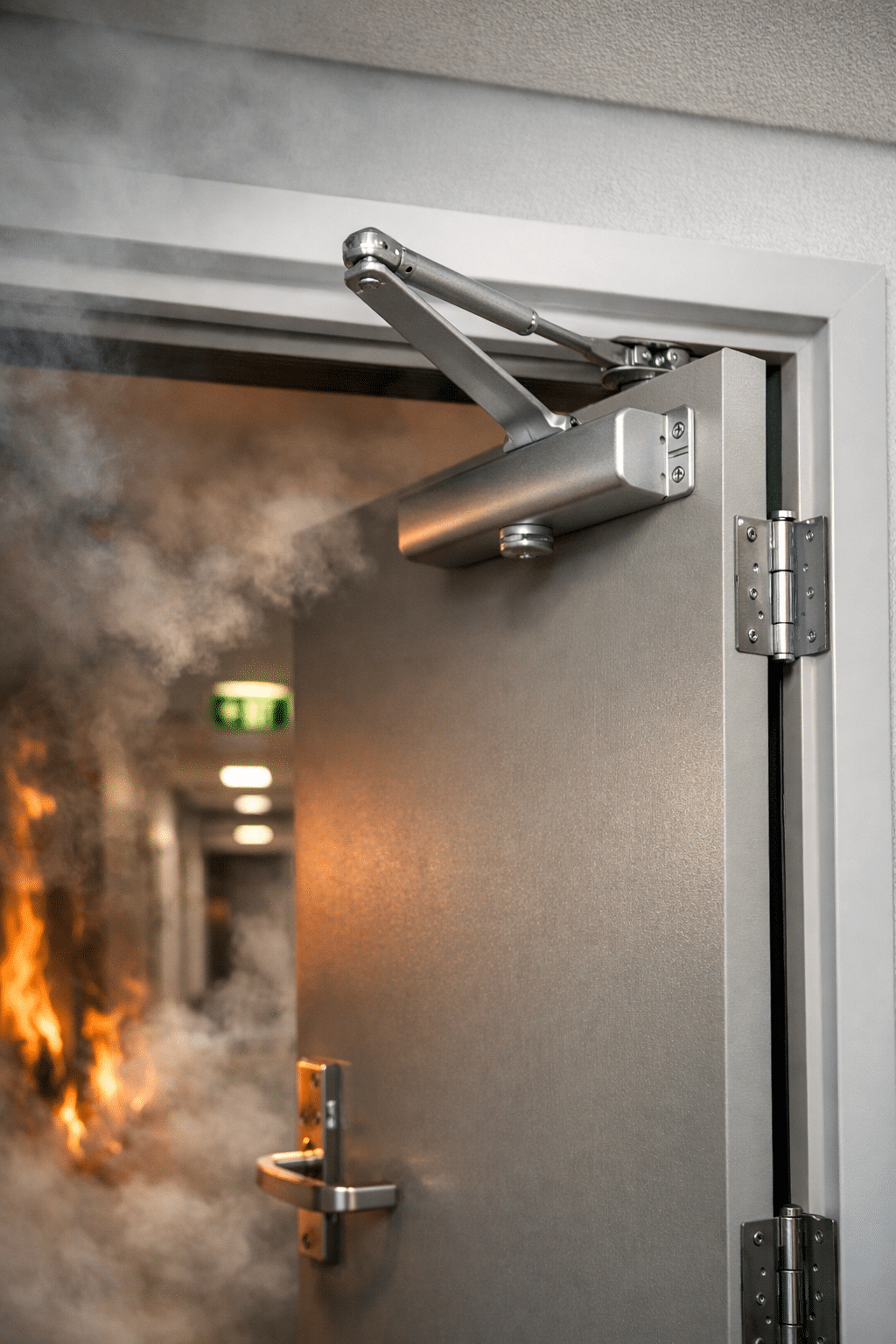
Solid core fire doors are one of those building features you barely notice until you really need them. They sit quietly in corridors, stairwells, plant rooms, and service areas, doing a very important job: slowing down fire and smoke so people can get out safely and emergency crews can do their work.
But not every door in a building needs to be fire rated, and not every fire door needs the same construction. Choosing the right door for the right spot helps with safety, compliance, durability, and day to day usability. This guide explains where Solid core fire doors fit best, why they are commonly specified in internal areas, and what to look for so the door performs as intended.
What “solid core” actually means in plain English
A solid core door is built with a dense internal core, rather than a hollow centre. That density gives the door strength, a more substantial feel, and better performance in a fire when it is part of a certified fire door set.
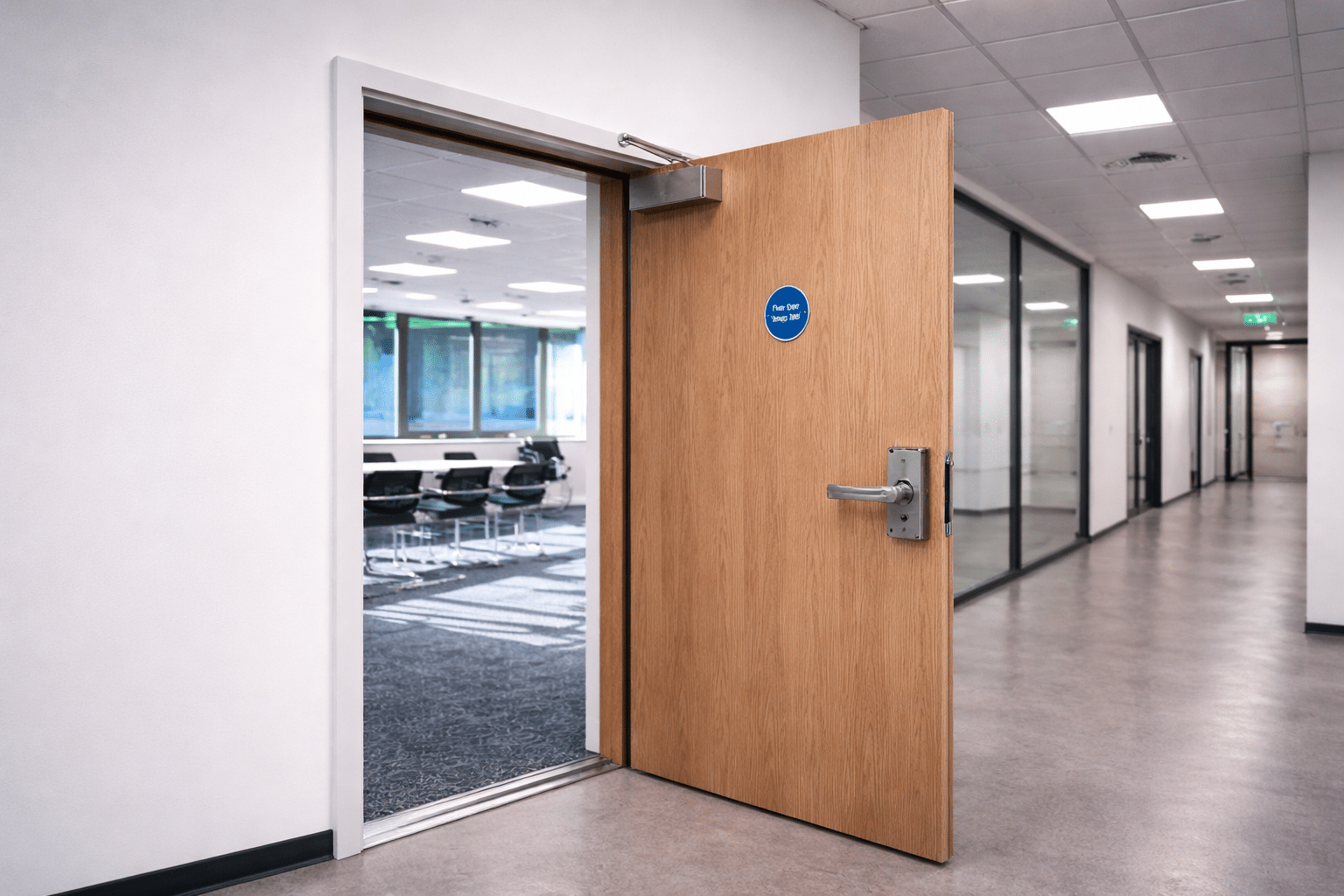
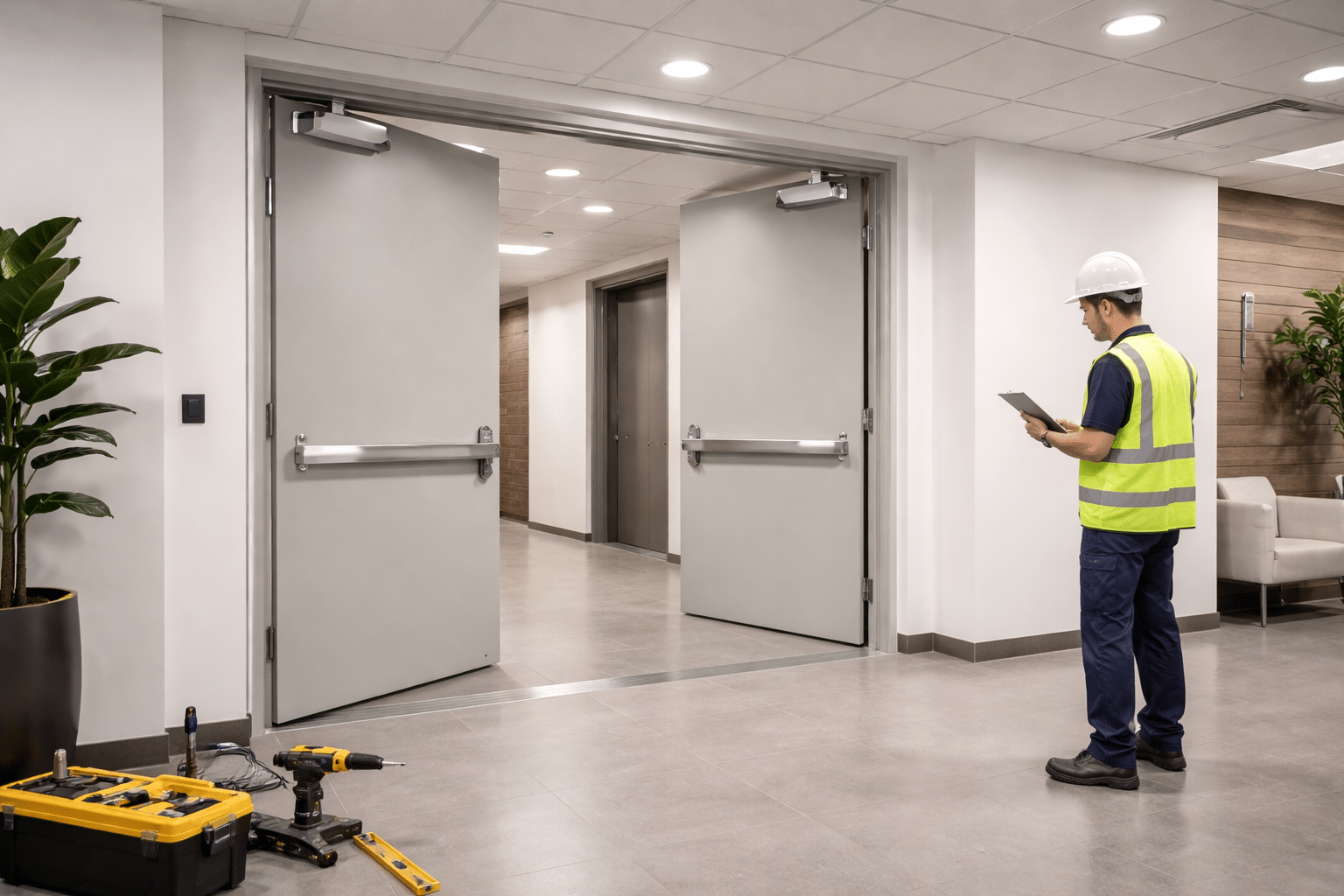
It is worth pointing out a key detail: fire performance is not just about the leaf (the door slab). A compliant fire door is a complete system, usually including the leaf, frame, hinges, latch hardware, seals, and a self-closing device. Solid core fire doors are often used because the door leaf is robust and suits high-traffic internal locations, but it still needs the correct frame and hardware to be compliant.
Where these doors fit best: the “inside the building” workhorses
Solid core fire doors are most often used internally. Think of the places where the building is divided into sections (often called compartments) to stop fire and smoke spreading quickly.
Here are the most common “best fit” zones.
1) Fire stairs and exit pathways
Stairwells and exit routes are prime candidates for Solid core fire doors because they are critical to safe evacuation. These doors are frequently opened and closed, and they take knocks from trolleys, deliveries, and daily foot traffic. A solid core leaf holds up well under that kind of use, while still supporting the required fire rating when installed as a certified set.
2) Corridors in apartments and mixed-use buildings
In strata buildings, common corridors are all about two things: getting residents out quickly and slowing smoke spread between apartments and escape routes. Solid core fire doors are a strong option in these internal corridors because they combine durability with the ability to meet fire door certification requirements, especially when paired with compliant seals and self-closing hardware.
3) Plant rooms, electrical rooms, and riser cupboards
Service areas can be higher risk due to electrical equipment, cabling, and building services. Solid core fire doors are often specified for these rooms to help contain a fire at its source. They also cope well with the heavier duty hardware sometimes needed in these spaces.
4) Basement connections and car park access points
Basements and car parks commonly connect to lobbies, lift cores, and stairs. These transition points are another excellent location for Solid core fire doors because they support compartmentation and help stop smoke moving from lower levels into occupied areas.
5) Fire-isolated lift lobbies and fire compartments
In many commercial and multi-storey residential buildings, lift lobbies and certain corridors are designed as part of the fire separation strategy. Solid core fire doors are frequently used at these boundaries, particularly where reliability and repeatable closing performance are essential.
Where they may not be the best choice
Solid core fire doors are fantastic in the right internal roles, but there are situations where a different solution may suit better:
- External openings exposed to weather: You may need specialised external-grade fire doors, materials, and coatings to handle moisture and temperature changes.
- Very large openings or special access needs: Sliding fire doors or custom engineered solutions can be more appropriate.
- Areas needing high acoustic performance or security: You can sometimes combine features, but it must still remain a certified fire door set, and not all upgrades are automatically compatible.
The takeaway: choose based on the location’s demands and the building’s fire strategy, not just on what looks similar to the eye.
What to check when specifying (or replacing) one
If you manage buildings, coordinate maintenance, or oversee projects, these are the practical things that prevent headaches later.
Fire rating and certification
Solid core fire doors should be sourced and installed as certified fire door assemblies that match the required fire resistance level for that opening. The rating is only meaningful when the complete set is compliant, including frame and hardware.
Correct hardware that matches the fire door system
A fire door is only as good as its parts. Hinges, locks, latches, and closers must be compatible and certified for use on fire doors. Swapping hardware “because it’s similar” is one of the fastest ways to create a compliance issue.
Self-closing function, every time
Fire doors are designed to be closed during a fire. If the door does not fully close and latch, it cannot do its job. This is why door closers, latch alignment, and unobstructed swing paths matter.
Seals and gaps
Perimeter seals and smoke seals play a major role in controlling smoke movement. Gaps around the door can undermine performance, even if the leaf is solid and heavy. Regular inspection helps identify damage, wear, or poor fit before it becomes a problem.
Real-world reasons people choose them (beyond compliance)
It is not all paperwork and regulations. Building teams like Solid core fire doors because they are:
- Sturdy in high-traffic areas: Less denting and warping than lighter doors.
- More stable over time: Helps maintain alignment, latch engagement, and consistent closing.
- Easier to maintain as part of a planned program: When you standardise internal doors across a site, ongoing servicing can be simpler.
In other words, they tend to behave well in busy buildings, which is exactly where you want dependable performance.
Maintenance: the quiet key to staying compliant
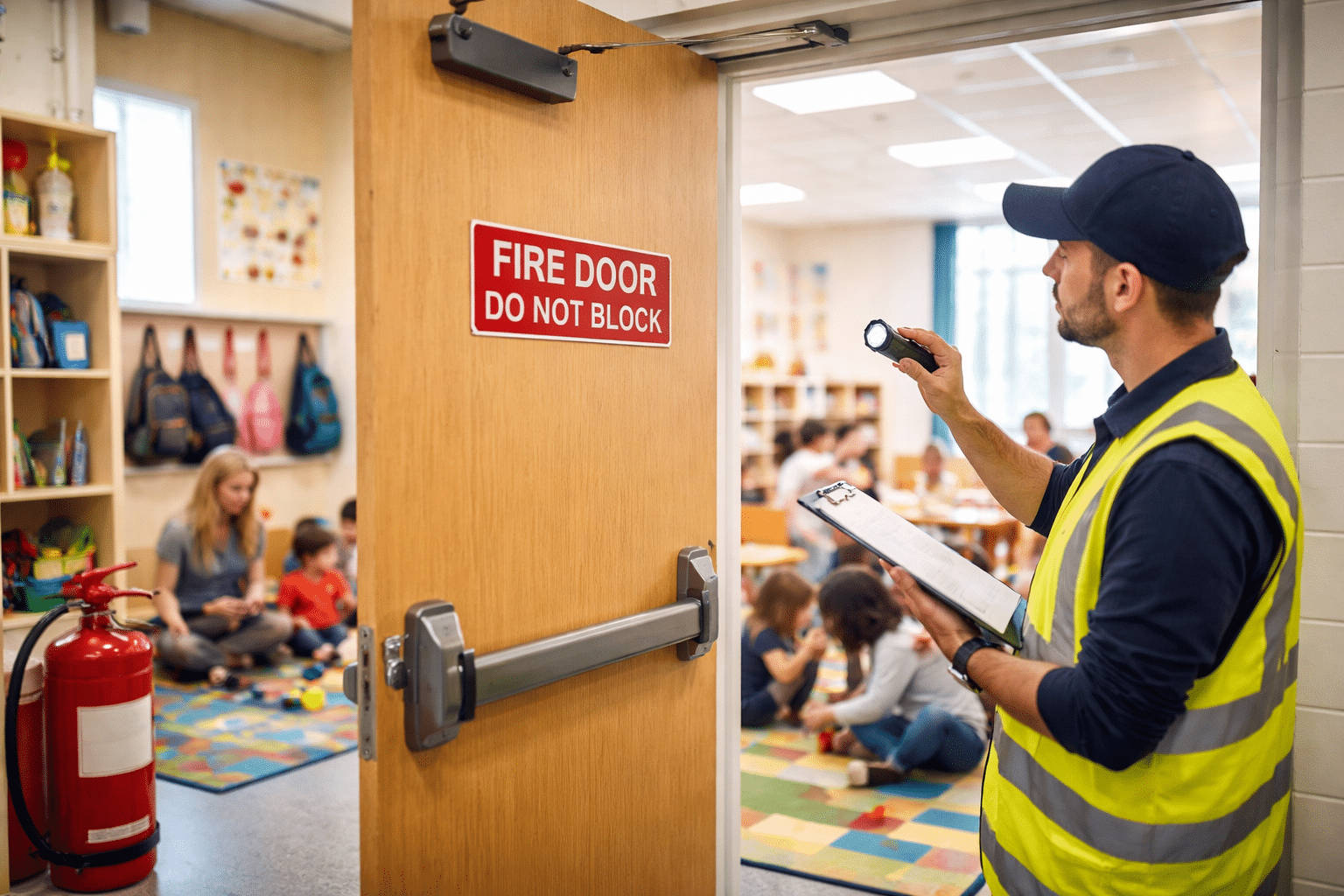
Even the best door can drift out of adjustment. Closers lose tension, seals wear, hinges loosen, and repeated impact can knock alignment out. For strata and commercial property managers, regular inspection and maintenance is what keeps doors working properly and supports documentation needed for building compliance processes.
A practical approach is to schedule routine inspections, log any defects, and prioritise repairs that affect closing and latching. Solid core fire doors are reliable, but they still need care, especially in high-use corridors and stairwells.
A quick, practical checklist for “best fit” decisions
If you are deciding where Solid core fire doors make the most sense, ask:
- Is this opening part of an exit route, stairwell, or corridor?
- Does it separate a higher-risk room (plant, electrical, services) from occupied spaces?
- Will the door see heavy daily use from residents, tenants, or staff?
- Do we need a robust door leaf that stays true over time?
- Can we install it as a complete certified assembly with compliant hardware?
If you answered yes to several of these, you are looking at a strong use case.
How CFS Can Help
If you are managing a strata complex, commercial site, or an active project in Sydney, Comprehensive Fire Services (CFS) can help you choose the right door type for each location, supply and install certified assemblies, and keep them working properly with ongoing inspections and maintenance. That means fewer surprises, clearer documentation, and doors that do what they are meant to do when it matters most.