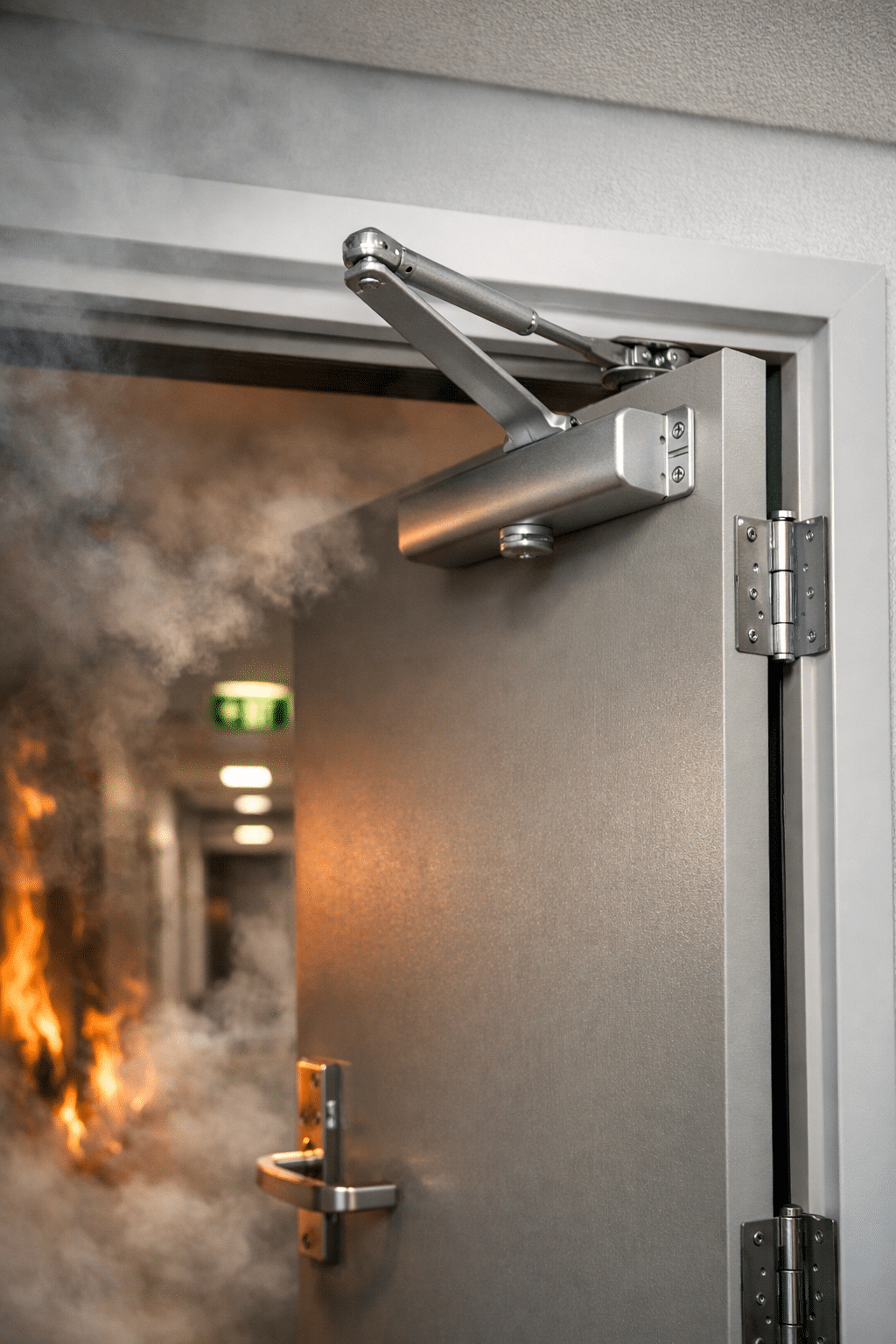
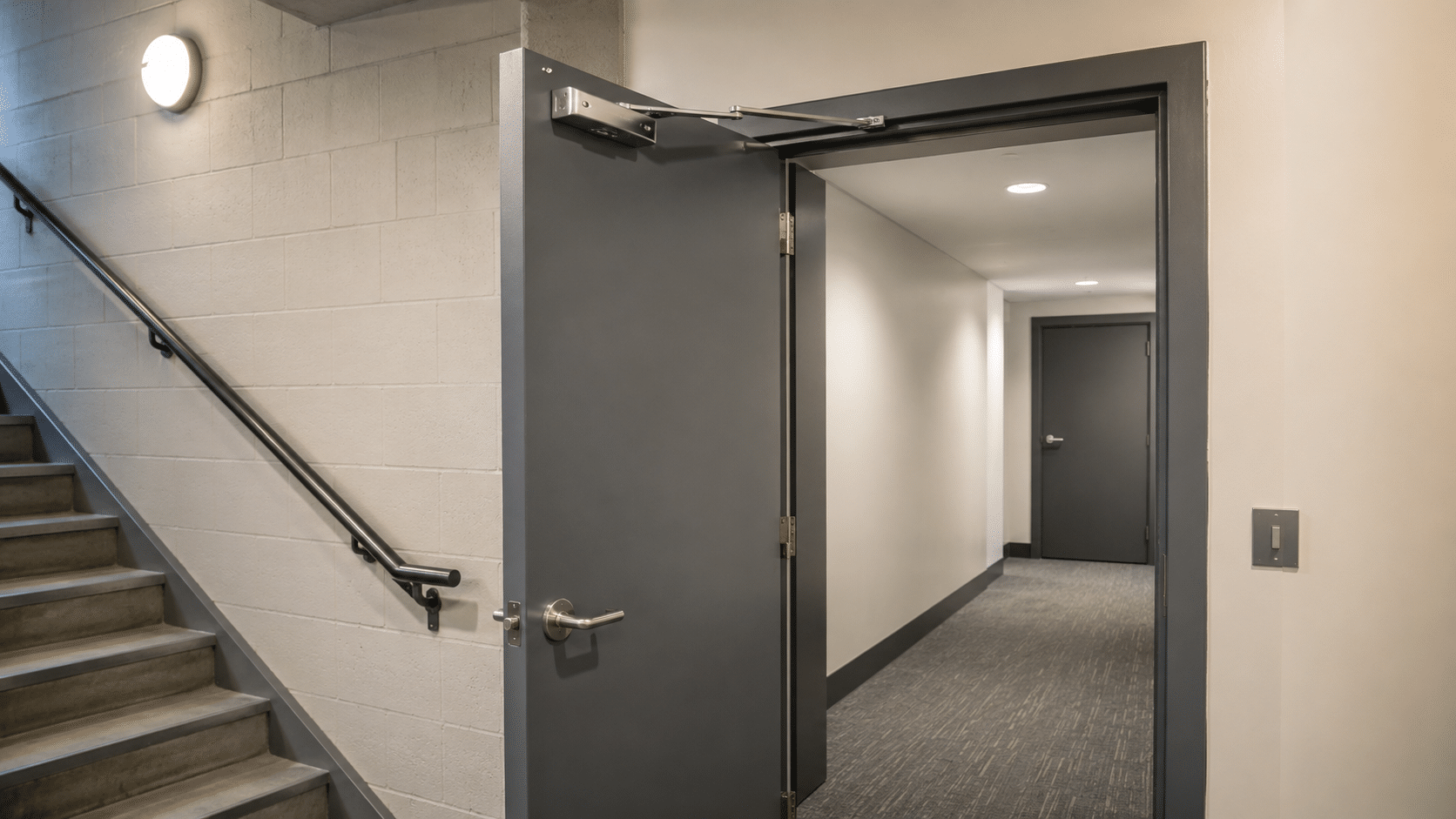
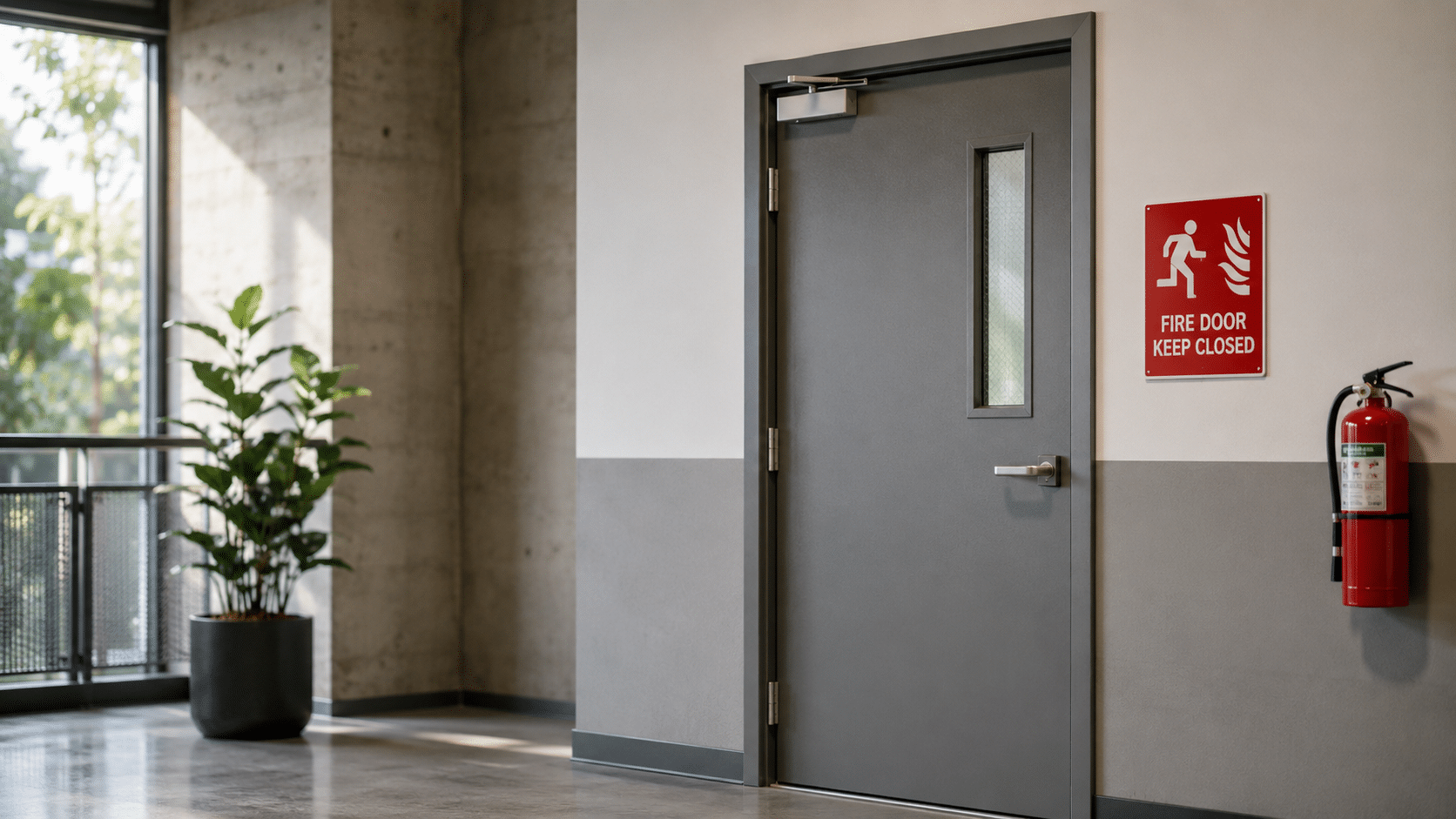
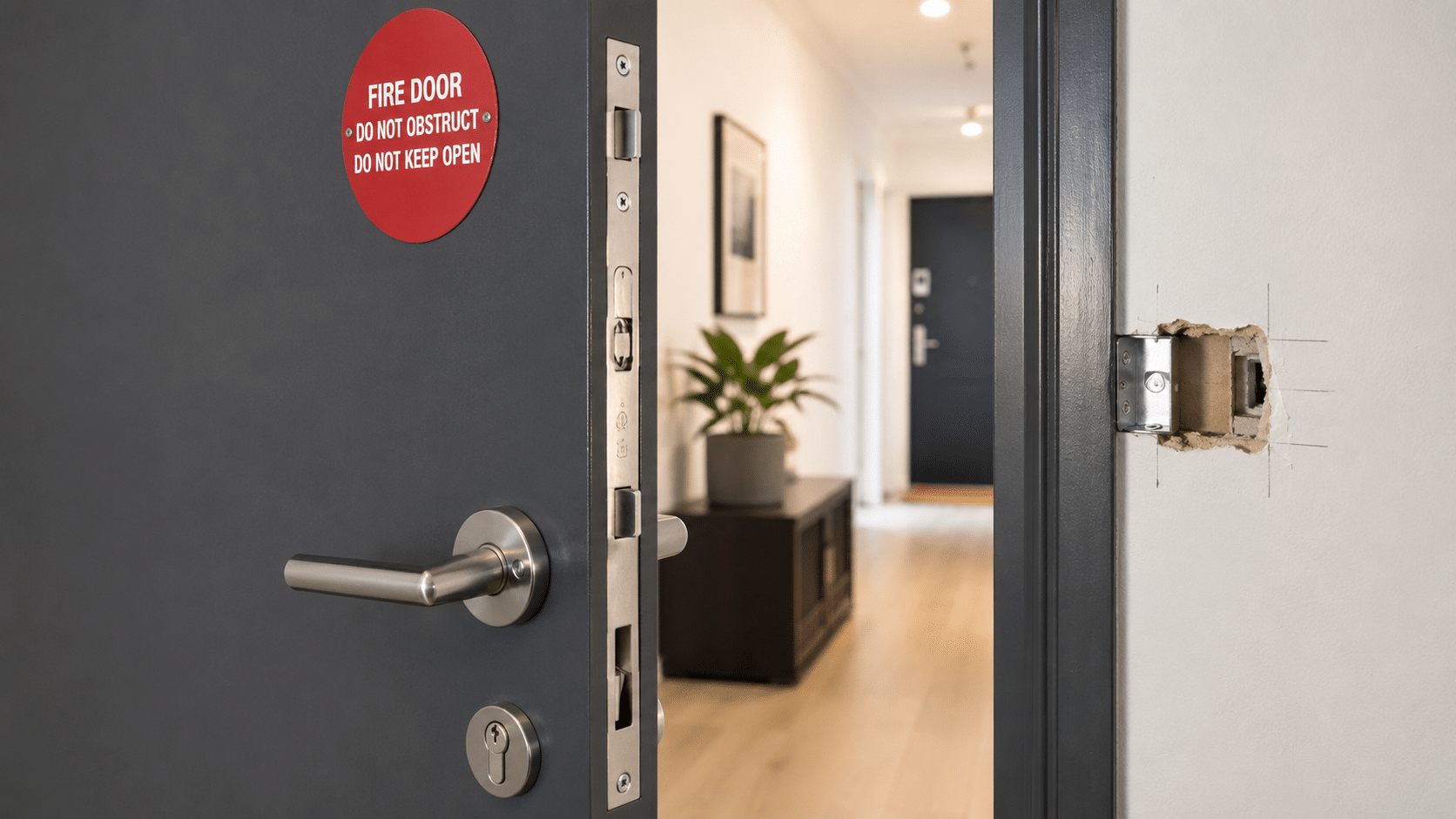
Self-closing mechanisms are one of those fire door features that only get noticed when something goes wrong. For strata managers, building managers, builders, and compliance teams, they matter because a fire door only works properly when it closes and latches as intended. If a fire door stays open, even slightly, it can no longer do its job of slowing the spread of smoke and fire through the building. That basic function sits at the heart of fire door performance and compliance in Australia.
What Is the Purpose of a Self-Closing Mechanism?
A fire door is not just a heavy door with a label on it. It is part of a tested door assembly designed to resist fire and smoke for a set period. That assembly includes the door leaf, frame, seals, hardware, and the parts that help it shut properly. Self-closing mechanisms are not an optional extra. They are one of the key components that allow the door to return to a closed position after someone passes through. Without them, the fire door may be left open and unable to perform as intended in an emergency.
Why Fire Doors Must Close Automatically
In an emergency, people are often stressed, distracted, or moving quickly. No one should have to rely on memory or perfect behaviour for a fire door to work. In offices, apartment buildings, warehouses, and plant rooms, doors are used constantly throughout the day. Someone carrying boxes, pushing a trolley, or rushing between jobs may not close the door behind them. That is where self-closing mechanisms become so important. They make sure the door closes after use and help maintain compartmentation, which means keeping fire and smoke contained to one area for as long as possible.
How Self-Closing Mechanisms Improve Safety
The main purpose of a fire door is to protect people and property by slowing the spread of smoke and fire. If a door does not shut properly, that protection is weakened straight away. Self-closing mechanisms help the door return to the frame and latch correctly, which supports the overall performance of the fire door system. This can make a major difference in protecting escape paths such as corridors, stairwells, and exits, giving occupants more time to evacuate safely.
Why Smoke Control Matters So Much
Many people think fire doors are mainly about stopping flames, but smoke is often just as dangerous. In some situations, smoke can spread faster than fire and reduce visibility within minutes. A door that has been left open can allow smoke to move through the building much more easily. Self-closing mechanisms help reduce this risk by ensuring the fire door shuts properly after each use. That simple action can help preserve safer access to exits and reduce the danger for occupants and emergency responders.
Why Compliance Depends on Proper Closing
Compliance is another major reason these mechanisms matter. Fire doors in Australia must meet strict requirements, and that includes having the correct hardware fitted and functioning as intended. Self-closing mechanisms are part of that compliance picture because a fire door that does not self-close may not meet inspection requirements. For strata managers, builders, and commercial property managers, that can create unnecessary problems during routine inspections, annual fire safety checks, or defect reporting. A properly functioning closer helps reduce compliance risks and supports peace of mind.
Common Problems with Self-Closing Mechanisms
Like any hardworking hardware, closers can wear down over time. Doors may begin to slam, stick, drift, or fail to latch properly. These issues may be caused by age, incorrect adjustment, frequent use, or damage. In busy buildings, this wear and tear can happen gradually and go unnoticed until an inspection highlights the fault. That is why self-closing mechanisms should be checked regularly as part of fire door maintenance. Waiting until there is a problem often leads to more disruption, more cost, and more stress.
Why Fire Doors Should Never Be Wedged Open
One of the most common issues in real buildings is fire doors being wedged open for convenience. It might seem harmless in a busy hallway or work area, especially when people want better airflow or easier access, but it completely defeats the purpose of the fire door. Self-closing mechanisms cannot do their job if the door is being held open by a wedge or another object. If a door genuinely needs to stay open during normal use, there are compliant hold-open devices available that release automatically when required. That is a far safer option than bypassing the system.
Why Maintenance Should Never Be Overlooked
Routine maintenance plays a big role in keeping fire doors effective. It is not enough to simply install a compliant fire door and assume it will always perform properly. Self-closing mechanisms need ongoing attention to make sure they are adjusted correctly and still operating as intended. Regular inspections can pick up issues early, such as loose hardware, slow closing speed, or poor latching. Fixing these problems early is usually much easier than dealing with urgent rectification later.
What Building Managers Should Keep in Mind
For building managers and strata managers, the best approach is to treat the closer as essential safety hardware rather than a small finishing touch. Staff and occupants should be reminded not to tamper with fire doors, maintenance teams should know what to look for, and any sign of poor performance should be investigated quickly. Self-closing mechanisms are easy to overlook because they work in the background, but they are one of the most important parts of the whole fire door system.
Why Self-Closing Mechanisms Matter Every Day
At the end of the day, fire doors are there to buy time, protect escape paths, and help reduce the spread of danger through a building. None of that works well if the door does not reliably return to a closed position after use. That is why self-closing mechanisms deserve serious attention from anyone responsible for building safety, maintenance, or compliance. They may not be the flashiest part of a fire door, but they are certainly one of the hardest working.
If your building needs help with inspections, compliant hardware, maintenance, or fire door rectification, Comprehensive Fire Services can help keep your fire doors operating as they should across strata, commercial, and industrial properties.