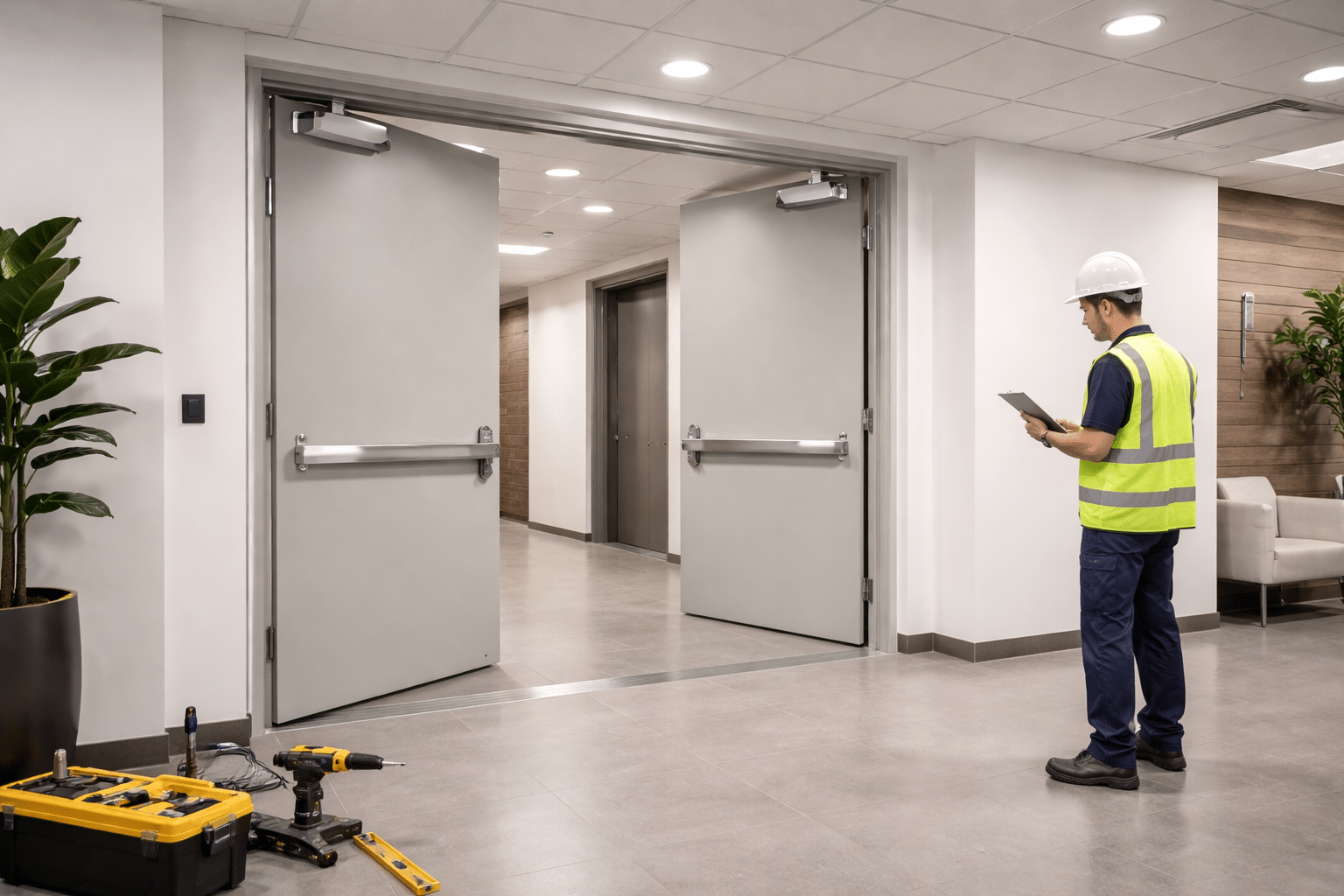
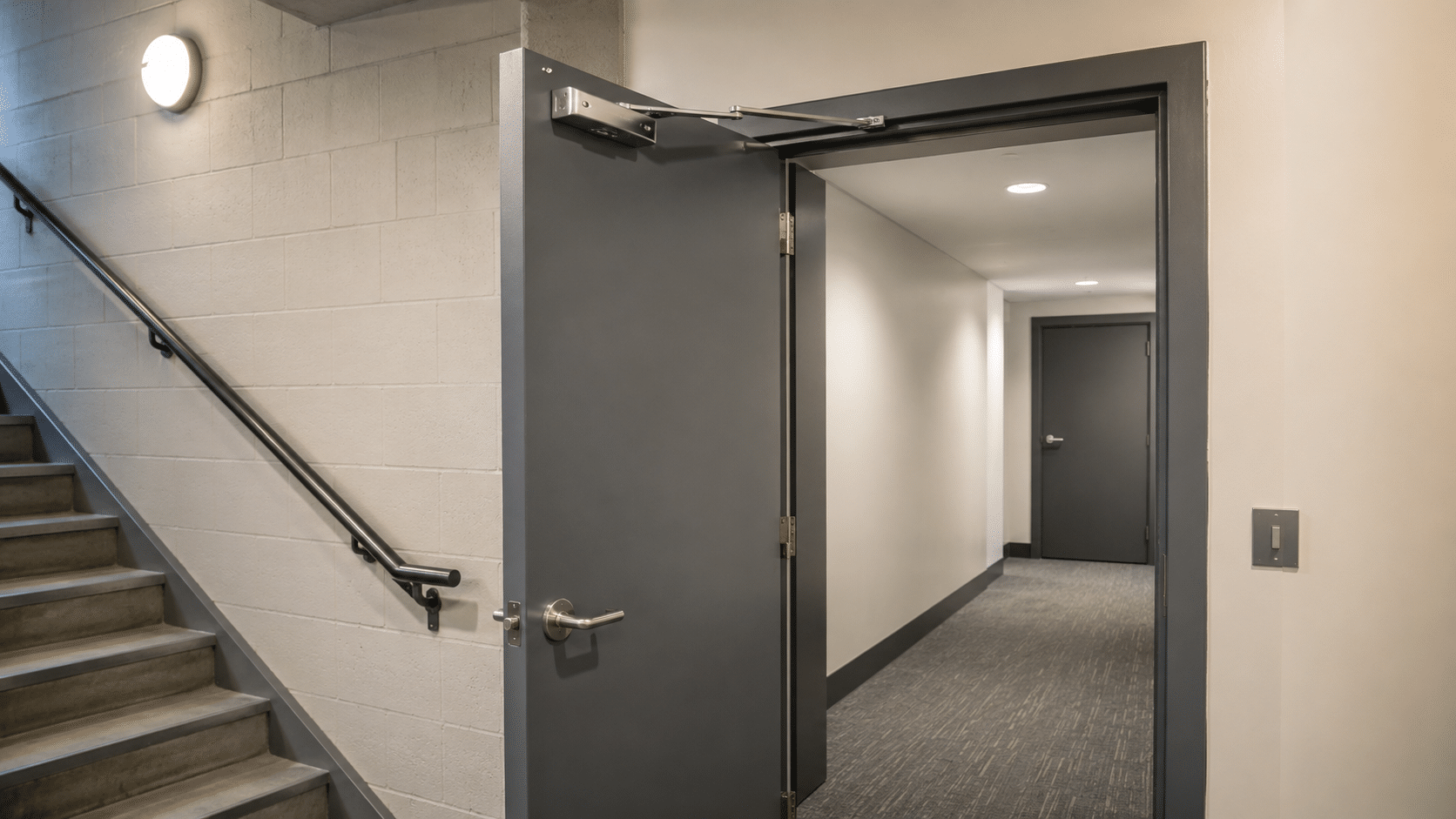
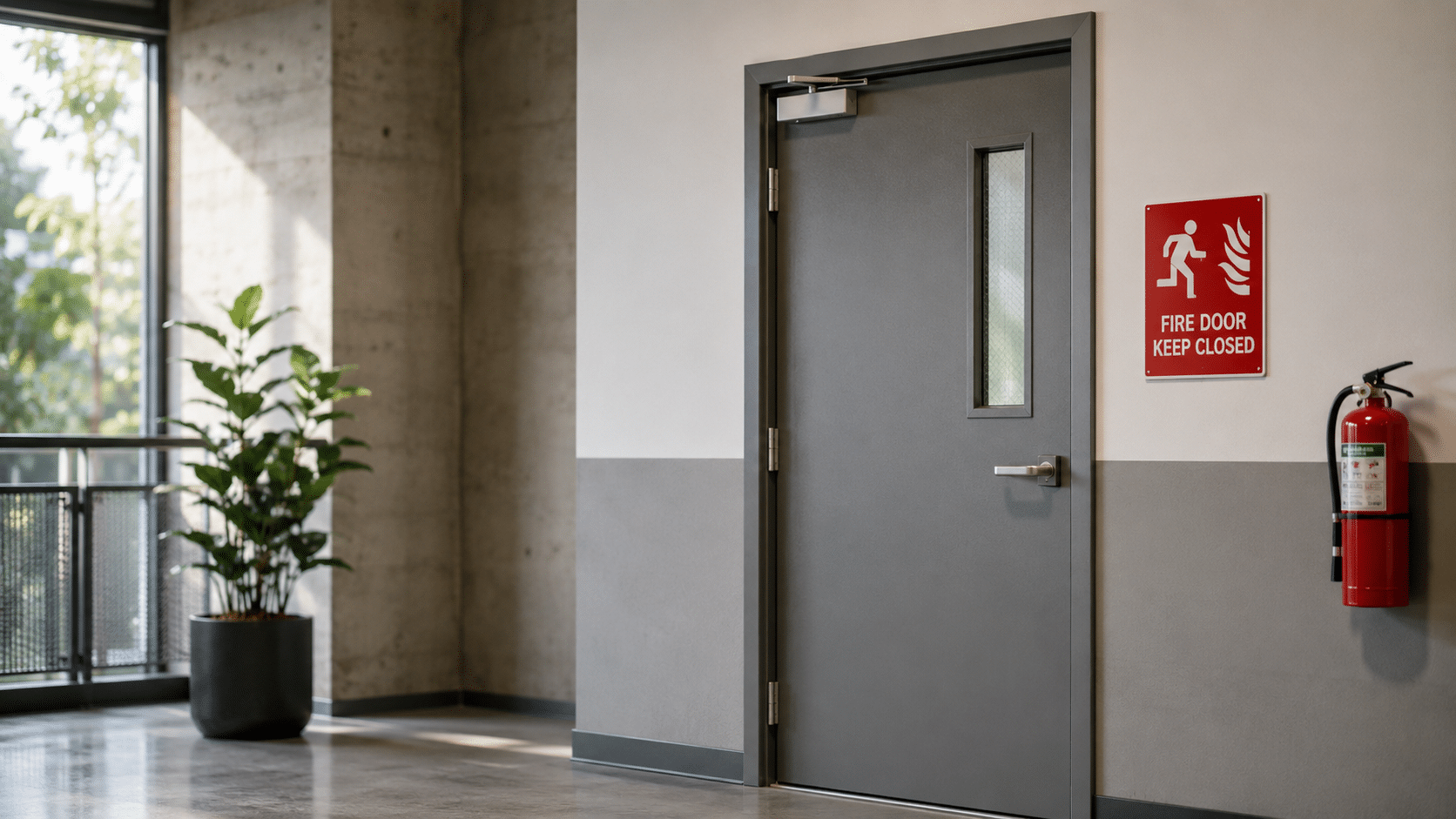
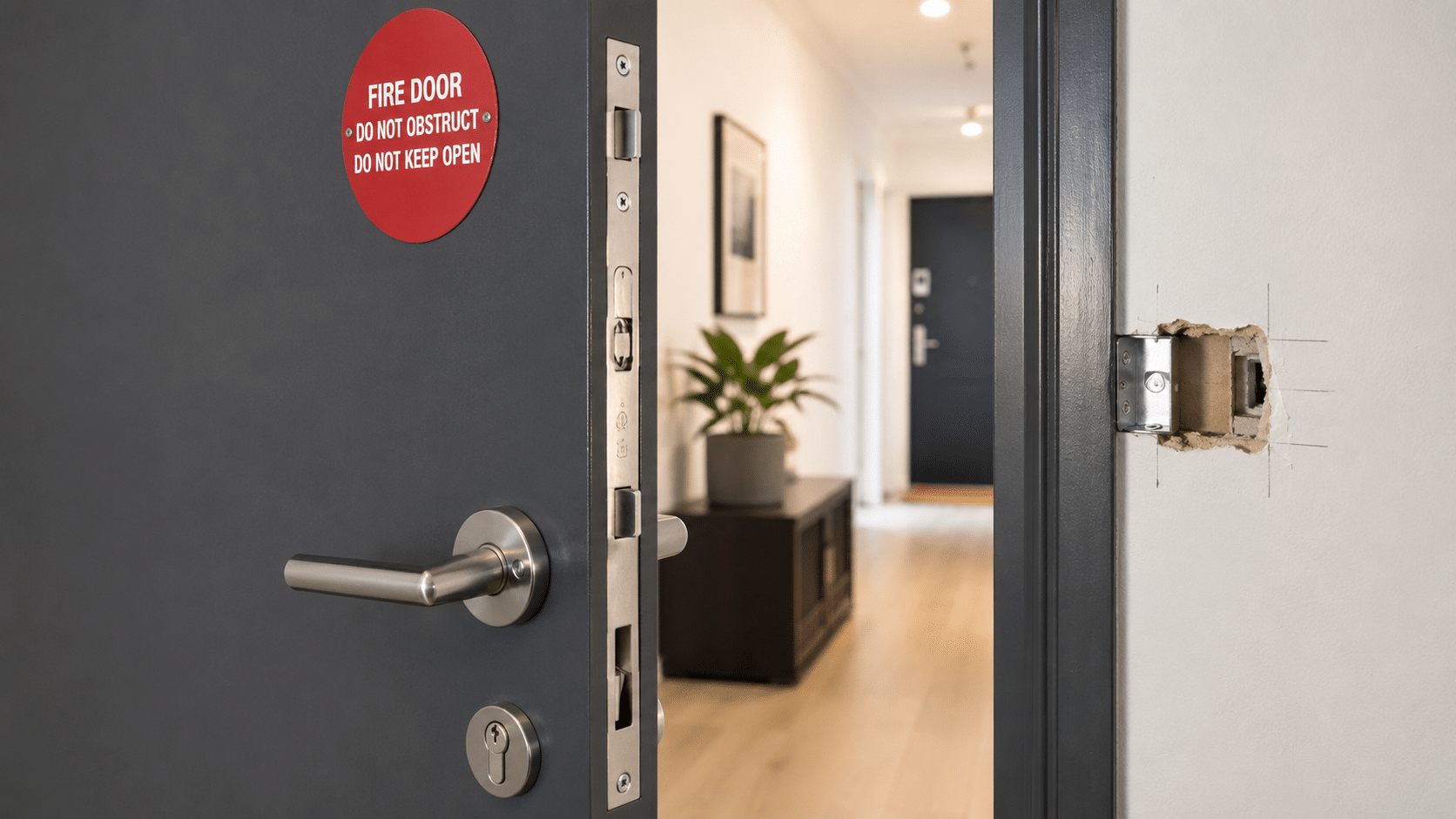
Fire door positioning plays a bigger role in compliance than many people realise. When a fire door is installed within a full wall opening, the exact location of the door set can affect clearance, swing, hardware performance, smoke control, and the way the whole opening behaves in an emergency. It is not simply a matter of making the door fit and moving on.
For strata managers, builders, and property professionals, this area can be frustrating because fire door positioning may look perfectly fine at first glance. It opens, it closes, and everyone goes home happy. But if the set-out is wrong, small problems can start showing up quickly. The latch may not engage cleanly, the closer may struggle, gaps may become an issue, or the opening may no longer perform the way it was intended to.
Why Fire Door Positioning Matters
In a full wall opening, the surrounding space often gives installers more room to work with, but that extra space can also create more room for mistakes in fire door positioning. The frame might be pushed too far to one side, recessed too deeply, or placed without enough thought for adjoining walls, ceilings, skirtings, services, or traffic flow. Good planning helps the door work as a complete system rather than a loose collection of parts.
This matters because fire doors are there to slow the spread of fire and smoke. They are also expected to work reliably in day to day use. In busy buildings, fire door positioning affects how easily doors are opened by residents, staff, contractors, and visitors. If the opening is awkward, people notice. If the door drags, clips, or feels heavy to use, they notice that too. And when people get annoyed with a door, they often start propping it open or forcing it, which creates a whole new problem.
Common Fire Door Positioning Mistakes
One of the most common issues is placing the frame without thinking about the finished wall build-up. On paper, the opening size may seem right. On site, once finishes are added, the door can end up looking off-centre or sitting too tight to an adjacent surface. That can affect both appearance and function.
Another common mistake is ignoring how the door will swing through the space. Fire door positioning can seem correct on paper, but a door might technically fit the opening and still open into a handrail, cupboard, glazing, or corridor pinch point. In some cases, the closer arm or other hardware ends up in an awkward spot, making maintenance harder than it needs to be.
Poor fire door positioning can also lead to clearance problems at the head, jambs, or threshold. Those details matter more than many people expect. Even a small issue can affect how neatly the leaf closes, how well the latch lines up, and whether the door continues to perform properly over time.
Then there is the human factor. In buildings with frequent traffic, door placement needs to make sense for the way people actually move. If the opening feels clumsy or restrictive, users will work around it. That is never a good sign in a safety-critical part of the building.
Planning Fire Door Positioning in Full Wall Openings
The best approach is to treat the opening as part of the building layout, not just a hole waiting for a door. Before installation, fire door positioning should be reviewed alongside the wall type, finished dimensions, floor levels, nearby services, and the direction of travel. It is also smart to think about cleaning access, trolley movement, and how the opening will be used during a normal day.
In many commercial and strata settings, symmetry also matters. A door set that is badly placed in a wide wall opening can look unfinished, even if it technically functions. That visual issue may seem minor, but it often points to rushed planning elsewhere. Good fire door positioning usually looks right because it has been thought through properly from the start.
Another useful step is checking that the selected frame and door arrangement suit the opening itself. Fire door positioning should never be treated as a one-size-fits-all decision. The wall construction, the intended rating, and the hardware package all need to work together. The more complex the site, the more valuable early coordination becomes.
It is also worth remembering that future maintenance matters. A door placed hard against an awkward surface may be much more difficult to inspect, adjust, or repair later. A small improvement during set-out can save plenty of hassle down the track.
How to Check Fire Door Positioning on Site
A practical site check does not need to be overly complicated. Start by looking at the frame in relation to the full opening. Does it sit where you would expect? Is it centred or intentionally offset for a clear reason? Does the swing path make sense? Is there enough room for hardware to operate properly without interference?
Next, look at the gaps and alignment. The door should close smoothly and consistently. It should not bind, slam, or need a shove to latch. The closer should control the leaf without looking like it is fighting the installation. If something feels off, it usually is.
When reviewing fire door positioning, it also helps to step back and look at the opening from both sides. A problem that is not obvious from one angle can stand out immediately from another. This is especially true in corridors, lobbies, service areas, and plant access zones where surrounding elements compete for space.
Take note of flooring transitions as well. Small level changes can affect thresholds, door swing, and long-term wear. In older buildings, this is especially common. What looked square when measured from one point can become a problem once the full opening is assessed properly.
When to Get Expert Help with Fire Door Positioning
If a project includes non-standard openings, refurbishments, unusual wall conditions, or high-traffic areas, expert input is worth getting early. Fixing a badly positioned fire door after installation is always more expensive than setting it out correctly in the first place.
The same goes for buildings preparing for inspections, rectification works, or annual compliance requirements. A door that appears serviceable may still need attention if the installation compromises performance or maintenance access. Clear advice can help avoid repeat call-outs, patch-up fixes, and unnecessary disruption to tenants or occupants.
For builders, early coordination supports smoother handover. For strata and property managers, it supports fewer headaches later. That is why fire door positioning should never be treated as a minor detail in a full wall opening. It affects compliance, safety, usability, and how well the door system holds up over time.
Done well, the result is simple. The door looks right, closes properly, suits the space, and does the job it is there to do. No drama, no awkward workarounds, and no unpleasant surprises during inspection.
If your site includes large openings, tricky wall conditions, or doors that just do not seem to sit right, Comprehensive Fire Services can help assess the opening, recommend the right solution, and improve fire door positioning so the installation works properly for compliance and daily use.