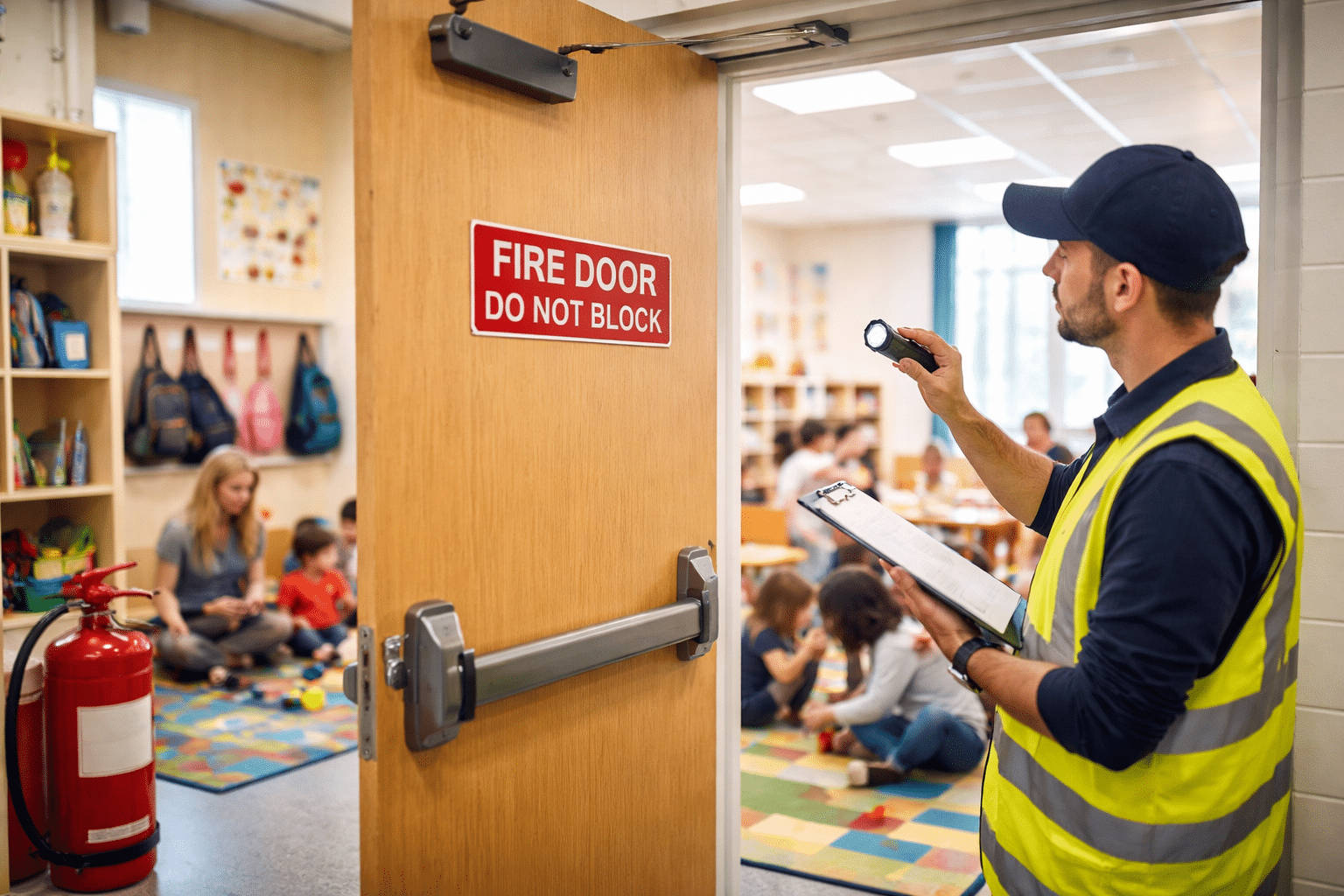
Schools and childcare centres carry a special duty of care. On any given day, they may have classrooms full of students, sleeping babies in nursery rooms, busy drop-off zones, food preparation areas, storerooms, and staff moving between buildings. In that environment, fire doors do far more than sit quietly in a frame. They help slow the spread of fire and smoke, protect escape paths, and support safer evacuation. In Australia, fire doors used where required by the building rules must meet specific construction requirements, including compliance with AS 1905.1, and they form part of broader fire safety obligations that are checked as part of building compliance.
For managers, principals, operators, and maintenance teams, the challenge is often not understanding that fire doors matter. It is knowing what good fire door management actually looks like day to day. The good news is that it does not need to be overly complicated. With the right checks, good habits, and prompt maintenance, schools and childcare sites can stay safer and more compliant without turning every inspection into a drama.
Where Schools and Childcare sites often get caught out
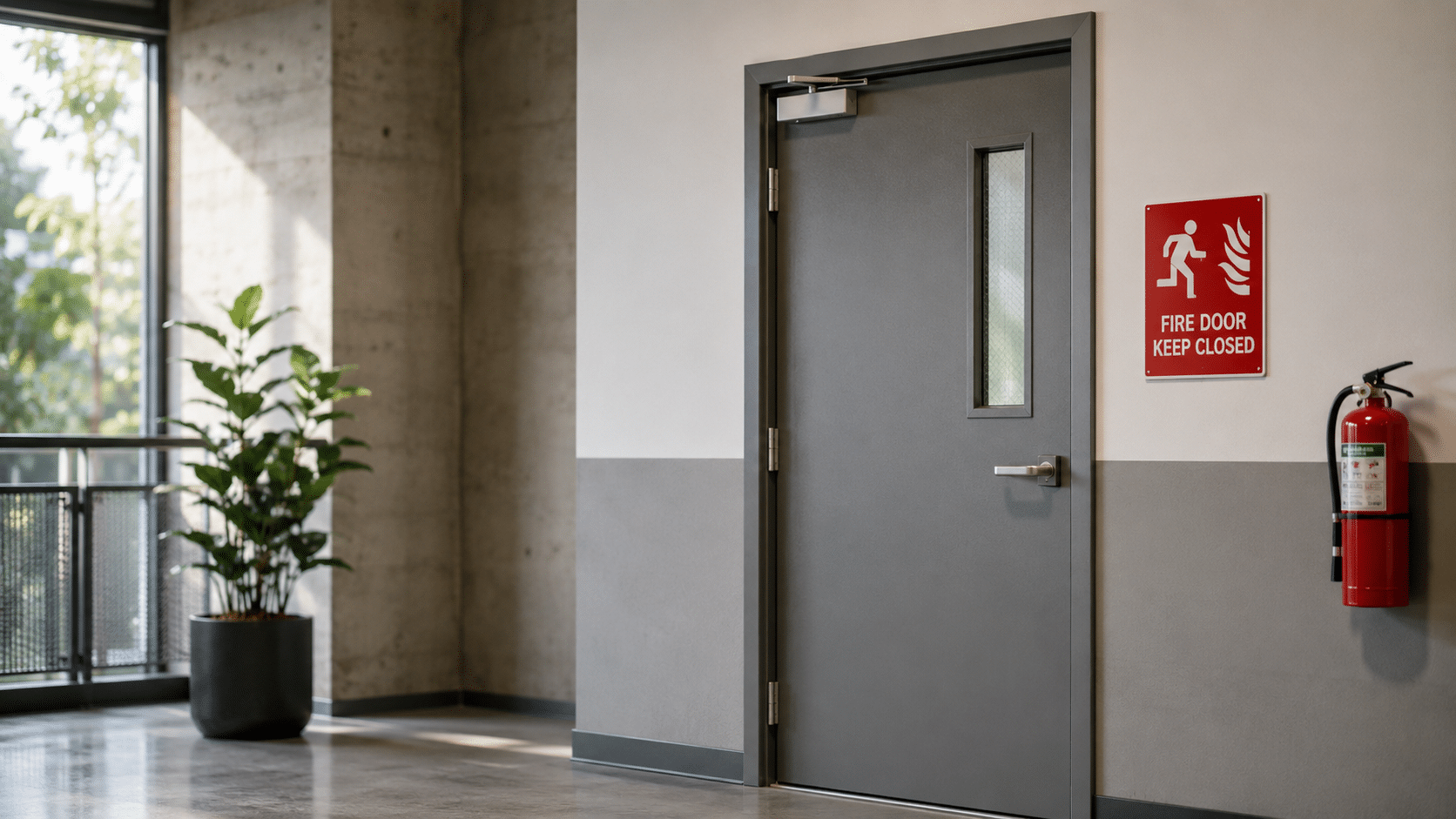
In education settings, buildings are constantly in use. Doors get opened all day, furniture gets moved, prams and trolleys pass through entries, and staff may prop open doors for convenience during busy periods. That is where problems begin. A fire door only works properly when the complete door set is in good condition and able to close and latch as intended. Queensland Fire Department guidance notes that fire doors restrict the spread of smoke, flames and toxic gases when closed, and that they are required to be self-closing and latching.
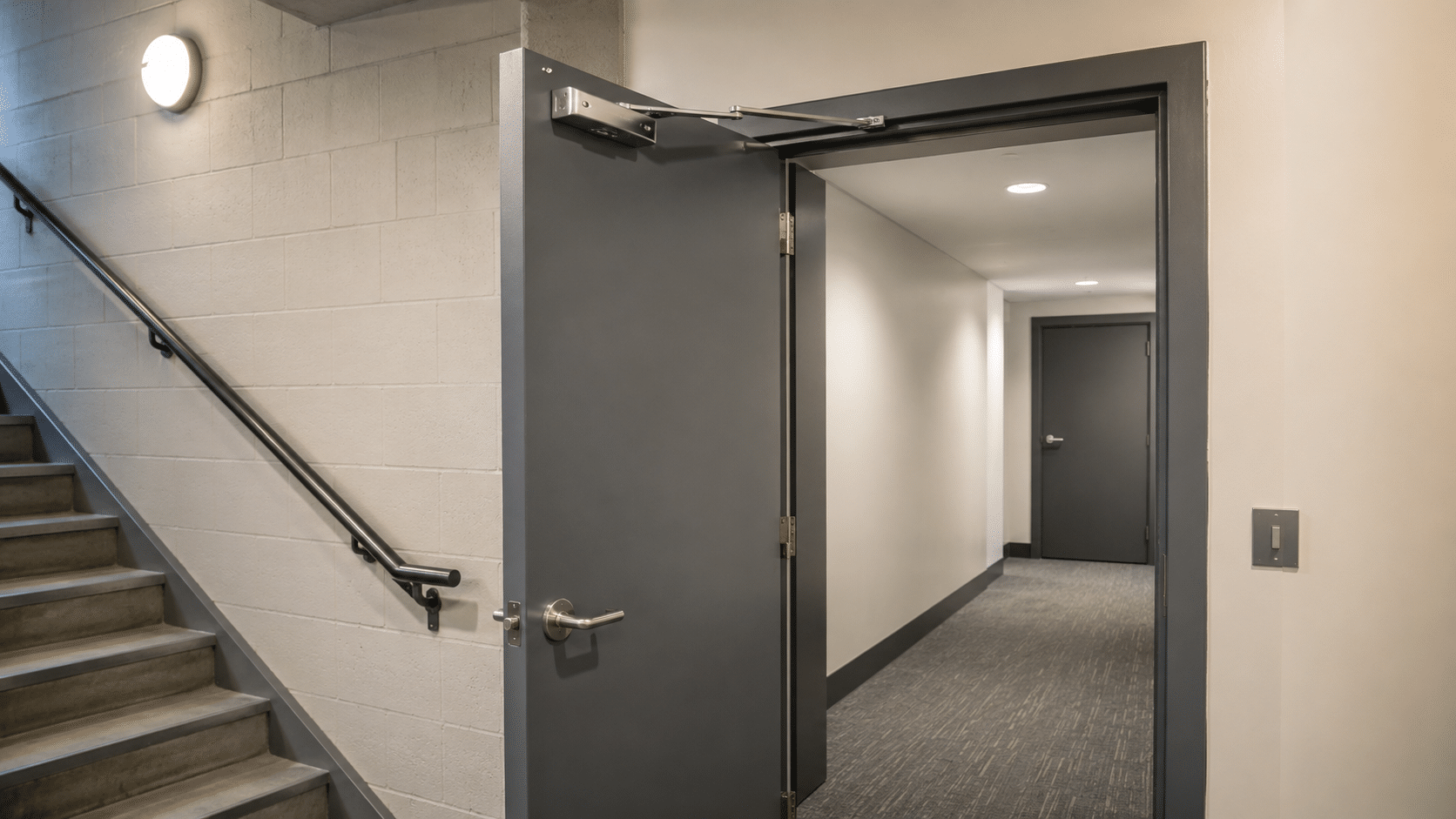
That means a fire door is not just the door leaf itself. It includes the frame, hardware, closer, latch, seals and identification tags. If one part has been changed, damaged or removed, the door may no longer perform the way it should. In schools and childcare environments, common causes of trouble include door closers being disconnected, seals wearing out, hold-open habits, damage from trolleys, and unauthorised modifications after fit-outs or repairs.
Why Schools and Childcare fire doors need regular attention
A common misconception is that if a fire door looks fine, it must be fine. Unfortunately, that is not always true. A door can appear normal while still failing to close fully, rubbing on the frame, missing its tag, or not latching correctly. These faults are easy to miss in a busy facility, especially when the site team is juggling many other priorities.
Routine inspections matter because they help spot issues before they become expensive or dangerous. NSW fire safety certification guidance explains that annual fire safety statements involve verification of applicable fire safety measures and confirmation of compliance for exit systems. CFS also highlights that regular fire door maintenance and professional inspections support compliance and safer escape routes. For schools and childcare operators, that means checking doors before a problem becomes a failed inspection item or a safety risk.
Practical checks usually include whether the door closes smoothly from a fully open position, whether it latches without force, whether seals are intact, whether signage is appropriate, whether the frame and leaf are undamaged, and whether there has been any change to hardware or glazing. It is also wise to keep good records, because paperwork often matters just as much as the repair itself when compliance is reviewed.
Common fire door issues in Schools and Childcare
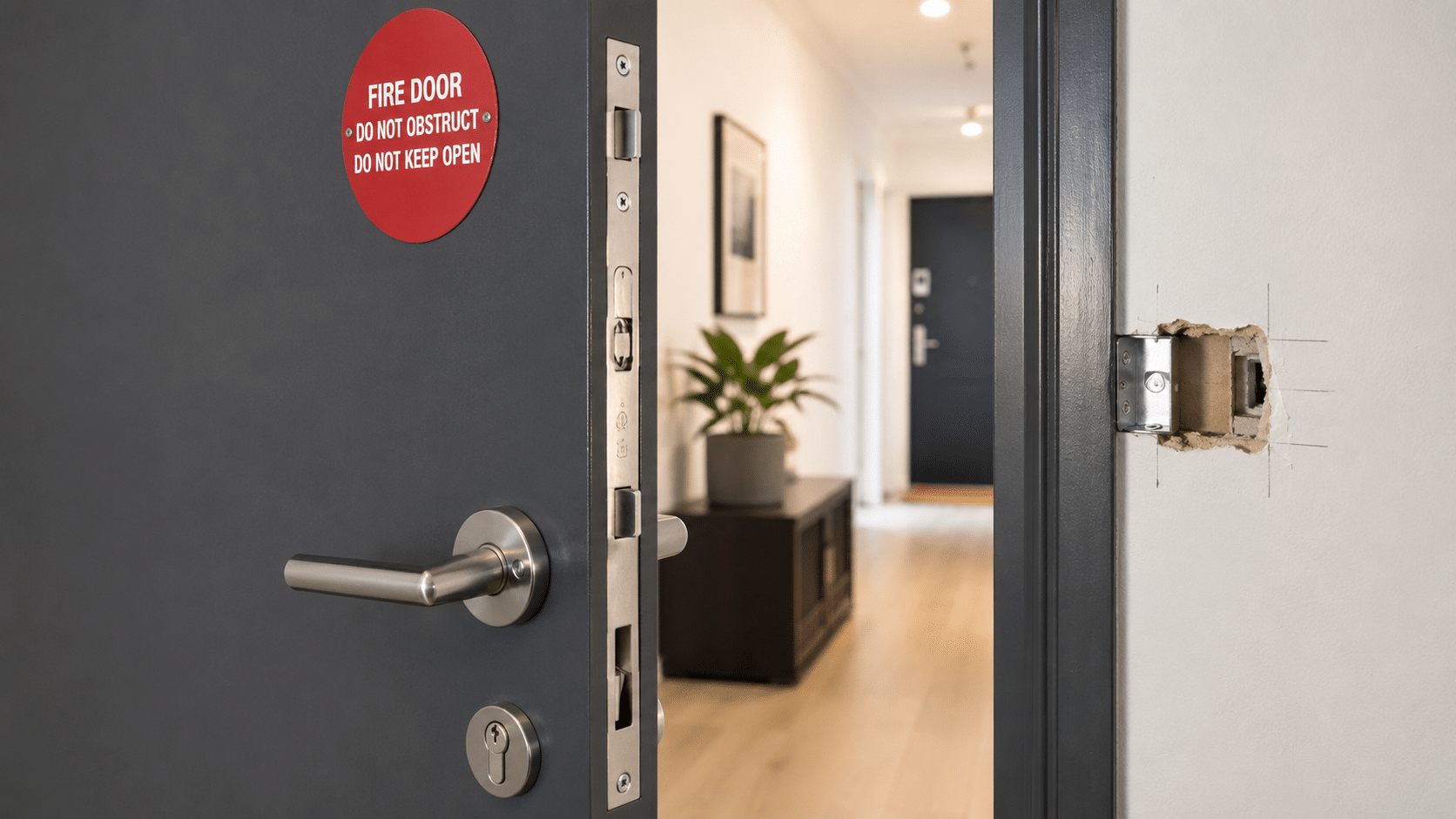
Some problems show up again and again across education and care sites. Doors are propped open with bins or wedges because staff need easier movement during peak periods. Art displays, storage units or bags are placed too close to doors. Hardware is changed after wear and tear, but the replacement is not suitable for a fire-rated door set. A closer becomes weak and the door stops shutting properly. Even a small gap issue can create a much bigger compliance headache later.
In schools and childcare settings, there is also the practical reality of caring for young children. Staff may worry that a heavier self-closing door is inconvenient, noisy, or difficult during busy transitions. That is understandable, but convenience cannot override fire safety performance. The better approach is to look at approved solutions and proper maintenance so the door works safely while still being practical for daily use.
Another point worth remembering is that fire doors protect more than the room they serve. They help maintain compartmentation through the building. The National Construction Code sets requirements for required fire doors and references AS 1905.1 for performance and construction. That is why small faults should not be brushed aside as minor wear and tear.
Training tips for Schools and Childcare teams
The best fire door program is not just about trades and inspections. It also depends on staff habits. Teachers, carers, cleaners, facilities teams and contractors should all understand that a fire door is a safety device, not just a normal door. A short site briefing can go a long way.
For schools and childcare teams, training should cover simple points. Do not prop fire doors open unless there is an approved compliant system. Do not stick decorations, hooks or extra hardware on the door without checking first. Report any slamming, sticking, damage, missing tags or failed latching straight away. Keep exits and door paths clear. Make sure outside contractors know they cannot alter a fire-rated door set without proper approval.
This kind of awareness creates fewer faults, fewer surprises during inspections, and better protection for children, staff and visitors. It also helps decision-makers plan maintenance budgets properly instead of dealing with urgent rectification at the worst possible time.
When fire door care becomes part of normal building management, compliance feels much less overwhelming. That is especially true in facilities with multiple rooms, changing occupancy, and regular wear from heavy daily use.
Schools and childcare operators who stay proactive usually find the process much easier. Regular inspections, clear reporting, prompt repairs and sensible staff training all make a real difference. If your site has ageing doors, recurring faults, or questions about compliance, it is worth getting specialist advice early. Comprehensive Fire Services provides fire door inspections, maintenance, repairs and compliance support for Sydney sites, helping building managers and operators keep essential fire safety measures in working order.