Fire rated doors are designed to slow the spread of fire and smoke, giving people more time to evacuate and helping protect the rest of the building. But from a quick glance, not every compliant door looks obvious. Some blend in with standard doors, while others look heavy-duty but still may not meet the right requirements.
That can be a real headache for strata managers, facility managers, and property owners. You do not want to assume a door is compliant just because it looks solid. A door only does its job when the whole assembly has been made, installed, and maintained correctly.
Start with the identification tag
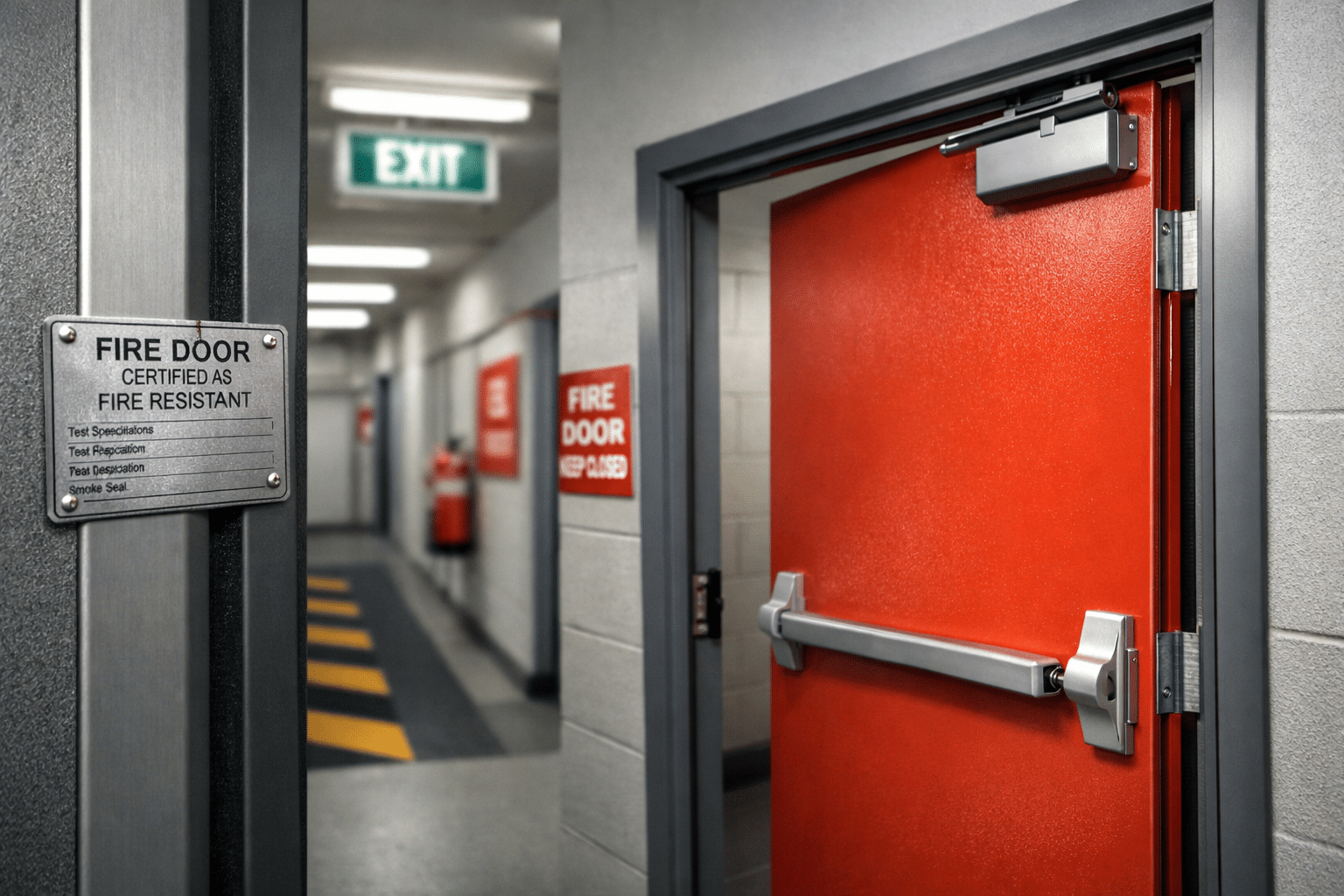
The easiest way to tell if a door is fire rated is to start with the identification tag or label. In many buildings, this is one of the clearest clues. The tag is usually fixed to the door or frame and provides information that helps confirm the door was manufactured or certified as part of a compliant fire door set. If there is no visible tag, or the label has been painted over, damaged, or removed, that should raise a red flag straight away.
Check the whole door set, not just the door leaf
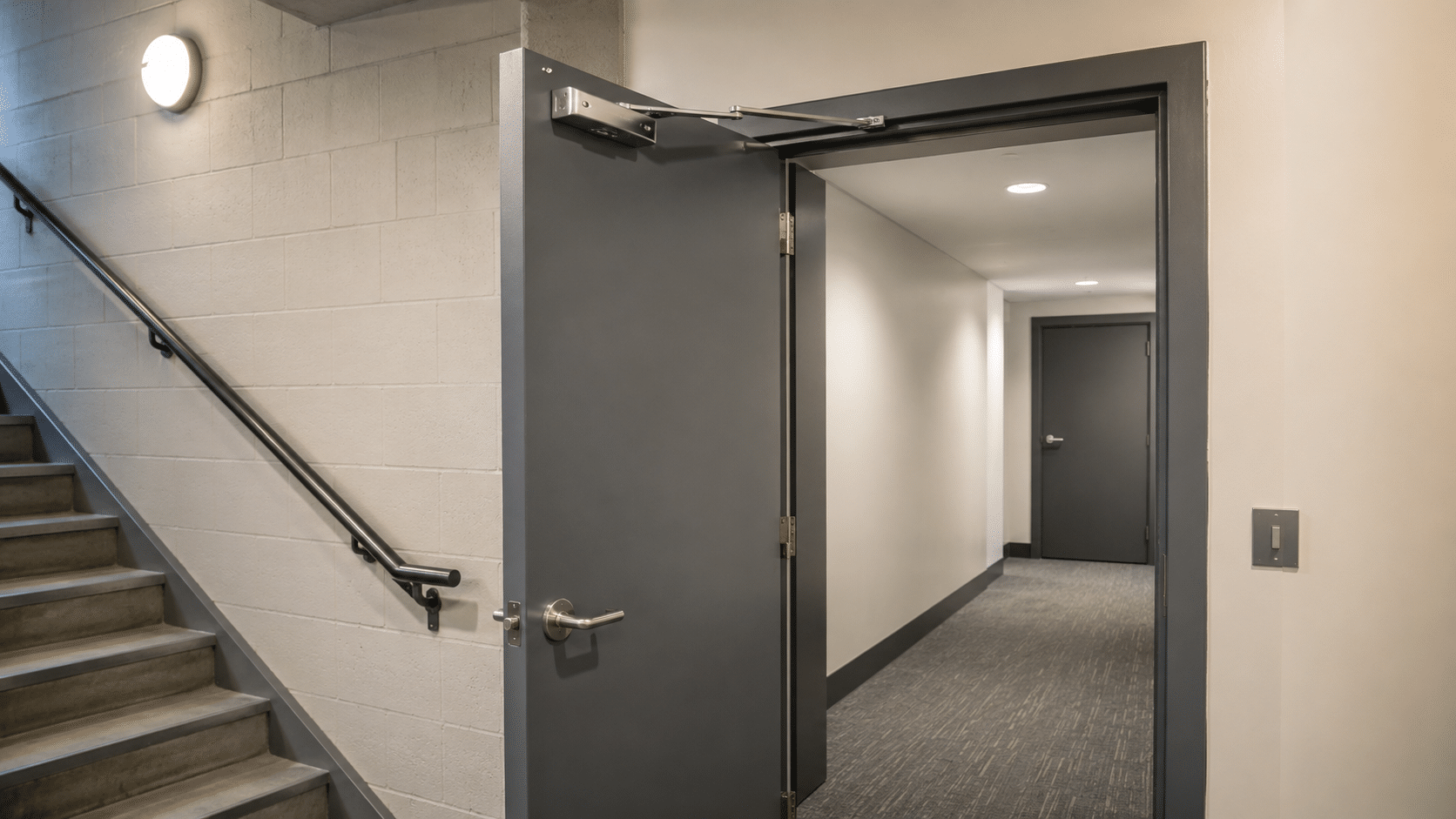
A genuine fire rated door usually has more than just a label going for it. It will also be part of a complete door set that includes the correct frame, hinges, latch, seals, and closer. This is where many people get caught out. A thick door leaf on its own is not enough. If hardware has been swapped, the frame is damaged, or gaps are excessive, the door may no longer perform as intended in a fire.
Look at where the door is located
Another clue is where the fire rated door is installed. These doors are commonly found in stairwells, service risers, plant rooms, corridors, and between different sections of a building where fire separation matters. In apartment buildings and commercial properties, they are often placed in locations designed to slow the movement of fire from one area to another. If a door is sitting in a critical part of the building, it deserves a closer look.
Test whether it closes and latches properly
You should also check whether the fire rated door closes fully and latches properly. This is one of the simplest practical tests you can do without getting technical. Open it and let it close under its own power. Does it shut smoothly? Does it latch without needing a shove? If the door sticks, swings too slowly, slams, or sits slightly open, that is a problem. A fire door that does not close properly cannot do its job when it matters most.
Inspect the hardware carefully
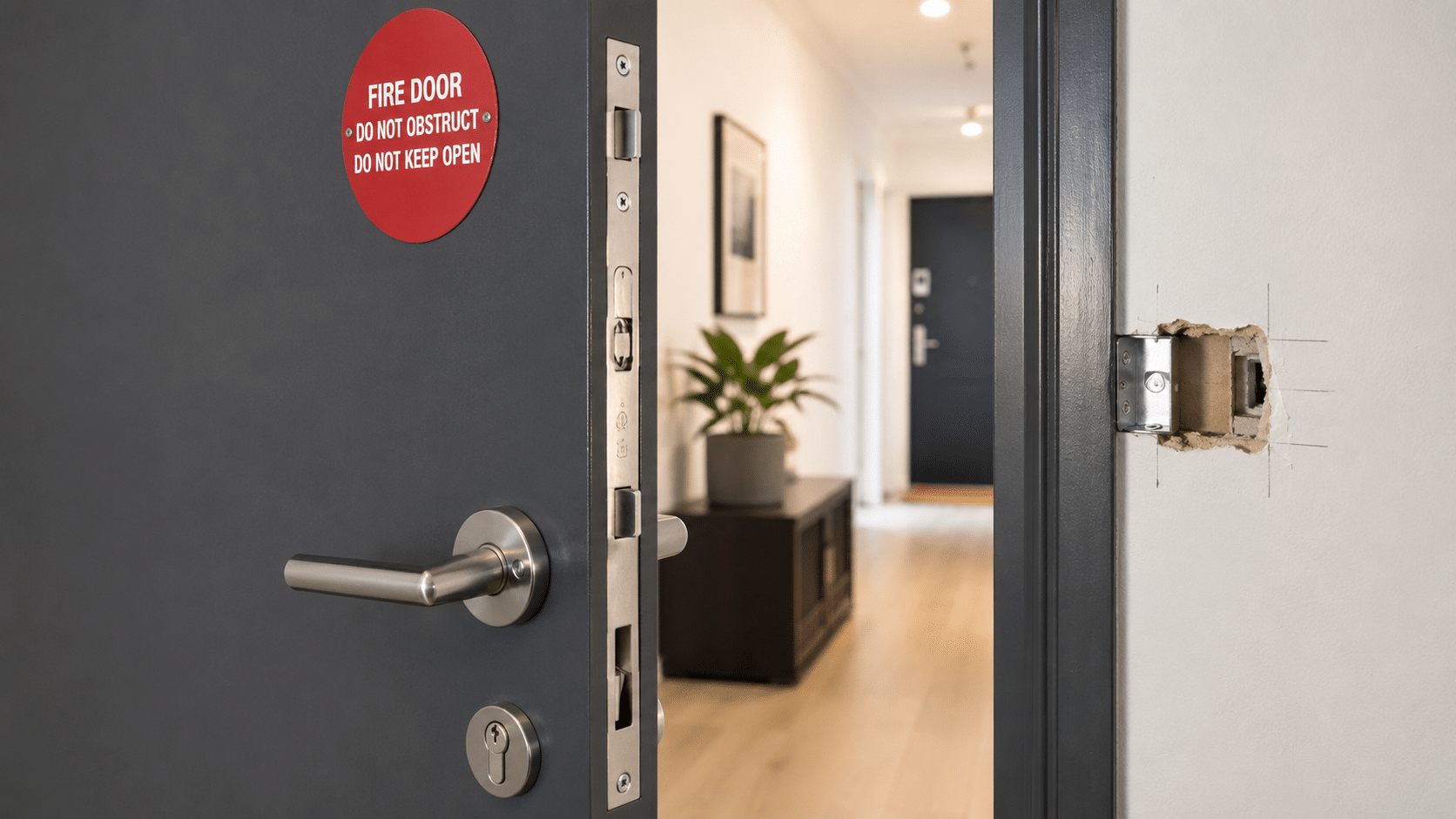
Hardware matters too, because a fire rated assembly relies on approved components working together. Hinges, locks, latches, panic hardware, and door closers all play a role. If you see mismatched hardware, missing screws, loose closers, or signs that someone has added a kick plate, deadbolt, or other fitting after installation, caution is needed. Small changes can affect compliance more than many people realise.
Pay attention to gaps and alignment
Gaps can also tell you a lot about a fire rated door. If there are large gaps around the edges or under the bottom, that is not just a cosmetic issue. Excessive gaps can allow smoke and heat to pass through more easily. Warping, sagging, or rubbing on the frame are also warning signs. The door should sit neatly within the frame and operate cleanly, without dragging or leaving unusual clearances.
Do not rely on signage alone
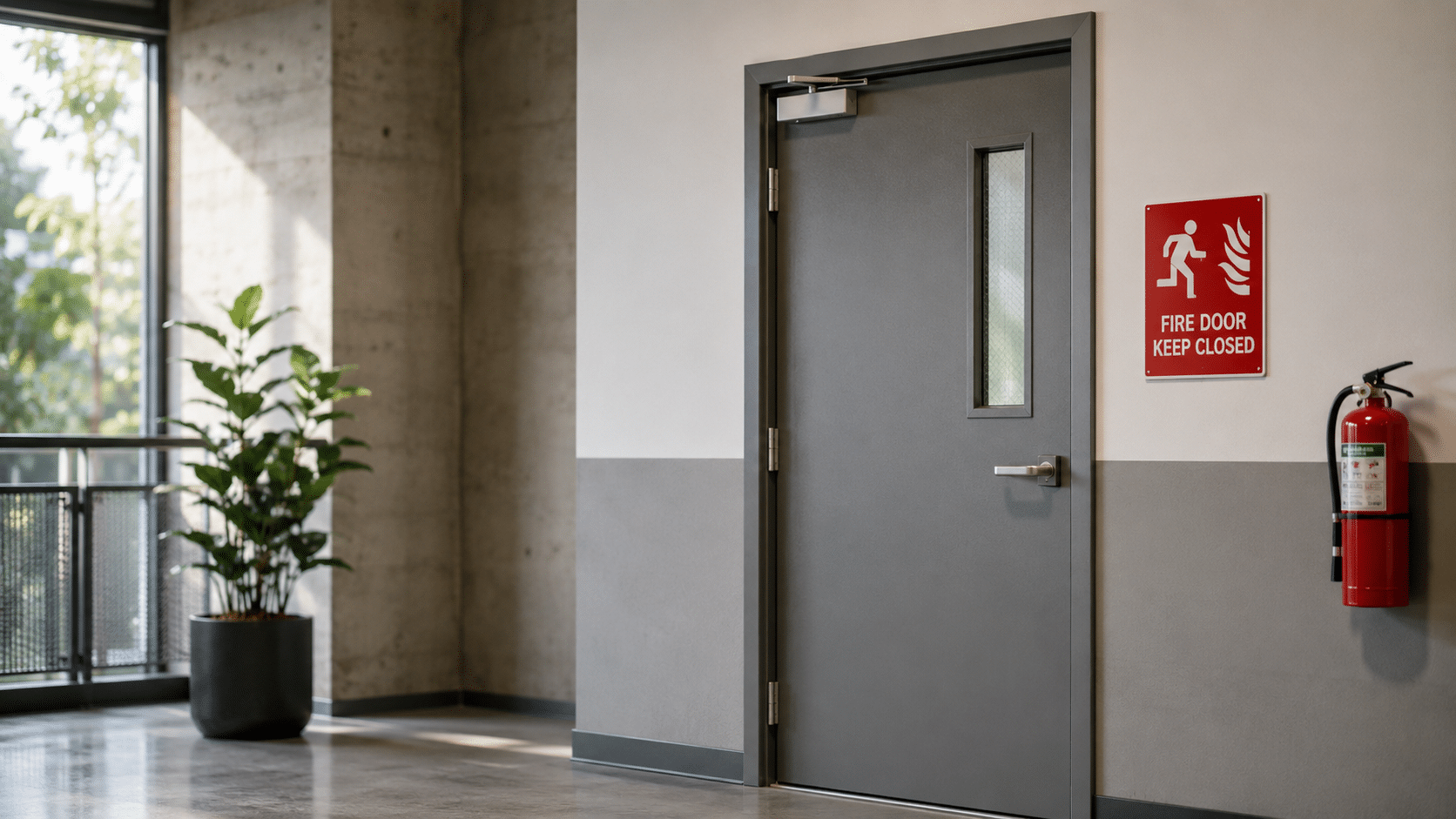
Signage is another useful clue when identifying a fire rated door. You may see signs such as “Fire Door Do Not Obstruct” or “Fire Door Keep Shut”. While signage alone does not prove compliance, it often indicates the door was intended to serve a fire safety function. The important thing is not to stop at the sign. A compliant sign on a damaged or altered door does not magically make it safe.
A solid-looking door is not always compliant
Even if a door looks solid, that does not make it fire rated. Plenty of standard solid-core doors can appear strong and substantial. The difference is in the tested construction, certified components, installation details, and ongoing maintenance. That is why visual guesswork only gets you so far. A standard door can look convincing right up until inspection day, which is not the moment anyone wants a nasty surprise.
Watch for unauthorised modifications
One of the most common mistakes in buildings is unauthorised modification. Holes drilled for cables, new locks fitted by handy contractors, painted-over labels, removed closers, wedged-open doors, and damaged seals all create risk. Sometimes these changes happen slowly over time and no one notices until there is an audit, annual statement, or defect report. By then, a simple maintenance job can turn into a bigger repair bill.
Routine inspections make a big difference
Routine inspections help confirm whether each fire rated door is still fit for purpose. This is especially important in strata blocks, commercial buildings, and industrial sites where doors are used heavily every day. Regular checks help spot wear and tear, damage, failed hardware, and missing records before they become a compliance issue. They also make budgeting easier, because you can plan repairs instead of reacting to urgent defects.
Use a simple checklist
If you are unsure, a practical checklist can help. First, look for the tag or label. Next, inspect the frame and hardware. Then test whether the door closes and latches by itself. Check the seals and general condition. Look for damage, modifications, oversized gaps, or signs that parts have been replaced with non-matching items. Finally, review maintenance records if they are available. Paperwork does not replace inspection, but it does help build confidence that the door has been properly managed.
When in doubt, get expert advice
When in doubt, treat the question “is this door fire rated?” as something that needs a proper answer, not a hopeful guess. A compliant fire door is part of a complete safety system, not just a slab of timber or steel on hinges. If anything looks off, it is worth having the door assessed by experienced professionals who understand certification, installation, and maintenance requirements.
For busy property and strata teams, that peace of mind matters. It helps reduce risk, avoid compliance dramas, and keep tenants safer without the last-minute scramble. If you need help inspecting, repairing, maintaining, or replacing fire doors, the team at Comprehensive Fire Services can help you identify issues clearly and keep your building on track.