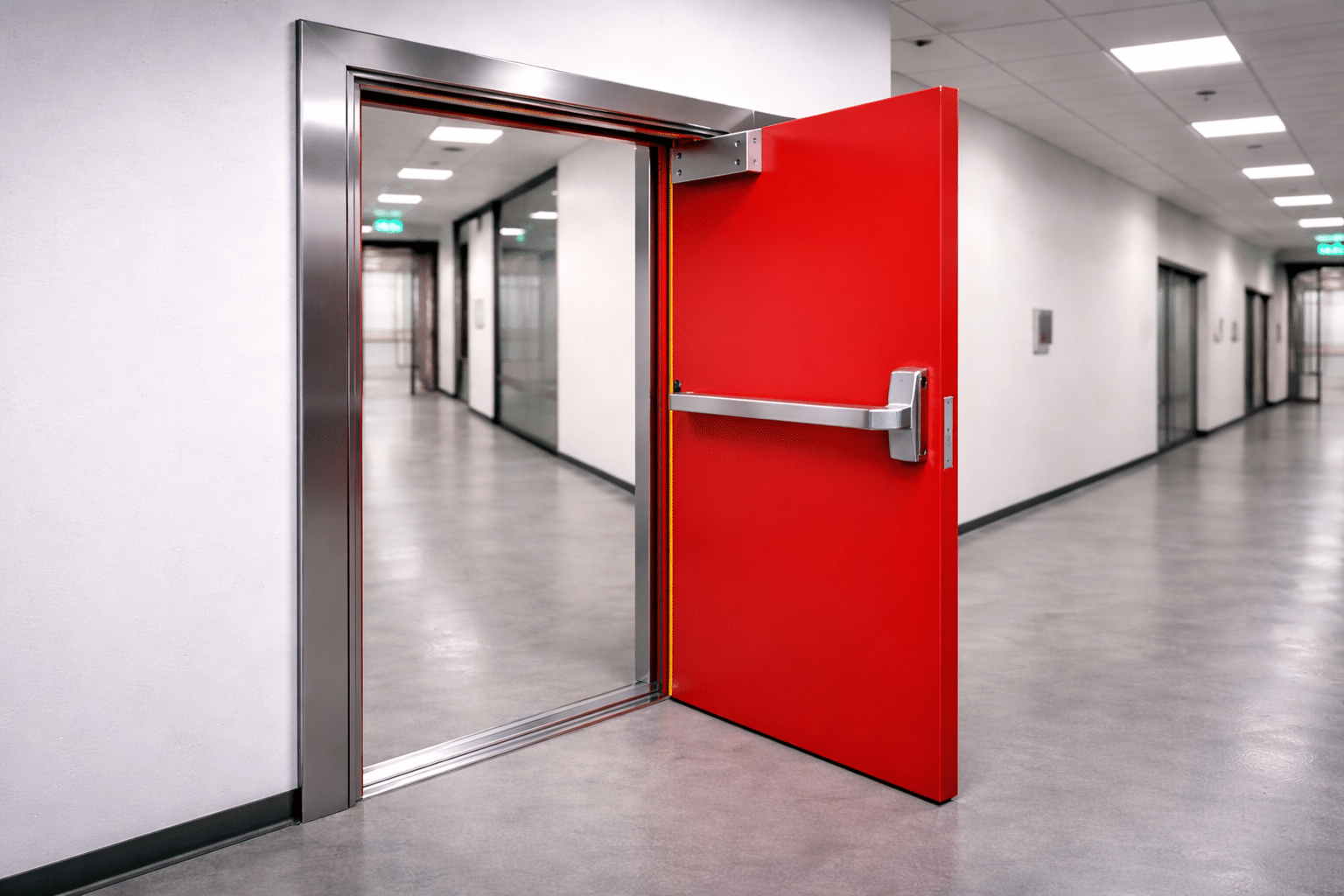
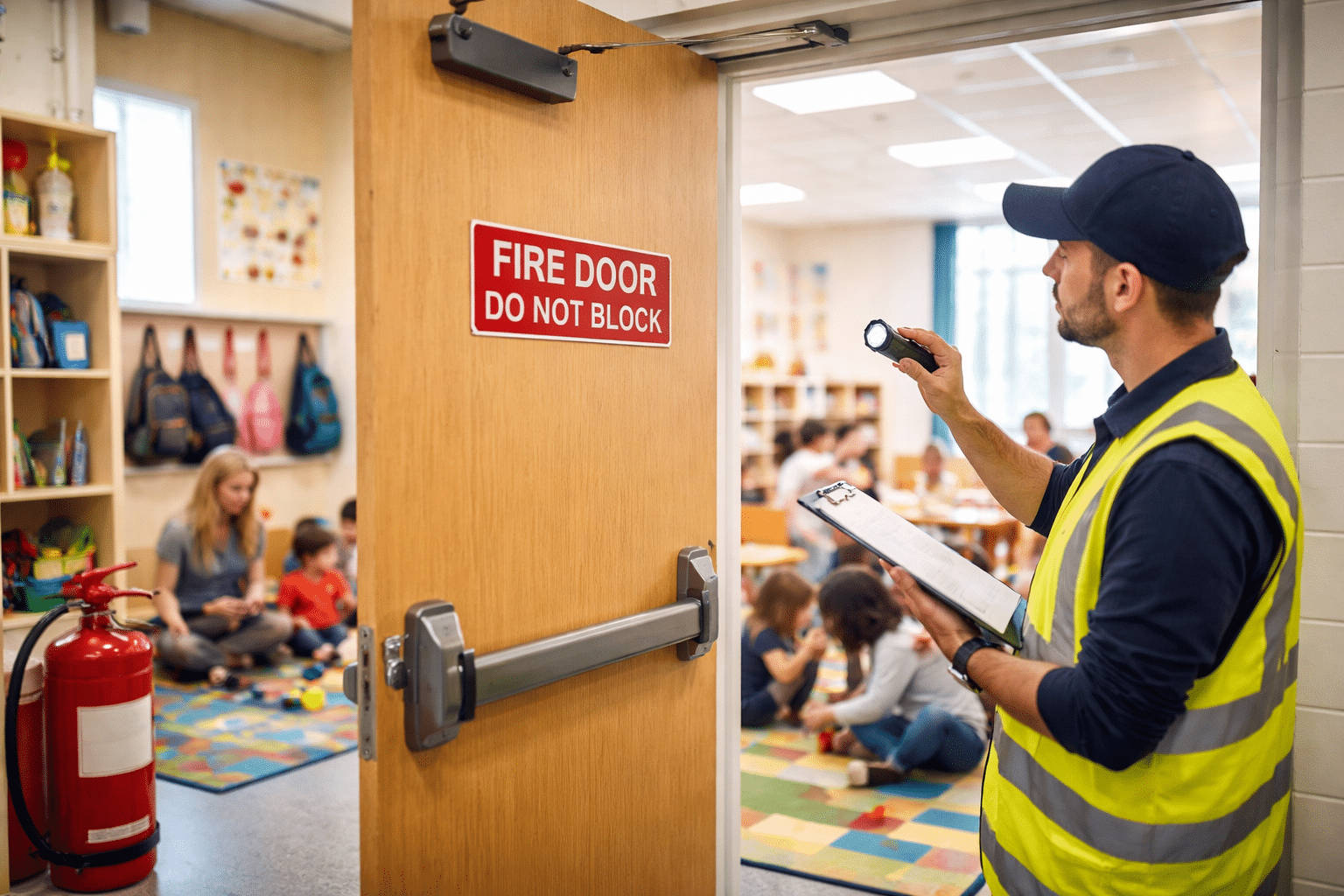
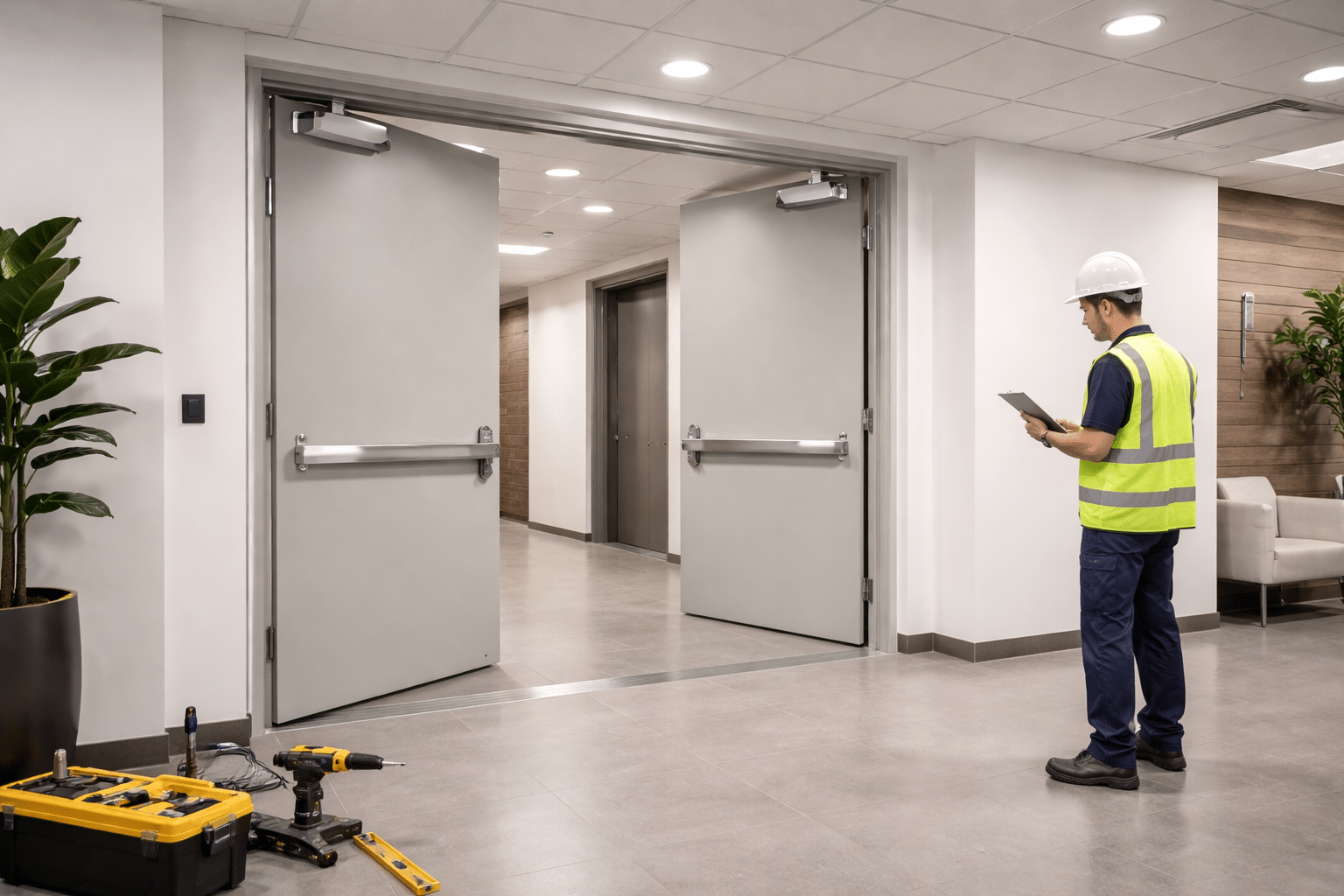
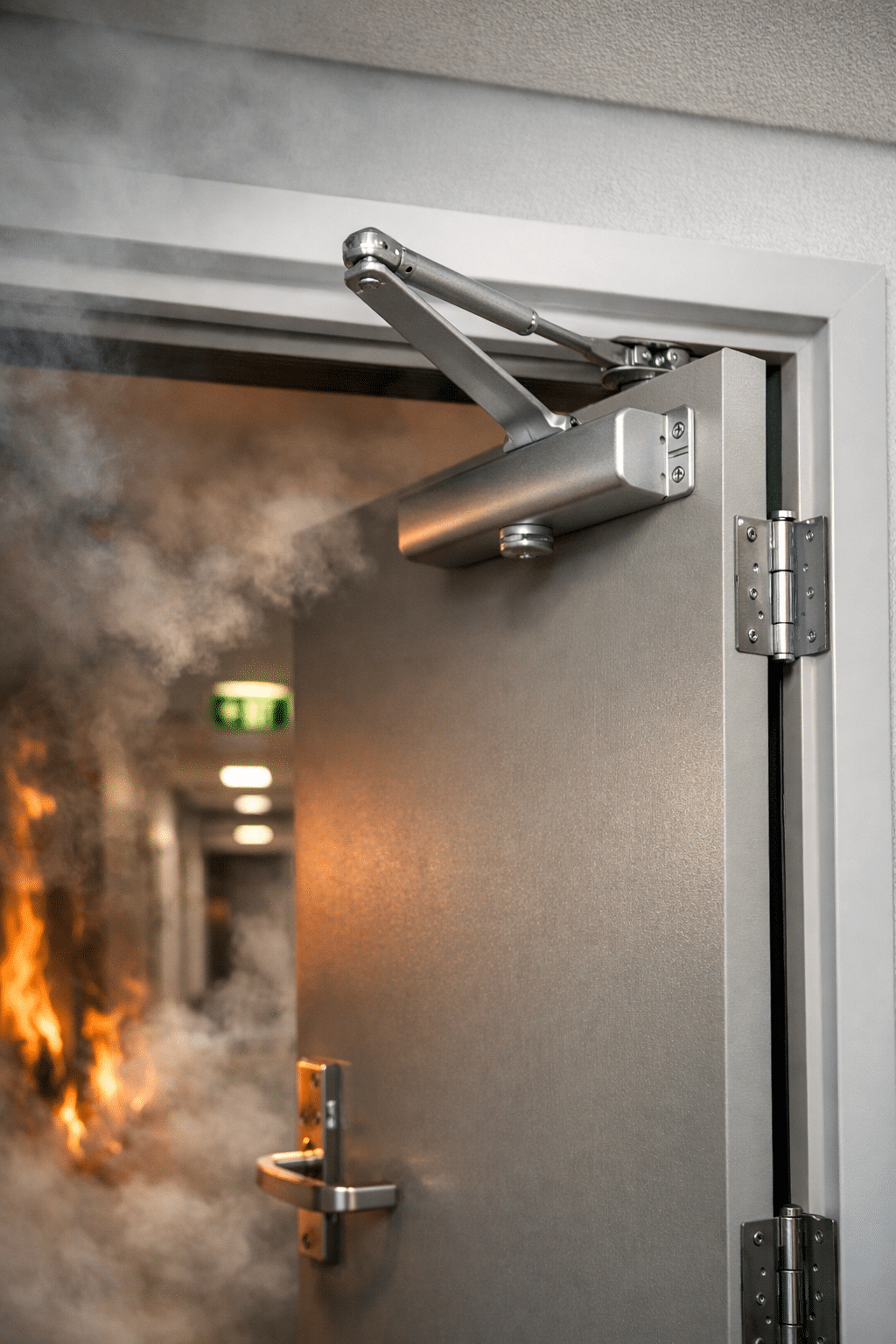
Steel door frames are the quiet achievers of fire door assemblies. They do not look flashy, but they do a big job: supporting the door, holding seals and hardware in place, and helping the opening perform properly during a fire. If you manage a strata building, commercial site, or an industrial facility, choosing the right frame can save you from repeat defects, tenant complaints, and last-minute compliance stress.
This buyer guide walks you through what to check before you purchase, what to ask suppliers and installers, and how to avoid common mistakes that lead to failed inspections.
Why The Frame Matters More Than People Think
A fire door is not just the leaf (the door panel). The door, Steel door frames, hinges, locks, closers, seals, and installation all work together as one tested system. If the Steel door frames are wrong, damaged, poorly installed, or incompatible with the wall type, the opening may not meet its required fire performance, even if the door leaf is certified.
In practical terms, a poor frame choice can lead to:
- Gaps that are too large around the door
- Twisting or movement that stops the door from self-closing
- Hardware that loosens over time
- Smoke leakage due to missing or poorly fitted seals
- Defects that show up repeatedly on inspection reports
Start With The Rating And The Evidence
Before you compare finishes or prices, confirm the fire rating required for the opening. Ratings vary depending on the building design and what the door protects, such as a stairwell, corridor, plant room, or fire-isolated exit.
Ask for documentation that shows the frame is suitable for the required rating and application. In Australia, you are generally looking for evidence that the frame can form part of a compliant fire door assembly and has been tested or assessed appropriately. Steel door frames should be clearly listed in that evidence (or within the tested system details), not implied.
A helpful rule of thumb: treat the frame and door as a package, even if you buy them separately. If your supplier cannot clearly explain compatibility, that is a risk flag.
Pick The Right Frame Type For The Wall
Steel door frames come in different profiles designed to suit different wall constructions. The wall type influences how the frame anchors, how it handles movement, and how it stays square over time.
Common wall types include:
- Masonry or concrete walls
- Stud walls with plasterboard
- Specialty fire-rated wall systems in commercial builds
Make sure the frame profile matches the wall thickness and construction. A mismatch can lead to ugly gaps, weak fixing points, or patchwork finishing that never looks right. It can also create compliance issues if the installation method does not match the tested or assessed configuration, especially where Steel door frames need specific fixings, packers, or fire-rated sealing methods to stay compliant.
Understand What You Are Actually Buying
Not all frames are built the same. Here are practical specs to check:
Steel thickness (gauge): Thicker steel is generally more robust and less prone to denting or twisting in high-traffic areas. For busy sites, stronger is usually worth it.
Welded vs knock-down frames:
- Welded frames are rigid and often used where strength and long-term alignment matter most.
- Knock-down frames can be easier to transport and may suit some retrofit jobs, but quality varies, and installation must be spot on.
Reinforcement for hardware: If the door uses heavy-duty closers, electric strikes, or access control, the frame should have appropriate reinforcement. Otherwise, screws can strip out, plates can shift, and the door can sag or fail to latch.
This is where Steel door frames can make or break your maintenance budget. A slightly cheaper frame that cannot hold hardware properly often costs more in repairs.
Finishes, Corrosion, And Real-World Wear
Finish is not just about aesthetics. It affects durability and how well the frame performs in harsh environments.
Options commonly include:
- Primer only (to be painted on site)
- Powder coating
- Galvanised coatings (helpful in more corrosive environments)
Think about your site conditions:
- Coastal locations can accelerate corrosion.
- Car parks and loading docks take knocks from trolleys and equipment.
- Plant rooms can be humid or chemical-prone.
If you are repainting, confirm that the paint system is compatible with the frame finish. Peeling paint looks bad, but it can also hide rust and make inspections more difficult, especially around Steel door frames where corrosion can start at joins, corners, and hardware cut-outs.
Sizing And Clearances: Where Defects Begin
One of the most common issues found during inspections is incorrect clearances around the door. Frames that are out of square, poorly packed, or installed in a rough opening that is not prepared properly can create gaps outside allowable limits, which is a frequent defect with Steel door frames when measurements or fixing methods are rushed or inconsistent.
When ordering, confirm:
- The exact opening size
- The door leaf size and handing
- Whether the frame needs to suit floor finishes (carpet, tiles, ramps)
- Any required smoke or acoustic seals that need space in the frame
If you are replacing an existing door and frame, do not assume the old opening is “standard”. Measure carefully and inspect the surrounding wall for movement, cracking, or previous patch repairs.
For many buildings, upgrading to Steel door frames that are correctly sized is the fastest way to reduce repeat defects.
Hardware Compatibility: Plan It Up Front
Frames are not generic rectangles. They are drilled, prepped, and reinforced based on the hardware set.
Before you approve an order, list the hardware requirements:
- Hinges (including quantity and fire-rated suitability)
- Latch and lock type (including electric strike or access control)
- Door closer type (surface-mounted, concealed, hold-open where allowed)
- Any coordinator devices for double doors
- Smoke seals and intumescent seals
If hardware is changed later, you can end up with extra holes, weak fixings, or site modifications that compromise finish and performance.
A reliable supplier will ask these questions. If they do not, you should.
Installation Quality Is Not Optional
Even the best product fails with poor installation. Frames must be plumb, level, square, and fixed correctly to the wall. Shims, packers, anchors, and fire-rated materials should be used in line with the required system, because Steel door frames rely on correct fixing and fire-rated perimeter sealing to maintain clearances, alignment, and compliant performance.
During installation, watch for:
- Frame twist (often caused by overtightened fixings)
- Poor grout or packing in masonry installs
- Inadequate fixing points in stud walls
- Damage to frame corners and hinge locations
- Missing or incorrect fire-rated sealing around the frame perimeter
If you are coordinating multiple trades, make sure the frame is protected until handover. Site damage is a common reason for early defects, especially in busy refurbishments.
Choosing Steel door frames is only half the job. Getting them installed properly is what protects your compliance position.
Compliance And Ongoing Maintenance
For building managers and strata managers, paperwork matters as much as products. Keep records for each fire door opening, including:
- Product details (door and frame)
- Hardware schedule
- Installation details
- Inspection reports and defect rectification notes
A proactive maintenance plan helps you avoid the “panic rush” before annual compliance deadlines. Simple steps like regular checks for door operation, latch engagement, and visible damage can catch issues early, including early warning signs around Steel door frames such as dents, loose fixings, corrosion, paint breakdown, or frame movement that can quickly turn into clearance and latching defects.
If your site has repeated problems, consider whether the frame specification suits the building’s use. High-traffic corridors, for example, may need more robust protection such as corner guards or upgraded finishes.
Many clients find that standardising Steel door frames across similar properties reduces confusion, speeds up repairs, and improves consistency in inspections.
Quick Buyer Checklist
Use this checklist before you place an order:
- Confirm required fire rating and application
- Confirm wall type, thickness, and fixing method
- Confirm frame construction (welded or knock-down) and steel thickness
- Confirm hardware prep and reinforcement
- Confirm finish for the environment
- Confirm sizing, handing, and floor finish allowances
- Confirm seal requirements (smoke and intumescent)
- Confirm documentation for compliance records
- Confirm installer experience with compliant fire door assemblies
If you tick every box, you are far less likely to face surprise defects later.
How CFS Can Help
At Comprehensive Fire Services (CFS), we work with strata managers, building managers, and commercial sites across Sydney to supply and install compliant fire door assemblies, including frames and hardware, and to keep them performing through regular inspections and maintenance. If you want help specifying the right frame, replacing a problem opening, or getting your documentation in order for inspections, call 0418 749 488 or use the contact form on our website.