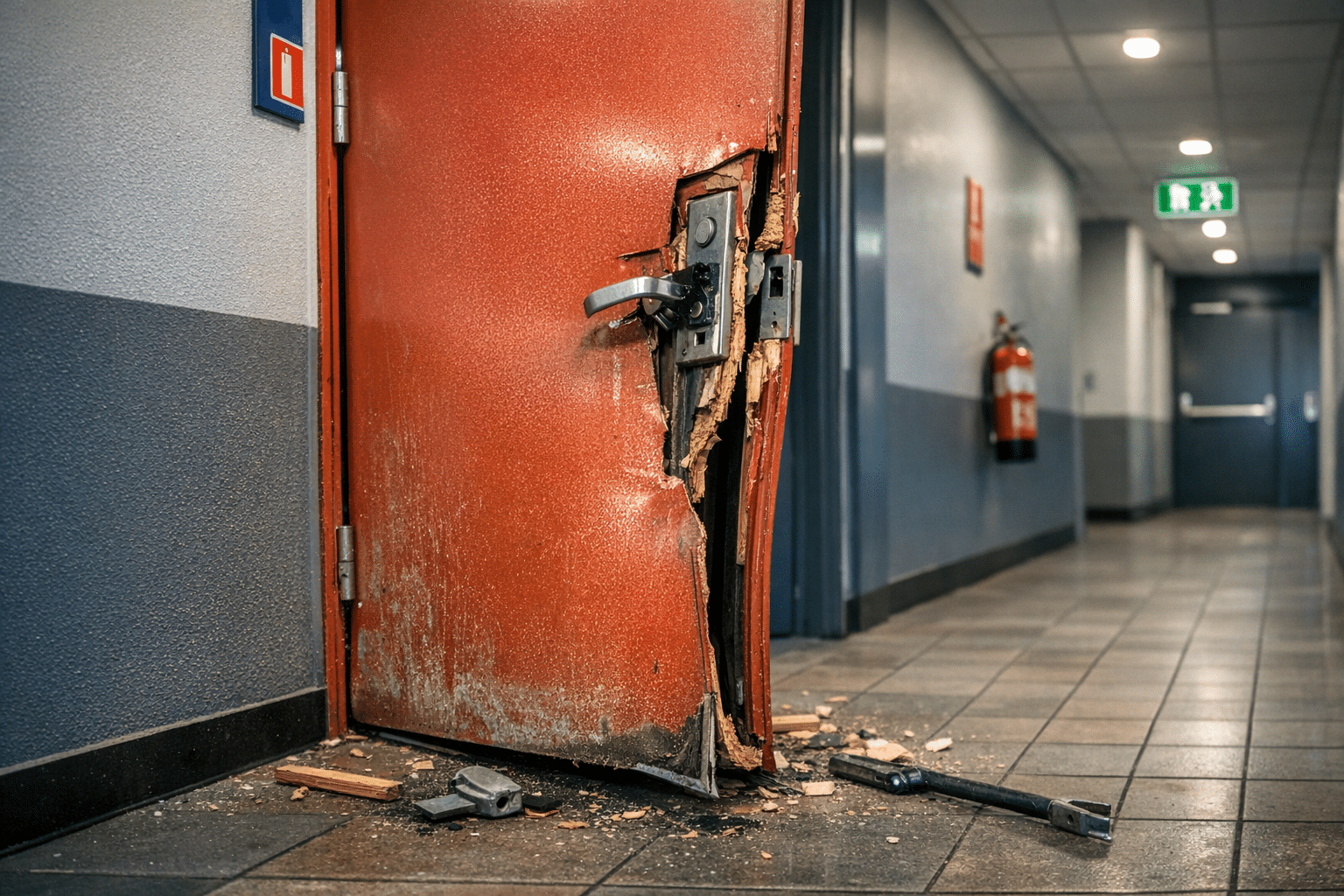
Break-In Damage: Steps After a Fire Door Break-In
Break-in damage to a fire door needs fast attention, even if the scene looks minor at first glance. A dented leaf, bent frame, forced lock, broken closer, or missing seals…

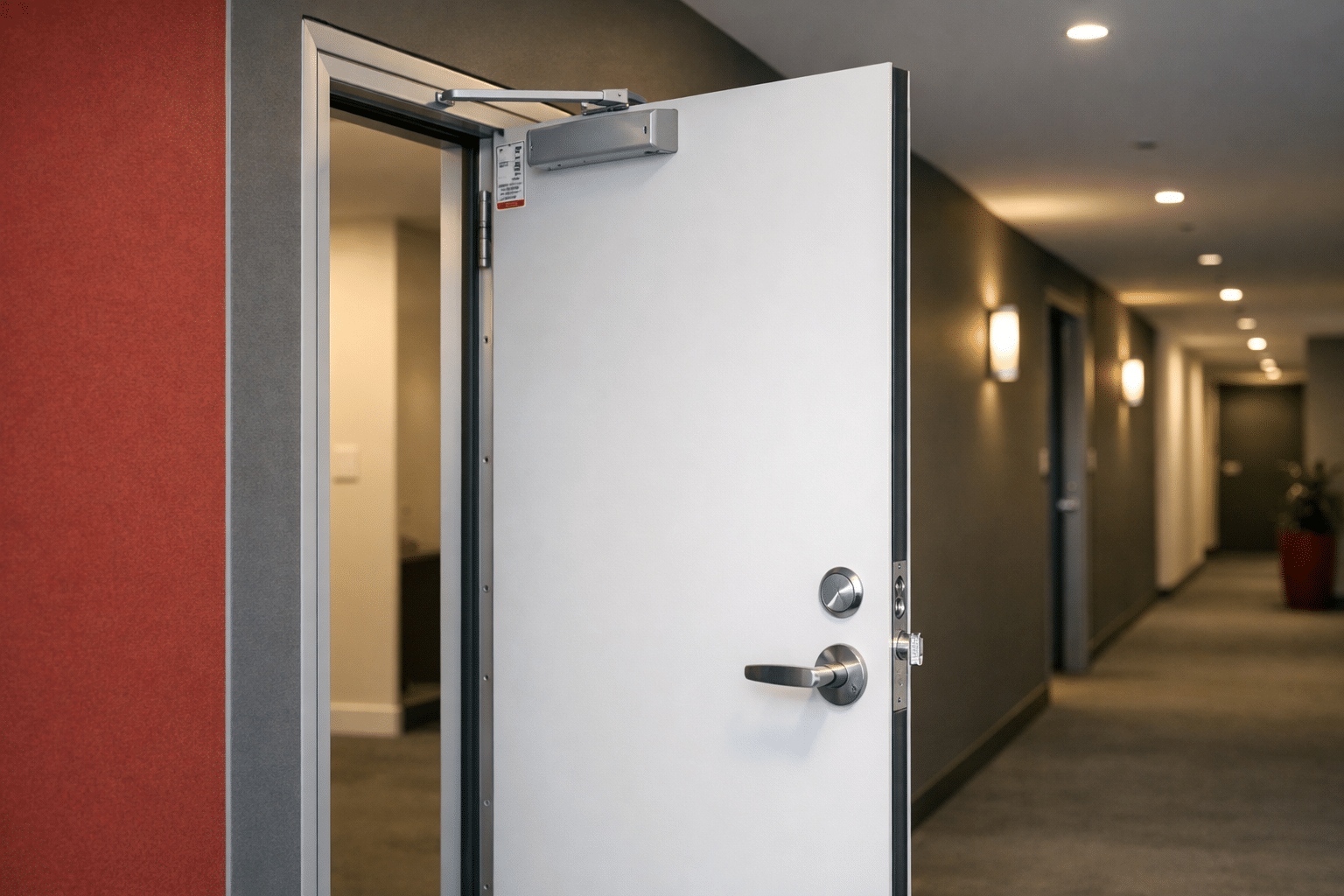
AFSS fire door compliance feels simpler when you have a clear, repeatable checklist that works across multiple buildings and strata committees. This practical guide is written for busy strata managers who need consistent processes, neat records and fewer last minute scrambles before the Annual Fire Safety Statement period. Follow the steps below to save time, reduce risk and keep residents confident that essential fire safety measures are in safe hands.
Start with a building list that identifies every door that must perform as a fire or smoke door. Note the location by level and lot, the door type, its rating and the tag or label details. Include common area riser doors, plant room doors and basement egress doors. Mark up a floor plan or a simple spreadsheet so you can tick things off in the same order the assessor will walk. Add a column to flag issues found last year so you can confirm they have been rectified ahead of your next AFSS fire door assessment.
A fast visual sweep can prevent easy fails. On each door, check that it closes fully from any position without slamming, latches securely, and is not wedged or held open. Look for paint or carpet edges that may have crept into clearances. Check that seals are continuous, undamaged and match the door set. Confirm the self closer is fitted, adjusted and leak free. Make sure signage is correct and visible on both sides where required. If you spot a problem, photograph it and raise a work order so the repair can be completed before the formal AFSS fire door inspection window.
Use a simple feeler gauge, ruler or card to check clearances at the sides, head and threshold. Typical limits apply to maintain the fire and smoke performance of the door set. If you can easily slide fingers or see light where you should not, call that out for a carpenter to adjust. Gaps are one of the most common causes of non compliance and they are also one of the simplest to fix when you catch them early. Record your measurements and keep the file handy for the AFSS fire door assessor to review on the day.
Each fire rated door leaf should carry a compliant tag or label that matches the frame and hardware combination. Take a close, well lit photo of the tag, then a second photo that shows the whole door in context so there is no doubt which opening the tag belongs to. Confirm approved hinges, latches and closers are fitted and tight. If a resident has swapped hardware to a non rated handle or lock, note it and arrange replacement. A tidy set of labelled photos is gold when your AFSS fire door evidence is requested during an audit or by the insurance assessor.
Great photos reduce email back and forth. Aim for three views per door. First, a context shot of the corridor or room with the door open. Second, a close up of the closer, latch, seals and any signage. Third, the tag or label with legible text. Use a simple naming format like Level03_Door12_Tag.jpg so everything is easy to file. If a defect exists, add one more photo that clearly shows the issue and a tape measure if a gap is out of tolerance. These habits make your AFSS fire door file easy to review and quick to defend.
Create a defect register that includes location, description, risk level, trade required, date raised and target close date. Prioritise life safety items first, such as missing closers, failed latches or doors that do not self close. Next, handle clearance adjustments and seal replacements. Finally, fix signage and cosmetic items. Share the list with your building manager and committee so expectations are clear. As items are completed, close them with before and after photos. The polished register becomes part of your AFSS fire door evidence pack and proves diligent management.
For apartment entry doors that form part of a fire or smoke barrier, you will need access. Give early notice with clear time windows and a simple explanation of why the work matters. Provide a contact number for rescheduling to reduce no shows. Where possible, bundle tasks so the carpenter can complete adjustments and the technician can refit seals in one visit. Good communication keeps the project on track and avoids a frantic rush as the AFSS fire door due date approaches.
Your documentation should include the asset list, last year’s statement, service reports, product data sheets for seals and hardware, calibration records for measuring tools if required, the defect register and the photo set. Store everything in a single folder by building and year so anyone covering your role can find it. When the assessor arrives, you can present a tidy pack that answers common questions without fuss. Strong records make the AFSS fire door process straightforward year after year.
The same issues show up again and again, which makes them easy wins. Look for missing or damaged seals, closers that are set too strong or too weak, latch strikes that are misaligned, non compliant deadbolts fitted by residents, excessive gaps at the bottom of the door and carpet that drags. Check that smoke doors have correct smoke seals and that fire doors do not have grilles or letter plates. If you treat these as a checklist on every site walk, your AFSS fire door results will steadily improve.
The calmest strata managers treat AFSS as a rolling cycle, not a one week scramble. Quarter 1, refresh your asset list and do a sample check on one level. Quarter 2, do a full pre check and log repairs. Quarter 3, close out defects and confirm access plans with residents. Quarter 4, host the assessment and file the statement with confidence. This rhythm spreads the workload and keeps small issues small. It also turns your AFSS fire door compliance into a predictable, low stress routine that committees appreciate.
High salt environments can corrode hardware faster, so coastal buildings deserve extra attention. Older towers often have a mix of original and upgraded doors, which means labels and ratings can vary between levels. Busy basements need regular hinge lubrication so doors close smoothly. Keep spares of common seals and closer arms to reduce repeat callouts. When these local factors are considered early, your AFSS fire door program runs smoothly and residents notice the difference in day to day usability.
Keep the message short. You are protecting lives, assets and the building’s insurance position. Share a one page summary that shows the number of doors checked, defects found, defects closed and any resident access issues. Include one photo that highlights a typical fix, such as a closer adjustment or new seal. When everyone understands the plan, approvals happen faster and budgets are easier to manage. AFSS fire door
Comprehensive Fire Services is a Sydney based specialist focused on fire doors and passive fire measures. AFSS fire door support: The team supplies, installs, maintains and inspects certified door sets, backed by tidy reporting that strata committees can understand. If you need help with a pre check, repairs or a full inspection program, CFS can take care of it and keep the paperwork neat for your AFSS period. Call 0418 749 488 or visit the contact page to line up a friendly chat about your building’s needs.
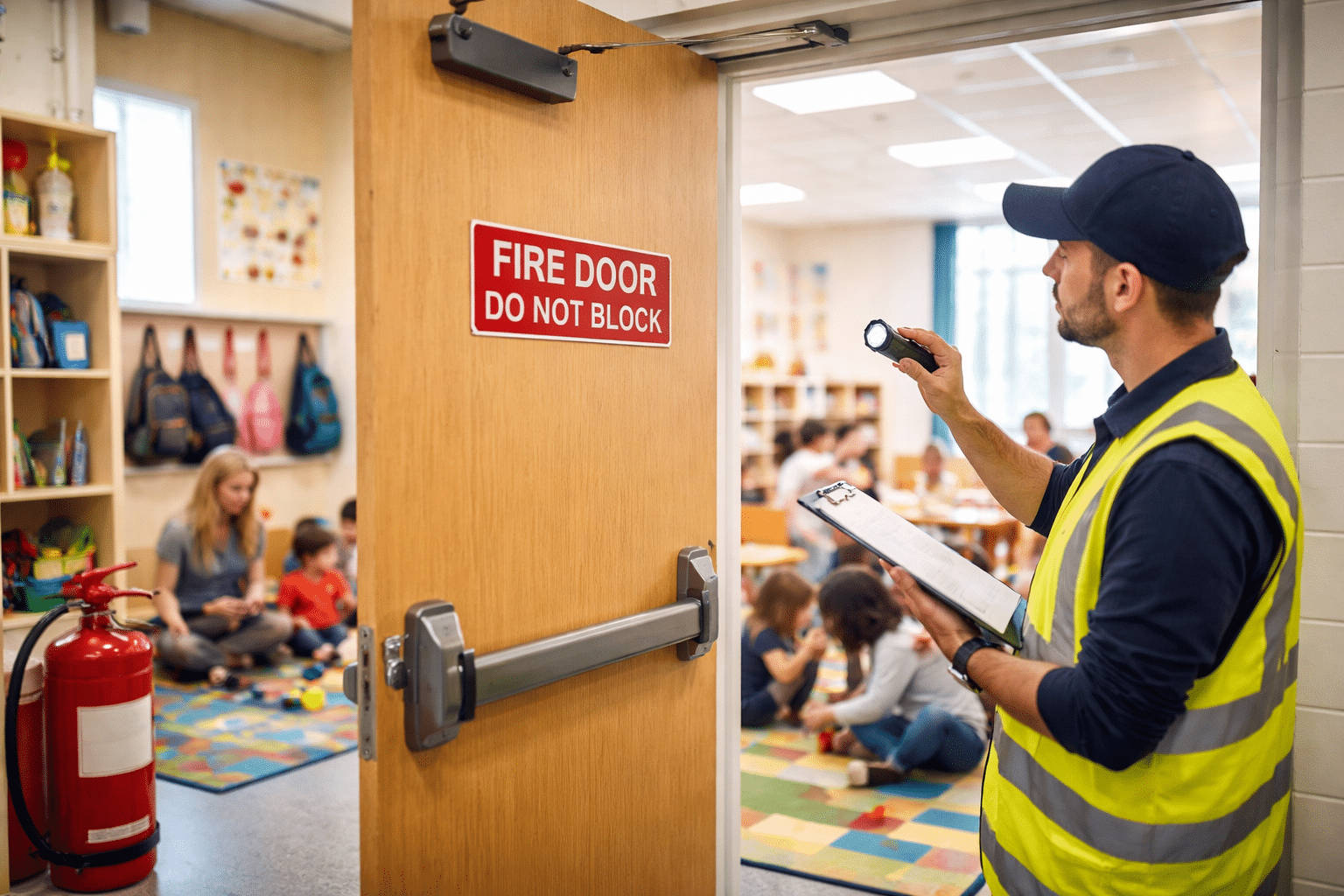
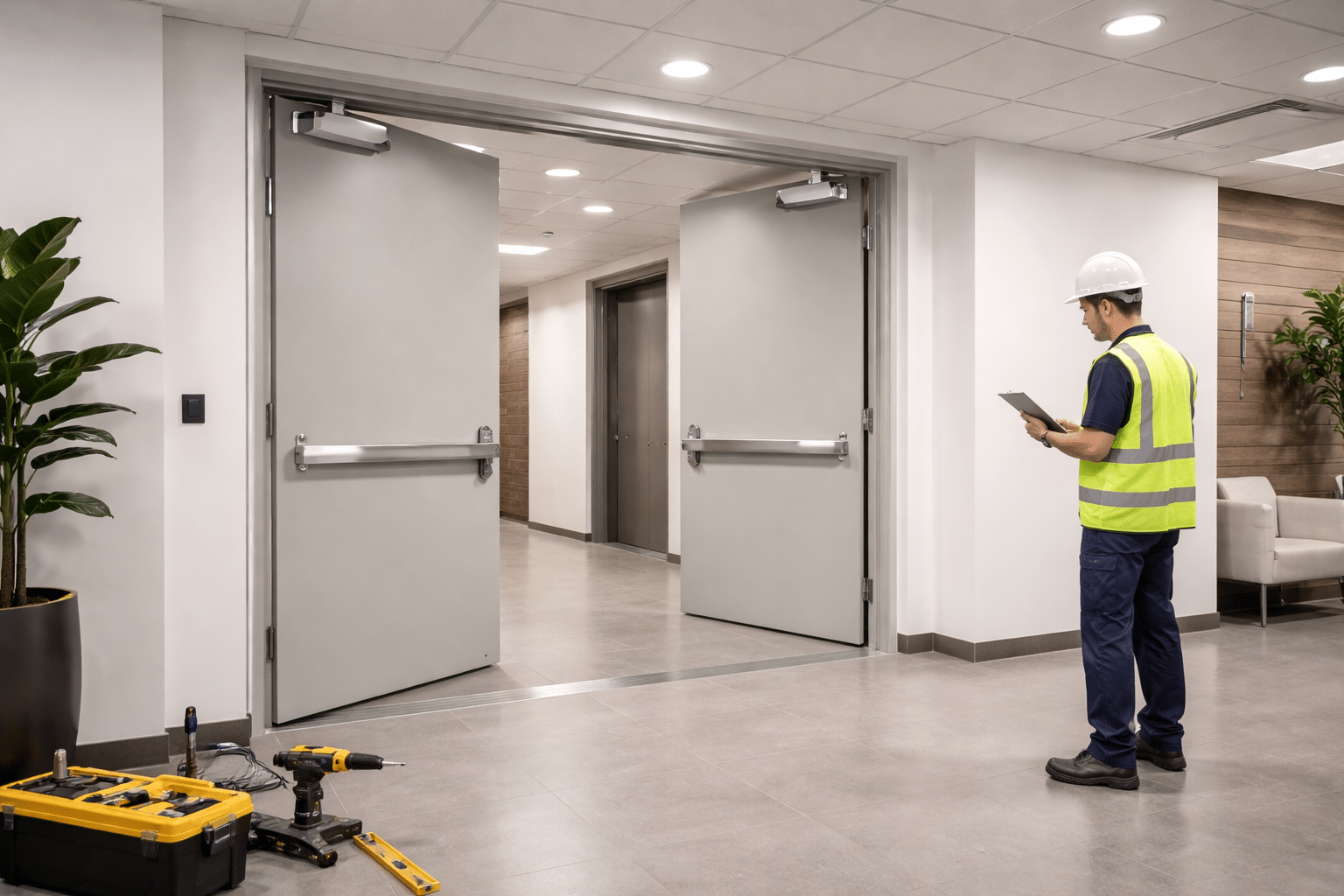



FPAS Accreditation Number: F055161A
We are committed to delivering the highest level of professionalism and compliance in the fire protection industry. As part of this commitment, our team holds accreditation under the Fire Protection Accreditation Scheme (FPAS) — the national accreditation framework developed by Fire Protection Association Australia (FPA Australia).

Phone: 0418 749 488
Fax: 02 4648 5386
Email: [email protected]
© 2026 Comprehensive Fire Service - Website by BSharp Tech