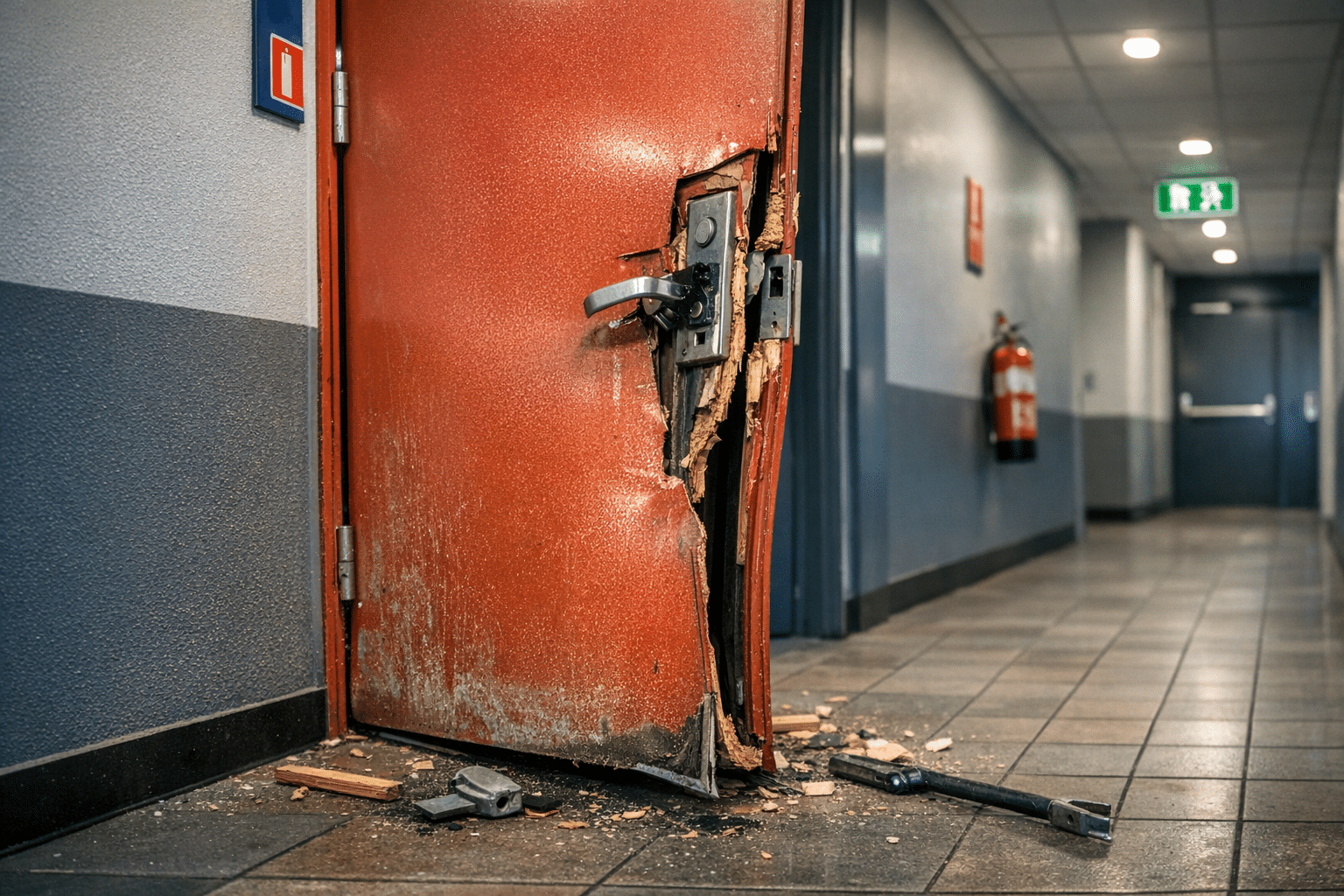
Break-in damage to a fire door needs fast attention, even if the scene looks minor at first glance. A dented leaf, bent frame, forced lock, broken closer, or missing seals can affect how the door performs when it matters most. For strata managers, building managers, and property teams, the goal is not just to make the opening look tidy again. It is to make sure the door is safe, secure, and still able to do its job.
After a forced entry, it is tempting to focus only on security and get the opening closed as quickly as possible. That part matters, of course, but fire doors are not standard doors. They are part of a building’s passive fire protection system, which means damage can create problems that are not always obvious. The smart move is to treat break-in damage as both a security issue and a compliance issue from the very start.
Why Break-In Damage Is More Than Cosmetic
A fire door is designed to slow the spread of fire and smoke between different parts of a building. To do that properly, the whole door set needs to work together. That includes the door leaf, frame, hinges, latch, lockset, closer, seals, signage, and the way the door closes into the frame.
When a break-in happens, force is often applied to the weakest point around the latch, lock, strike, or frame. Even if the door can still open and close afterwards, the set may no longer align properly. Gaps can change, hardware can loosen, and self-closing can become unreliable. In other words, Break-In Damage can affect both everyday function and emergency performance.
Step 1: Make the Area Safe and Record the Break-In Damage
First things first: make the area safe. If the door is hanging, splintered, sharp, or unable to latch, isolate the opening as best you can and reduce access until the site is secure. If there has been unauthorised entry, follow your normal incident process and notify the relevant people straight away.
Next, document what you can see. Take clear photos of the door face, lock area, frame, hinges, closer, signage, and surrounding wall. Capture wide shots and close-ups. Note the date, time, location, and a short description of what happened. Was the lock forced? Was the frame spread? Did the door stop self-closing? Good records help with internal reporting, insurance, contractor attendance, and future maintenance planning.
It is also worth checking if any debris or broken hardware has fallen nearby. A dropped closer arm, damaged latch, or torn seal can give clues about how much force the opening took. The more complete your record is, the easier it is to assess the real extent of the damage later.
Step 2: Check How the Break-In Damage Affects Performance
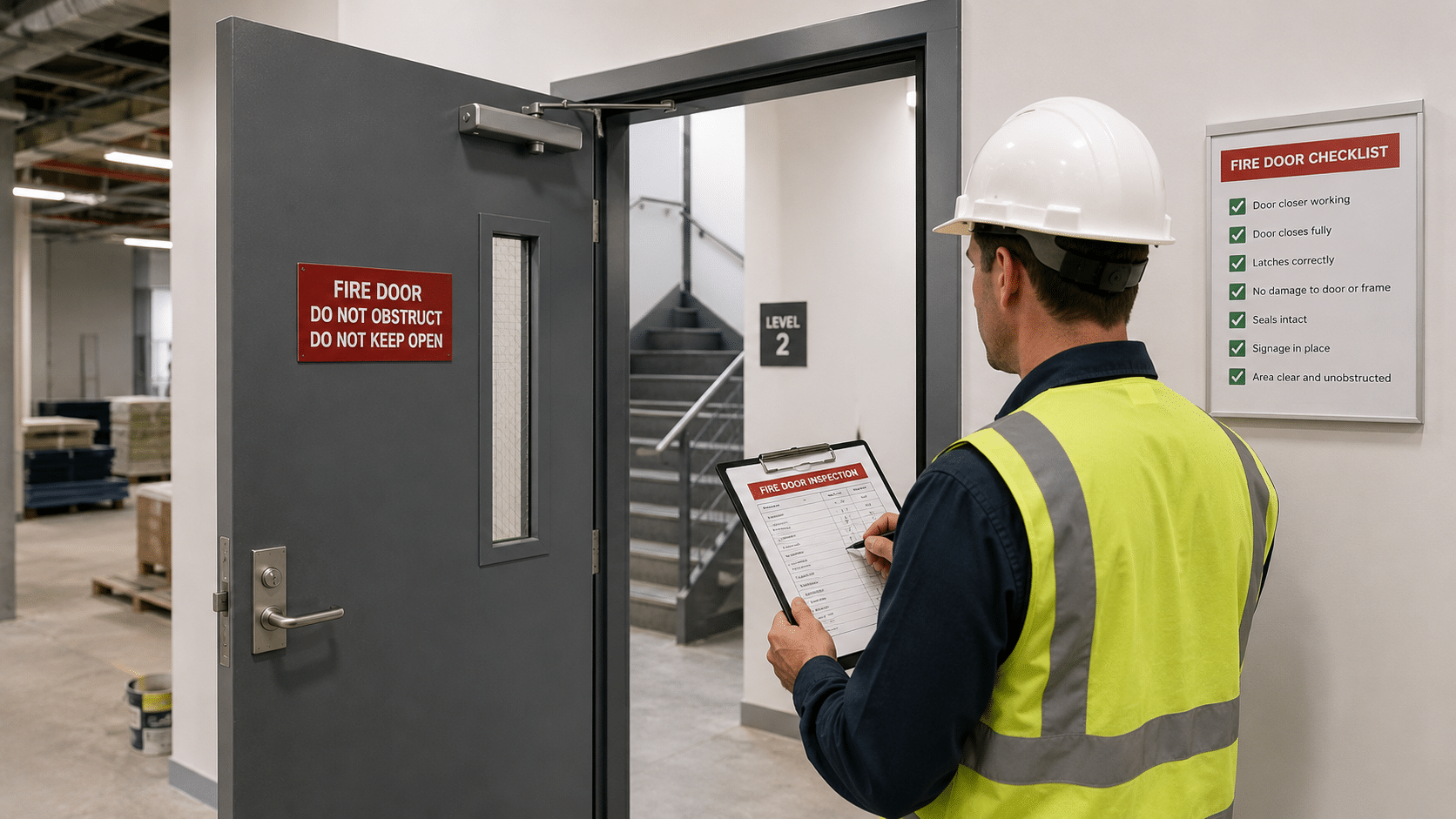
Once the area is stable, look at how the door now behaves. Does it open smoothly? Does it self-close from a normal open position? Does it latch properly without being pushed or slammed? Are there obvious rub points, new gaps, or loose hardware?
This step matters because break-in damage often shows up in the operation of the door before it shows up in a report. A door that drags on the floor, sticks at the latch, or bounces back without fully closing is telling you something important. The same goes for cracked frames, damaged strike plates, loose hinges, or missing seals.
If the door no longer closes and latches correctly, that is a red flag. If the frame has shifted, the problem may be larger than it first appears. If there is visible damage to the core, edges, or hardware fixings, it needs proper inspection rather than a quick tidy-up.
Step 3: Avoid Temporary Fixes That Hide Break-In Damage
In busy buildings, there is often pressure to get things looking normal again. A temporary plate over the lock area, a hardware swap using non-matching parts, or a quick adjustment to force the door shut can seem like a practical stopgap. The problem is that these shortcuts can hide the real condition of the opening.
A patched-up door may look secure while still failing to self-close, latch, or seal correctly. That is why break-in damage should not be covered up with a cosmetic repair and forgotten. The goal is not just to restore appearance. It is to restore the correct fire door function.
Temporary site security may still be needed, especially after hours or in a high-traffic area. That is understandable. Just make sure any temporary measure does not become the long-term solution by accident. A fire door deserves a proper assessment and a repair approach that matches the type and extent of the damage.
Step 4: Arrange a Proper Inspection and Repair
The next step is to engage a qualified fire door specialist to inspect the opening. They can assess whether the damage is limited to hardware, whether the frame has been compromised, or whether the door set needs repair, rectification, or replacement.
This is where professional judgement really matters. Break-in damage can affect more than one part of the assembly, and replacing only the most obvious item does not always solve the problem. A new lock will not help much if the frame has spread. A new closer will not fix a door leaf that no longer aligns correctly. A proper inspection helps avoid spending money twice.
At this stage, it is also helpful to confirm whether any related items were affected during the incident, such as smoke seals, signage, hold-open devices, or surrounding passive fire elements. When one part of a fire-resisting opening takes a hit, nearby components can sometimes cop it too.
Step 5: Update Your Records and Ongoing Maintenance Plan
Once the repair path is clear, update your maintenance records. Note what was damaged, what was inspected, what was repaired or replaced, and when the follow-up check was completed. For property teams managing multiple sites, this paper trail is worth its weight in coffee.
Keeping a record of break-in damage helps with future audits, recurring security issues, budgeting, and maintenance scheduling. It can also highlight whether a certain door location is exposed to repeated misuse, poor access control, or traffic conditions that need a broader fix.
This is also a good time to review whether nearby fire doors should be checked as well. If one opening has been forced, others in the same building may be due for a closer look, particularly in areas with heavy wear, shared access, or known security concerns.
A fire door that has been damaged during a break-in should never be treated as just another maintenance item on a crowded list. Break-in damage needs a calm, practical response: secure the area, document the issue, assess how the door performs, avoid patch jobs, and organise a proper inspection. Done properly, that approach protects your building, supports compliance, and helps you avoid bigger headaches later.
If you need help with damaged fire doors, inspections, repairs, or compliant replacement solutions, Comprehensive Fire Services works with strata managers, builders, and property professionals across Sydney to keep fire doors safe, functional, and up to standard.