Handover requirements for fire doors should be clear from the start of any development project, not rushed together when everyone is trying to reach practical completion. For developers, the handover stage is where fire door installations, documentation, certification and maintenance details need to come together in a way that building owners, strata managers and facility teams can actually use.
Fire doors are part of a building’s passive fire protection system. In simple terms, they help slow the spread of fire and smoke between areas of a building. That protection only works when the right doors are installed, the correct hardware is fitted, the doors close properly and the paperwork supports the work completed.
For developers, good handover is more than a folder of documents. It is a practical bridge between construction and long-term building management. When handover requirements are handled properly, they help reduce confusion, defects, compliance delays and future maintenance issues.
Why Fire Door Handover Matters
A building can look finished while still having unresolved fire door issues behind the scenes. Doors may be installed but not labelled correctly. Hardware may not match the required fire rating. Door closers may need adjustment. Certification documents may be incomplete or difficult to locate.
These small gaps can create major headaches for developers, builders, certifiers, owners corporations and property managers. They can delay occupancy, complicate annual fire safety processes and create disputes after settlement.
Clear handover requirements help show that the fire doors have been supplied, installed and checked in line with the project requirements. They also give the building’s future managers the information they need to maintain fire doors correctly over time.
What Developers Should Include
Developers should aim to provide a complete, easy-to-follow fire door handover pack. This should include door schedules, fire ratings, product details, installation records, inspection results, certification documents and maintenance recommendations.
A fire door schedule is especially useful. It should identify each fire door location, the required rating, door type, frame type, hardware and any related notes. This makes it easier for future inspections because the building manager does not need to guess which door is which.
Product documentation is also important. This may include details for fire-rated doors, frames, locks, hinges, seals, closers and other approved hardware. If a component needs to be repaired or replaced later, this information helps ensure that the replacement is suitable and compliant.
When handover requirements are prepared in a clear format, everyone benefits. Developers can reduce back-and-forth questions, and building managers can take over the property with more confidence.
Certification And Compliance Records
Certification is one of the most important parts of fire door handover. Developers should ensure that the required compliance records are complete, accurate and easy to access.
This may include installation certificates, inspection reports, test evidence, product approvals and any relevant statements from qualified installers or fire door specialists. The exact documents may vary depending on the project, but the goal is always the same: to show that the fire doors have been installed and assessed correctly. Clear handover requirements also make it easier for developers, certifiers and future building managers to confirm what was completed and what needs ongoing attention.
It is also helpful to separate fire door documentation from other project paperwork. When everything is mixed together, important records can be missed. A simple labelled folder or digital file structure can save hours of searching later.
Strong handover requirements support smoother certification and make it easier for future building managers to maintain records for ongoing fire safety obligations.
Common Fire Door Handover Problems
Many fire door handover issues come from poor organisation rather than poor intent. Documents may exist, but they may be scattered across emails, contractor folders or project management systems.
Another common issue is missing door identification. If the fire door schedule does not clearly match the doors on site, future inspections become harder. A building manager may know there are fire doors in the stairwell, basement or service areas, but may not have enough information to confirm the required rating or hardware. Clear handover requirements can help avoid this by linking each fire door to its location, rating, hardware and inspection record.
Developers can also run into trouble when late project changes are not recorded. For example, if a door type changes during construction, the final documentation should match what was actually installed, not what was listed in an earlier design version.
Well-managed handover requirements help prevent these issues by keeping records current, consistent and tied to the finished building.
Hardware Details Should Not Be Overlooked
A fire door is not just the door leaf. The frame, hinges, closer, latch, seals, locks and signage all play a role in performance. If one part is unsuitable, damaged or missing, the door may not work as intended. Clear handover requirements should capture these details so future building managers understand the full fire door system, not just the visible door panel.
Developers should make sure that the handover documentation includes the approved hardware fitted to each fire door type. This is important because future maintenance teams need to know what can and cannot be changed.
For example, replacing a fire-rated lock with a non-compliant product may create a safety and compliance problem. The same applies to door closers, seals and other components. A simple hardware schedule can help avoid accidental mistakes after handover.
Good handover requirements make future repairs easier because building managers have a clear record of what was installed and why it matters.
Inspection Before Handover
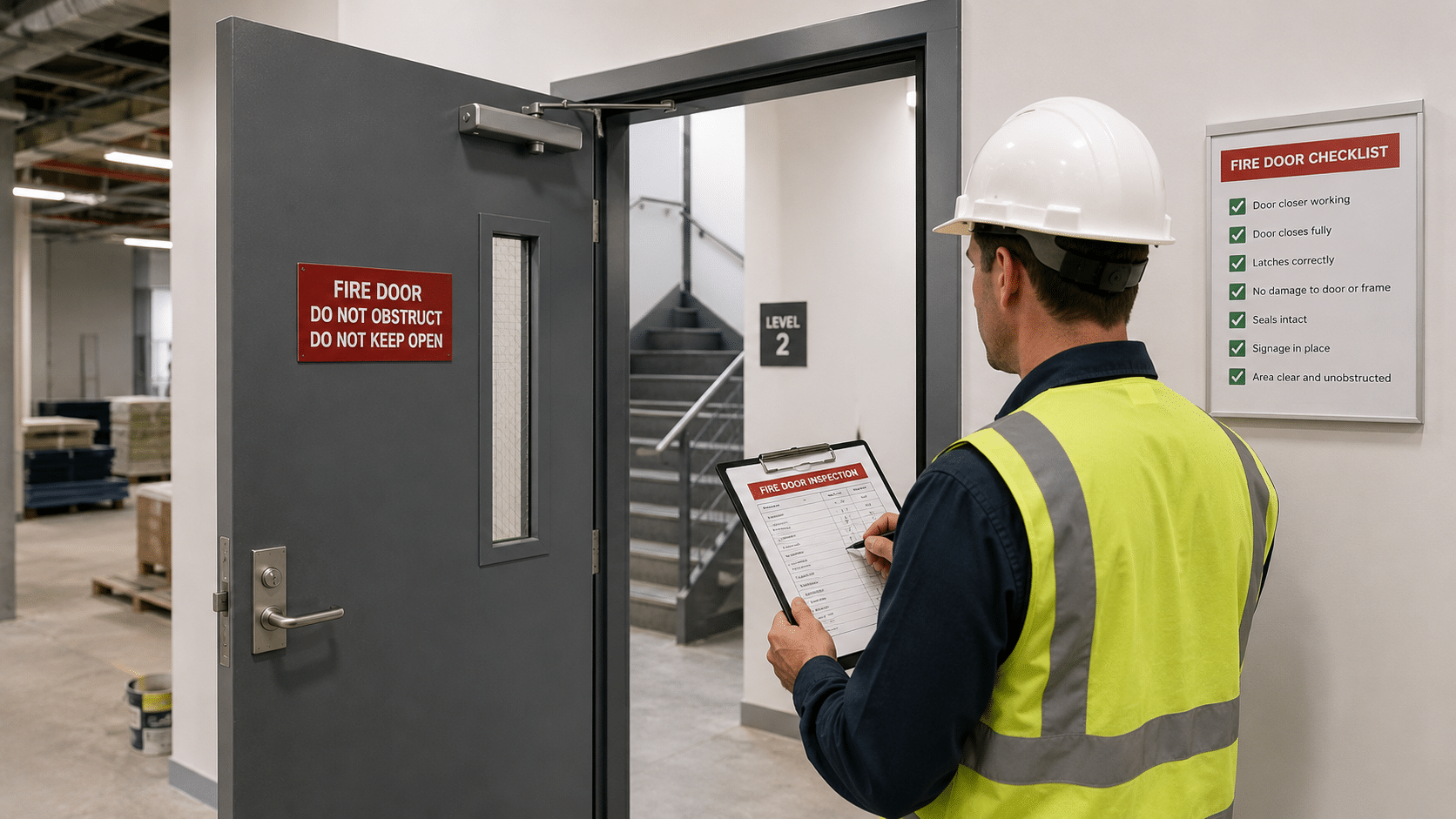
Before final handover, fire doors should be inspected carefully. This is the time to check whether doors close and latch correctly, whether seals are intact, whether gaps are suitable, whether hardware is fitted properly and whether the doors are free from damage.
Inspections should cover all fire doors, including those in stairwells, corridors, plant rooms, basements, service areas and car parks. These are often high-use areas where damage can occur during construction or final fit-out.
It is also wise to check that fire doors have not been altered by other trades. Holes, missing hardware, incorrect fixings or unapproved changes can affect performance.
By reviewing handover requirements before the final rush, developers can identify defects early and arrange repairs before the building changes hands.
Make The Information Easy To Use
A handover pack should not feel like a puzzle. Building managers, strata managers and facility teams are busy. They need information that is organised, labelled and practical.
Use clear file names. Group documents by category. Include a simple summary page that explains what is included. Where possible, provide digital copies so records can be stored, shared and updated easily. Well-organised handover requirements help building managers find the right information quickly when inspections, repairs or compliance checks are due.
It is also useful to include contact details for the fire door installer or maintenance provider. If a question comes up after handover, the new building manager knows who to contact.
Clear handover requirements reduce confusion and help the new management team take responsibility for fire door maintenance without starting from scratch.
Supporting Future Maintenance
Fire doors require ongoing care. They should be inspected and maintained regularly to help ensure they continue to perform as intended. The handover stage should make this future maintenance easier.
Developers can support this by including recommended inspection intervals, maintenance notes and known access requirements. For example, some doors may be in secure plant rooms or shared service areas where access needs to be arranged in advance.
It is also helpful to flag any areas that may need early attention after occupation. High-traffic entry points, loading areas and car park doors often experience wear sooner than quieter areas.
Practical handover requirements help building owners move from construction completion into long-term safety management with fewer surprises.
How CFS Can Help
Comprehensive Fire Services works with developers, builders, strata managers, building managers and fire safety professionals across Sydney. CFS can assist with fire door supply, installation, inspections, maintenance, compliant hardware and documentation support.
For developers, working with a specialist fire door team can make the handover process smoother. It helps ensure that fire doors are installed correctly, checked properly and supported with useful records.
If your project is approaching completion, CFS can help review fire door condition, identify issues and provide practical support before handover. Strong handover requirements can save time, reduce stress and give the next building team a safer, clearer starting point.