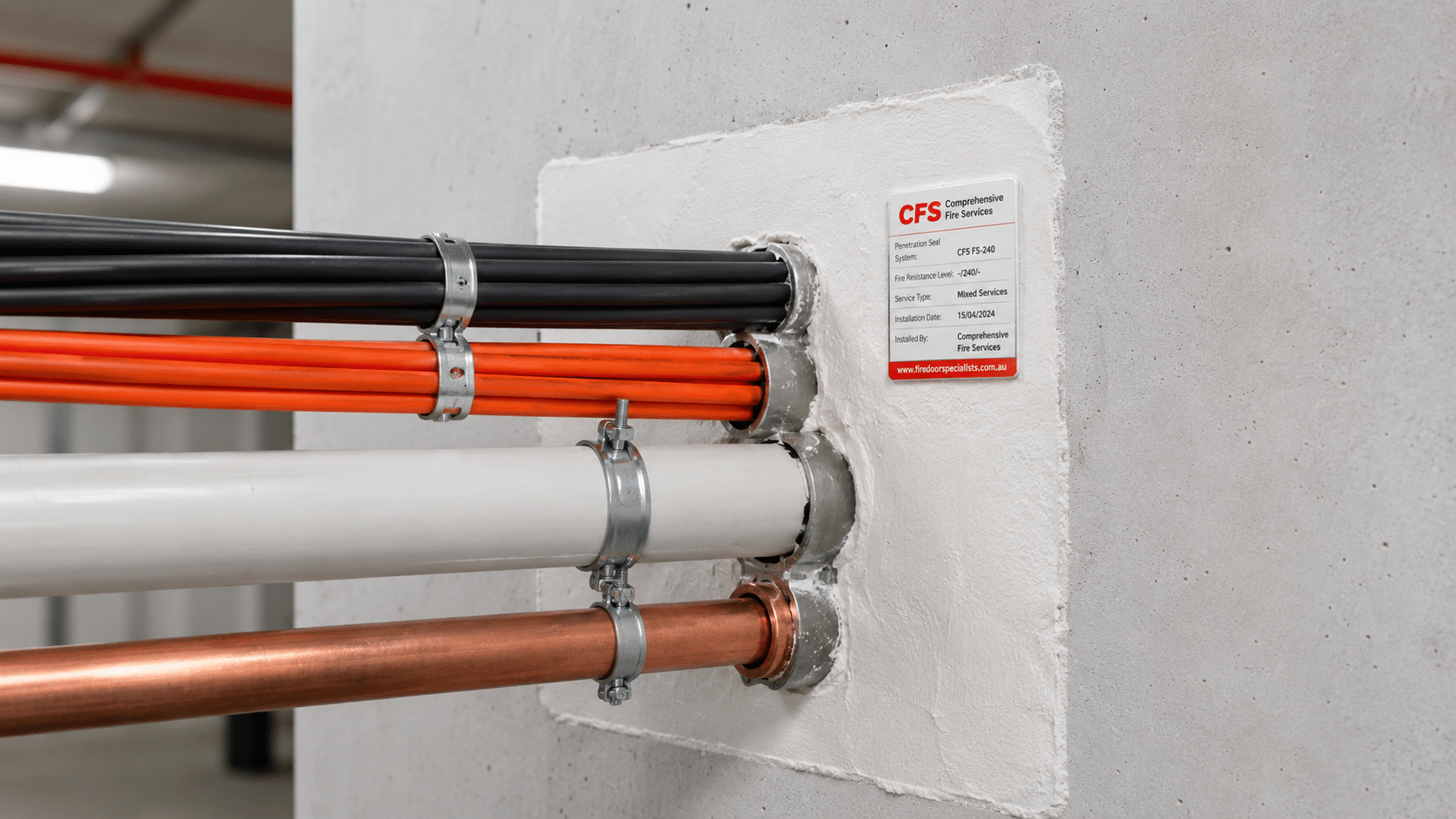
When Cables or Pipes Pass Through a Fire Wall
Cables or pipes pass through fire walls in many commercial, strata and industrial buildings, but the small opening around those services can create a big fire safety problem if it…
Train building occupants to stop misusing fire doors, and you will reduce one of the most common fire safety risks in busy residential, commercial and industrial buildings. Fire doors are not just heavy doors with warning stickers. They are designed to slow the spread of fire and smoke, protect escape paths, and give people more time to leave safely.
The challenge is that many fire door problems are not caused by faulty products. They are caused by everyday habits. A door gets propped open for deliveries. A closer is disconnected because it makes a noise. A tenant wedges a door open for airflow. Someone stores boxes in front of an exit because “it will only be there for a minute”.
When building managers train building occupants properly, these habits can change before they turn into costly compliance issues.
Most people do not misuse fire doors because they are careless. They usually do it because they do not understand the purpose of the door. To them, a fire door may look like an inconvenience, especially when they are carrying equipment, moving furniture or trying to keep a hallway cooler.
In strata buildings, offices, factories and shopping centres, occupants often focus on convenience. That is understandable, but it creates risk. Fire doors must close fully, latch correctly, remain unobstructed and stay in good condition. If they are held open, damaged or blocked, they may not perform during an emergency.
A practical way to train building occupants is to explain the “why” behind the rules. People are more likely to follow instructions when they understand that a closed fire door can help contain smoke and protect lives.
Fire safety training does not need to feel like a lecture. In fact, the simpler it is, the better. Avoid technical language and focus on clear actions people can remember.
For example, instead of saying, “Maintain compartmentalisation integrity,” say, “Do not wedge fire doors open because they help stop smoke and fire spreading.”
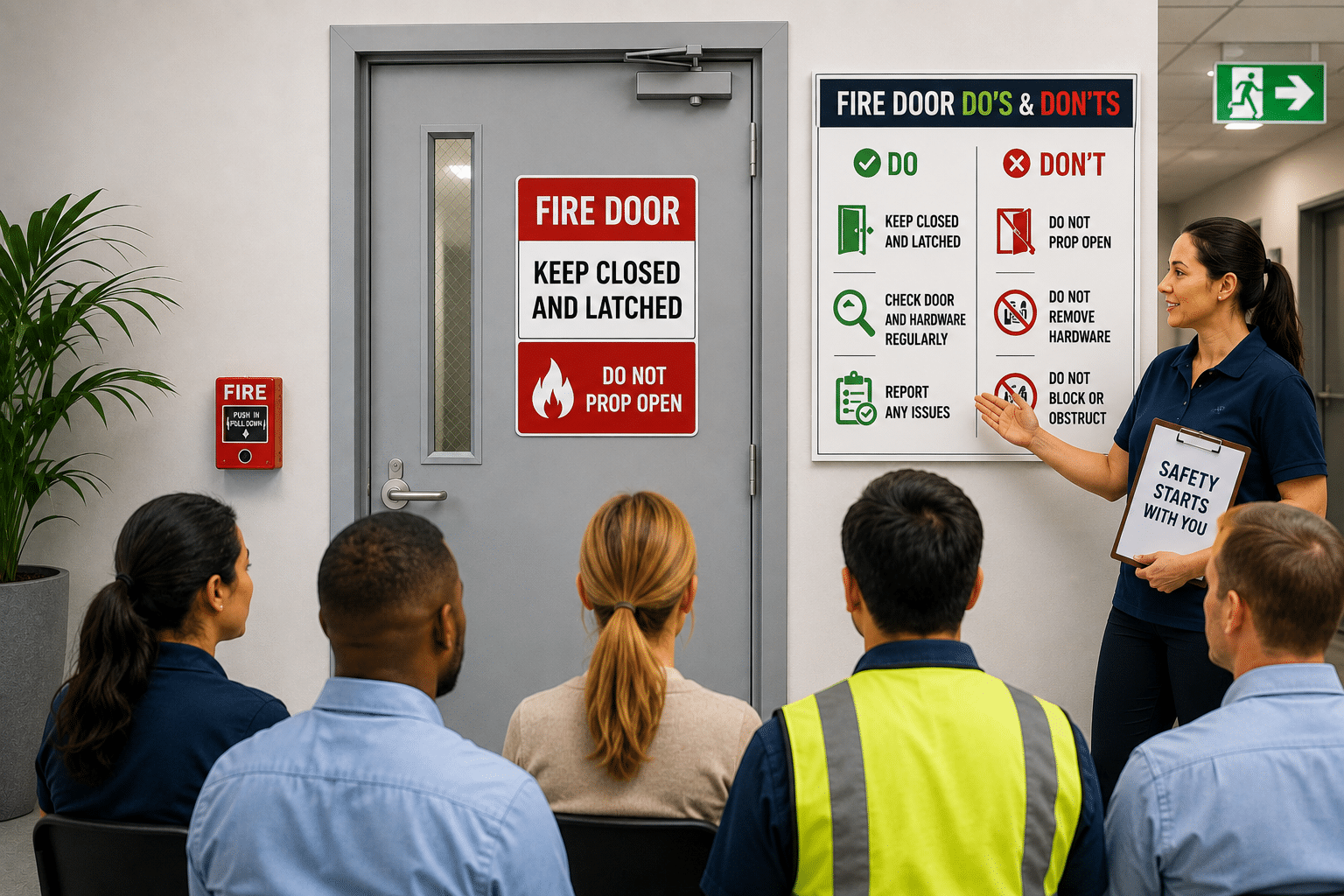
To train building occupants well, use plain instructions such as:
These points are easy to understand and easy to repeat. That makes them much more useful in day-to-day building management.
Signs are not a full training program, but they are helpful reminders. A clear sign on or near a fire door can stop misuse at the moment it is about to happen.
The best signs are short, direct and placed where people will see them. For example, a sign near a frequently propped-open door might say, “Fire door, keep closed.” A sign near a storage area might say, “Keep this fire door clear at all times.”
The best way to train building occupants is to combine signage with brief education. A sign tells people what to do. Training tells them why it matters.
Every new tenant, worker, contractor or regular building user should receive a basic fire safety induction. This does not need to be long. A few minutes can make a major difference.
For strata managers, this may be included in welcome packs, resident notices or building handbooks. For commercial and industrial sites, it can be part of worker onboarding or contractor sign-in procedures.
You can also train building occupants during toolbox talks, tenant meetings or scheduled safety updates. The goal is to make fire door safety a normal part of building use, not something only discussed after a problem is found.
Many occupants notice problems but do not report them because they are unsure who to contact. A fire door may slam, drag on the floor, fail to latch or have damaged seals. These issues can affect performance, but they are often ignored until an inspection.
Make reporting simple. Put contact details on noticeboards, in tenant emails or in the building management portal. Encourage people to report faults early, even if they seem minor.
If you train building occupants to speak up, you can catch problems before they become bigger repairs or compliance concerns. This is especially useful for buildings with high foot traffic, shared corridors or multiple tenancies.
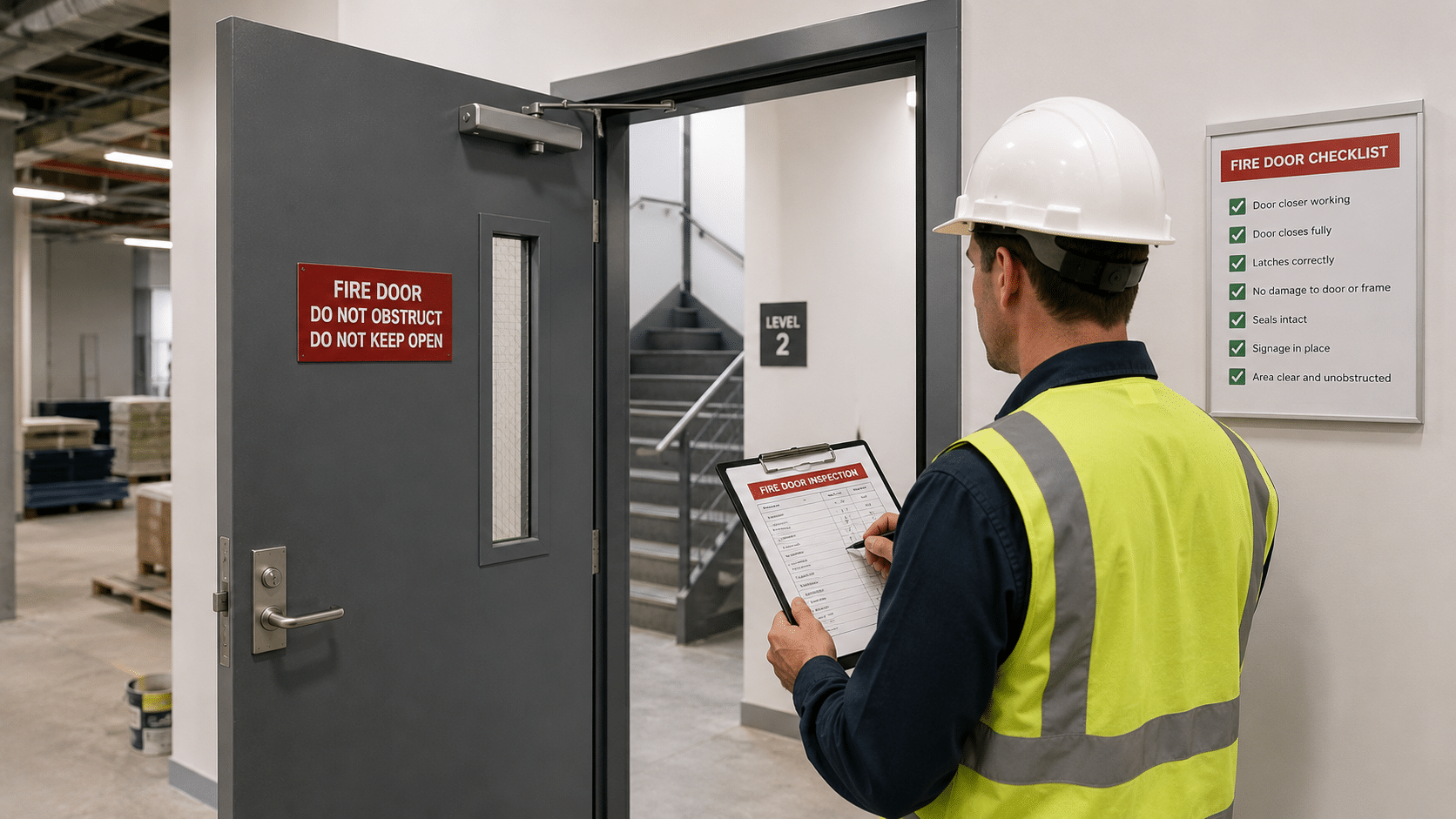
Some forms of fire door misuse appear again and again. These include wedging doors open, tying doors back, blocking exits, removing closers, forcing doors shut, taping latches and ignoring visible damage.
Building managers should talk about these examples directly. It helps people recognise the behaviour when they see it. A friendly reminder can work well, especially when it avoids blame.
For example: “We know deliveries can be tricky, but fire doors must not be wedged open. Please ask building management if access is difficult.”
When you train building occupants with real examples from their own building, the message feels more relevant and easier to follow.
One email per year is rarely enough. People forget, tenants change and contractors come and go. Fire door safety works best when reminders are repeated throughout the year.
This can include quarterly emails, posters in common areas, short messages in tenant newsletters, reminders during fire drills and updates after inspections. Keep the tone helpful rather than heavy-handed.
Another helpful way to train building occupants is to link reminders to real situations. Before moving days, remind residents not to prop open stairwell doors. Before busy trading periods, remind retailers to keep exit paths clear. Before maintenance works, remind contractors not to tamper with fire door hardware.
Contractors, cleaners and delivery drivers often use fire doors more than anyone else. They may move bins, tools, equipment or stock through service areas and corridors. If they are not included in training, fire door misuse can continue even when tenants are doing the right thing.
Contractor instructions should be simple and clear. Fire doors must not be held open without approved controls. Exit paths must remain clear. Any accidental damage must be reported immediately.
It is important to train building occupants and regular service providers together where possible, because fire safety is a shared responsibility across the whole building.
Training helps reduce misuse, but it does not replace maintenance. Fire doors still need regular inspection, testing and repair. A door that is difficult to open, noisy, heavy or poorly aligned is more likely to be misused.
For example, if a door closer slams loudly, someone may try to disconnect it. If a door scrapes along the floor, people may force it open. If a latch does not engage properly, the door may not provide the protection it is meant to provide.
Good maintenance makes the right behaviour easier. That is why fire door inspections, repairs and documentation are important for compliance and everyday safety.
When you train building occupants to treat fire doors properly, you create safer habits across your building. However, training works best when your fire doors are also compliant, functional and well maintained.
Comprehensive Fire Services works with strata managers, building managers, commercial property teams, construction companies and fire safety professionals across Sydney. CFS can assist with fire door inspections, maintenance, repairs, compliant hardware, installation and documentation to support annual fire safety requirements.
If your building has ongoing fire door misuse, damaged doors or compliance concerns, CFS can help identify the issues and recommend practical next steps. When you train building occupants and keep your fire doors in proper working order, you make safety easier for everyone.




FPAS Accreditation Number: F055161A
We are committed to delivering the highest level of professionalism and compliance in the fire protection industry. As part of this commitment, our team holds accreditation under the Fire Protection Accreditation Scheme (FPAS) — the national accreditation framework developed by Fire Protection Association Australia (FPA Australia).

Phone: 0418 749 488
Fax: 02 4648 5386
Email: [email protected]
© 2026 Comprehensive Fire Service - Website by BSharp Tech