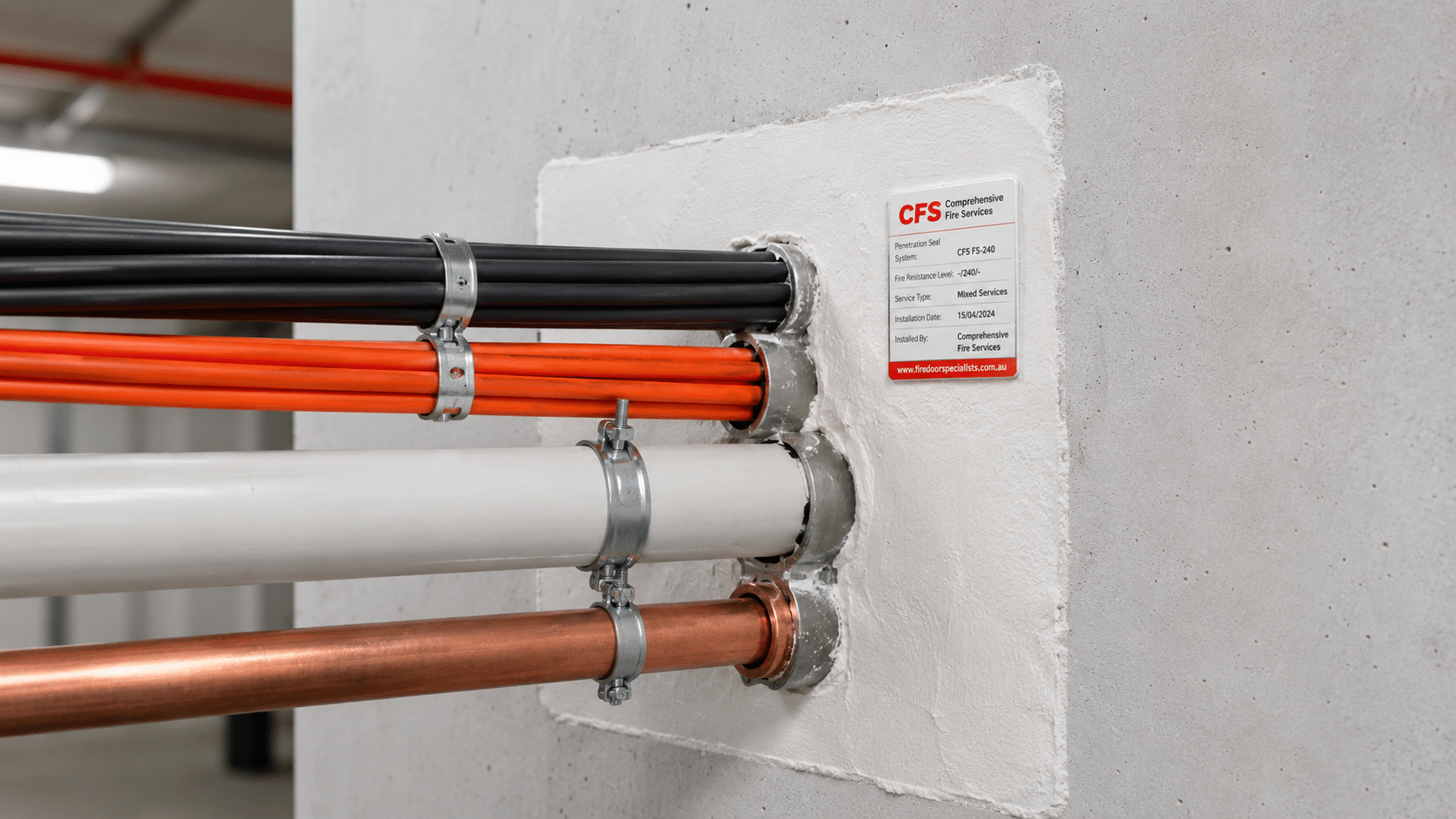
When Cables or Pipes Pass Through a Fire Wall
Cables or pipes pass through fire walls in many commercial, strata and industrial buildings, but the small opening around those services can create a big fire safety problem if it…

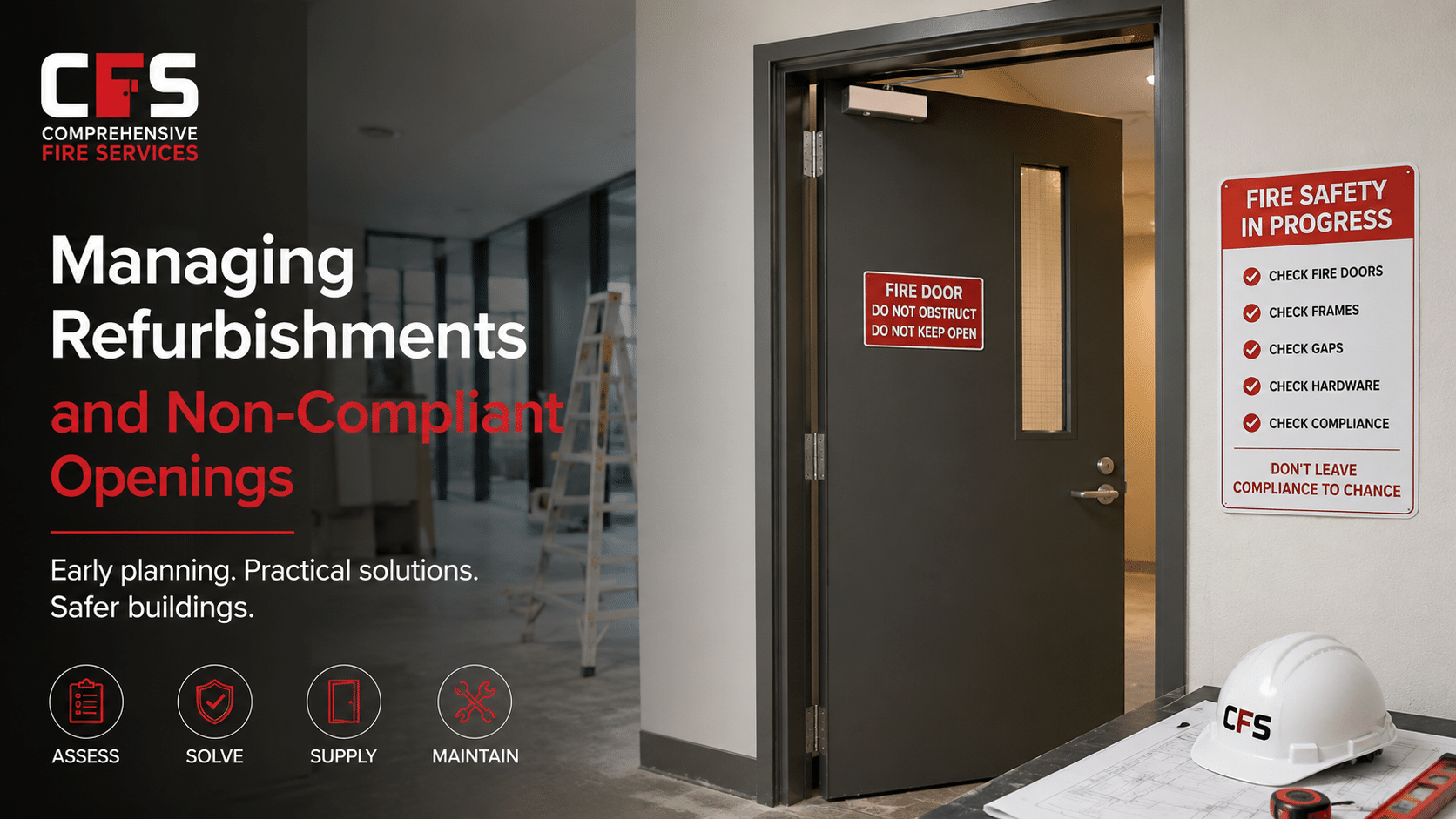
Refurbishments and non-compliant openings can turn a simple fire door job into a much bigger compliance puzzle. In many Sydney buildings, fire doors were installed years ago, then walls were altered, frames shifted, services added or finishes upgraded. The result can be a door opening that no longer matches what is required for a compliant fire-rated door system.
A fire door is not just a door leaf. It is a complete system made up of the door, frame, hinges, closer, seals, latch, locks and the wall around it. If one part is incorrect, the whole system may fail to perform as intended during a fire.
In older apartment buildings, commercial sites, schools, warehouses and mixed-use properties, refurbishments and non-compliant openings are common, and a door may look fine from the hallway, but small issues such as oversized gaps, damaged frames or incorrect hardware can compromise safety.
For building managers and strata teams, the challenge is that these problems are not always obvious until an inspection, upgrade or Annual Fire Safety Statement process brings them to light.
When a building is being modernised, refurbishments and non-compliant openings often appear as new flooring raises floor levels, wall linings change, door frames are removed and reinstalled incorrectly, or a contractor cuts, planes or modifies a fire door without understanding the compliance impact
Common problems include openings that are too wide, too tall, out of square or fitted with a frame that is not suitable for a fire-rated door. Gaps around the door may also exceed acceptable limits, which can allow smoke and heat to pass through too quickly.
Refurbishments and non-compliant openings can also involve hardware changes. A standard lock, non-compliant closer or unsuitable seal may seem like a small detail, but fire doors rely on tested components working together.
A fire door is designed to slow the spread of fire and smoke between areas of a building. This gives occupants more time to evacuate and helps protect escape paths. When the opening is not compliant, the door may not close properly, latch securely or seal the gap as required.
A building may appear upgraded while hidden fire safety issues remain, which is why refurbishments and non-compliant openings can create problems for owners, tenants, insurers and anyone responsible for compliance documentation.
It is also important to remember that fire door compliance is not just about passing an inspection. It is about making sure the door can do its job when people need it most.
Before work begins, it is worth checking any fire-rated doorways that may be affected. This includes entry doors to units, doors in fire-isolated stairs, plant rooms, service cupboards, corridors and commercial tenancy areas.
Problems can be planned for instead of discovered at the end of the project when refurbishments and non-compliant openings are assessed early, helping avoid delayed handovers, extra costs and frustration for everyone involved.
Check whether the existing door is tagged, whether the frame is damaged, whether the closer works, whether the door latches, and whether there are visible gaps, cracks or unapproved modifications. Even a fresh coat of paint can hide issues if the door has been patched or altered incorrectly.
The frame is one of the most important parts of the fire door system. If the frame is loose, warped, poorly fixed or not fire rated, the door may not perform correctly.
Frames may no longer suit the wall type or required door rating when refurbishments and non-compliant openings are involved, especially if a frame was installed in a wall that has since been altered or the fixing method does not match the fire-rated system.
In some cases, a custom-made fire door or a new steel door frame may be needed to suit the opening. This is usually a better long-term option than trying to force a standard door into an unsuitable space.
Gaps around fire doors matter. They help determine whether the door can limit the movement of smoke and heat. If the gap is too large, the fire door may not protect the area as expected.
Gap issues can occur when refurbishments and non-compliant openings are affected by changed floor finishes, worn hinges, moving frames or incorrectly trimmed doors, making excessive clearance a compliance concern even if the door only appears slightly out of place.
Building managers should avoid quick fixes such as shaving down a door leaf or adding unapproved strips. Fire doors are tested systems, so repairs and adjustments need to be completed with compliant materials and methods.
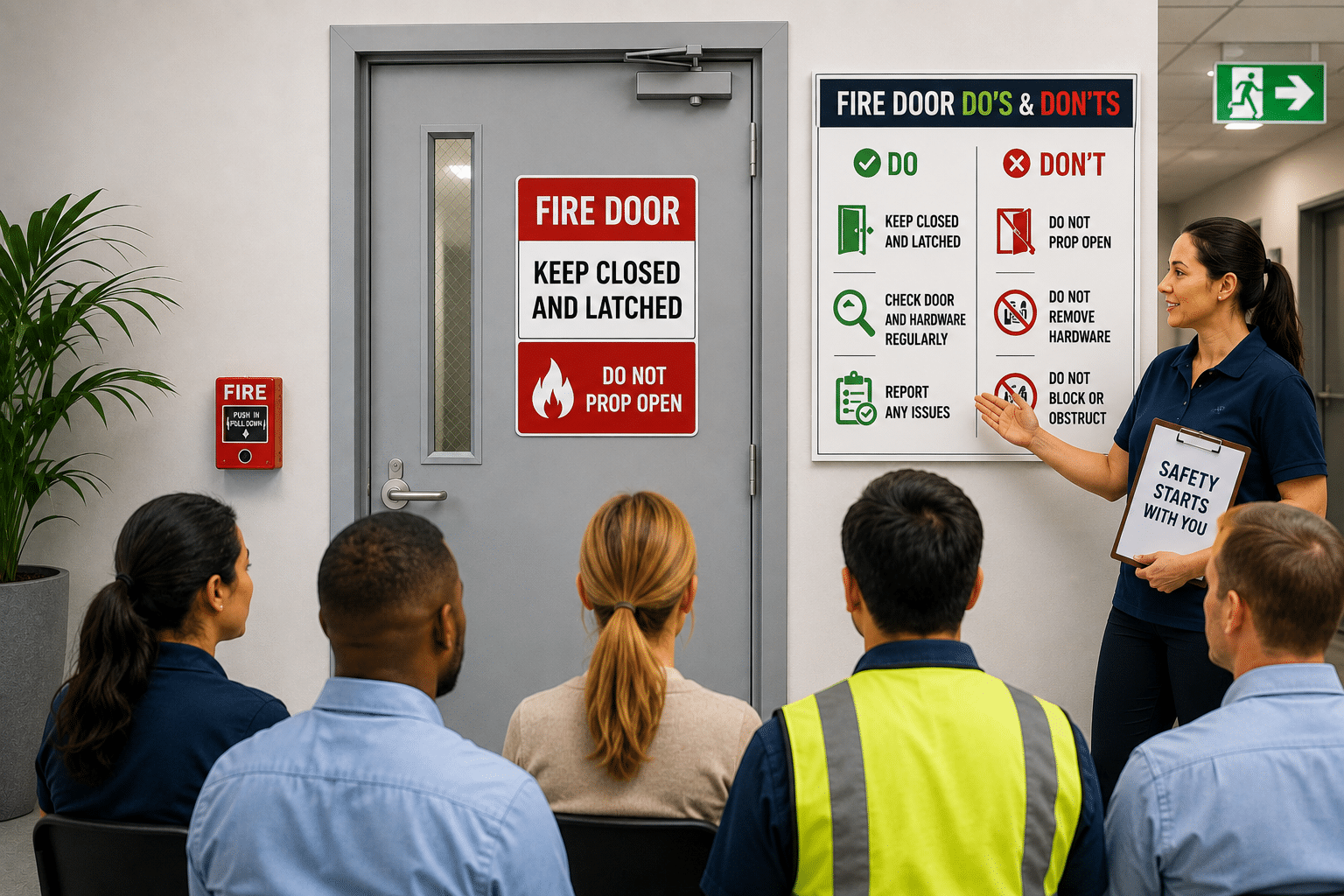
A fire door must close and latch properly. That means the door closer, latch, hinges and seals need to be suitable and in good working order. If a door is propped open, does not self-close or fails to latch, it cannot do its job.
Refurbishments and non-compliant openings often go hand in hand with hardware changes. During an upgrade, a contractor may replace a lock for convenience or fit a closer that is not suitable for the door size or rating.
The safest approach is to use fire-rated hardware that matches the door system. This keeps the door functional, compliant and easier to maintain over time.
Fire door work should be supported by clear documentation. This may include inspection reports, certification, door tags and maintenance records. For strata managers, facility managers and compliance officers, this paperwork is more than admin. It helps show that the building is being managed responsibly.
Records can become harder to confirm when refurbishments and non-compliant openings involve past work that was not properly documented, especially if a door was changed years ago with no clear evidence of its rating, installation method or approved hardware.
When records are missing, a professional inspection can help identify what is currently installed and what needs to be corrected.
Not every issue requires a full replacement. Some doors may only need hardware upgrades, closer adjustments, seal replacement or minor frame repairs. However, when the opening itself is unsuitable, replacement may be the smarter choice.
A custom fire door may be required for non-standard sizes, especially in older buildings where refurbishments and non-compliant openings do not match modern standard dimensions and should be assessed case by case.
A proper assessment can help avoid spending money twice. It is usually more cost-effective to install the right compliant solution the first time than to patch an unsuitable door and fail a later inspection.
Fire doors are easier to manage when refurbishments and non-compliant openings are included in the planning stage, so before approving works, confirm which doors are fire rated and whether flooring, wall, frame or hardware changes will affect them.
Use qualified trades who understand fire door systems. Keep records of all works. Do not allow unapproved modifications, even if they seem minor. Schedule inspections after refurbishment work is complete so any issues can be identified before they become a bigger compliance problem.
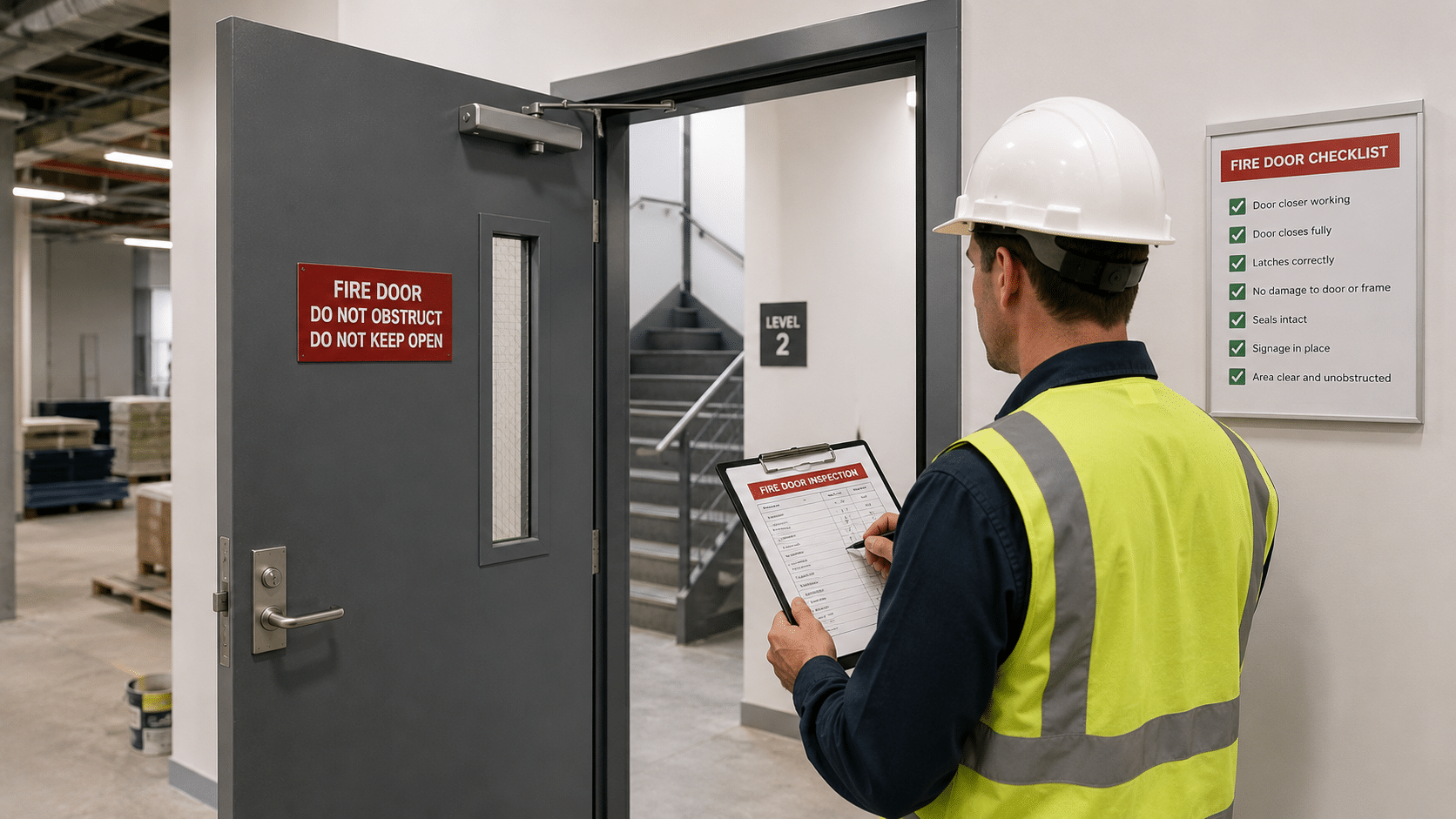
A simple checklist can make life easier: does the door close, latch, seal, swing freely and display the correct tag? If the answer is no, it is time to investigate.
Refurbishments and non-compliant openings do not need to become a headache. Comprehensive Fire Services works with strata managers, building managers, commercial property teams, builders and fire safety companies across Sydney to inspect, supply, install and maintain compliant fire door systems.
CFS can assess existing openings, identify compliance issues, recommend practical solutions and provide fire-rated doors, frames, locks, closers and maintenance support, so refurbishments and non-compliant openings can be managed properly whether you are dealing with one tricky opening or a full building upgrade.
For help with fire doors in refurbishments or non-compliant openings, contact Comprehensive Fire Services on 0418 749 488 or visit the contact page to arrange support.
Prepared using the CFS training and customer profile documents.



FPAS Accreditation Number: F055161A
We are committed to delivering the highest level of professionalism and compliance in the fire protection industry. As part of this commitment, our team holds accreditation under the Fire Protection Accreditation Scheme (FPAS) — the national accreditation framework developed by Fire Protection Association Australia (FPA Australia).

Phone: 0418 749 488
Fax: 02 4648 5386
Email: [email protected]
© 2026 Comprehensive Fire Service - Website by BSharp Tech