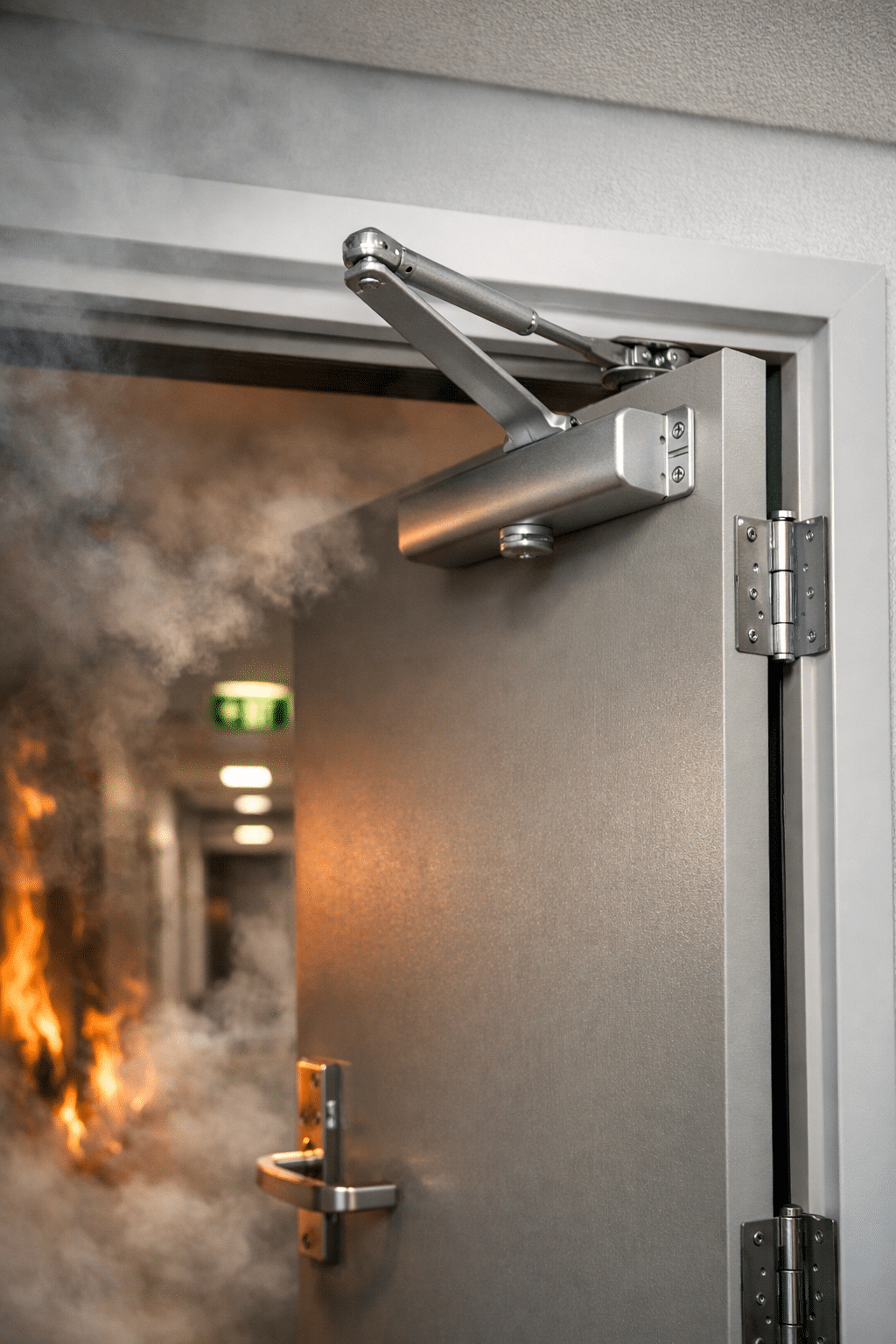
Building fire audit preparation does not need to be stressful. With a clear plan, the right documents and a quick walk-through of your site, you can glide through the process and keep occupants safe. This guide explains what to do in the weeks before, the day of, and immediately after the inspection so your building stays compliant and your Annual Fire Safety Statement stays on track.
What is a fire audit in plain English?
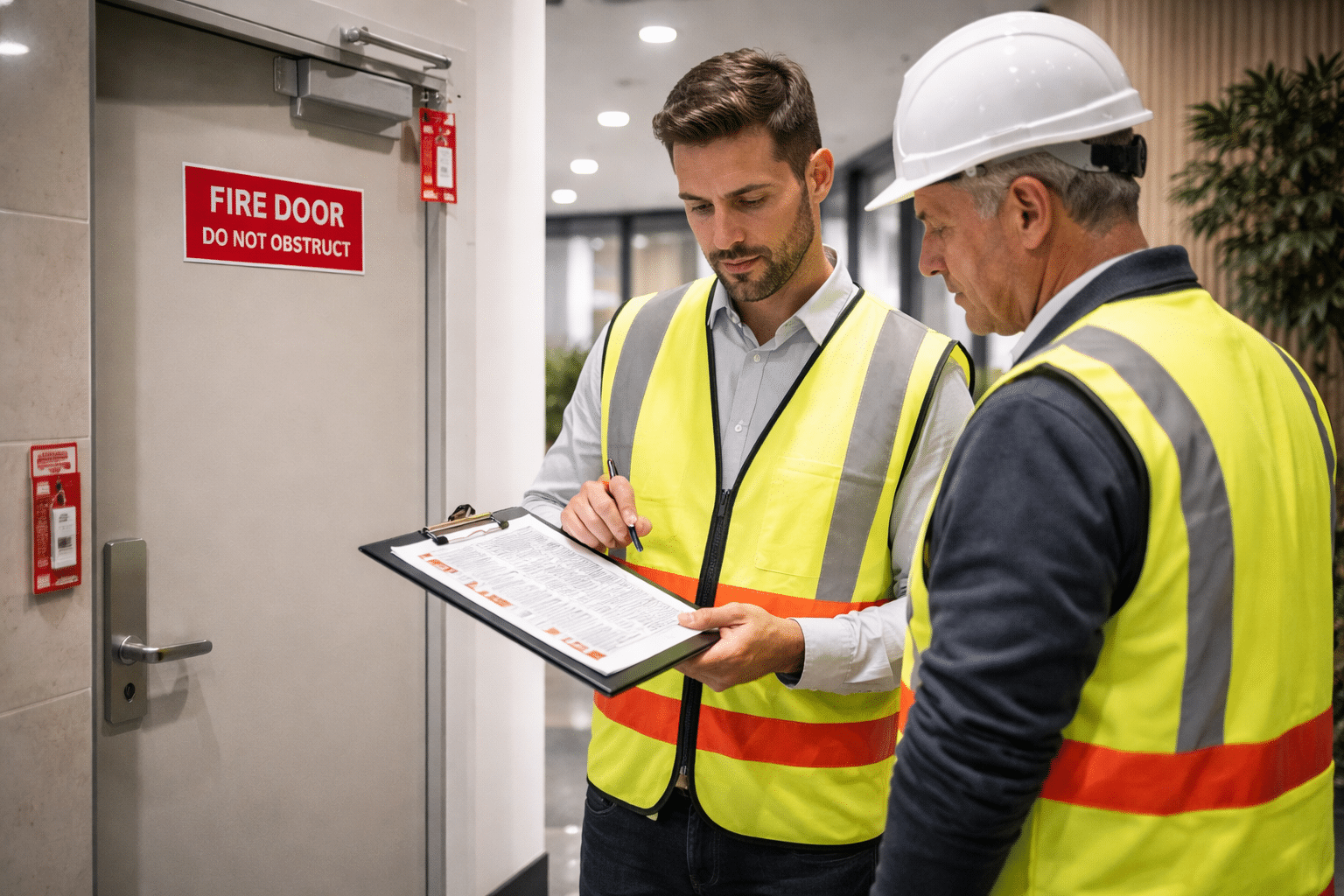
A building fire audit is a structured check of your essential fire safety measures to confirm they are installed, maintained and working properly. In practice, that means an auditor or certifier will verify fire doors and frames, closers and locks, exit hardware, smoke seals, signage, passive fire stopping, egress paths, and logbooks. If anything is missing, damaged or out of date, you will receive items to fix within a set timeframe.
Why the audit really matters
A building fire audit protects lives and reduces legal and financial risk. For strata managers and building managers, it also helps avoid nasty surprises when lodging your AFSS. Small issues multiply if left too long, so using the audit as a regular health check is smart asset management.
Timeline for smooth preparation
Use this simple timeline to get ready without last minute panic.
Three weeks out
- Book any trades needed for minor fixes.
- Confirm who will attend and who holds keys and access cards.
- Review past audit notes to see what tripped you up last time.
Two weeks out
- Walk each floor to spot visible defects.
- Check plant rooms, risers and fire stairs for storage.
- Confirm all documentation is current and filed in one place.
One week out
- Test that doors self close and latch.
- Clear egress paths and carpark thoroughfares.
- Send a notice to occupants about access windows and noisy works.
This staggered approach keeps your building fire audit calm and predictable.
Pre-audit quick wins inside the building
Focus on items that are fast to verify and often cause non-conformances.
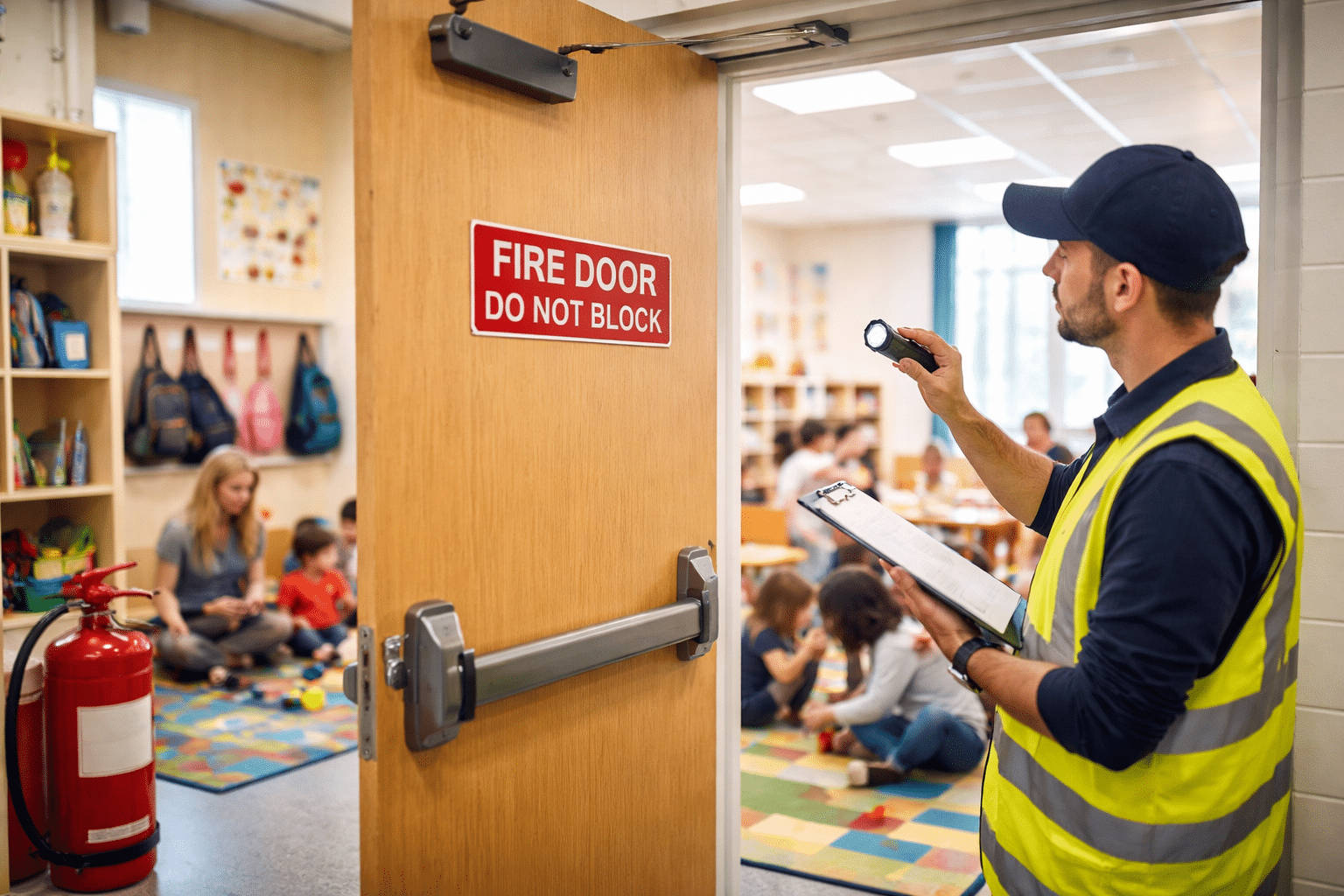
- Fire doors and frames
- Doors must self close from any open position and latch firmly.
- No wedges, hooks or doorstops.
- Check edge smoke seals are continuous and undamaged.
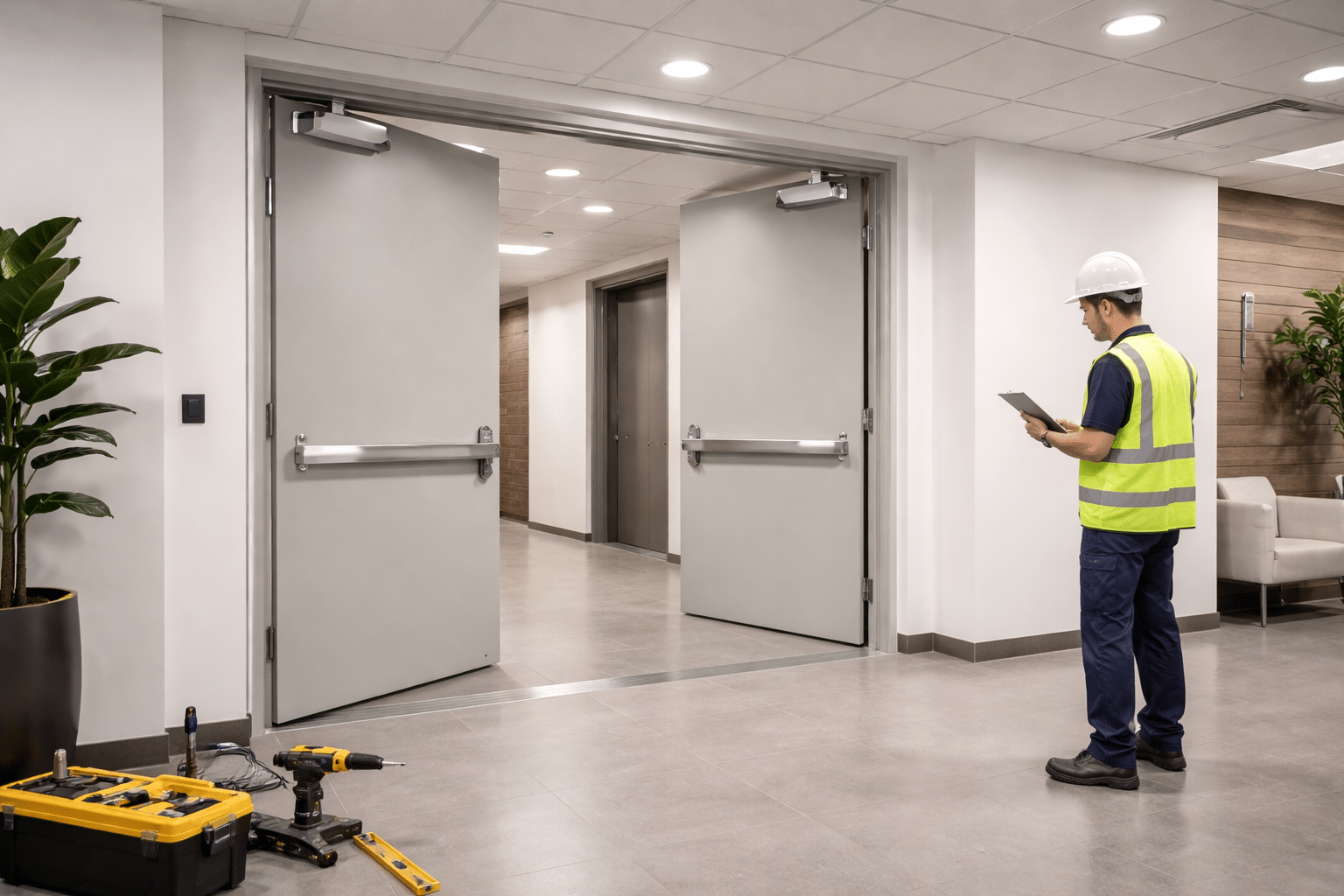
- Door hardware
- Closers are not leaking oil and arms are secure.
- Fire-rated locks and exit devices operate smoothly.
- Door gaps are within tolerance so smoke cannot slip through.
- Passive fire stopping
- Service penetrations around pipes and cables are properly sealed with rated materials.
- Labels are present and legible.
- No temporary foam or tape fixes.
- Paths of travel
- Fire stairs and corridors are free of storage and trip hazards.
- Exit signs are visible and not blocked by fit-out changes.
- Doors along the path open in the direction of egress.
- Signage and documentation
- Door tags and asset labels match your register.
- Assembly point and prohibition signs are tidy and current.
- Logbooks and test records are complete.
Nailing these basics will lift your confidence heading into the building fire audit.
Documents the auditor expects to see
Create a single folder, physical or digital, that includes:
- Current test and maintenance records for essential fire measures
- Product certificates for fire doors, frames and hardware
- Passive fire stopping details and drawings where available
- Previous audit reports and evidence of close-out
- Site plan with access notes and after-hours contacts
Having this pack ready speeds up your building fire audit and shows you take compliance seriously.
Common problems that trigger re-inspections
Even well run buildings hit a few snags. Watch for these usual suspects:
- Door closers out of adjustment causing doors to slam or fail to latch
- Damaged smoke seals from wear and tear or tenant alterations
- Unsealed penetrations in risers after new cabling works
- Non-rated hardware installed during reactive repairs
- Cluttered egress paths especially in basements and fire stairs
If you spot any of the above in your pre-check, log them and fix them before your building fire audit to avoid delays.
Day-of checklist for a tidy inspection
On the morning of your audit, run through this quick list:
- Ensure all access keys and passes are ready at reception
- Notify security and concierge of the auditor’s arrival
- Clear contractors from critical areas for the inspection window
- Keep one building representative with the auditor at all times
- Take photos of any issues raised to speed up quoting later
This small amount of structure helps the building fire audit stay on time and on scope.
What to do if the auditor finds defects
Stay calm and systematic. Ask the auditor to group items by priority and risk. For each item, note location, description and the standard it relates to. Agree on what evidence is required to close it out, such as a photo of a re-hung door, a label, or a certificate for passive fire sealing. This clarity will make close-out of your building fire audit faster and cleaner.
How to keep momentum after the audit
Your post-audit rhythm should be straightforward:
- Assign actions to contractors or the onsite team with due dates.
- Schedule access with tenants and send notices early.
- Track status in a simple register that mirrors the defect list.
- File evidence as you complete works so nothing is missed at AFSS time.
When your close-out is done, send a short summary to stakeholders so everyone knows the building fire audit outcomes and the building’s compliance status.
Strata, commercial and industrial tips
- Strata
Keep a small annual budget for door hardware and passive fire patching. It avoids special levies and keeps your building fire audit simple.
- Commercial towers
Lock in a quarterly door survey. High traffic floors see faster wear on closers and seals, so you will find issues earlier and your building fire audit will be routine.
- Industrial sites
Pay extra attention to sliding fire doors and large frames. Forklift knocks are common. A quick monthly visual check can save time during your building fire audit.
CFS helps Sydney property and strata managers prepare for a building fire audit with practical inspections, certified fire door supply and installation, compliant hardware, and passive fire stopping. We focus on doing the simple things well, documenting them clearly and communicating in plain English. If you need help getting audit-ready or closing out items, we can jump in quickly and keep you moving.