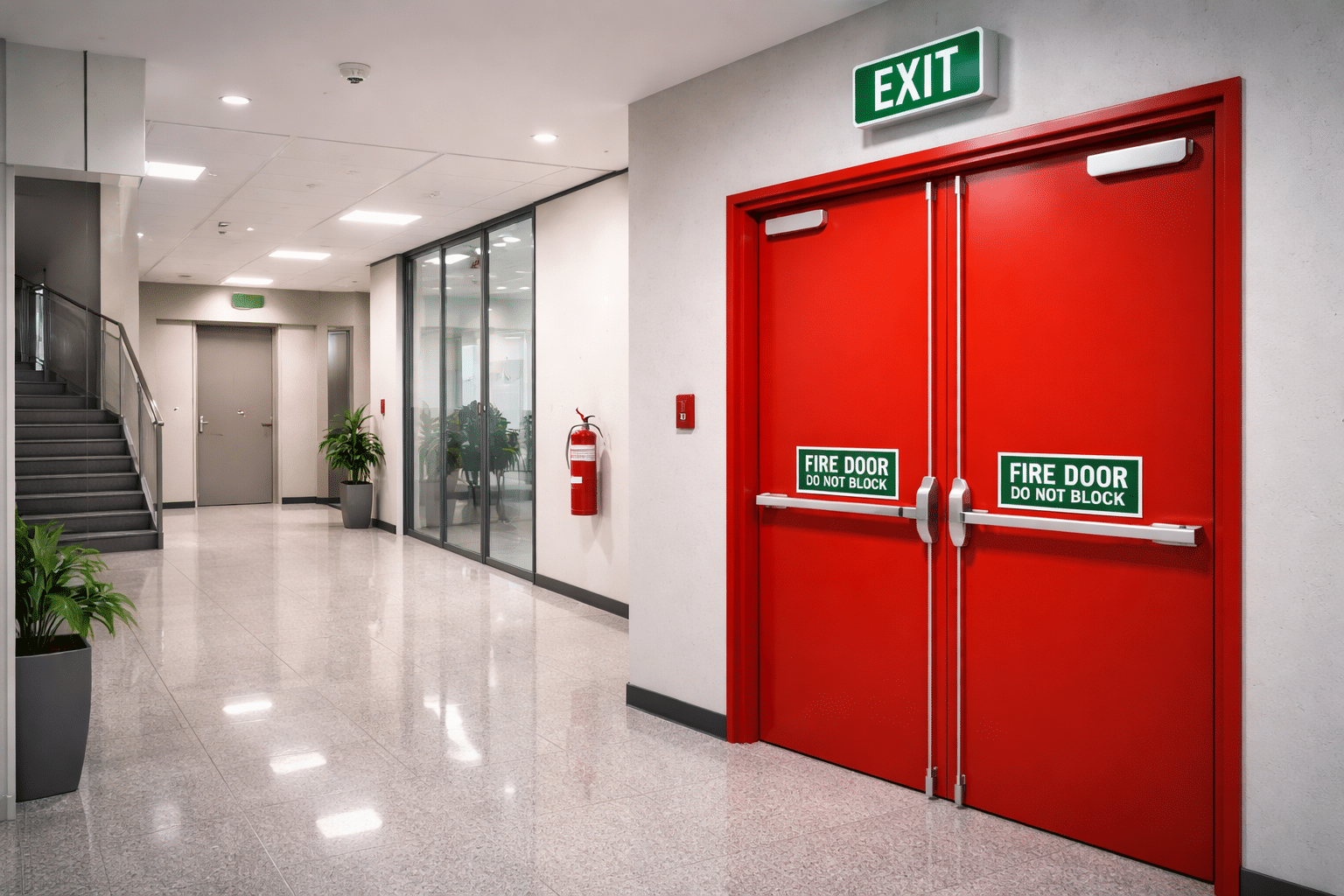
Commercial buildings need more than alarms and extinguishers to stay safe during a fire. One of the most important safety features is the fire door. It helps slow the spread of fire and smoke, protects escape routes, and gives occupants more time to get out safely. For property managers, strata teams, builders, and facility managers, knowing where fire doors are required is not just helpful. It is part of keeping a building compliant and reducing risk.
What Is a Fire Door and Why Does It Matter?
In simple terms, a fire door is usually required where an opening sits in a fire-resisting wall or barrier. The National Construction Code says required fire doors must comply with AS 1905.1, and these requirements sit within the broader rules for fire resistance, compartmentation, protection of openings, and exits.
The easiest way to think about commercial buildings and fire doors is to picture a building divided into safer sections. These sections are designed to contain fire in one area for a period of time, rather than letting it spread freely through corridors, stairs, plant rooms, or adjoining tenancies. If there is a doorway in one of those fire-resisting barriers, that doorway often needs a compliant fire door.
Fire Doors in Stairwells and Exit Paths
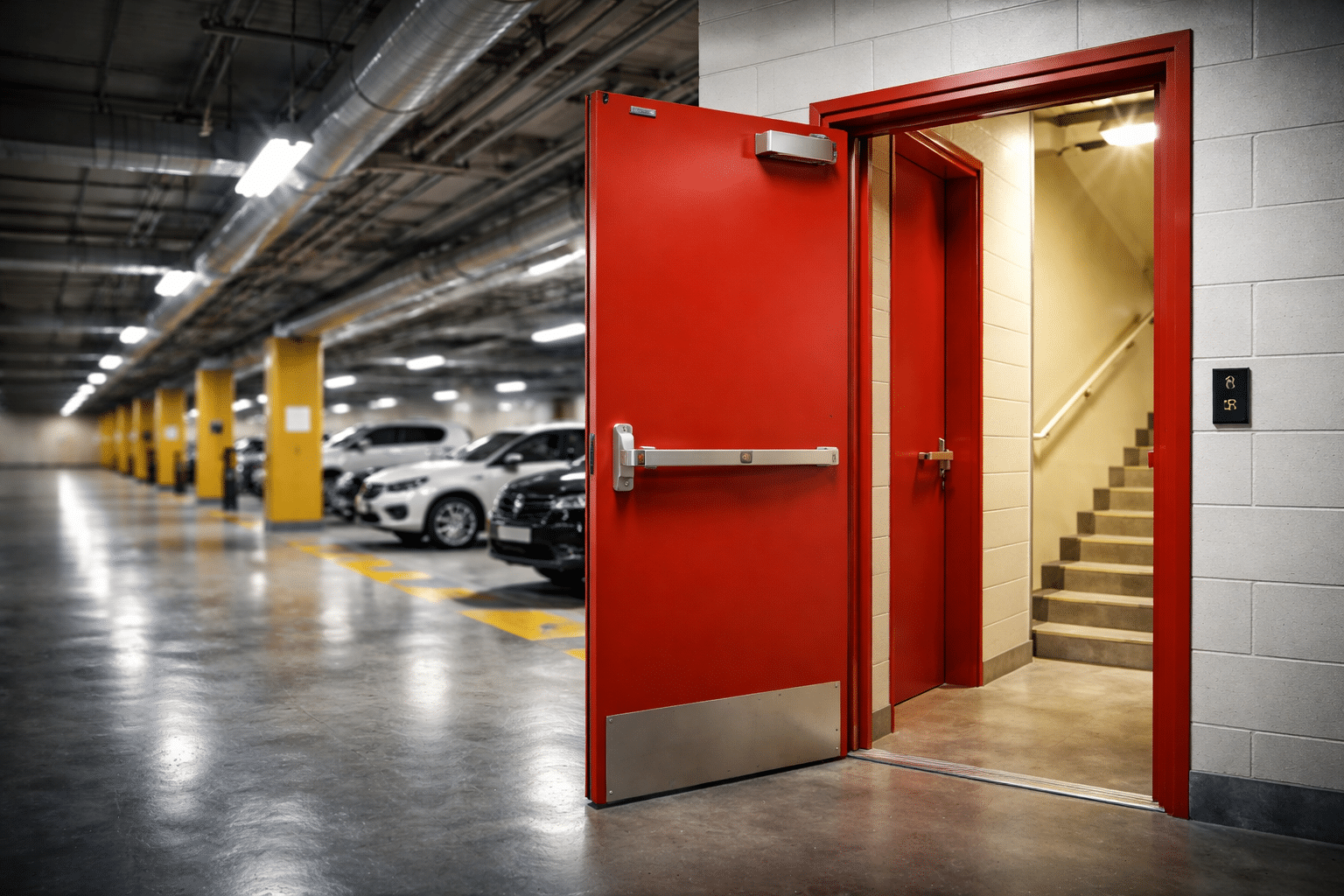
One of the most common places fire doors are required in commercial buildings is at entries to fire-isolated stairways and fire-isolated passageways. These exits are meant to stay protected so people can evacuate safely. If the door to a stairwell cannot resist fire and smoke, that safe path can quickly become dangerous. This is why stair doors are a major focus during routine inspections and annual compliance checks.
Fire Doors Between Tenancies
Another common location in commercial buildings is where separate tenancies meet. In office buildings, shopping centres, mixed-use sites, and warehouses, walls between occupancies may be required to resist fire. Where there is an opening in that wall, the door set often needs to match the fire performance of the wall system. The goal is straightforward: keep a fire in one tenancy from quickly moving into another and causing wider damage, more disruption, and greater danger to occupants.
Fire Doors for Service and Plant Rooms
Service rooms are another area to watch. In many commercial buildings, fire doors may be required for rooms that house electrical equipment, communication services, plant, or other building systems. These rooms can present a higher fire risk or need separation from the rest of the building. The same logic applies to some risers, shafts, and service cupboards where fire-resisting construction is part of the building design. If a wall needs to resist fire, the opening through it needs proper protection too.
Fire Doors Along Corridors and Smoke Barriers
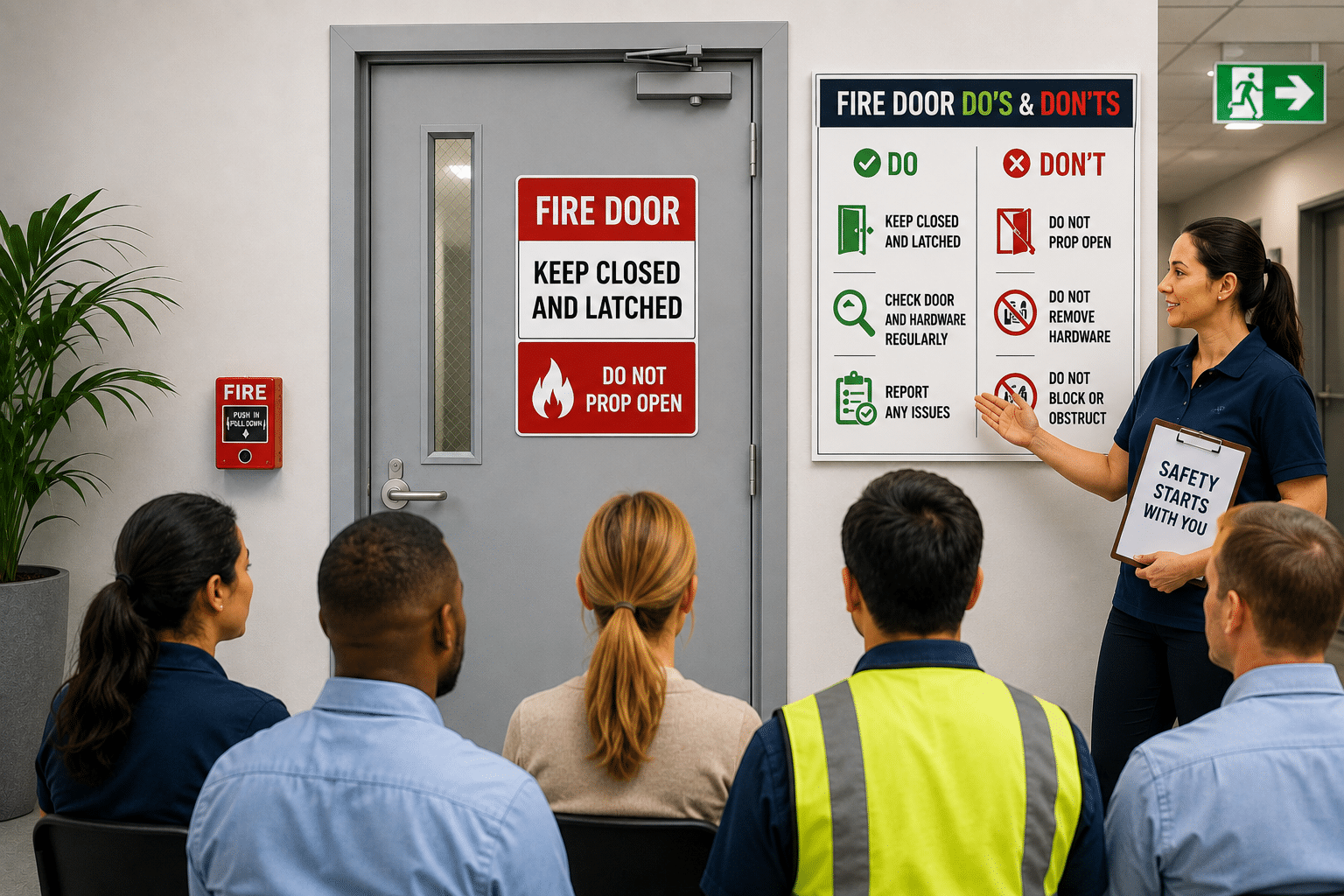
You will also often find fire doors in commercial buildings along corridors that form part of the overall fire and smoke separation strategy. In some cases, these may be smoke doors rather than fire doors, depending on the design and the function of the area. Either way, the point is the same: keep escape paths safer for longer and support orderly evacuation. This is one reason propped-open doors can cause real problems. A door only helps when it closes properly and its seals, frame, hardware, and latch all work as intended.
Why Older Buildings Need Extra Attention
For older commercial buildings, there can be a bit of confusion because the current layout, tenancy use, or fitout may have changed over time. A door that looks heavy is not automatically a compliant fire door. Paint, new hardware, damaged seals, unapproved glazing, or gaps around the frame can all affect performance. That is why visual assumptions are risky. Fire doors need to be correctly specified, installed, and maintained as part of the building’s fire safety measures.
The Compliance Side of Fire Doors
For managers responsible for commercial buildings, the compliance side matters just as much as the physical door itself. In New South Wales, annual fire safety statements must be issued each year for existing buildings with essential fire safety measures. Fire doors may form part of that process depending on the building’s fire safety schedule and design.
A practical way to stay on top of fire door compliance in commercial buildings is to treat it as part of routine maintenance rather than a last-minute scramble before paperwork is due. Regular inspections can pick up common issues such as missing tags, non-compliant locks, damaged closers, worn seals, misaligned frames, or doors that do not self-close. Fixing these issues early is usually easier and less costly than dealing with failed inspections, urgent rectification work, or tenant complaints later on.
Common Mistakes That Affect Compliance
Another important point for commercial buildings is that not every door near an exit is automatically a fire door, and not every fire door can be modified without consequences. Swapping hardware, drilling holes for cabling, adding signage, or wedging a door open may affect compliance. Fire doors work as a system, not just a door leaf on its own. The frame, seals, hinges, closer, latch, and certification details all play a part in how that system performs under fire conditions.
Where Fire Doors Are Usually Required
So, where are fire doors required? In most cases, they are required where openings occur in fire-resisting walls, protected exits, stair enclosures, passageways, service rooms, shafts, and separation walls between spaces that need to be isolated from one another. The exact requirement depends on the building classification, design, fire safety schedule, and applicable code provisions, which is why site-specific advice is always important.
Final Thoughts
When managed properly, commercial buildings become safer, easier to maintain, and less likely to run into nasty surprises at inspection time. Fire doors are not there to make life difficult. They are there to buy time, protect lives, and support the safe operation of the building. If you are unsure whether your site has the right doors in the right places, a professional inspection is the smartest place to start.
Comprehensive Fire Services can help with fire door inspections, maintenance, replacements, and compliance support across Sydney. If you need practical advice without the runaround, the CFS team can assess your building and help you keep things safe, compliant, and moving in the right direction.