Evacuation diagrams are the roadmaps people rely on in an emergency, and they work best when your fire doors and their signs are set up clearly and consistently. If you look after strata buildings, commercial sites or industrial facilities in Sydney, you already juggle a lot. This guide keeps things simple so you can tick off compliance and keep occupants safe without the headache.
Why your diagrams and door signs must work together
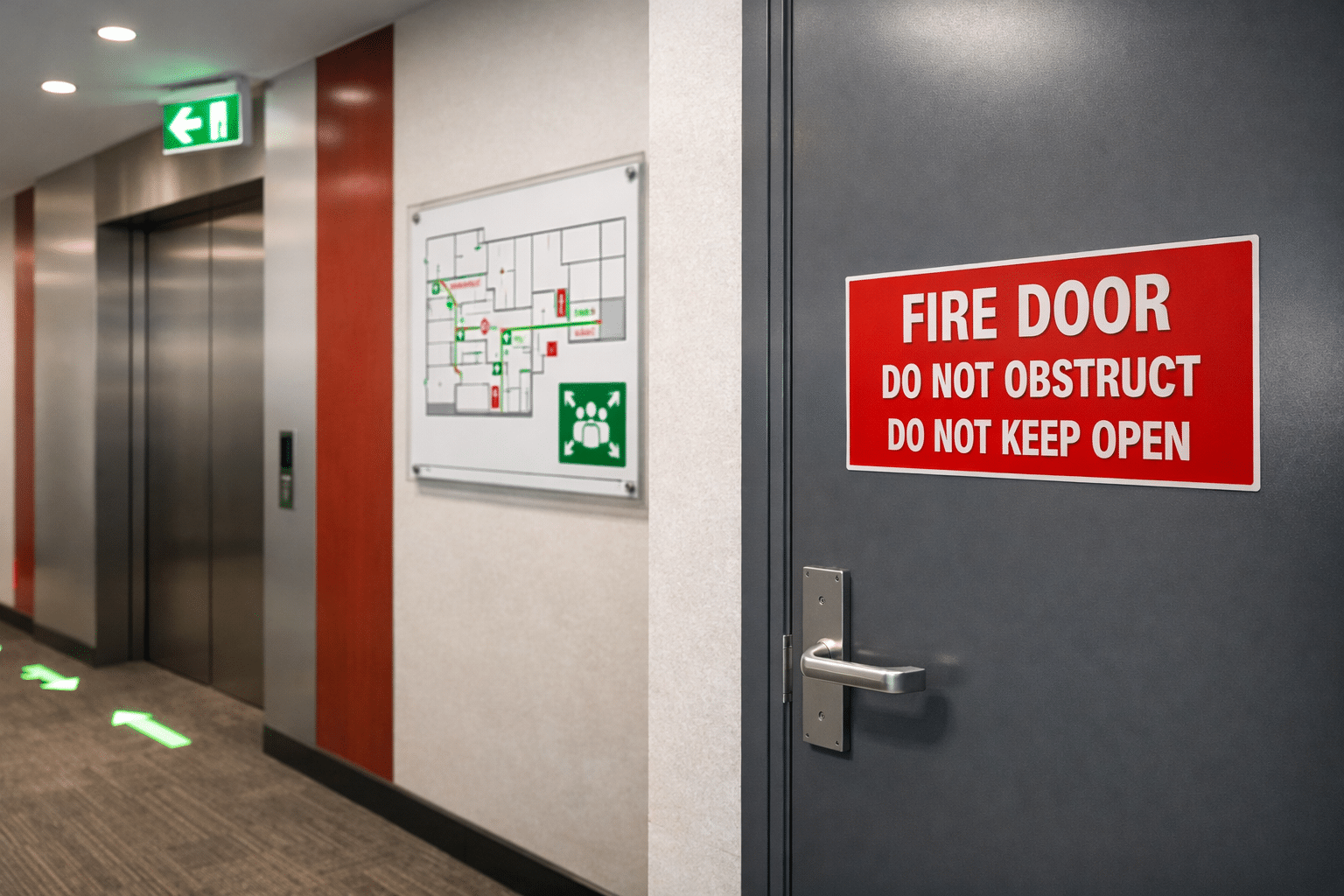
When alarms sound, people do not think for long. They look for the nearest exit, follow arrows and head to assembly points. That is why evacuation diagrams should match what people see on the ground: real door labels, the right door swings shown, and signage that lines up with paths of travel. If your diagram shows an exit through a fire door that is actually kept locked or blocked by storage, confusion follows. Aligning the map with the hardware and the signs saves seconds that matter.
What standards and rules apply
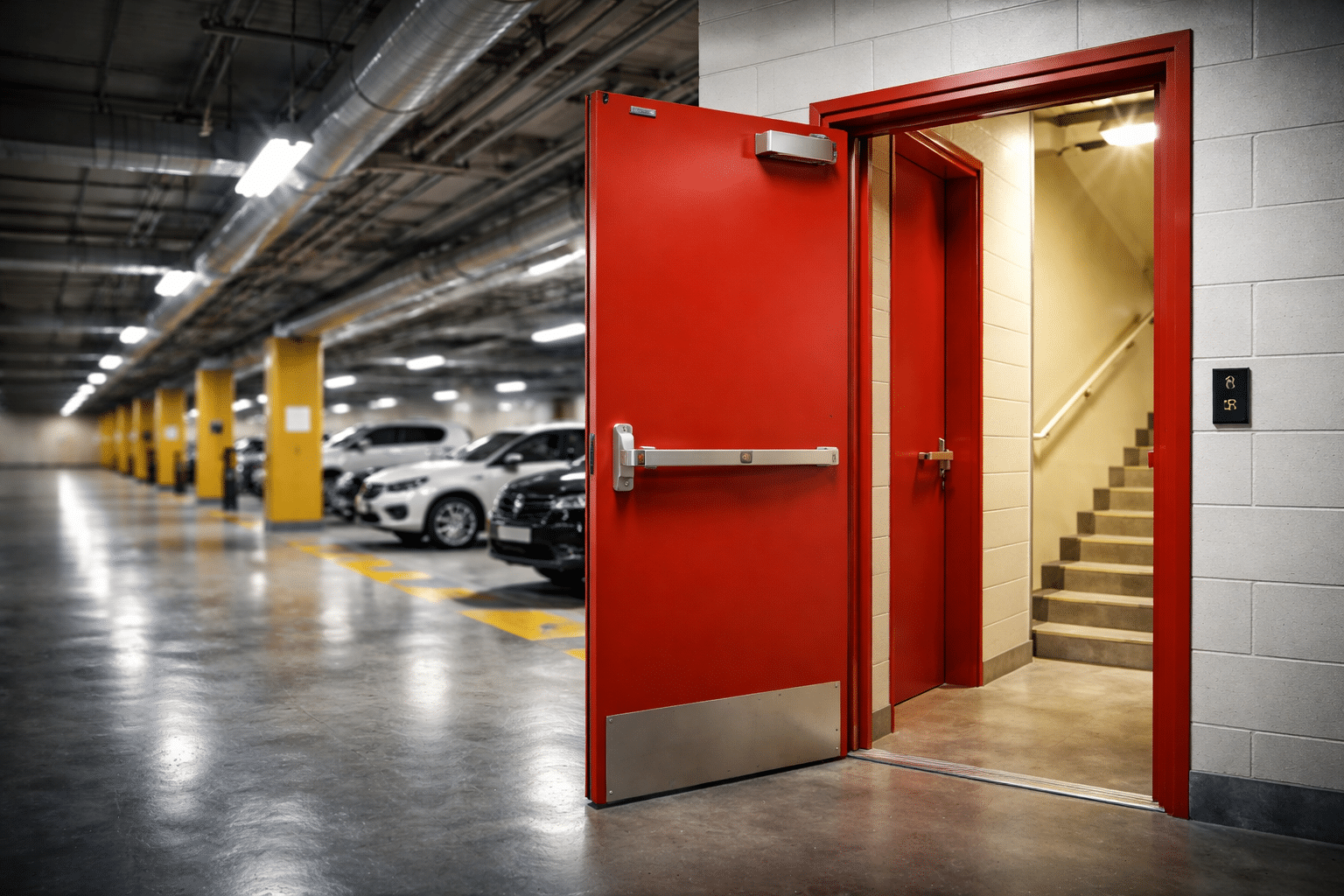
For Aussie sites, your evacuation diagrams should reflect the building’s layout accurately and clearly, with features like exits, fire equipment and assembly areas easy to spot. Your fire doors must also comply with their fire rating and be fitted with self closers, compliant locks and smoke seals. Signs like “Fire Door Do Not Obstruct Do Not Keep Open” must be visible and durable. While your fire safety assessor will check many items, the day to day accuracy sits with the building manager or strata committee, so a simple maintenance routine is essential.
The essential elements of a useful diagram
Great Evacuation Diagrams share a few traits: a clear “You are here” marker, uncluttered symbols, clear exit routes and assembly points that make sense for all occupants. If your site has multiple floors, show stair connections clearly. Good diagrams also show firefighting gear like hose reels and extinguishers. Most importantly, Evacuation Diagrams should be located where people actually pause and look, such as lobbies, lift lobbies, major corridors and near exits.
Placement tips for different building types
Strata hallways, retail tenancies and industrial warehouses each have their quirks. In strata, place evacuation diagrams at each lift lobby and near stair entries so residents and visitors see them on the way in and out. In retail or hospitality, keep them at staff areas and behind counters where teams gather for briefings. In warehouses, mount them at main entries, dispatch doors and break rooms where shift workers start and finish. For multi tenant floors, ensure each tenancy has diagrams tailored to their fit out, not just the base building.
Fire door signage that actually gets noticed
Even the best evacuation diagrams will fall short if the matching fire door has a faded or missing sign. Make your fire door signs consistent in size, colour and wording. Keep them above eye level so trolleys and furniture cannot damage them. Add directional arrows on corridor walls before you reach the door so people know what is ahead. Consistency reduces hesitation, and clear repetition helps in smoky or stressful situations.
Common mistakes to avoid
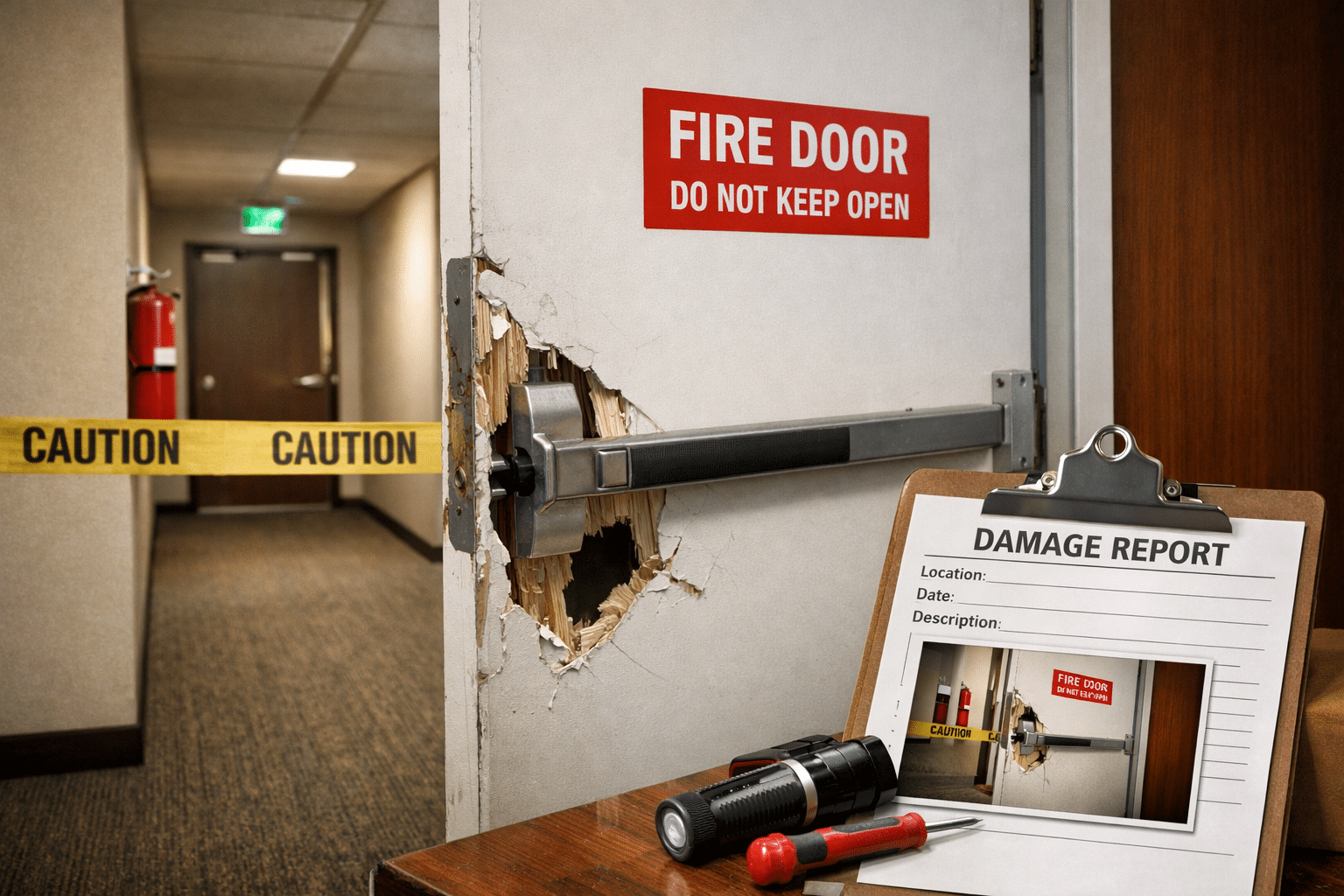
Three slip ups appear over and over. First, outdated evacuation diagrams left on the wall after a fit out or new tenancy. Second, furniture placed in front of fire doors, making the sign useless. Third, doors held open with wedges that defeat their self closers. Fixing these is simple: update the map whenever you change walls or doors, keep a quarterly walk through checklist, and use compliant hold open devices where needed rather than wedges.
A quick step by step checklist
Start with a walk through to confirm the paths of travel and the location of each fire door. Note any doors where the signage is missing or incorrect. Next, review your evacuation diagrams to confirm they show each door and its correct swing and label. After that, replace or install signs where gaps exist and remove any wedges or obstructions. Finally, schedule a recurring reminder to review evacuation diagrams every six months or whenever a layout changes.
Making the diagrams easy to read
Design matters. Choose a simple colour palette with high contrast for exits and paths. Use one symbol set consistently. Keep text minimal and legible. When you update evacuation diagrams, check print quality and laminate for durability, especially in busy or humid areas like loading docks or end of trip rooms. A tidy frame helps protect the sheet and makes it look official, which encourages people to trust and use it.
Training your team to use what they see
Even the clearest evacuation diagrams and the neatest signs cannot replace a short briefing. Include a 10 minute induction for new staff, cleaners and contractors, pointing out where the diagrams are and how to read them. Walk the actual path to the assembly area at least once each year. For strata sites, add a reminder into meeting notes and lift notices before scheduled fire drills. Keep it friendly and practical so people remember it.
Keeping everything up to date
Buildings change. Tenants move walls. New cupboards appear. That means evacuation diagrams need attention any time you alter the floor plan, change a door swing or relocate equipment. Keep a dated version number in a corner so you can tell at a glance which sheet is current. Store the editable file securely so updates are quick. Tie the diagram review to your annual fire safety statement process to avoid last minute stress.
How this links to broader fire door compliance
Getting signage and maps right is part of a bigger picture. Fire doors need the correct tags, compliant hardware and regular maintenance so they close properly in a fire. When you coordinate evacuation diagrams with onsite signage and door performance, you reduce risk, lower the chance of non compliance and improve safety for everyone who uses the building. Treat the map on the wall, the sign on the door and the door itself as one system that needs to work as a team.
Simple fixes that deliver big wins
Small changes make a big difference. Add glow in the dark arrows where corridors can get smoky. Place extra directional arrows in long hallways that bend. Reposition a diagram that is hidden behind a pot plant. Refresh worn stickers before they peel. And the easiest win of all is to match the wording on your door signs to the wording shown on your evacuation diagrams so there is no second guessing.
What to do next
Pick one floor and do a 30 minute walk through this week. Mark any mismatches between evacuation diagrams and real world signage. Book a tidy up of door labels and order replacements together to keep the look consistent. Then schedule a review for the remaining floors. Once the basics are in place, your future checks will be quick, and your occupants will be more confident during drills and emergencies.