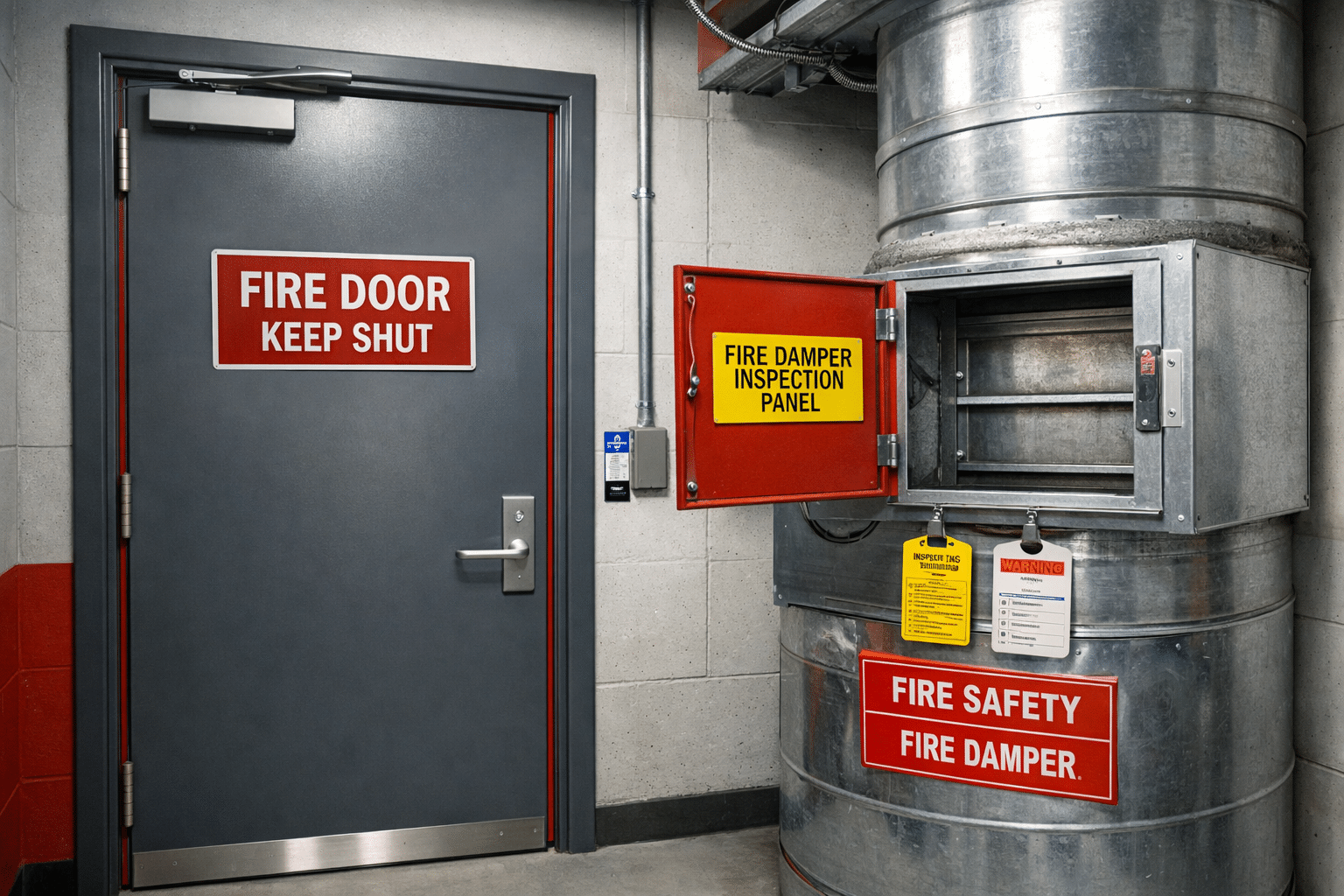
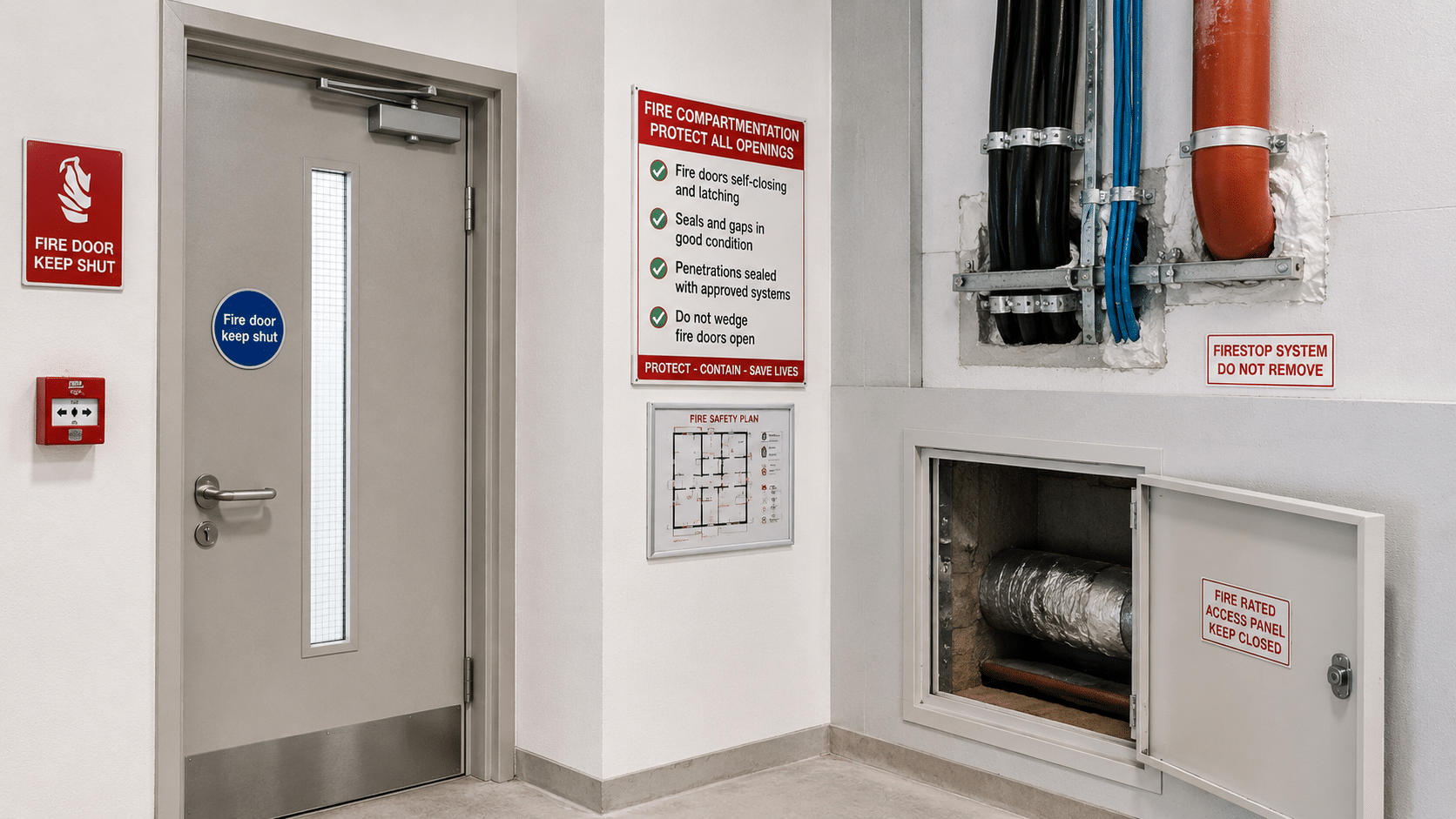
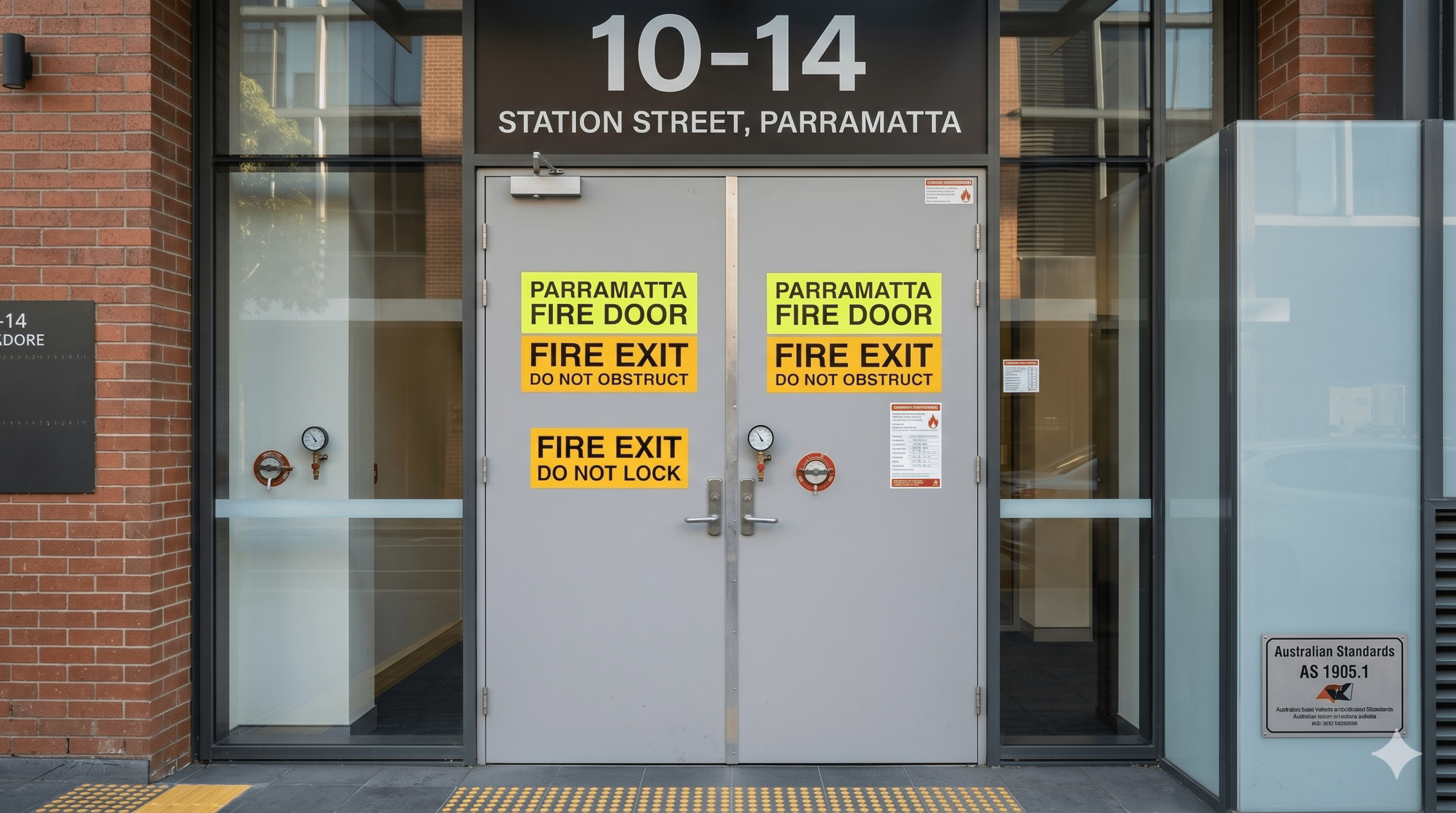
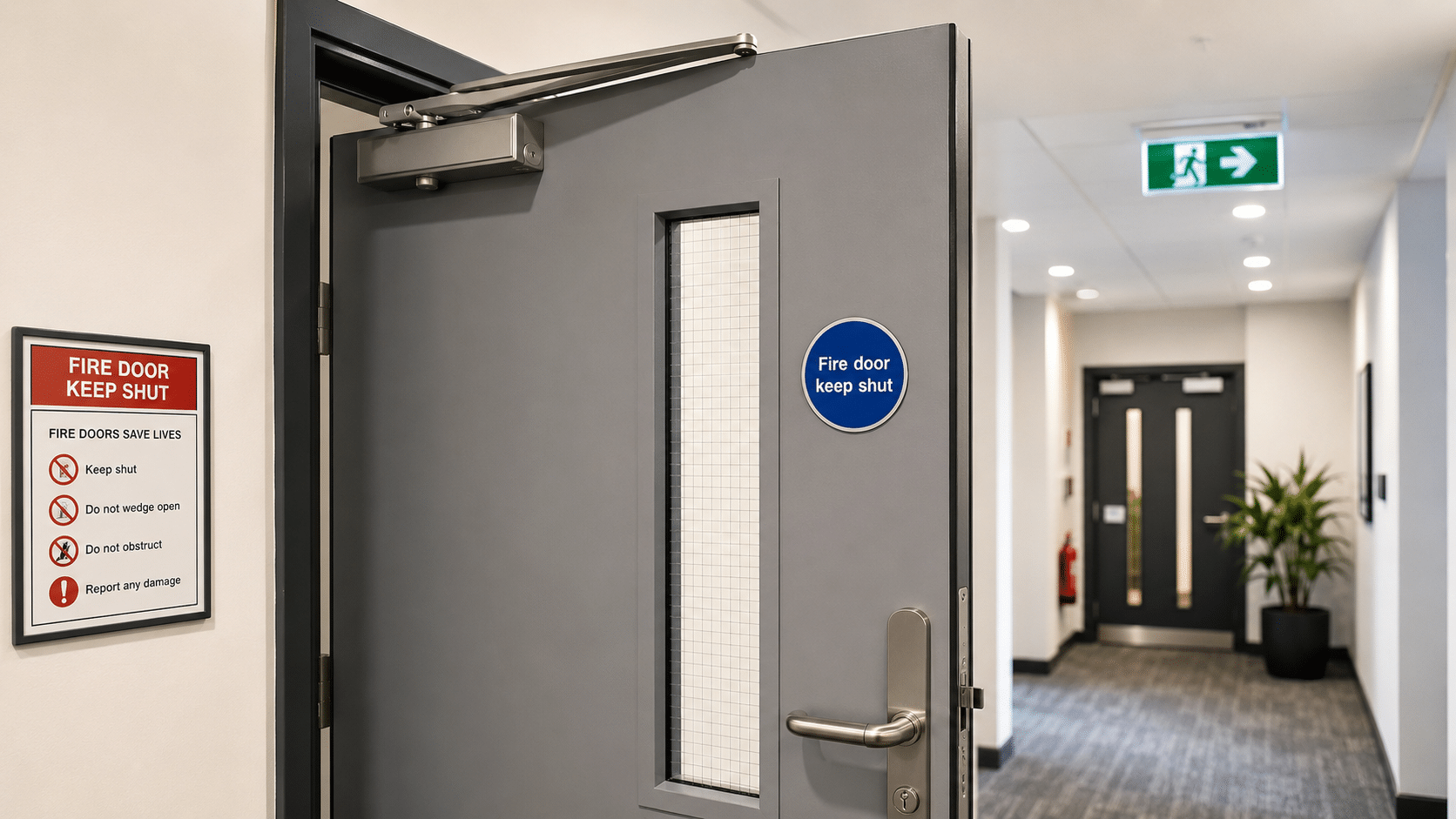
Fire damper coordination with fire doors in risers is one of those behind-the-scenes jobs that only gets noticed when something goes wrong. In a fire, these two passive protection elements work together to slow flames and smoke so people can get out and firefighters can get in. When they are not planned together, you can end up with clashing hardware, compromised fire ratings, and unnecessary rework.
What is a riser and why does it matter?
A riser is a vertical shaft that carries services like ductwork, electrical, and plumbing up through a building. It is usually part of a fire compartment system. The door on the riser room or shaft helps maintain the fire barrier, while the fire damper inside the ductwork is designed to shut when heat is detected, keeping fire from moving between levels. If either element fails, the barrier is only as strong as its weakest link.
Common coordination pitfalls
Across strata, commercial, and industrial sites, we see the same issues pop up:
- Doors and dampers specified in isolation
The door schedule may call for a -/60/30 door set, while the mechanical spec lists a different duct rating. Without a quick check, you might get a mismatch. That can create delays during inspection when the certifier asks for evidence that the door, duct, and fire damper assembly work as a system.
- Clearance clashes
A damper or actuator installed too close to the opening can clash with door frames or closers. This is a common headache in tight risers. A little upfront planning of the damper sleeve length and frame profile avoids on-site cutting that can affect the rating and the fire damper performance.
- Access for inspection and maintenance
Dampers need inspection points and tags. Door hardware needs regular checks. If the access panel is hidden behind a door stop or shelving, your maintenance team will struggle to reach the fire damper for yearly checks.
- Seal continuity
Penetrations around ducts and frames must be sealed with tested systems. Using a general-purpose filler near a fire damper or frame might look tidy but can void compliance.
A simple five-step coordination checklist
Here is a plain-English approach your building or project team can use to get everyone on the same page.
1) Confirm the fire strategy early
Before ordering anything, confirm the fire compartmentation plan for the riser. Note the fire resistance level for the walls and the required door set rating. Match that with the mechanical specification for duct rating and the fire damper type. One page with ratings, product standards, and access needs saves weeks later.
2) Draw the interface, not just the items
Ask your designer or builder to show the door frame, closer, threshold, and the damper sleeve and actuator in the same detail. Include clearances and access openings. If the fire damper sits within 200 mm of the opening, check for clashes with hinges, closers, or panic hardware.
3) Choose compatible, tested components
Use components that have been tested to relevant Australian Standards and are designed to work in the same assembly. Pair the door set, frame, sealant system, and fire damper that have documentation you can present at certification. Keep a digital folder of data sheets, installation instructions, and tags.
4) Plan access and identification
Every fire damper needs to be identifiable and reachable for inspection. Mark the access panel position on drawings and confirm it will not be blocked by the door swing or future shelving. For the door, confirm vision panel or louvre requirements align with the riser’s smoke and fire strategy.
5) Document the install and handover
Take photos as you go. Record the fire damper tag numbers, the door set labels, and the sealant batches used at the penetration. A clean handover pack makes your annual statements much easier and avoids hunting for paperwork.
Mechanical and door hardware tips that actually help
- Use slim-profile frames in tight shafts
A narrow frame profile can give a few extra millimetres for ductwork and the fire damper assembly without compromising the door rating.
- Position the closer smartly
Surface-mounted closers are reliable, but their arms can clash with duct sleeves. Confirm arm swing zones before finalising the fire damper location.
- Select the right door undercut
Riser rooms can be negative pressure zones. Too big an undercut invites smoke spread, too small can affect ventilation. Balance with the fire damper shut-off behaviour to keep smoke paths controlled.
- Protect cables and actuators
If your fire damper uses an actuator, run cabling in a way that does not force penetrations through the door frame or leaf. Keep penetrations to tested, labelled points only.
Construction sequencing for fewer headaches
On site, order of operations matters. Here is a sequence that works well:
- Set out the riser opening and frame fixings.
- Install the frame and check plumb and level.
- Fit ductwork and the fire damper sleeve, keeping clear of the door swing envelope.
- Apply tested penetration seals around the sleeve.
- Hang the door leaf and install closers and latches.
- Add access panels for damper inspection.
- Label the fire damper and the door set.
- Photograph and file your documents.
Sticking to this order reduces the number of times trades need to redo work and helps the fire damper and door end up exactly where they should be.
Compliance and record keeping made easy
Certifiers and building managers want to see proof, not guesswork. Keep the following in a tidy pack:
- Product compliance certificates for the door set, frame, hardware, and fire damper
- Installation instructions marked up with any site-specific tweaks
- Photos of each stage, showing seals and tags
- A simple riser schedule listing door ratings, fire damper types, access panel locations, and inspection intervals
With that pack, annual statements are far less stressful and service contractors can get in and out quickly.
For strata and building managers
If you manage multiple sites, standardise your riser details. Use one-page typicals that show the door type, frame profile, fire damper location, access point, and labels. Share the same typical with your contractors so everyone talks the same language. That way, when a callout happens, the technician knows exactly where to find the fire damper and what parts to bring.
For builders and mechanical contractors
Agree on responsibilities during procurement. Who supplies the frame packers, the penetration seal system, and the fire damper access panels. Who labels what. Make that crystal clear in the subcontract scopes. A short coordination meeting before frames are ordered can prevent the classic site problem where the fire damper lands in the only place the door closer arm needs to be.
Quick troubleshooting guide
- Door will not close fully
Check for clashes with the duct sleeve or access panel frame near the hinges. If necessary, adjust the sleeve length so the fire damper sits clear of the door swing.
- Visible gaps at the penetration
Replace general filler with the tested sealant or collar listed for the fire damper and duct type. Re-photograph for records.
- No room for the access panel
Relocate the panel to the corridor side if permitted, or switch to a smaller format that still allows tool reach to the fire damper blades and actuators.
How CFS can help
Comprehensive Fire Services works with builders, strata managers, and compliance teams across Sydney to coordinate door sets, frames, and penetrations around risers so the whole assembly works as designed. We understand the site pressures and the paperwork, and we are happy to liaise with your mechanical team to make sure the fire damper and the fire door are a neat, compliant pair. For advice or a quote, call 0418 749 488 or contact us through our website.