Fire door hardware compatibility can be tricky, especially when you are juggling multiple buildings, budgets and timelines. This friendly guide gives you a practical map to check whether your door, frame and hardware will actually work together. It is written for strata managers, building managers and construction teams who want confident decisions without the techy overwhelm.
Why compatibility matters
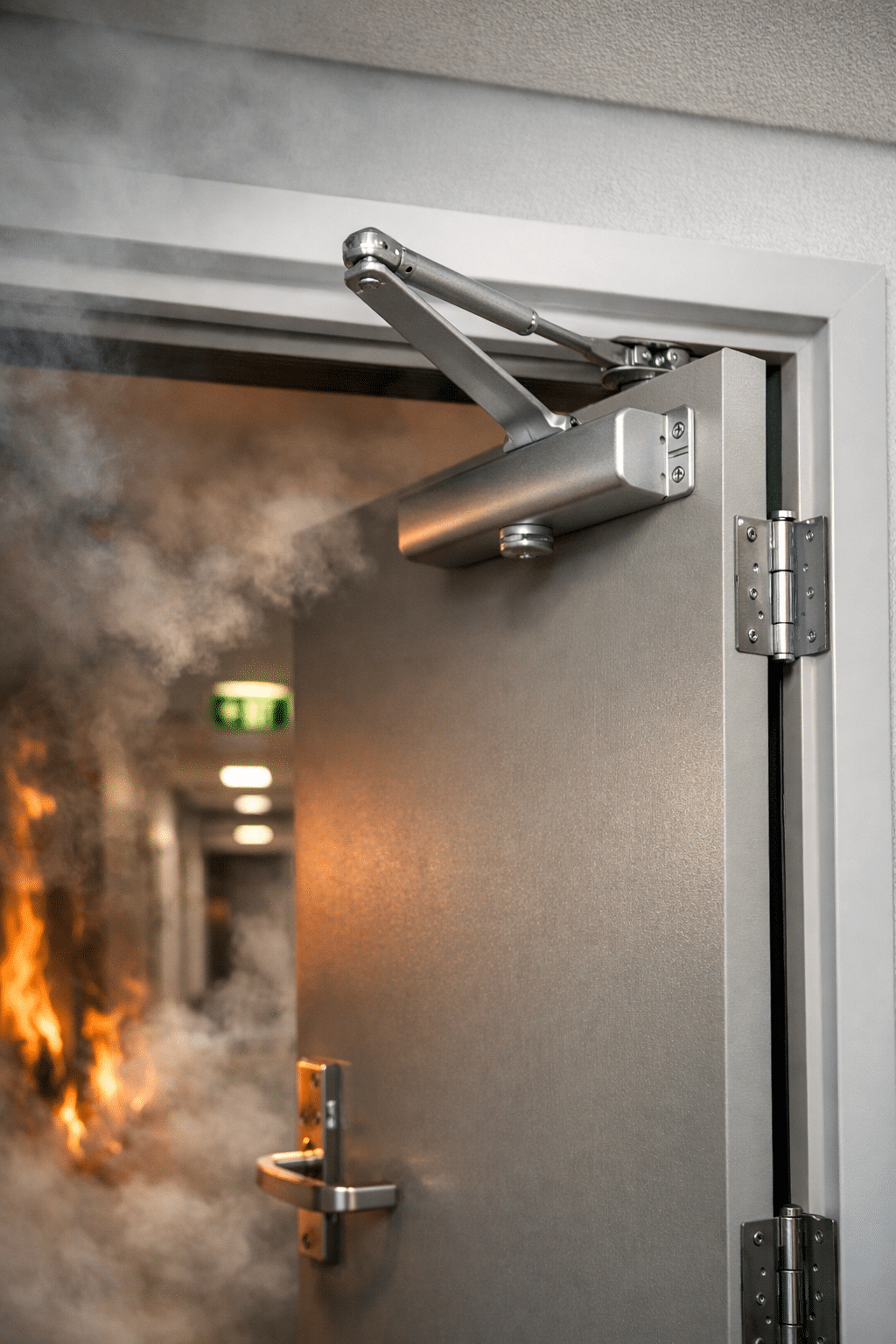
A certified fire door leaf is only one part of a passive fire system. If the hinges, closer, locks or seals are not tested with the door set, the rating can be compromised. That puts tenants at risk, creates compliance headaches and can blow out maintenance costs. The good news is you can avoid most issues by following a simple matching process that mirrors how certified systems are assessed. Our map below turns the standards into clear steps.
Meet the parts in the map
Before we map, let’s label the main pieces:
- Door leaf and core type
- Frame and profile
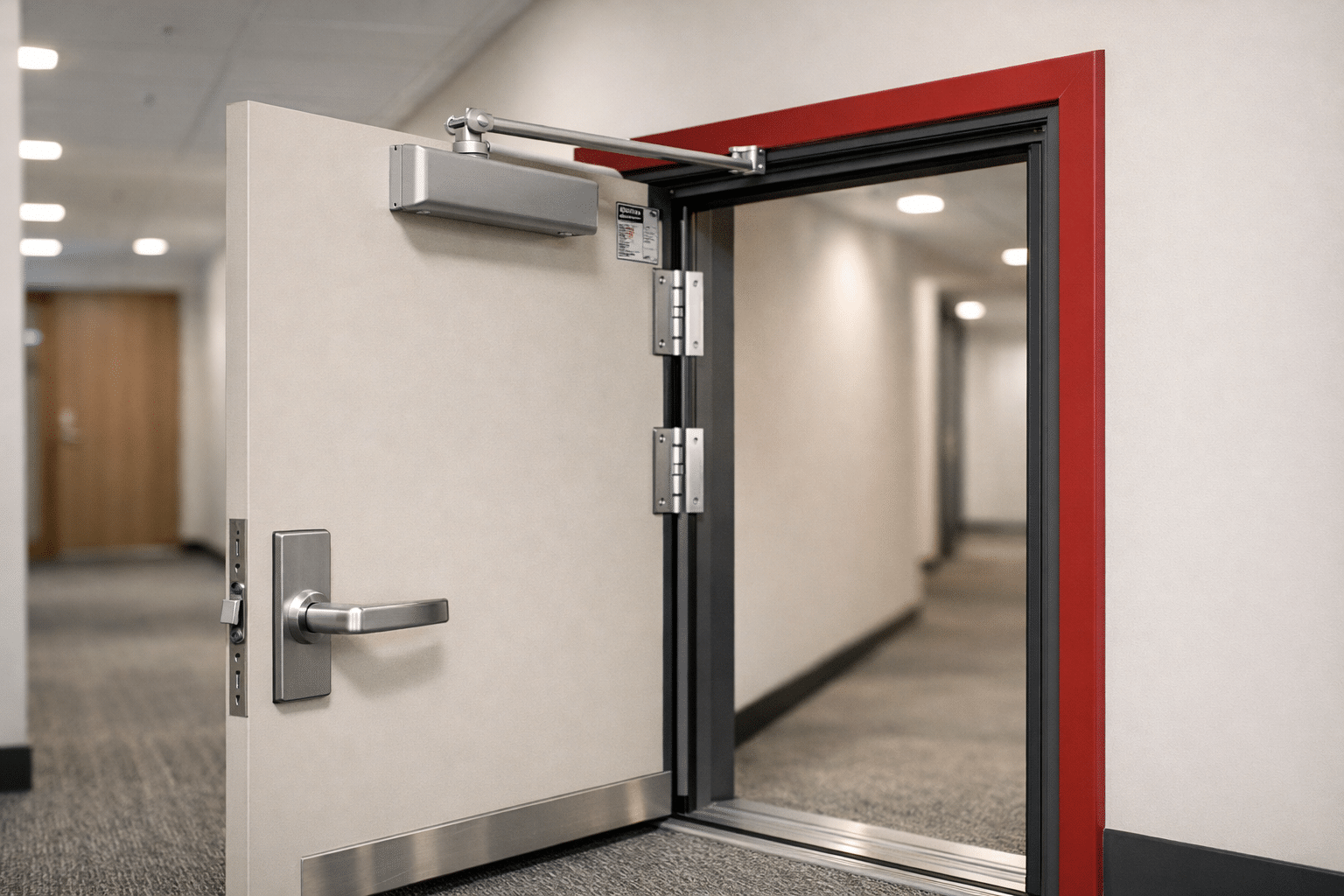
- Hinges and fixings
- Door closer and arm type
- Latching hardware and strike
- Smoke and fire seals
- Threshold and drop seals
- Vision panel and glazing kit
- Door undercut and clearances
Each element in a Fire door assembly affects the others. For example, a heavy closer can stress light hinges, while a tall threshold seal can fight the closer, leaving the door ajar. In a rated assembly, the combination must be proven as a set.
The compatibility map at a glance
Picture three columns: Door Set, Hardware and Environment. Draw lines only where there is documented evidence the items match. If you cannot draw the line, you cannot install the combo.
Door Set
- Leaf model and thickness
- Core density and edge strips
- Frame material and profile
- Approved fasteners
Hardware
- Hinge model, size and bearing type
- Closer model, strength and arm
- Lock or latch model, backset and strike
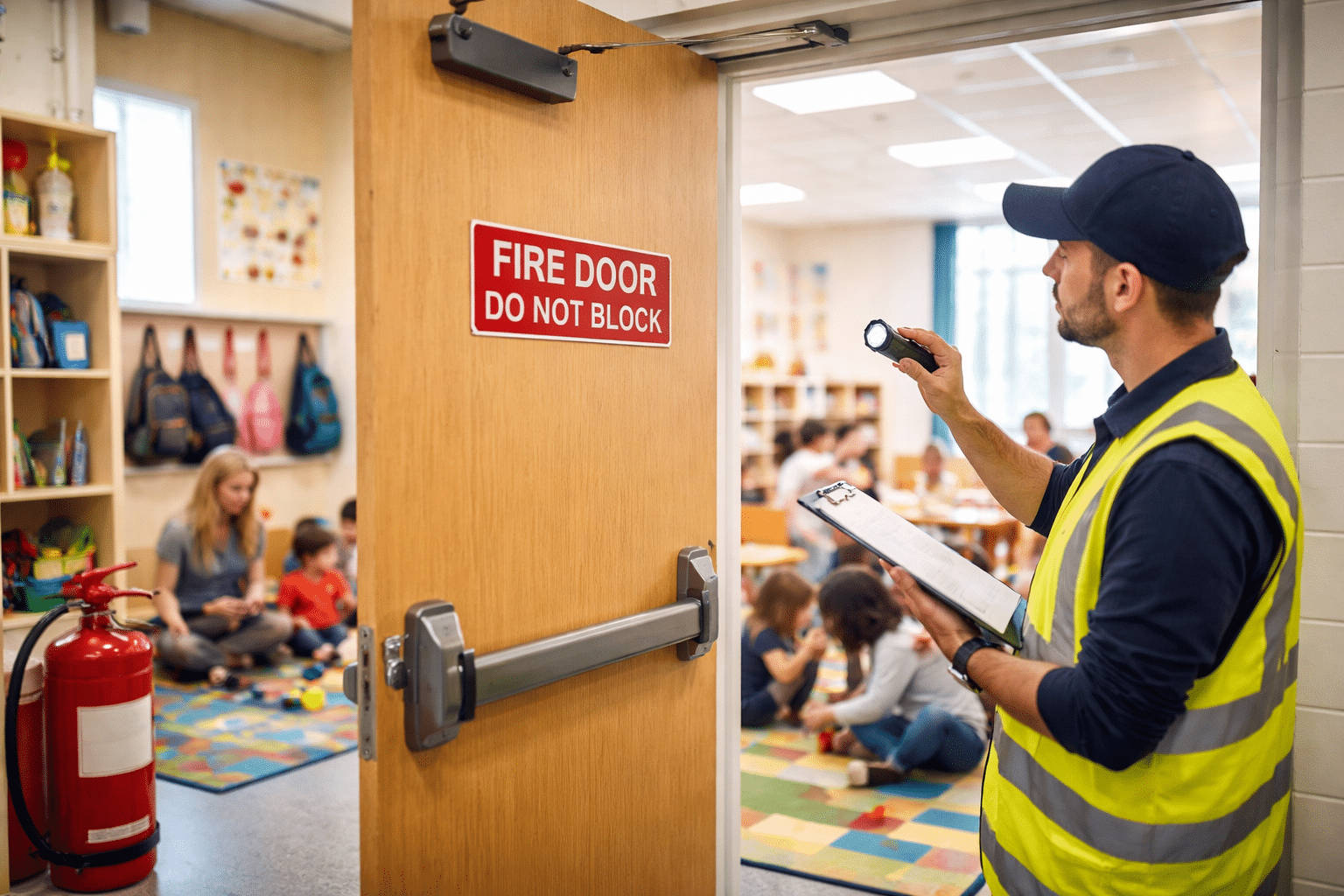
- Panic hardware if fitted
- Door stop, viewers and pulls
Environment
- Fire rating period
- Single or double action
- Swing direction and wind
- Air pressure and HVAC
- Traffic level and usage
Attach the certificate or fire door schedule to each line you draw. If the schedule lists an item number, use that model. If it lists a family, choose any model within that family that the schedule allows.
Step by step: how to confirm a match
- Identify the exact door set
Pull the label or paperwork for the leaf and frame. Note thickness, core type and rating. This is the anchor for your choices.
- Read the hardware schedule for that set
Manufacturers provide lists of hinges, closers and locks that were tested with the fire door leaf and frame. Stick to those items or their stated equivalents. If your preferred brand is not on the list, contact the supplier for an approval in writing.
- Size the closer to the environment
Choose a strength that will reliably close the door against seals, air pressure and traffic. If in doubt, size up and add delayed action only where allowed. The goal is a consistent latch every time.
- Check hinge capacity and count
Heavy doors or high traffic often need three or more hinges with proper bearing. The hinge specification must match the leaf thickness and weight. Undersized hinges can sag the leaf and cause rubbing.
- Confirm latch and strike compatibility
Your lock should have a fire-rated latchbolt and a strike plate listed for the frame. If you need electronic access, check that the electric strike model is on the approval list for that frame profile.
- Select compliant seals
Use the seal type and size listed for the door set. Overly bulky seals can slow closing and affect latching. If acoustic performance is required, pick a drop seal or perimeter kit that the schedule accepts.
- Mind vision panels and extras
Glazing kits, viewers and pull handles all need to be approved. A small change can void a big certificate if it pierces a listed area.
- Install to the letter
Even the right fire door parts can fail if they are fitted incorrectly. Use the fasteners, positions and clearances shown in the installation instructions. Finish with a functional test and adjust the closer for smooth, full latching every time.
Common mistakes the map prevents
- Mixing a certified leaf with a non-listed closer because it was on hand
- Adding an electric strike that was never tested with the frame
- Choosing a decorative lever that weakens a rated latch
- Installing seals that create too much resistance for the closer
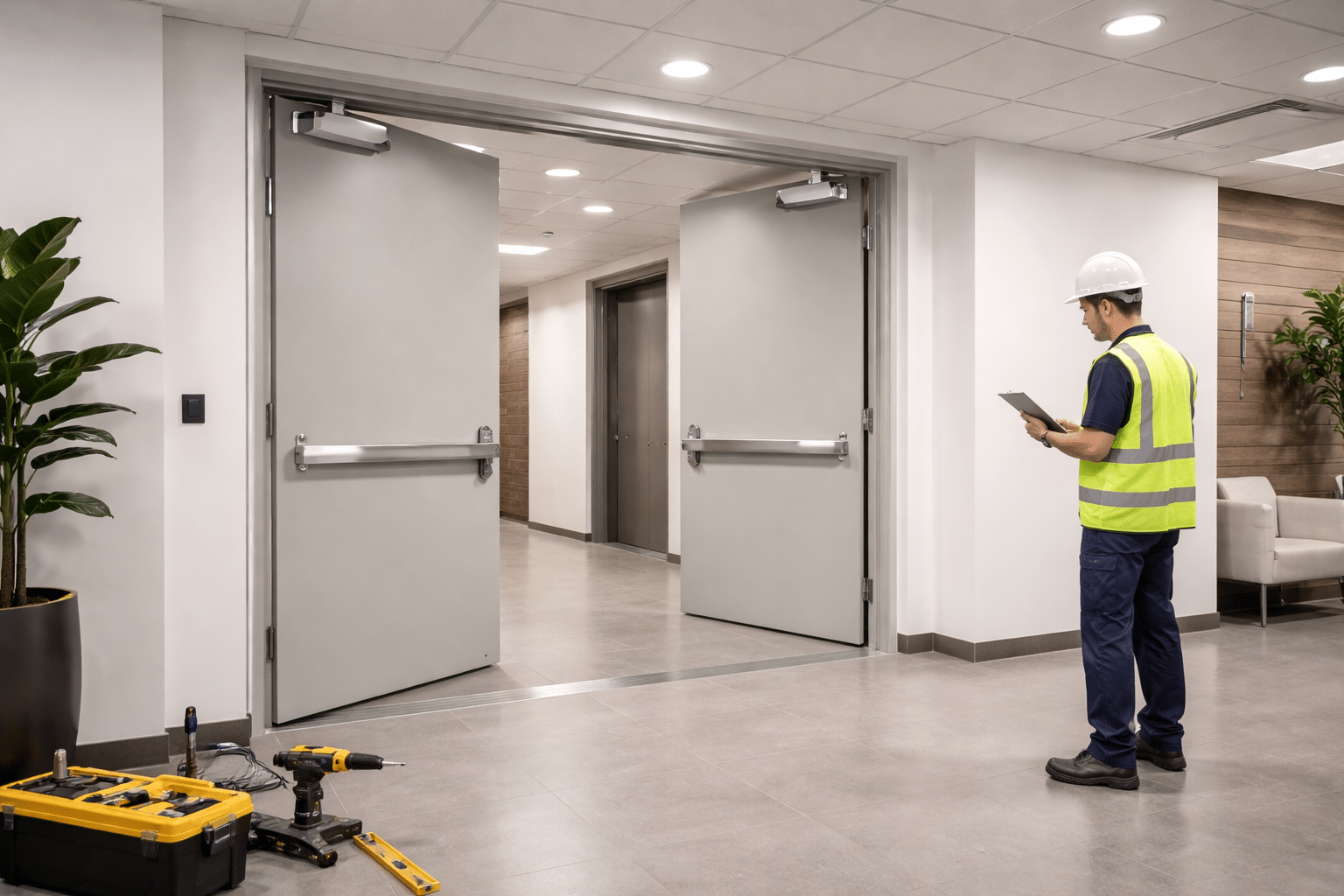
- Forgetting that door pairs need coordinated closers and sequence selectors
Each of these seems small on site but looms large at audit time. Using the map keeps your choices inside the proven combinations that auditors expect.
Quick reference: hardware to door set matching
Use this pocket list when planning a work order:
- Hinge set matches the leaf brand and thickness
- Closer model and arm are on the schedule
- Closer strength suits seals and air pressure
- Latch or lock model appears on the list
- Electric strike listed for the frame profile
- Smoke and fire seals match the set
- Vision panel and glazing kit approved
- All fixings are the specified type and length
- Final swing and latching test passes
Planning for your property portfolio
Strata and building managers often manage dozens of assets, and each fire door set benefits from a consistent approach. Standardising on one or two approved door sets and matching hardware families will reduce spare parts, training time and rework. Create a simple register per building that lists the door set, compatible hinges, closers and locks, plus where to source them. This mirrors the needs of professional property teams who value fast, reliable compliance and clear documentation.
Where the map meets compliance
Your fire door map should reference the door set documentation, the hardware schedules and your own inspections. Keep copies for Annual Fire Safety Statements, including photos of labels and installed hardware. When you upgrade access control, refresh the map and re-verify the combinations. That way, your audit trail stays clean and your sites stay safe. This approach supports the compliance, maintenance and risk goals common to commercial and industrial property portfolios in Sydney.
When to get help
Bring in a fire door specialist if you are changing door function, adding electronic locks or working in high-pressure environments like basements or plant rooms. A specialist can cross-check approvals, size the closer to your seals and confirm the latch and strike for the frame. It is a small step that prevents costly call backs and keeps tenants happy. For larger projects, partner with a provider who can supply, install and maintain the system end to end across multiple sites.
Simple template for your own compatibility map
Copy and adapt this to your next work order:
- Building and door location:
- Door set label and rating:
- Approved hinges: model and quantity
- Approved closer: model, arm, strength
- Approved lock or latch: model and strike
- Electric strike or access control: model
- Approved seals: perimeter and threshold
- Extras: viewers, pulls, signage
- Installer and date:
- Final test: swing, latch, clearances
How CFS can help
Comprehensive Fire Services works with Sydney strata and building managers, construction teams and fire safety companies to select, supply, install and maintain compliant fire door sets and hardware. If you want a compatibility check, a tidy upgrade plan or a full supply and install service, we are ready to help keep your buildings safe, documented and audit ready. Call 0418 749 488 or contact us online for friendly, expert support.