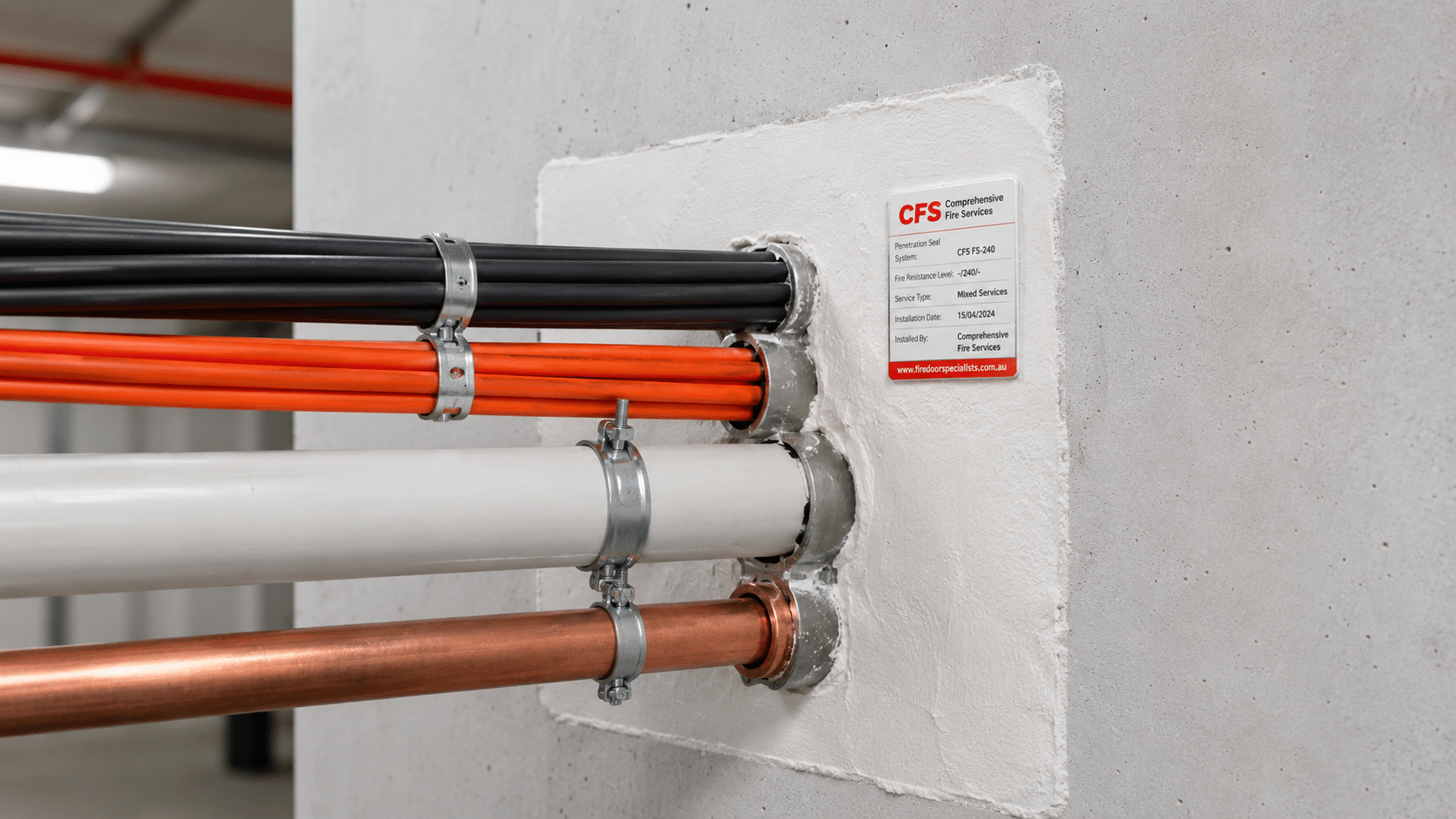
When Cables or Pipes Pass Through a Fire Wall
Cables or pipes pass through fire walls in many commercial, strata and industrial buildings, but the small opening around those services can create a big fire safety problem if it…

Fire door inspection is not something building owners and managers can afford to leave to chance. In Australia, fire doors play a critical role in slowing the spread of fire and smoke, protecting escape paths, and helping occupants get out safely. Nationally, required fire doors must comply with the National Construction Code and AS 1905.1 for construction, while ongoing servicing is governed by maintenance requirements such as AS 1851, with state-based compliance and certification rules sitting over the top. In NSW, those rules now explicitly require relevant buildings to comply with AS 1851-2012, and annual fire safety statements remain a key part of the compliance picture.
That leads to the question most strata managers, building managers, and property owners ask sooner or later: how often should fire doors actually be inspected?
The honest answer is that there is no single one-size-fits-all number for every building in Australia. The exact timing can depend on your building classification, your state or territory rules, your fire safety schedule, and whether the door is part of a broader annual or supplementary compliance program. In NSW, annual fire safety statements must be issued every year, and supplementary fire safety statements may be required at more regular intervals for critical fire safety measures listed on the building’s fire safety schedule.
A fire door is not just a heavy door with a closer slapped on it. It is a tested system made up of the door leaf, frame, seals, hardware, clearances, and latching components, all working together. If one part is damaged, altered, missing, or poorly adjusted, the door may no longer perform as intended in a fire.
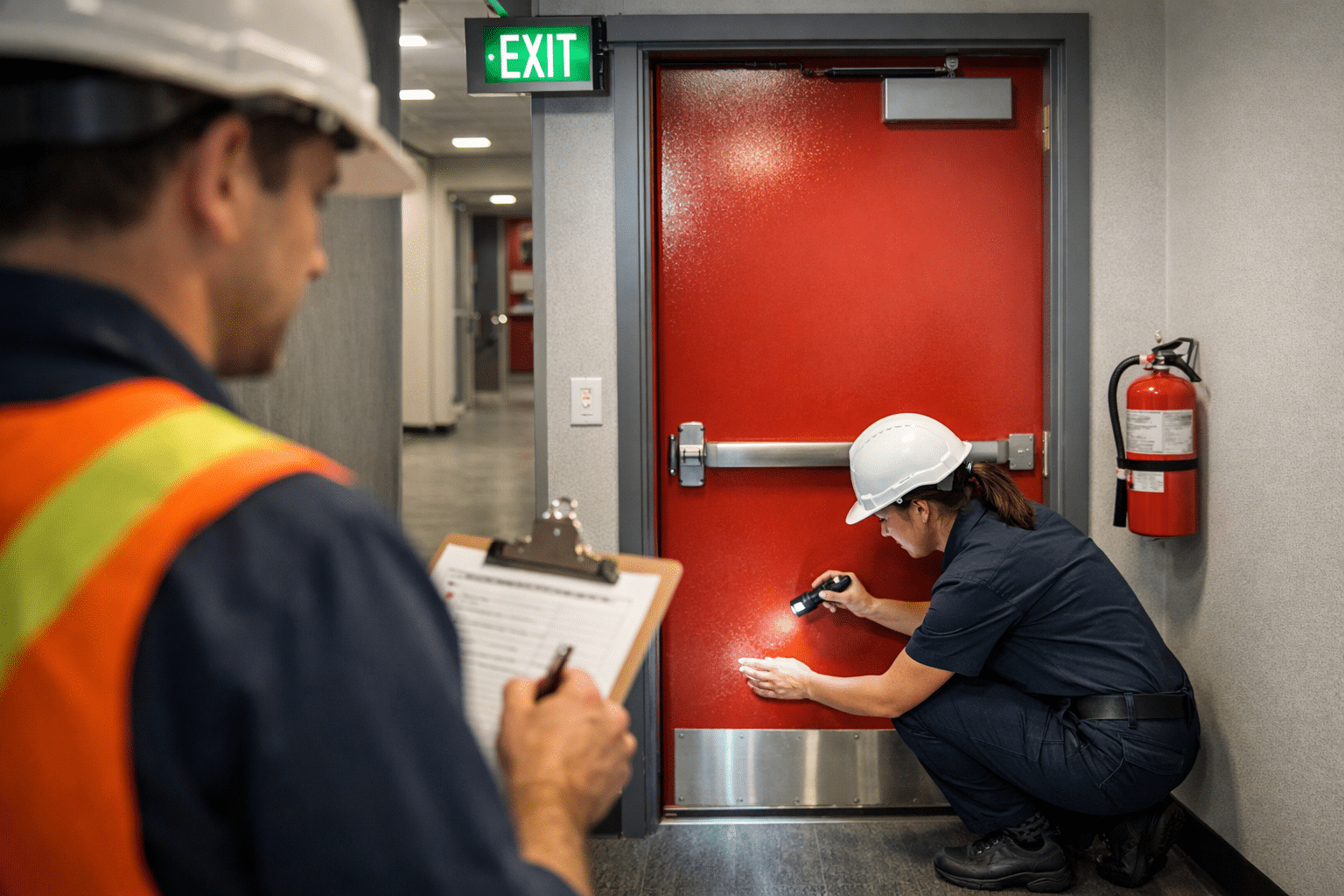
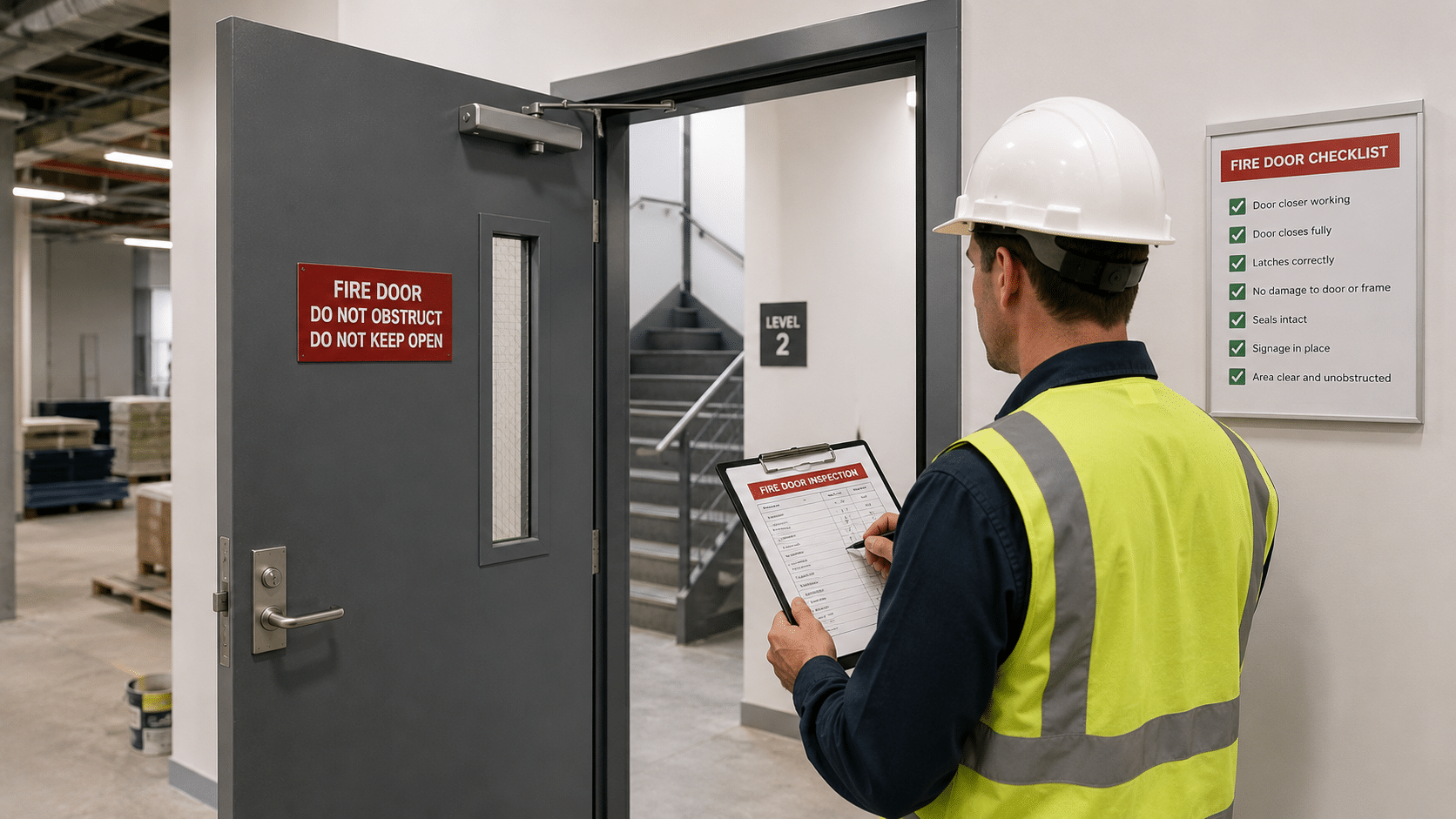
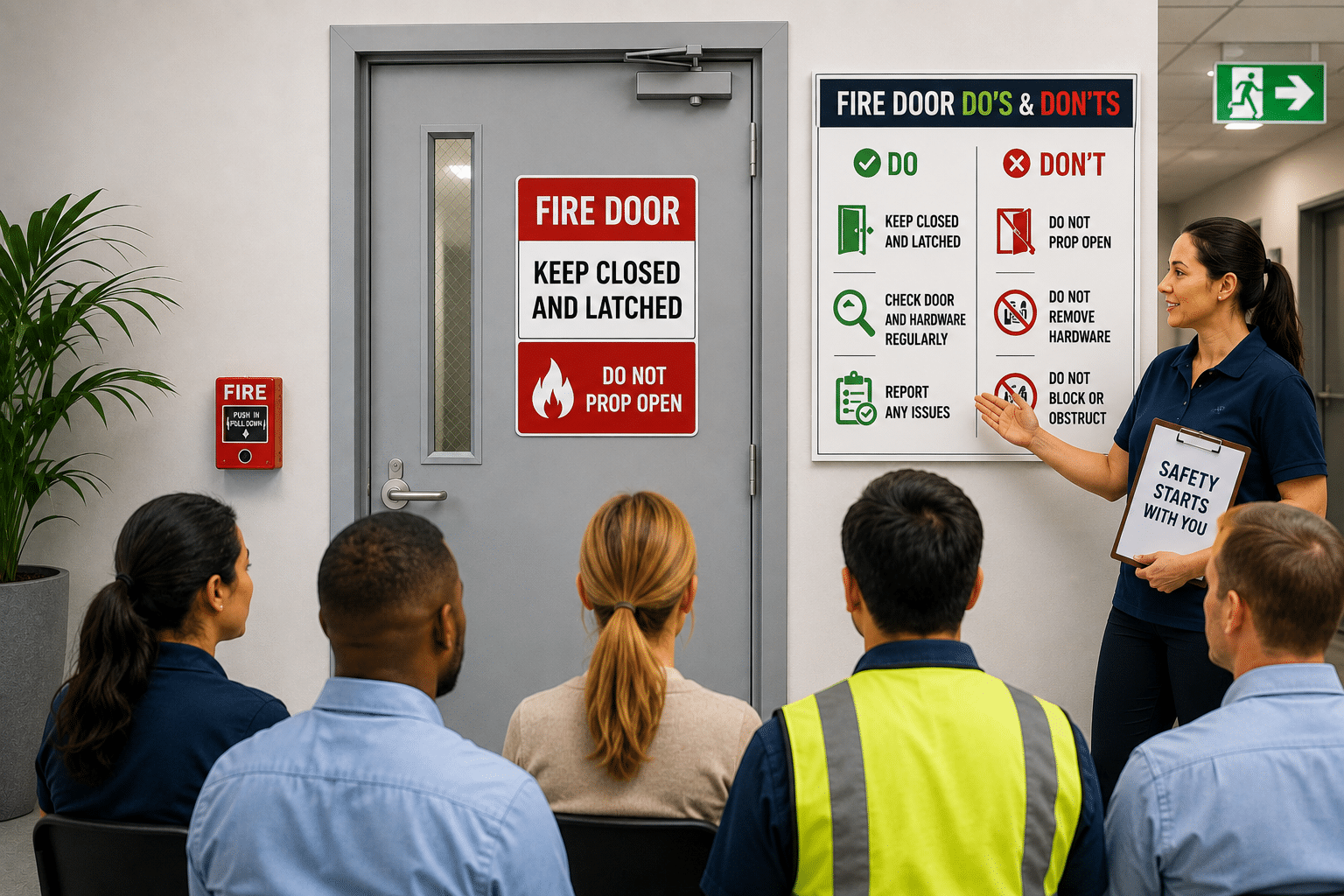
That is why a proper fire door inspection covers much more than a quick glance in the corridor. A competent inspection should check the condition of the door, frame, hinges, latch, seals, signage, gaps, self-closing action, and any signs of unauthorised modifications. If the door sticks, does not latch, has damaged seals, or has been drilled, wedged, painted over, or propped open, that can create a serious compliance issue and a genuine safety risk. CFS also highlights inspections of hardware, seals, and structural integrity as part of compliant testing and inspection services.
As a practical rule, every fire door should be checked regularly, and every building with fire safety obligations should be working to a planned inspection and maintenance schedule rather than waiting for annual paperwork to roll around. In many Australian buildings, that means routine checks during the year, with a more formal review tied to annual compliance requirements. In NSW, owners of affected buildings must provide an annual fire safety statement each year, confirming that accredited practitioners have assessed and inspected relevant fire safety measures.
For most Australian buildings, fire door inspection should never be treated as a once-a-year afterthought. Annual certification is important, but it does not replace regular maintenance. In busy apartment buildings, shopping centres, offices, warehouses, hospitals, and industrial sites, doors get knocked, dragged, propped open, and worn down through daily use. The more traffic a door sees, the more likely it is to fall out of adjustment between formal compliance visits.
In practical terms, fire door inspection usually sits within a broader maintenance plan. Many responsible building managers arrange periodic site checks throughout the year, then complete formal compliance inspections annually, or more often where the fire safety schedule or site risk calls for it. That approach is not only safer, it is usually cheaper than discovering a long list of defects right before an annual statement is due.
A good way to think about it is this: annual inspection is the minimum checkpoint most people remember, but regular preventive checks are what stop small issues turning into expensive rectification works. Nobody wants to find out, one week before their compliance deadline, that half the doors on site are not latching properly.
Fire doors are passive fire protection. That means they do their job quietly in the background, right up until the moment they are needed most. If they fail, smoke and fire can spread faster through hallways, stairwells, and adjoining compartments. That can reduce escape time, increase property damage, and put people at greater risk.
Regular fire door inspection helps catch problems early. A worn closer, loose hinge, damaged smoke seal, swollen leaf, or poor gap tolerance may seem minor on its own, but together these faults can affect the door’s performance. Early repairs are usually simpler, less disruptive, and easier to budget for.
Another benefit of fire door inspection is documentation. Building owners, strata managers, and facility teams need clear records to show that safety measures have been maintained properly. Good records support annual fire safety statements, help with contractor coordination, and make it easier to plan future repair or replacement work. They also give decision-makers peace of mind, which is worth a lot when managing multiple properties.
There is also the tenant and occupant confidence factor. People may not know every detail of building compliance, but they do notice when safety items look neglected. A damaged or wedged-open fire door sends the wrong message straight away.
During a typical inspection, a technician will look at whether the door closes fully, latches correctly, and sits properly within the frame. They will also review the door’s hardware, fire or smoke seals, signage, general condition, and any visible defects or modifications. Depending on the building and the service scope, they may also identify doors needing adjustment, hardware replacement, or full rectification.
This is where specialist experience matters. Fire doors are not ordinary doors, and not every tradesperson should be making changes to them. A door that has been altered incorrectly can create a bigger problem than the one it started with. That is why it makes sense to use professionals who understand fire door assemblies, compliance requirements, and correct rectification methods.
If your next fire door inspection is coming up, the smartest move is to get ahead of it. Review your maintenance records, check your fire safety schedule, and make sure problem doors are identified early. For Sydney strata managers, builders, property managers, and commercial site teams, Comprehensive Fire Services can assist with inspections, maintenance, repairs, and compliant fire door solutions that help keep your building safe and ready for certification.



FPAS Accreditation Number: F055161A
We are committed to delivering the highest level of professionalism and compliance in the fire protection industry. As part of this commitment, our team holds accreditation under the Fire Protection Accreditation Scheme (FPAS) — the national accreditation framework developed by Fire Protection Association Australia (FPA Australia).

Phone: 0418 749 488
Fax: 02 4648 5386
Email: [email protected]
© 2026 Comprehensive Fire Service - Website by BSharp Tech