Fire door upgrades are often the missing link between preserving your building’s charm and keeping people safe. If you manage a heritage-listed site, you know the juggle well. You need doors that look the part, pass inspections, and stand up in an emergency. In this guide we unpack how to achieve all three without turning your lobby into a modern art experiment.
Why heritage doors need special attention
Original timber doors are beautiful, but most were not designed to limit the spread of fire and smoke. Over time, gaps appear, hardware ages, and seals fall off. Add higher foot traffic and modern compliance checks, and the risk goes up. Sensible fire door upgrades bridge this gap by strengthening performance while respecting the building’s character.
What “compliance” really means in plain English
In Australia, fire doors are tested to strict standards to make sure they hold back fire and smoke for a set time. In practice, that means your door leaf, frame, seals, hinges, closers, and locks must all be certified and installed correctly. Any change to a certified door system needs to be like-for-like or approved by a competent person. The right fire door upgrades focus on compatible components, neat installation, and good documentation so your Annual Fire Safety Statement is straightforward.
Keep the heritage look while improving safety
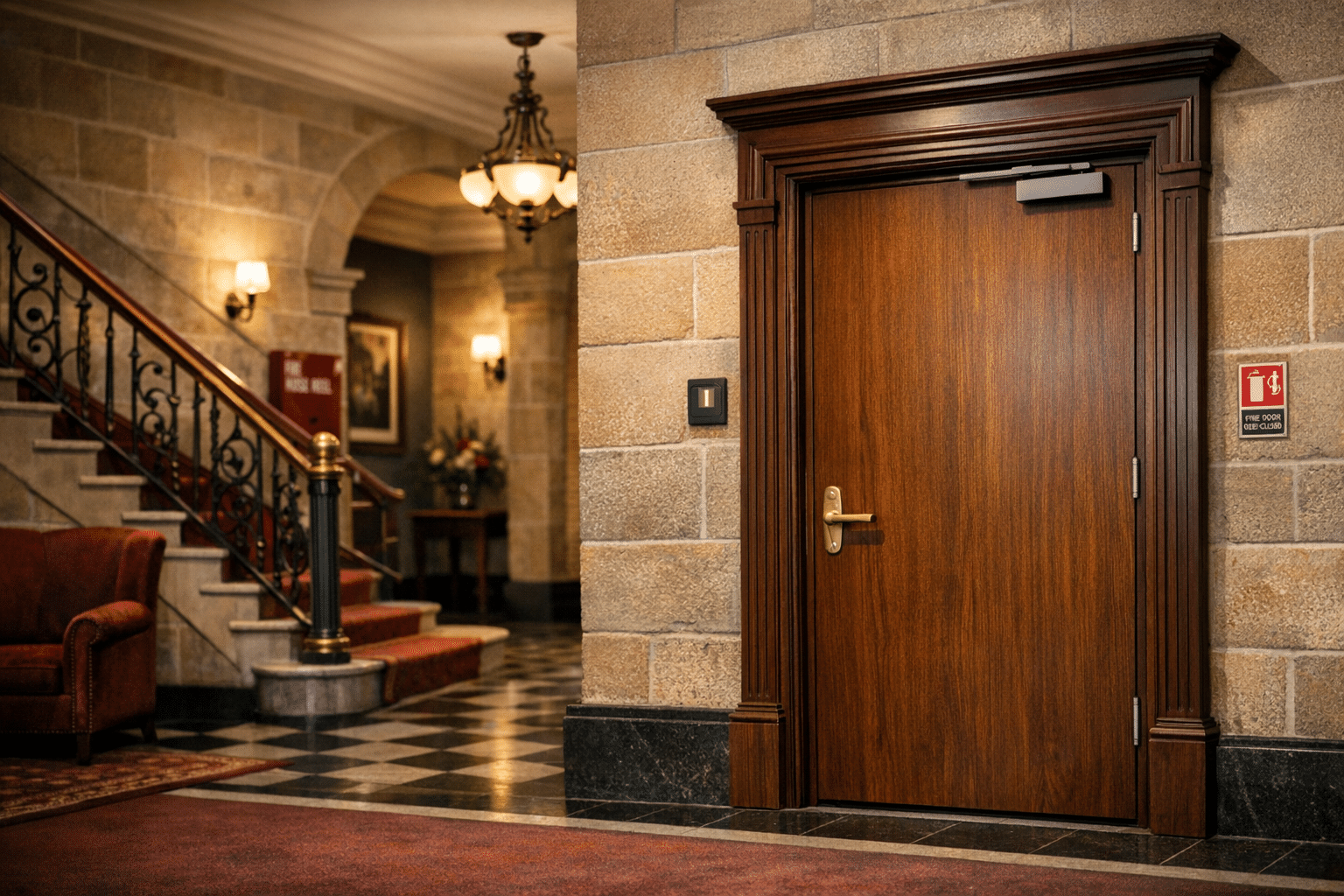
The common worry is that safety work will ruin period features. That does not have to happen. With the right planning, fire door upgrades can blend in so well that most visitors never notice them. Consider these sympathetic options:
- Timber-veneer fire doors: Choose veneers that match existing paneling or stained finishes. Modern cores deliver the rating, while the outside keeps the heritage style.
- Discreet seals: Intumescent and smoke seals can be recessed into the edge of the door or frame so they are barely visible.
- Low-profile closers: Surface-mounted closers with small bodies or concealed options keep sightlines clean.
- Hardware in traditional finishes: Brass or antique bronze levers and plates are available with fire ratings, keeping the look consistent.
These choices mean fire door upgrades protect people first, without compromising your building’s story.
Tackle the most common pain points first
Not every door needs a full replacement. A targeted approach saves money and time.
- Gapping and misalignment
Old frames move and doors sag. If gaps exceed what the rating allows, smoke slips through. Skilled carpentry and compliant smoke seals are simple fire door upgrades that can restore performance fast.
- Faulty or missing self-closing action
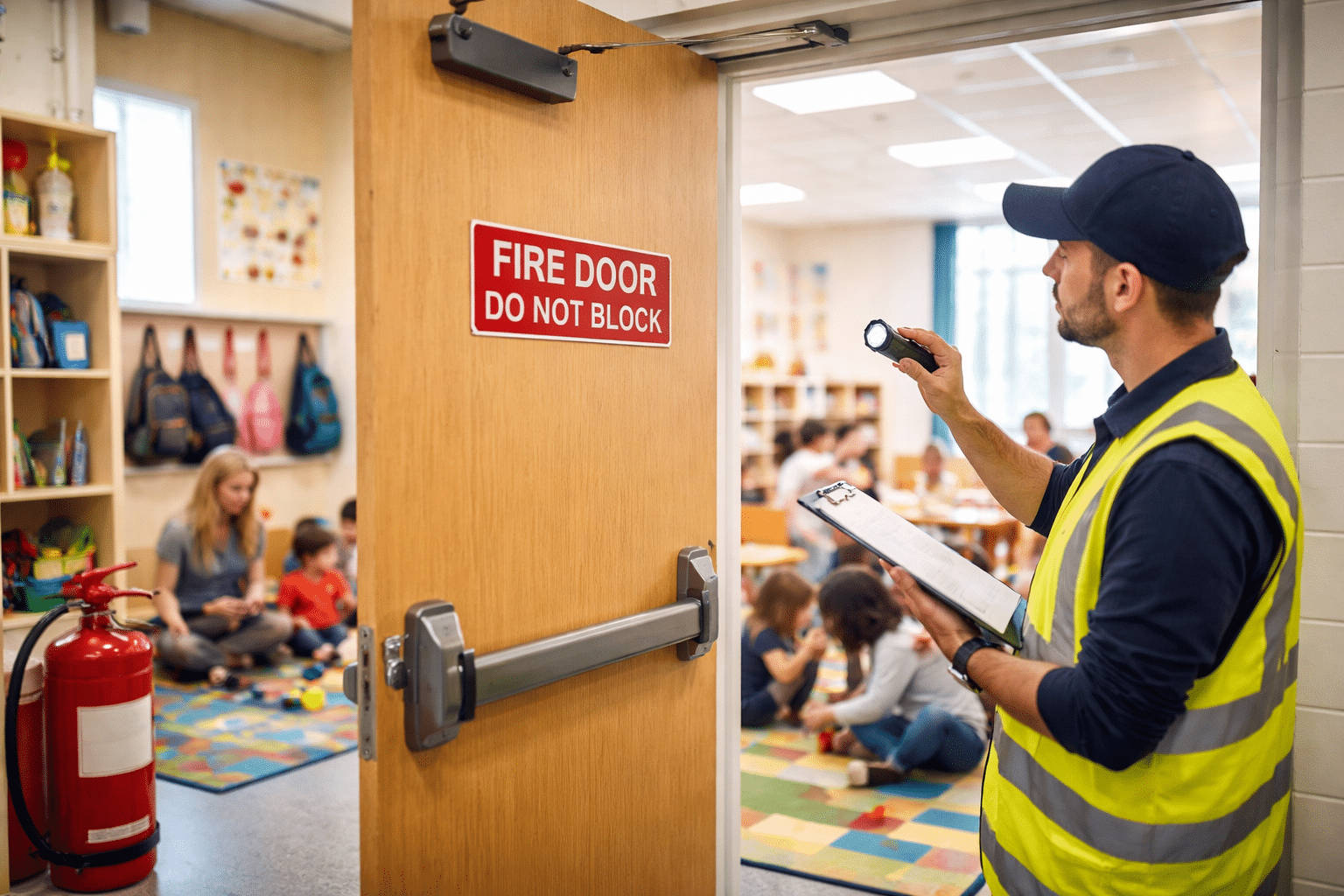
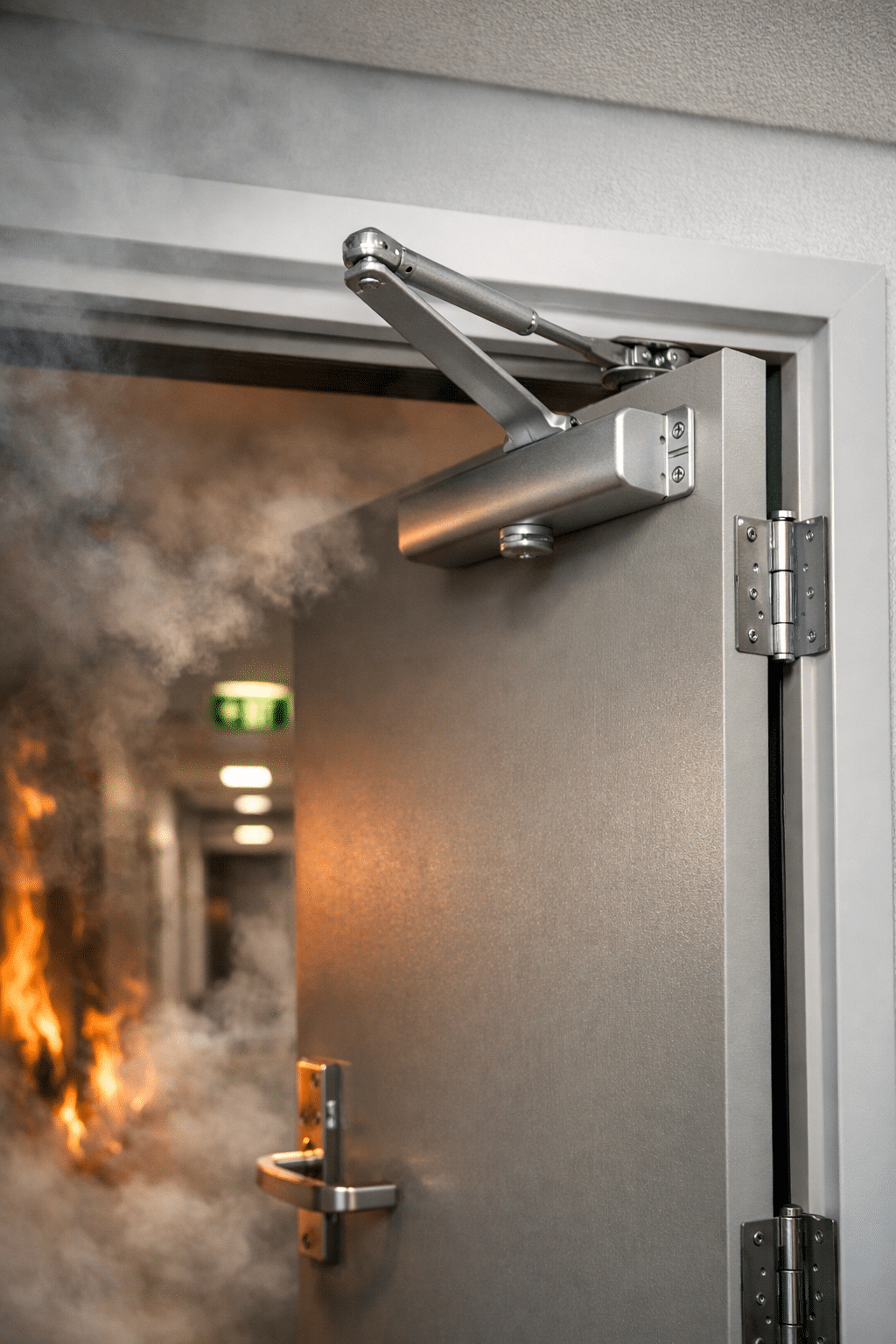
A fire door must shut on its own. If a closer is leaky or mismatched, the door may not latch. Replacing the closer with a certified unit, adjusting the swing, and balancing the latch are high-value fire door upgrades you will feel immediately.
- Non-compliant hardware
Heritage knobs or unlabeled locks might look pretty but fail the test. Swapping to fire-rated levers, hinges, and strikes that match the period finish is one of the cleanest fire door upgrades available.
- Damaged door leafs and frames
Chips, undercuts, or unapproved holes compromise the door’s rating. A repair using listed materials or a new rated leaf in a compatible frame are dependable fire door upgrades that keep inspectors and insurers happy.
When to repair and when to replace
Repairs are ideal when the core is intact, the frame is sound, and the issues are local. Replacement makes sense when there is extensive damage, the frame is out of square, or the door simply cannot meet modern requirements. A good provider will document the condition, outline options, and recommend staged fire door upgrades to control both cost and disruption.
Make access and daily use easier
Safety is not just about fire. People need to move comfortably every day.
- Hold-open technology: Legally, doors must still close on fire alarm. Electromagnetic hold-opens link to the alarm system so doors stay open during normal hours, then close automatically during an event. Integrated correctly, these are tidy fire door upgrades that reduce door wear and improve accessibility.
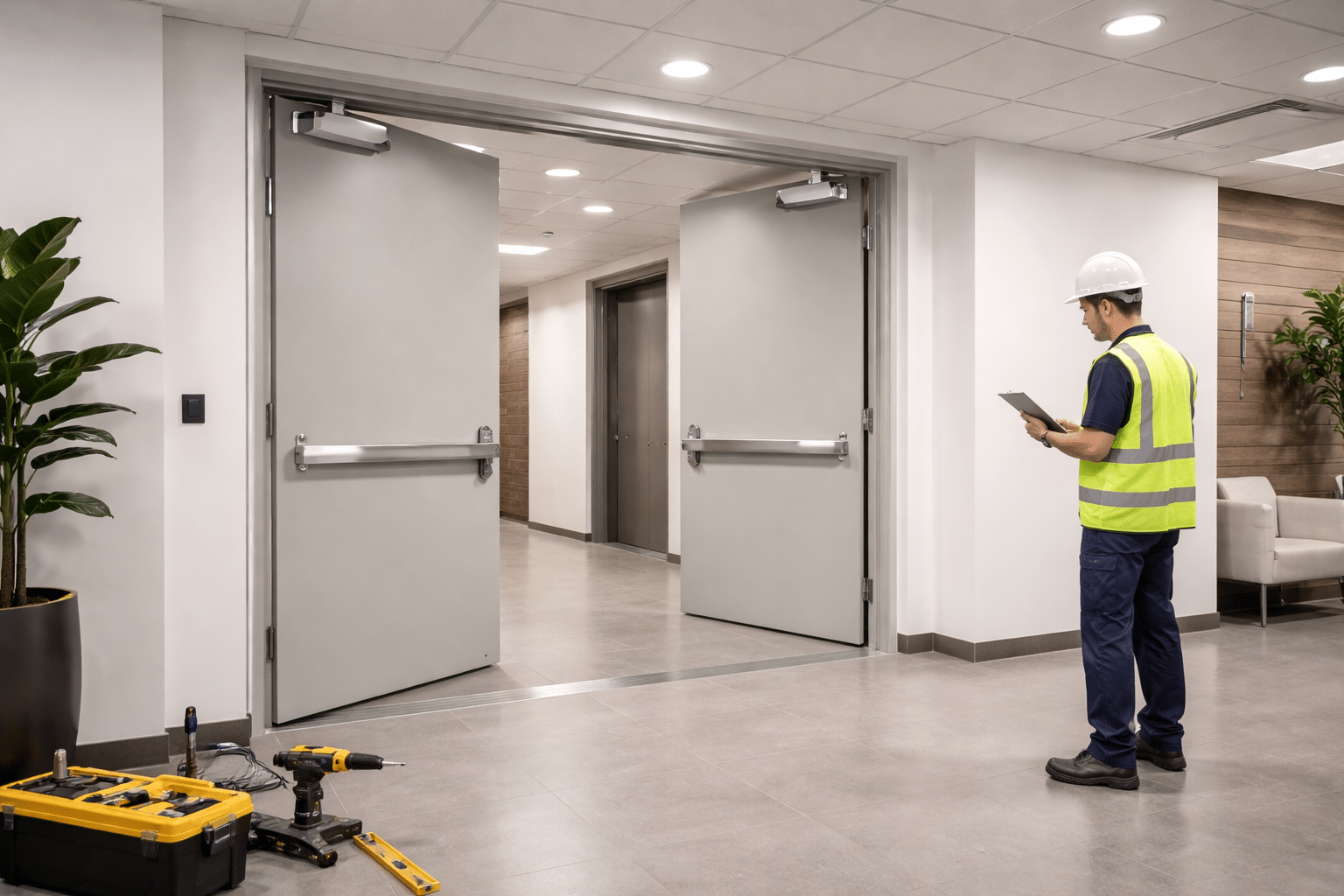
- Sliding solutions for tight corridors: In some commercial and industrial settings with space constraints, rated sliding doors can be part of your fire door upgrades plan. They save space, protect egress widths, and can be finished to match heritage trims.
Minimise disruption during works
Heritage sites are busy and sensitive. The trick is careful staging.
- Survey first: A door-by-door audit lists defects and prioritises works.
- Mock-up one door: Agree on finishes, seals, and hardware once, then roll out.
- Work in zones: Keep tenants and visitors moving by scheduling fire door upgrades outside of peak times and in small batches.
- Protect finishes: Use dust suppression, floor protection, and tidy fixings to keep the site presentable.
Documentation that keeps audits painless
Inspectors love clarity. After any fire door upgrades, keep a record of door locations, ratings, hardware schedules, certificates, and photos. A clean pack of documents makes your next AFSS cycle far easier and shows diligence to owners and insurers.
Passive fire stopping and door interfaces
A compliant fire door is part of a bigger system. If services pierce the wall near the door, smoke and heat can bypass the barrier. Pair your fire door upgrades with passive fire stopping around cables and pipes. Use rated sealants, collars, and wraps suited to the substrate. This way, the entire compartment performs as intended.
Budgeting and lifecycle thinking
Heritage maintenance is a marathon, not a sprint. Plan capital works over several years and focus first on doors along evacuation paths and high-occupancy areas. Include routine inspections and minor fixes in your operating budget. Small, timely fire door upgrades reduce the chance of costly emergencies later, and consistent care extends the life of every component.
A quick checklist for heritage managers
- Are all fire doors self-closing and latching smoothly?
- Do gaps meet the allowed limits around the leaf?
- Are smoke and intumescent seals present and undamaged?
- Is all hardware certified and in good working order?
- Does documentation match what is physically installed?
- Have you planned staged fire door upgrades for the next 12 months?
If you can answer yes to each question, you are on the right track.