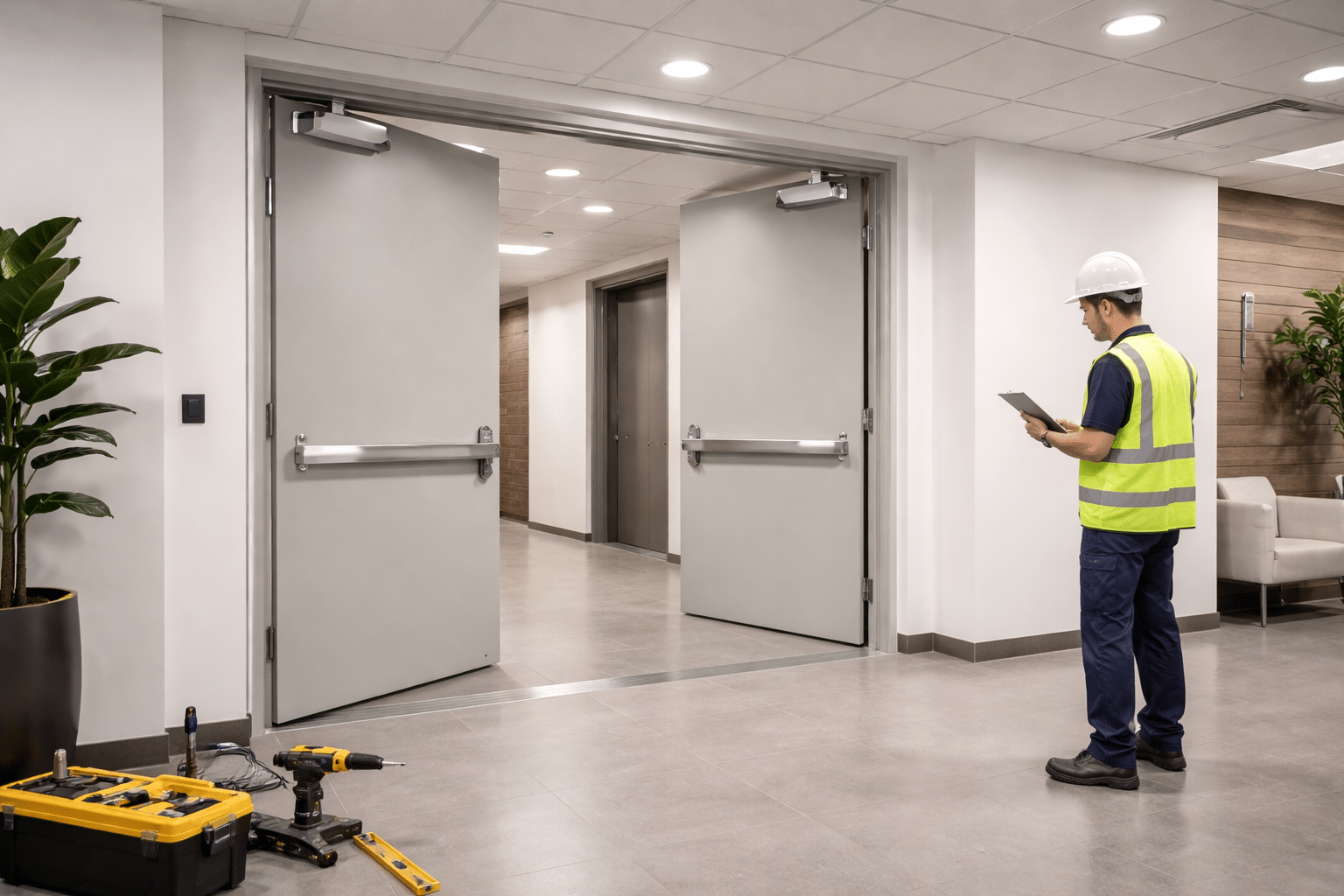
Fire Door Positioning for Full Wall Openings
Fire door positioning plays a bigger role in compliance than many people realise. When a fire door is installed within a full wall opening, the exact location of the door…
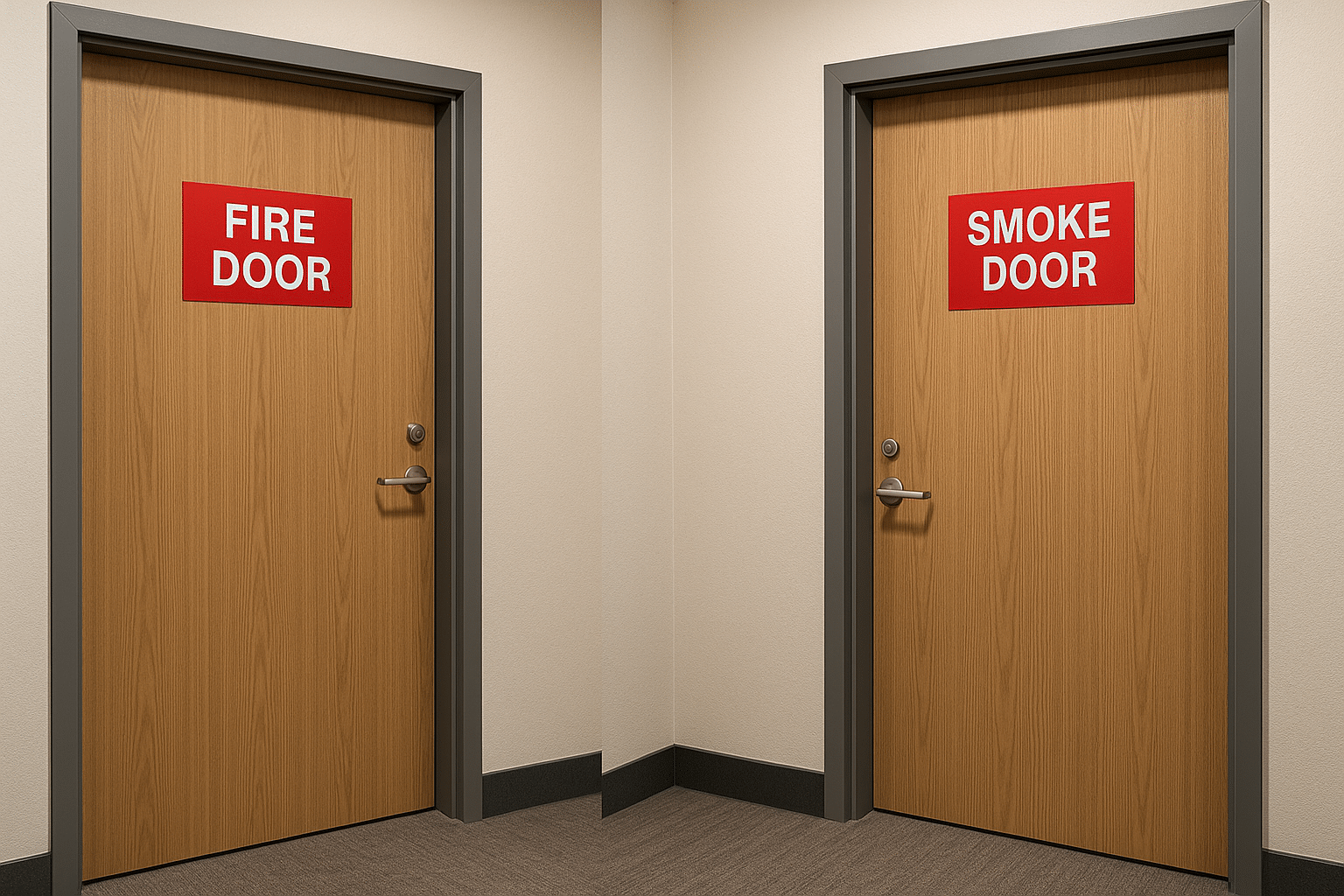
Fire door vs smoke door is a question we hear all the time from strata managers, property owners, and builders. Both play essential roles in fire safety, but they serve different purposes. Understanding the difference is vital for compliance with the Building Code of Australia and, more importantly, for keeping people safe during an emergency.
At first glance, fire doors and smoke doors can look similar. They’re both heavy-duty doors with seals and closers, and they’re usually found in stairwells, corridors, or entryways. But once you look closer, the differences become clear. Let’s explore.
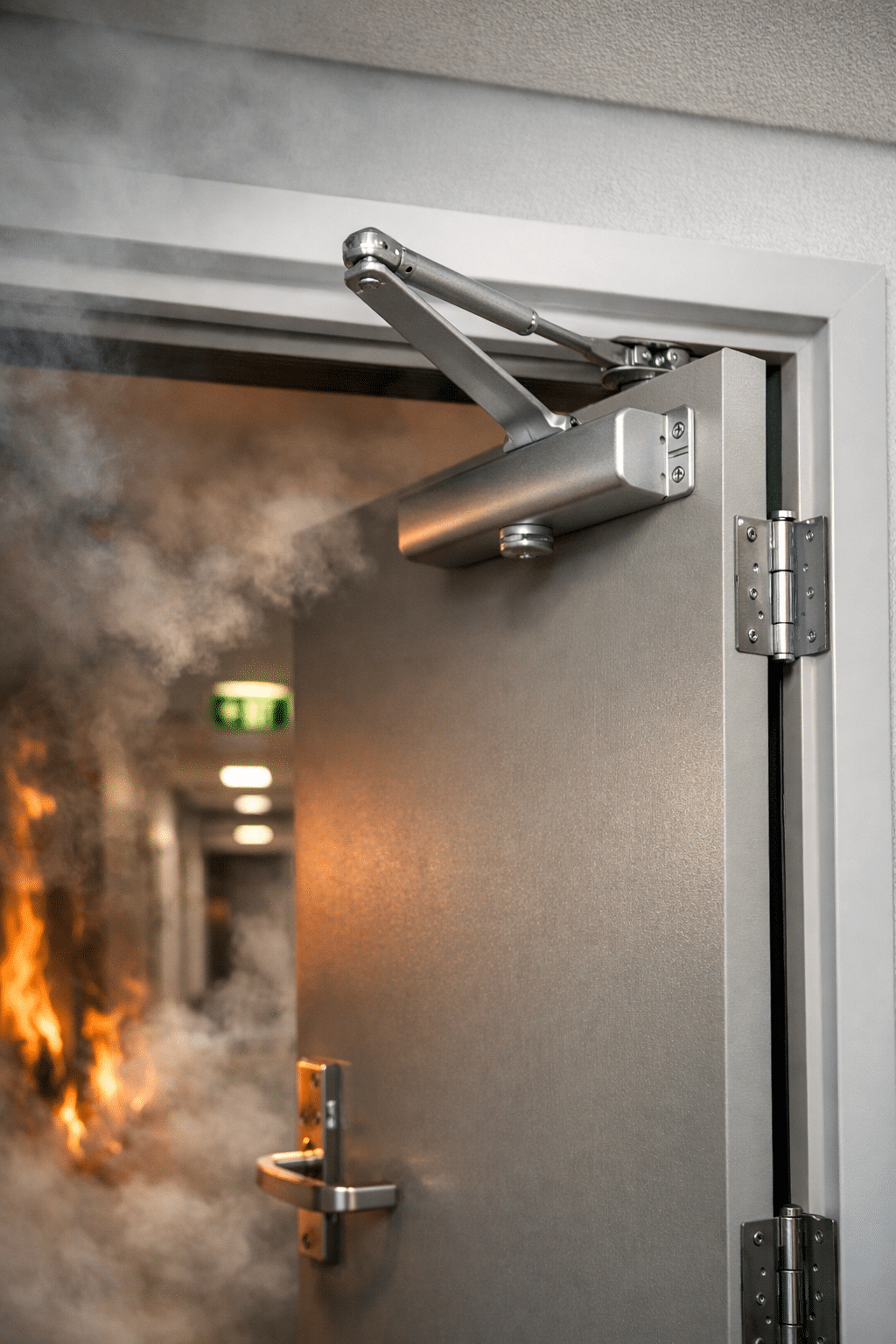
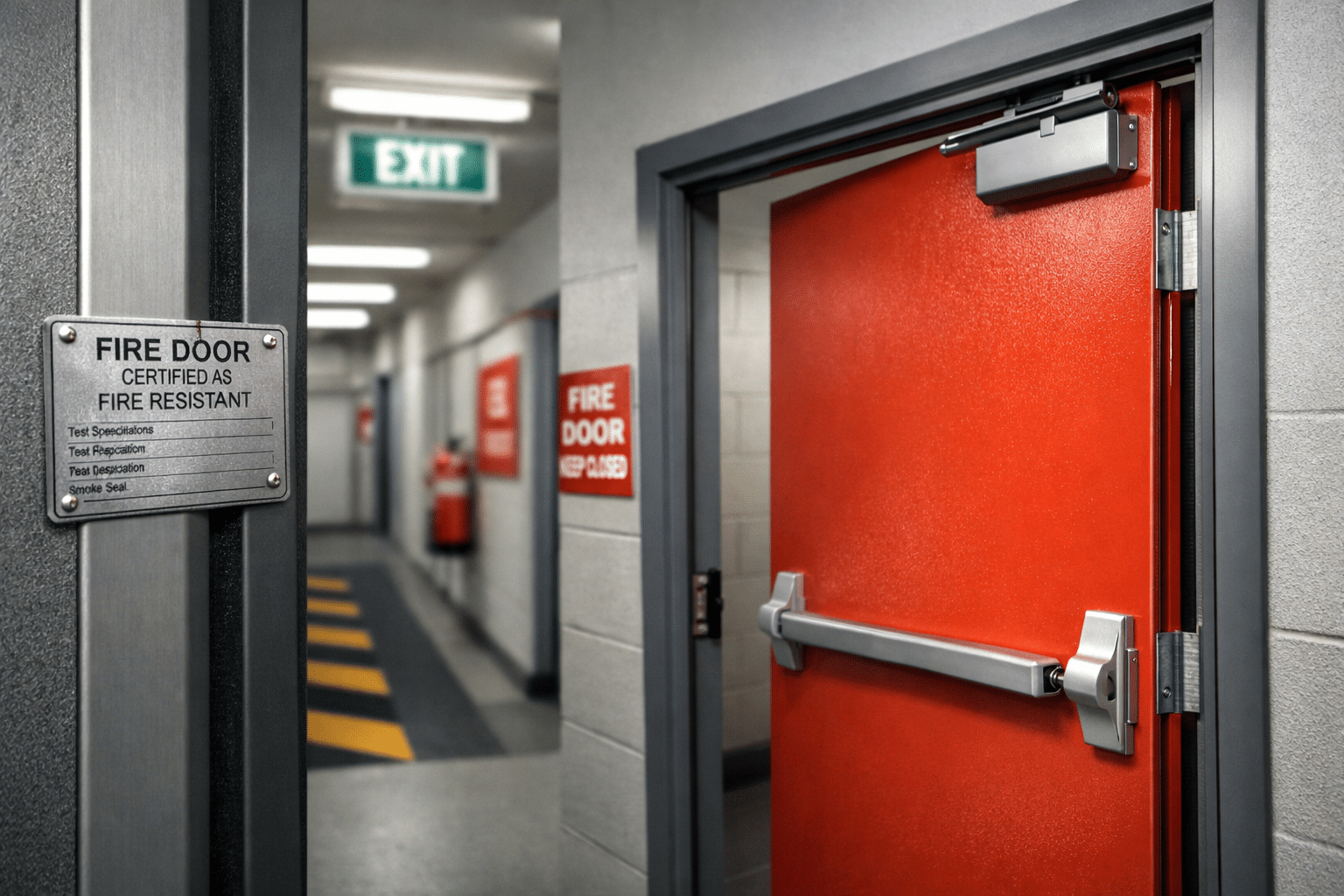
A fire door is a specially designed door that prevents the spread of flames and smoke from one part of a building to another. Certified under AS1905.1 standards, a fire door is tested as a complete assembly, including the door leaf, frame, hardware, and seals.
Key Features of Fire Doors:
In the fire door vs smoke door comparison, fire doors are essential in all commercial, industrial, and strata buildings, ensuring compartmentalisation and compliance.
In the context of fire door vs smoke door, a smoke door, as the name suggests, is designed primarily to stop smoke from spreading throughout a building. While it may have some fire-resistance properties, its main purpose is to limit smoke infiltration into escape routes such as stairwells or corridors.
Key Features of Smoke Doors:
In many cases, smoke doors are combined with fire doors to provide comprehensive protection against both flames and smoke.
Now let’s break down fire door vs smoke door side by side:
| Feature | Fire Door | Smoke Door |
|---|---|---|
| Primary Function | Contain fire and smoke | Restrict smoke only |
| Standard | AS1905.1 (fire-resistant doorsets) | Referenced under BCA smoke hazard management |
| Construction | Heavy-duty fire-resistant materials | Focus on seals to stop smoke |
| Seals | Intumescent + smoke seals | Smoke seals only |
| Testing | Certified as full fire door assembly | May not be fire-tested |
| Signage | Mandatory “Fire Door – Do Not Obstruct” | Not always required |
In short, fire doors are always smoke doors, but smoke doors are not always fire doors.
The fire door vs smoke door debate isn’t about which one is better; it’s about where each is needed. Fire doors are mandatory in many areas to comply with compartmentalisation requirements, while smoke doors are used in other parts of buildings to keep escape routes clear of toxic gases.
Both save lives by:
During inspections, our team often finds compliance gaps when it comes to fire door vs smoke door requirements. Some of the most common issues include:
Each of these can lead to a failed compliance inspection and increased safety risks for occupants.
In the fire door vs smoke door landscape, strata managers need to pay close attention to both. Apartment entry doors leading to common corridors are typically fire doors, while internal stairwell access points may require smoke doors. Both must be inspected annually to meet AFSS obligations.
With multiple tenants and heavy foot traffic, maintaining seals, closers, and signage becomes even more critical in strata environments.
Regardless of whether it’s a fire door or a smoke door, inspections should check for:
Maintenance should always be handled by licensed professionals to ensure compliance. DIY fixes or using non-rated materials can quickly void certification.
At Comprehensive Fire Services (CFS), we specialise in ensuring all doors, fire or smoke, are compliant with Australian Standards and the Building Code.
Our services include:
Whether you manage a strata building, a warehouse, or a commercial property, we’ll ensure your doors meet all safety standards, no confusion when it comes to fire door vs smoke door requirements, keeping them safe, functional, and compliant.
Understanding fire door vs smoke door requirements is vital to protecting your property and the people inside it. Don’t let confusion or overlooked maintenance put you at risk.
Call Now: 0418 749 488
Contact Us Now: firedoorspecialists.com.au/contact-us
Let CFS assess your property, identify whether you need fire doors, smoke doors, or both, and provide a tailored compliance solution.



FPAS Accreditation Number: F055161A
We are committed to delivering the highest level of professionalism and compliance in the fire protection industry. As part of this commitment, our team holds accreditation under the Fire Protection Accreditation Scheme (FPAS) — the national accreditation framework developed by Fire Protection Association Australia (FPA Australia).

Phone: 0418 749 488
Fax: 02 4648 5386
Email: [email protected]
© 2026 Comprehensive Fire Service - Website by BSharp Tech