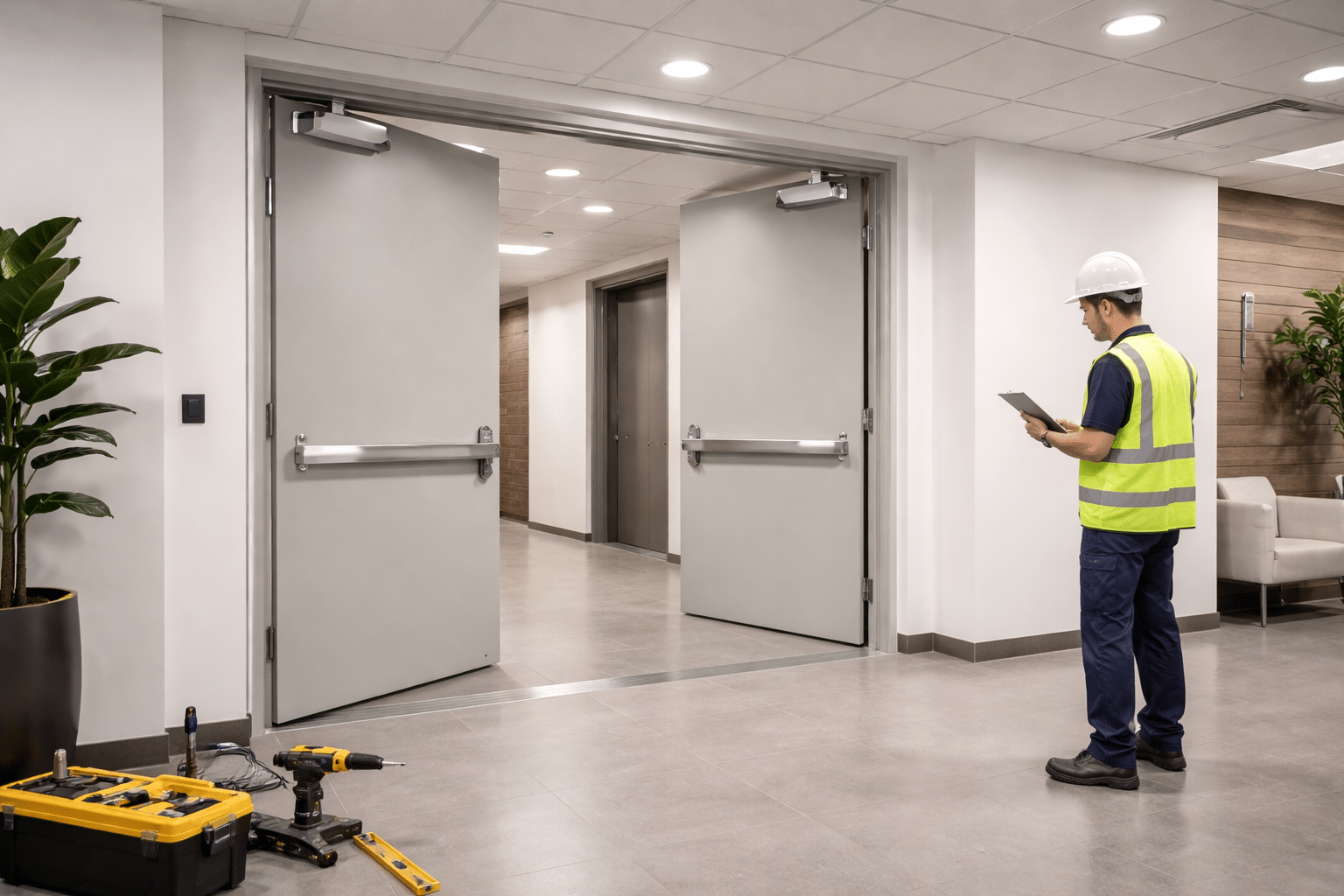
Fire Door Positioning for Full Wall Openings
Fire door positioning plays a bigger role in compliance than many people realise. When a fire door is installed within a full wall opening, the exact location of the door…

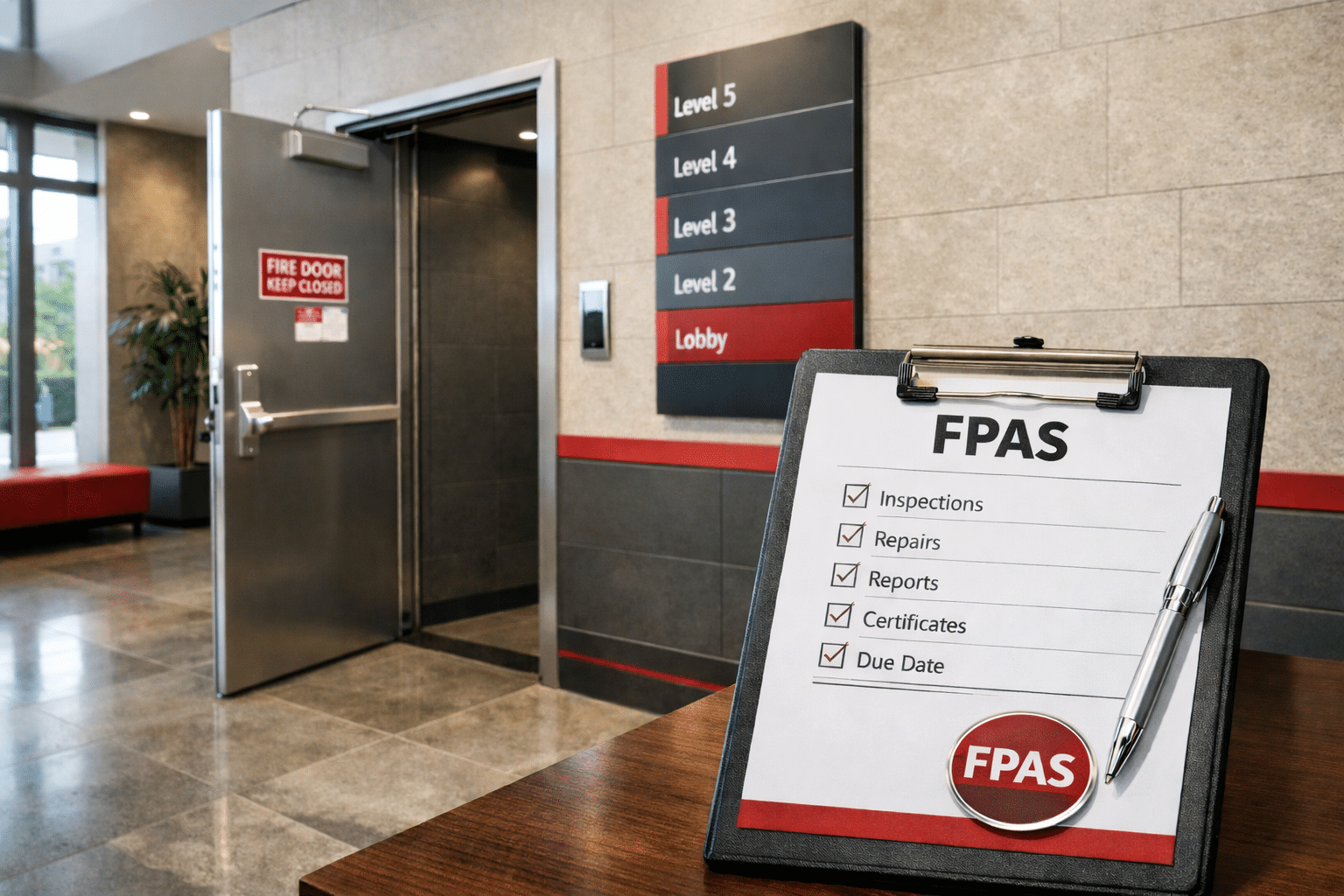
FPAS is the national accreditation framework for fire protection practitioners that NSW relies on for key fire safety tasks. If you run a strata, commercial or industrial site, knowing how the scheme works helps you book the right people, avoid AFSS headaches, and keep tenants and visitors safe. This guide keeps things practical, with plain language and actions you can use straight away.
The goal is simple. FPAS sets the training, skills and accountability for people who design, assess, certify, inspect and test essential fire safety measures. In NSW, the scheme is recognised for specific roles so you can be confident that the person signing your documents or inspecting your assets is qualified to do so. Think of it as a clear set of guardrails that removes guesswork and reduces risk for owners and managers.
Past practice varied a lot from site to site. By leaning on FPAS, the state raised the bar at design, approval, construction and maintenance stages. For a building manager this means fewer disputes about who can do what, fewer repeat visits, and a smoother path to a valid Annual Fire Safety Statement. It also supports better records, which councils value when they review your submission.
There are several classes under the scheme. The three you will see most often are:
Each class covers defined activities. Before engaging anyone, confirm the exact class and scope they hold. FPAS credentials are issued to individuals, not just companies, so always check the person who will attend site.
Your AFSS is only accepted when the correct accredited person has assessed and endorsed each essential fire safety measure. Routine inspection and testing through the year feeds into that assessment. If you use the wrong people, or if evidence is weak, councils may reject your submission, which leads to extra cost and delays. A tidy rhythm of inspections, quick defect close out, and a clear handover to your assessor keeps the cycle calm and predictable. Having FPAS on your radar through the year avoids the last minute scramble that many sites still face.
Use this at the start of each AFSS cycle:
Late discovery of door defects
Fire doors work hard and can be propped open or fitted with the wrong hardware. If tags are missing, gaps are excessive, or closers fail to latch, the assessor will not sign. Add a monthly walk through for door closers, gaps and signage. Small fixes done early prevent last minute dramas that can derail FPAS planning.
Unclear roles
Some managers assume a routine technician can sign the AFSS. Most cannot. The assessor’s role under FPAS is different from a service technician’s role. When you issue a work order, state the measure, the relevant standard, and the class you expect the contractor to hold. That simple line saves time, money and confusion.
Patchy documentation
Loose PDFs and photos buried in inboxes slow the AFSS. Keep a shared folder per property with clear subfolders for routine service, defects, rectification evidence and final statements. File every record as you go so the assessor review is quick and clean and aligned with FPAS requirements.
Project changes
If a refurbishment touches egress paths, fire doors or building penetrations, bring a designer in early. This avoids rework and aligns the solution with actual risk and budget, not just the minimum code text.
Before a site visit, ask for the practitioner’s full name and the class they hold. Also ask for example reports and a brief list of recent jobs of similar size. If the scope is complex, check that the person has experience with the specific measures on your schedule. If details are vague or inconsistent, pause the booking. A short verification step protects you and your owners corporation and keeps your AFSS on track with FPAS expectations.
Fire doors are essential fire safety measures and feature on most schedules. Service technicians should check closers, latching, gaps, tags and signage to AS 1851, then record defects with photos. Assessors rely on that evidence to endorse the measure for your AFSS. If you are replacing or altering doors, a designer may be needed to endorse non standard openings, hardware choices or performance solutions. Clear coordination between service technicians, assessors and designers avoids rejections and repeat visits, which keeps your FPAS timeline intact.
Using the wrong person can result in rejected AFSS submissions, extra costs and regulatory penalties. Councils can ask for evidence of the practitioner’s accreditation and can refuse statements that do not meet the rules. It is faster and cheaper to use the correct class from the start and to keep a tidy evidence trail. Make it a habit to write the required class into every scope and to confirm it before anyone attends site. That way your AFSS stays on schedule with the right FPAS practitioner in place.
Comprehensive Fire Services specialises in compliant fire doors and passive fire solutions for strata, commercial and industrial properties across Sydney. We work neatly alongside your accredited practitioners by providing thorough inspections, clear reports and tidy, standards based rectifications that make AFSS sign off smoother. If you need help with fire door repairs, replacement or documentation, our team is ready to support you.
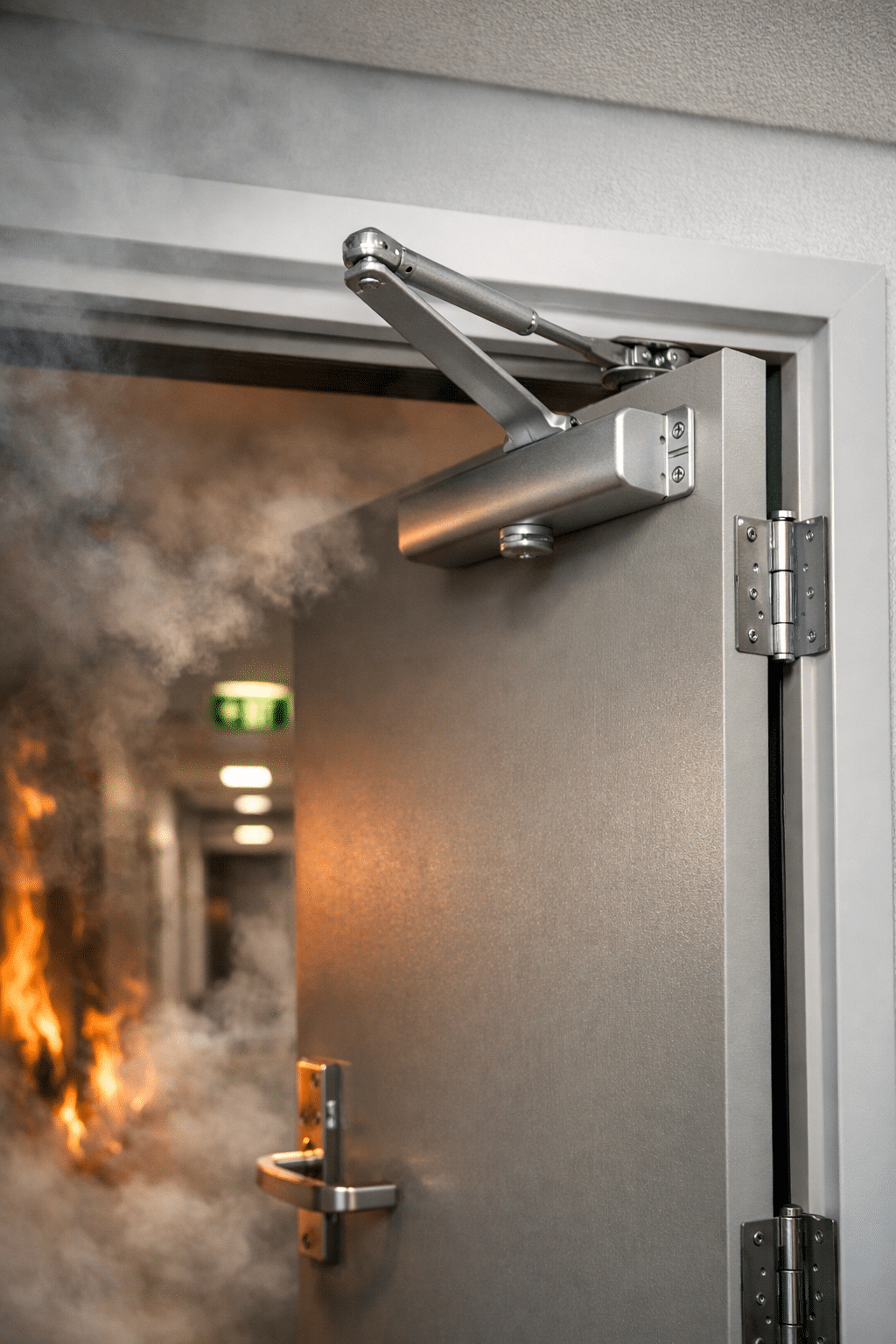
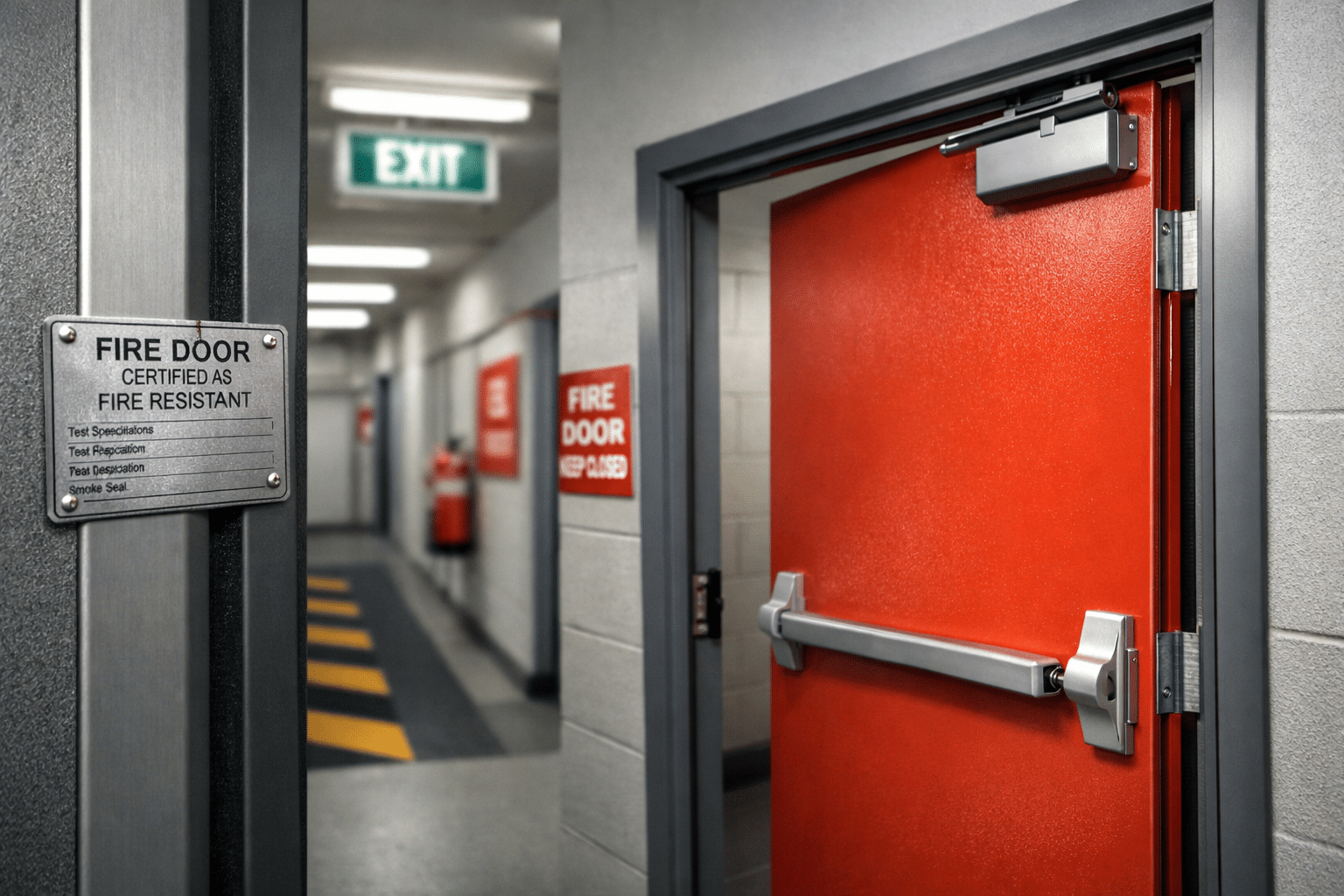



FPAS Accreditation Number: F055161A
We are committed to delivering the highest level of professionalism and compliance in the fire protection industry. As part of this commitment, our team holds accreditation under the Fire Protection Accreditation Scheme (FPAS) — the national accreditation framework developed by Fire Protection Association Australia (FPA Australia).

Phone: 0418 749 488
Fax: 02 4648 5386
Email: [email protected]
© 2026 Comprehensive Fire Service - Website by BSharp Tech