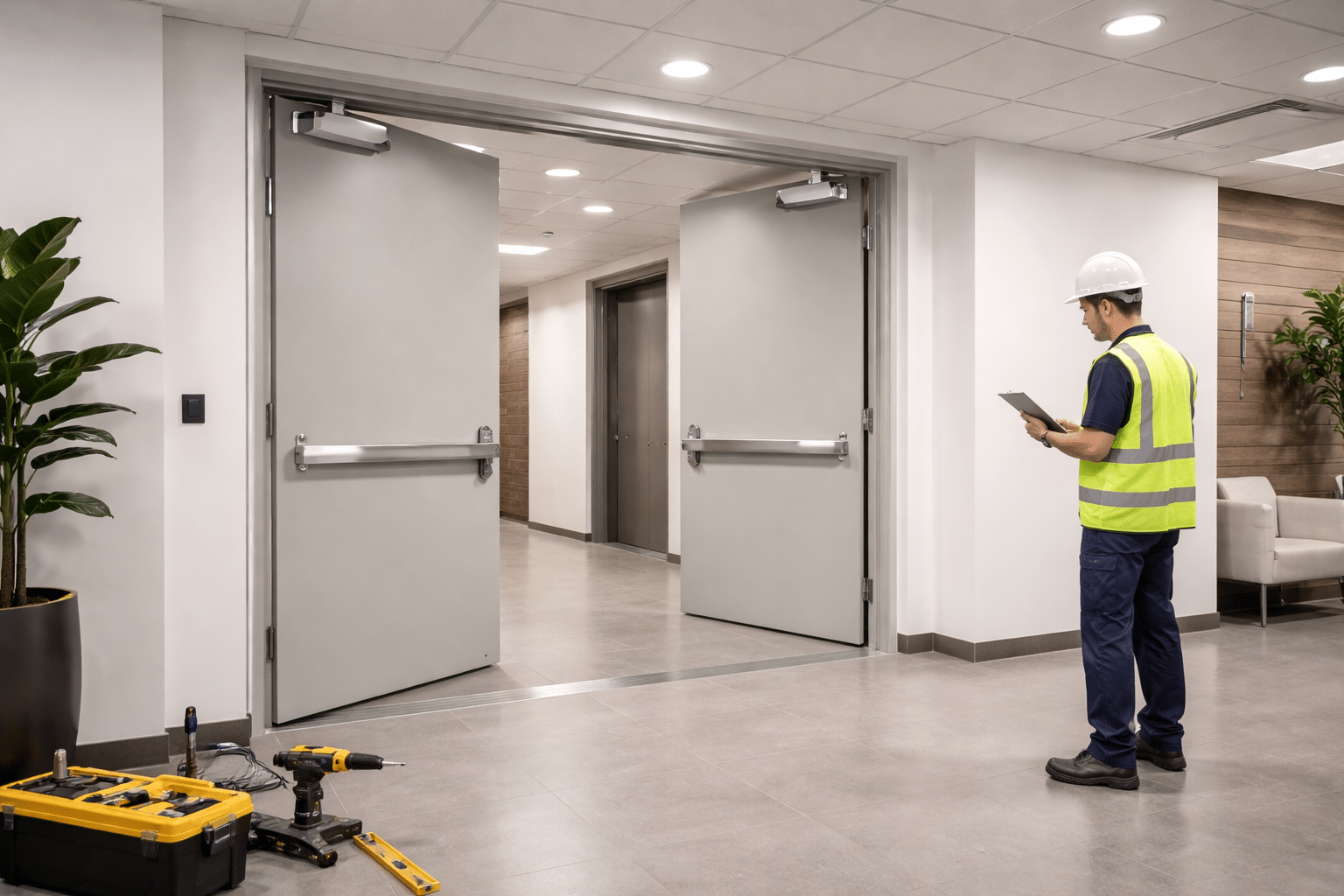
Fire Door Positioning for Full Wall Openings
Fire door positioning plays a bigger role in compliance than many people realise. When a fire door is installed within a full wall opening, the exact location of the door…

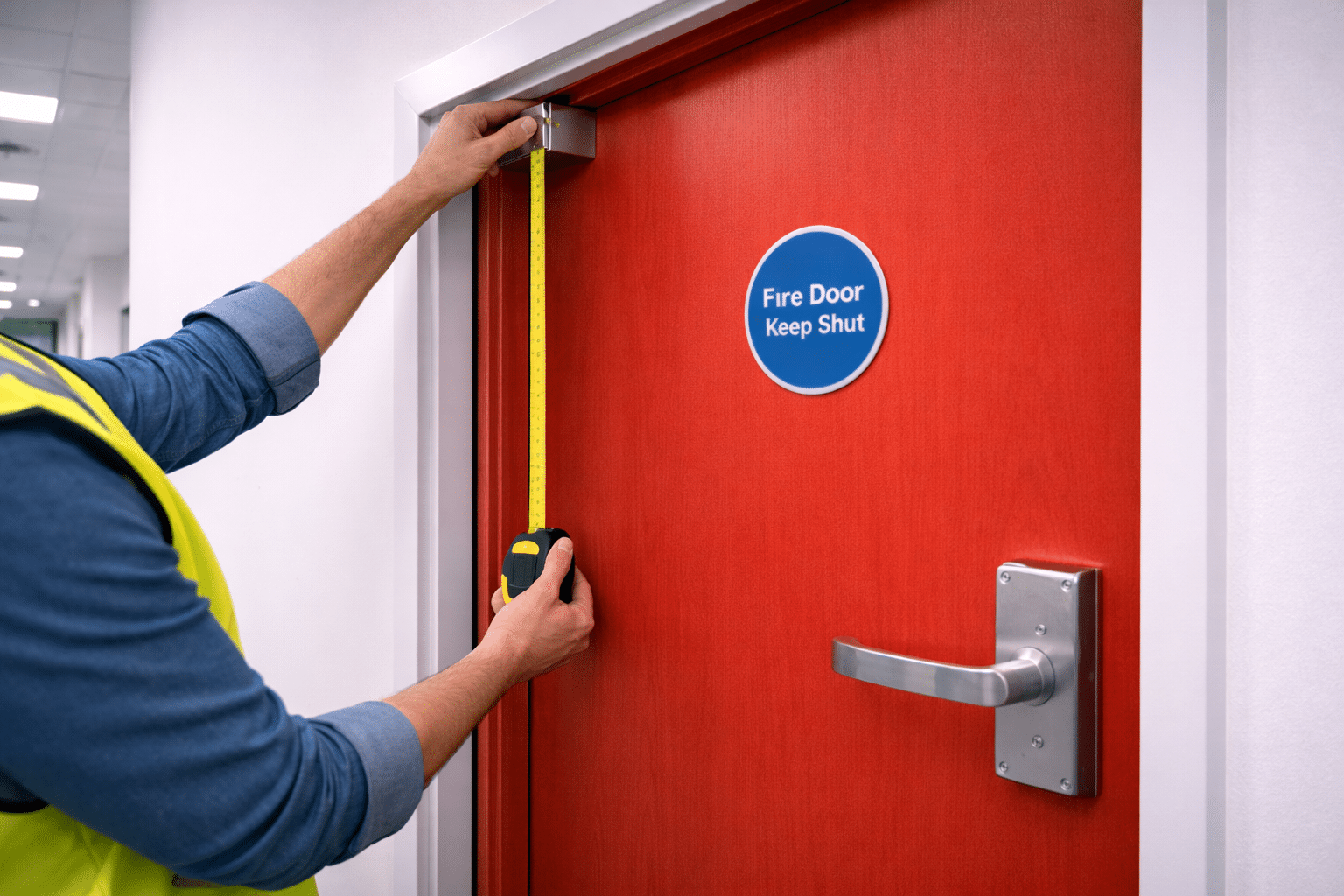
Gap tolerances are one of those small details that can cause big headaches in a fire door inspection. The good news is you do not need fancy gear or a trade background to spot obvious issues early. If you manage buildings, organise contractors, or sign off on maintenance, this quick guide will help you measure common gaps confidently and know when it is time to call in a specialist.
A fire door is designed to slow the spread of fire and smoke by sealing an opening in a fire-rated wall. If the gaps around the leaf are too large, the door can lose performance, fail compliance checks, and allow smoke to move between compartments sooner than it should. That is why measuring them is such a useful habit.
For many standard side-hung fire doors, common maximum clearances are typically 3 mm at the sides and head and 10 mm at the bottom (unless the door is specifically approved for something different).
To check Gap tolerances quickly, keep these on hand in your site kit:
Tip: If you are checking multiple doors, label photos with the door location so your maintenance team can act quickly.
When people talk about Gap tolerances, they are usually talking about these areas:
Measure the gap between the door leaf and the frame along both vertical edges. A practical approach is to take three readings per side: top, middle, bottom. This avoids “one good spot” hiding a bigger issue elsewhere.
What you are looking for is consistency. A door with a tight gap at the top and a wide gap at the bottom can signal sagging hinges, loose fixings, or a frame issue.
Take two readings across the head: near the hinge side and near the lock side. Again, consistency is the goal. If the gap changes dramatically across the top, the frame might be out of square or the door may be twisted.
Measure from the underside of the door leaf to the finished floor. A common guide for many standard fire doors is not more than 10 mm under the leaf and not less than around 3 mm, depending on the door system and floor finish.
If the floor finish has been changed (new carpet, tiles, vinyl, or a threshold strip), Gap tolerances can drift without anyone touching the door. This is why “it used to close fine” is not a reliable compliance test.
Use this simple routine to keep Gap tolerances checks consistent:
If your readings suggest Gap tolerances are outside what the door is approved for, flag it for assessment rather than trying a quick DIY fix.
When Gap tolerances are not right, the cause is often practical, not mysterious:
Some doors or seal types may allow slightly different gaps, so it is important to follow the door’s approved specifications, not just a rule of thumb.
This is where Gap tolerances can get tricky. The “3 mm sides and head, 10 mm bottom” guidance is commonly used for standard configurations, but doors can be approved with different details under certain conditions.
So, treat this guide as a fast screening tool:
That approach keeps you practical and compliant without guessing.
For each door, write down:
This documentation helps with audits and makes contractor follow-up much faster.
Call a professional when Gap tolerances are clearly out, or when you notice:
A qualified technician can confirm what the door is certified to, adjust hardware correctly, and recommend compliant rectification options.
If you manage strata, commercial, or industrial sites around Sydney, Comprehensive Fire Services (CFS) can help you stay on top of Gap tolerances with professional fire door inspections, maintenance, and compliant repairs. We provide clear reporting to support compliance and reduce the risk of unpleasant surprises at inspection time. Call 0418 749 488 or use the contact form on our website to book an inspection.



FPAS Accreditation Number: F055161A
We are committed to delivering the highest level of professionalism and compliance in the fire protection industry. As part of this commitment, our team holds accreditation under the Fire Protection Accreditation Scheme (FPAS) — the national accreditation framework developed by Fire Protection Association Australia (FPA Australia).

Phone: 0418 749 488
Fax: 02 4648 5386
Email: [email protected]
© 2026 Comprehensive Fire Service - Website by BSharp Tech