Hardware guide is your plain-English roadmap to picking the right closer, hinge and lock for a fire door. By the end, you will know the basics, the must-do checks, and the questions to ask your contractors so your building stays compliant and safe. Whether you manage a small block or a large site, this friendly reference will help you make clear, confident decisions.
Why fire door hardware matters
In most buildings the closer is the star performer, because it makes a fire door self close from any open position. A good way to remember this is to think of a closer as a seatbelt for the door. It must work every single time. In this spirit, the hardware guide reminds you to match the closer to the door’s size and weight, expected traffic and any air pressure from HVAC systems.
Door closers explained
In this hardware guide, a fire door must close and latch reliably. Surface mounted closers are common in commercial sites because they are robust, economical and straightforward to maintain. Concealed closers and floor springs can deliver a cleaner look, but they require precise installation and more specialised servicing. Choose with the whole life of the door in mind, not just the brochure.
Choosing power size and features
In this hardware guide, power size relates to the force a closer can provide. Larger and heavier doors need a higher size so they close against seals and still latch. If you have strong draught seals or a latch that needs a firm pull, step the power up. Look for adjustable closing and latching speeds so you can fine tune the action on site. Backcheck reduces slamming from wind or busy corridors. Delayed action helps in hospitals and aged care where staff need more time to move trolleys. To keep things simple, the hardware guide suggests surface mounted closers in most commercial settings because they are proven, serviceable and cost effective.
Compliance checks for closers
Fire doors must not be held open by wedges or non-rated gadgets. If you need doors to stay open during daily use, install an approved hold open device that is connected to the fire detection system and releases on activation. Keep all documentation from the supplier and installer. During audits this is a common failure, so train cleaners and tenants to report or remove door wedges on sight. The hardware guide message is simple. If it is a fire door, it has to close and latch on its own when it counts.
Hinges basics
Hinges are the quiet workhorses. They carry the load through thousands of cycles, and when they wear out the door starts to sag, scrape or fail to latch. Fire doors need fire rated hinges that match the door’s test evidence. Stainless steel or quality steel hinges with ball bearings are a safe bet for high traffic areas. Use at least three hinges per leaf to spread the load. For tall or heavy doors, four is better for stability and smoother action.
Quantity, screws and materials
Check the screw length and pattern against the test data. Short screws into a soft frame loosen quickly. Pilot drill accurately and use all fixings provided. Watch for black dust at the hinge knuckle, which signals wear. If you see rubbing marks or hear a scrape, act early to prevent damage to frames and seals. As the hardware guide points out, a few extra minutes on correct fixings and alignment saves many hours of rework later.
Locks and latches
In this hardware guide, locks and latches must be both secure and compliant. Many facilities choose mortice locks for strength and smooth operation. In some locations a tubular latch may be acceptable, but it still needs to be supported by the door’s fire test evidence. Pair the latch with a lever set that is easy to operate in an emergency. Knobs are harder to grasp and are not favoured by accessibility rules.
Egress and access control
For escape paths, people should open the door with one simple action without a key from the egress side. Panic bars or lever sets designed for egress are common solutions. If you add electronic access control, ensure devices release on alarm and on power loss where required by the fire strategy. Always confirm with a qualified fire contractor and keep written evidence with your maintenance records. The hardware guide rule here is to verify the whole setup before audit time, not after.
Seals and supporting components
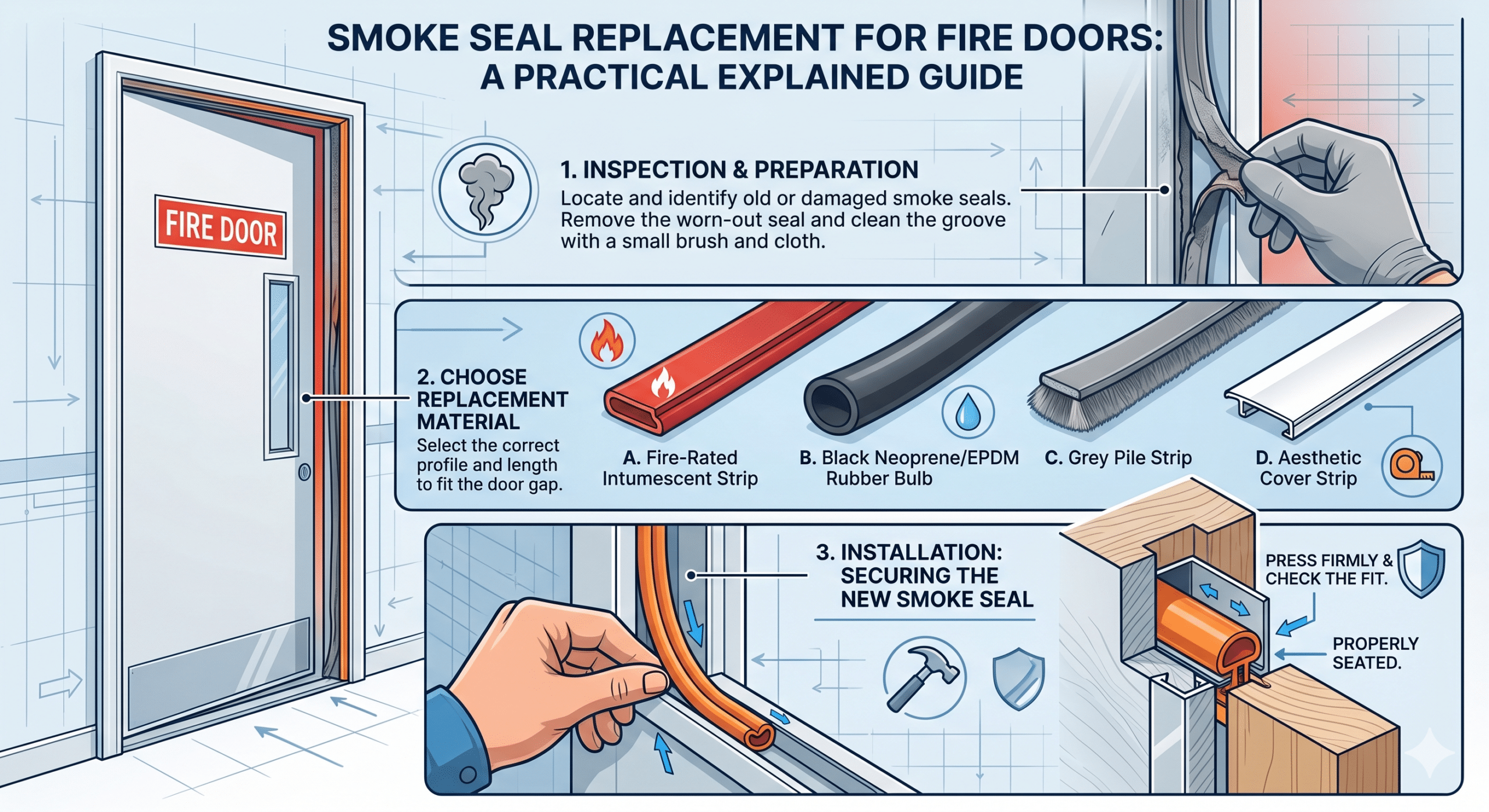
Do not forget the supporting players. Intumescent edge seals swell in heat to block gaps. Smoke seals reduce early smoke movement and help the door pass smoke leakage tests. If your door has a vision panel, the glazing, beading and fixing method must match the tested configuration. Door coordinators on double doors ensure the correct leaf closes first so the rebates engage. Threshold plates and drop seals maintain protection at the floor while keeping movement easy. The hardware guide view is that these extras work as a system, so always mix and match within the door’s verified evidence.
Selecting for the environment
Different spaces call for different choices. In a busy retail corridor, a sturdy surface closer with a vandal resistant cover is wise. In plant rooms or basements with negative air pressure, step up the closer power so the latch still engages. On coastal sites, choose corrosion resistant hinges and fixings. In child care or aged care, fine tune closing speeds so the leaf latches firmly without banging. Think about cleaning chemicals, carts and trolleys, wind tunnels near entries and after-hours access routines. The hardware guide encourages you to choose hardware for the real life the door will live, not just a standard spec.
Installation best practice
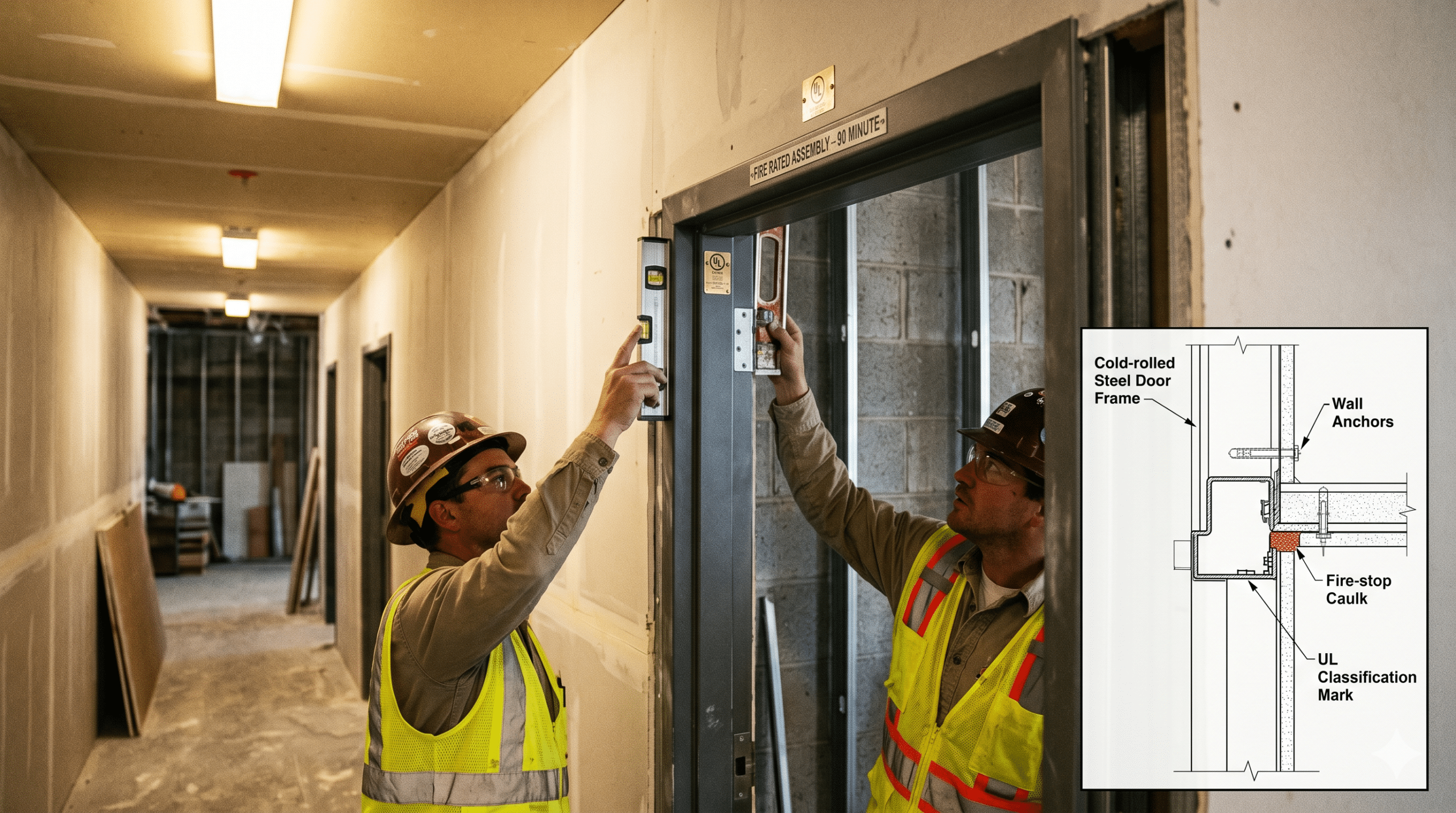
Installation quality makes or breaks performance. Mount the closer using the supplied template and set arm angles carefully. Confirm fixing points are solid and not in damaged or weak substrates. Pilot drill for hinges and use all screws of the specified size. Lock cutouts should be neat and tight so the door core is not weakened. After installation, cycle the door several times and check for smooth closing and positive latch. Adjust speeds on the closer so the latch engages without a slam. Record all settings so future maintenance is faster. The hardware guide approach is to test, adjust and document before you sign off.
Maintenance routine
Maintenance keeps you compliant year after year. Inspect and service regularly. Look for loose screws, bent arms, oil leaks from closers, worn hinge pins and misaligned strikes. Clean dust from seals and hardware, and replace any that are split or hardened. Re-tension closer arms if the door drifts open or fails to latch. Log every action so you can show a clear history during your Annual Fire Safety Statement. If tenants report doors that bang, stick or fail to latch, treat it as urgent and investigate quickly. As the hardware guide notes, small problems become big risks if ignored.
Common mistakes to avoid
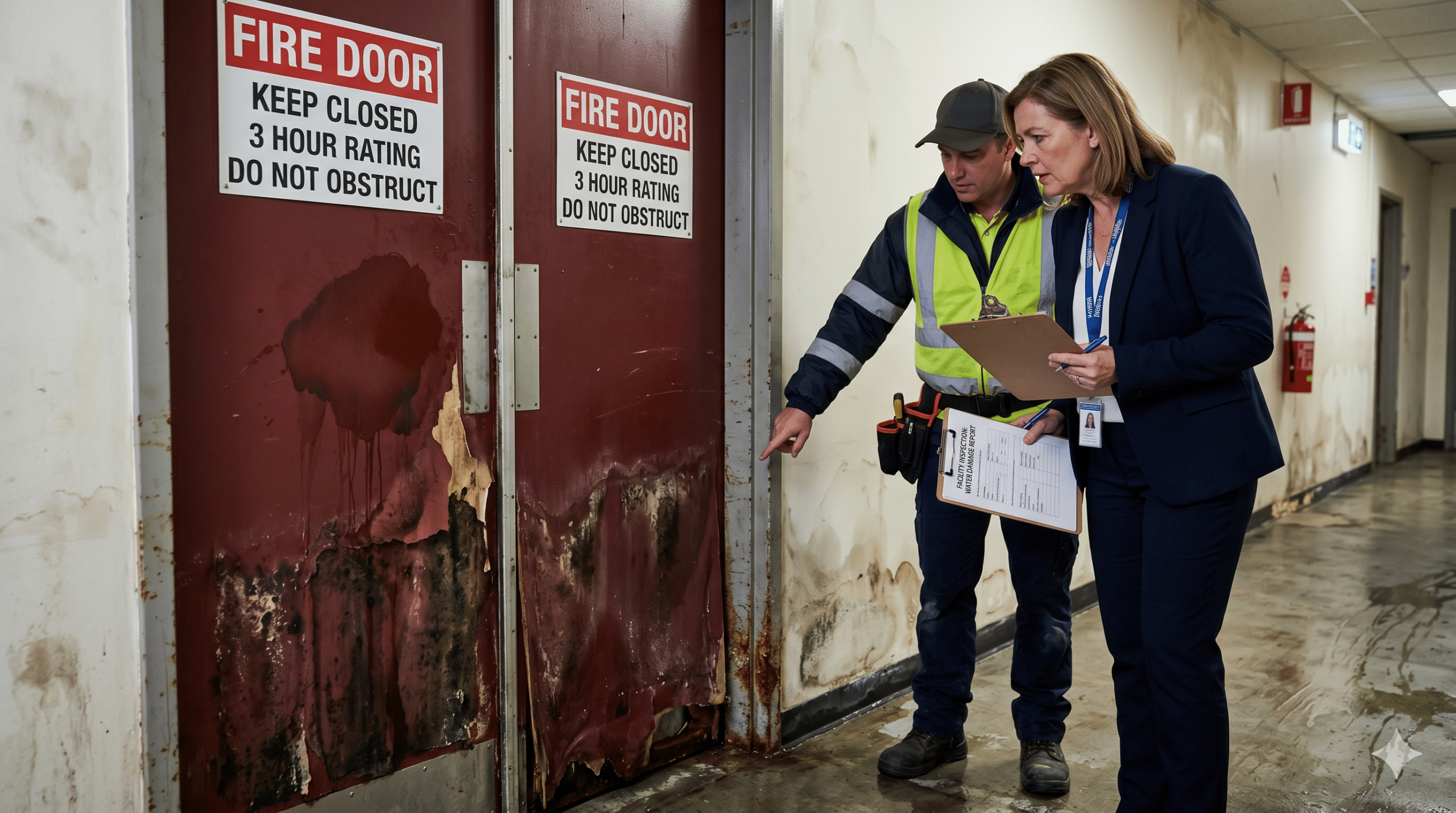
Avoid mixing non-rated hardware with a rated door even if it looks similar. Do not fit kick plates, grills or viewers without checking the door’s test evidence. Do not add surface bolts or barrel bolts that stop a door from self latching. Do not paint over seals so they stick or tear. Keep door leaf gaps within the tested tolerances. Most of all, never disable closers with wedges or magnets that are not tied to the fire system. The hardware guide takeaway is that shortcuts may save a minute today but can cost you dearly during an audit or an emergency.
Quick selection checklist
- Confirm the door’s fire rating and supporting test evidence.
- Choose a closer with the right power size and adjustability.
- Use fire rated hinges, at least three, with the correct screws.
- Select a fire rated lock or latch that allows simple egress.
- Ensure seals and any vision panels match the tested setup.
- Install neatly, then test and adjust for smooth close and latch.
- Document everything for your AFSS and future audits.
How CFS can help
Comprehensive Fire Services works with strata managers, building managers and construction teams across Sydney to supply, install and maintain compliant fire doors and hardware. As your hardware guide, our technicians match closers, hinges and locks to your specific door system, provide documentation to support compliance, and schedule maintenance that keeps everything on track. If you would like help with a site review or a hardware upgrade, call 0418 749 488 or contact us online. We are here to keep your doors doing their job when it matters most.b when it matters most.