Installer handover is the moment when a freshly installed fire door moves from the builder or installer to the person who will manage it day to day. Done well, it saves headaches, avoids compliance gaps and gives building managers confidence that the door will perform as expected. In this guide, we share a practical, plain English checklist you can adapt to your site, whether you look after a strata block, a commercial tower or a busy industrial facility in Sydney. CFS focuses on clear communication, quality workmanship and long term support for business clients across these sectors, which is why a solid checklist matters from day one.
Why a formal handover matters
In the rush to reach practical completion, small details can slip. A thorough installer handover ensures the right documentation, tags and labels are in place, the door operates correctly, and everyone understands how to keep it compliant. It also sets you up for ongoing maintenance and future Annual Fire Safety Statements, which many managers list as a key pain point.
The ultimate new fire door checklist
Use the following sections to structure your handover pack. Tweak the wording to fit your templates and local council requirements.
1. Compliance paperwork
Start with the legal backbone of the installation.
- Certificates of compliance for the door leaf, frame and hardware, confirming they meet AS 1905.1 and relevant building codes, included as part of your installer handover.
- Manufacturer data sheets and installation instructions for all components.
- A signed installer declaration that the door set was fitted according to the manufacturer’s requirements.
- Photos of the finished door from both sides, including labels and tags, stored with the job record.
Tie these into your digital asset register so everything is easy to find when audit time rolls around and to streamline future AFSS submissions as part of your installer handover. Many of our customers prioritise tidy documentation because it saves time and reduces risk.
2. Physical identification
Every door should be easy to identify.
- Permanent labels showing door rating, manufacturer and batch.
- Unique door ID that matches your site plan and maintenance register.
- Sticker or tag with installation date and next inspection due date.
A clean, consistent labelling system makes future work faster and avoids mix ups when contractors visit.
3. Correct door operation
Open and close the door ten times. Watch and listen.
- The door should self close fully from any open angle without slamming.
- Latch should engage smoothly without lifting or tugging.
- No rubbing on the floor, frame or threshold.
- Gaps to the frame and floor within tolerance.
Record the results on a simple tick sheet. If anything is out, fix it before the installer handover is complete.
4. Hardware check
Hardware is where many issues arise.
- Closer model and strength suited to door size and location.
- Hinges fire rated and correctly spaced.
- Latch or lockset fire rated, strike aligned, no drilled out sections beyond specification.
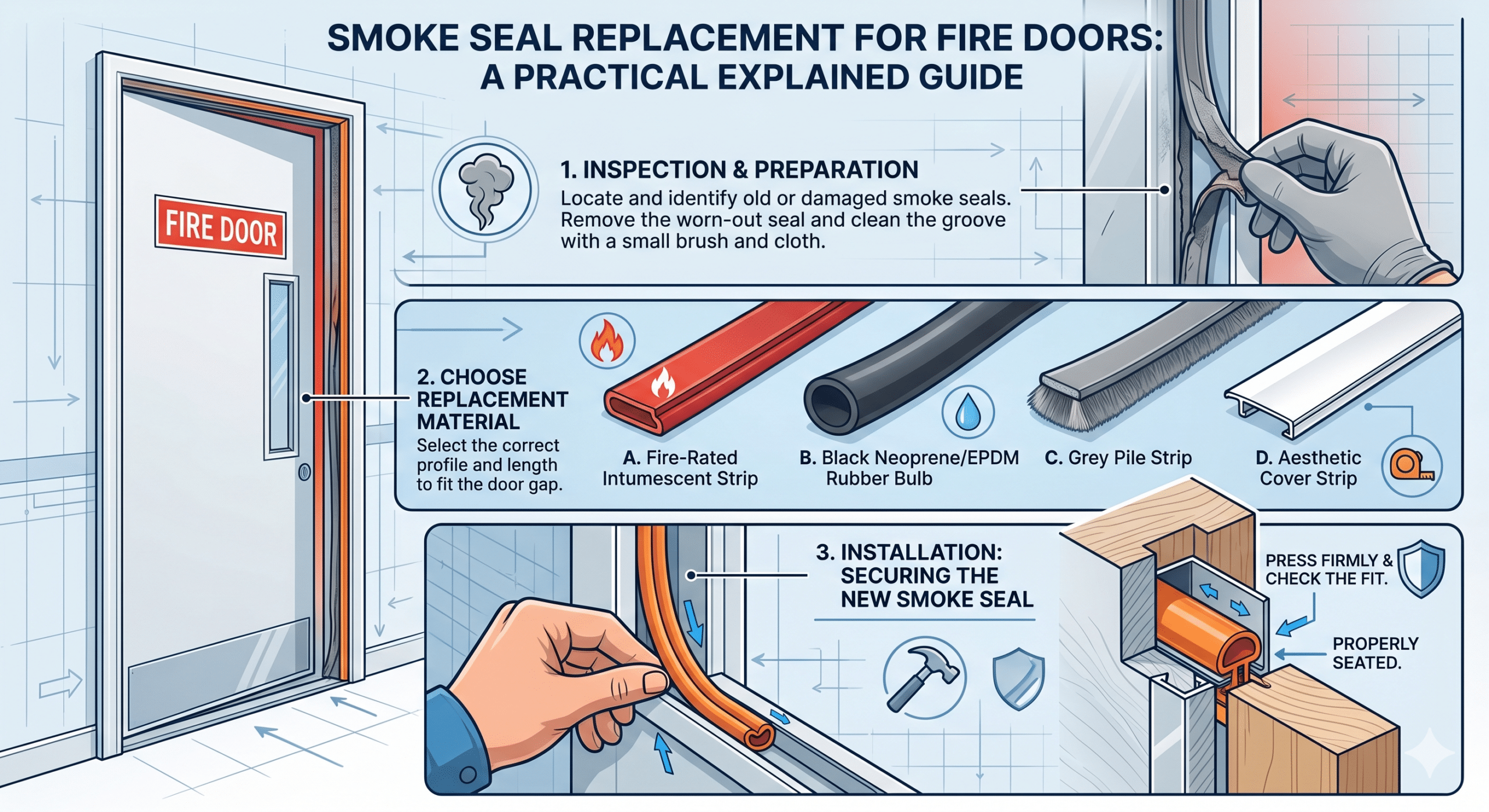
- Intumescent seals continuous and undamaged, fire and smoke seals appropriate to rating.
Photograph each hardware item and file the pictures with the door’s paperwork.
5. Surrounding construction
A compliant door in a non compliant wall still fails.
- Confirm wall type and rating match the door set.
- Check for penetrations in the wall near the door and that passive fire stopping is correctly installed.
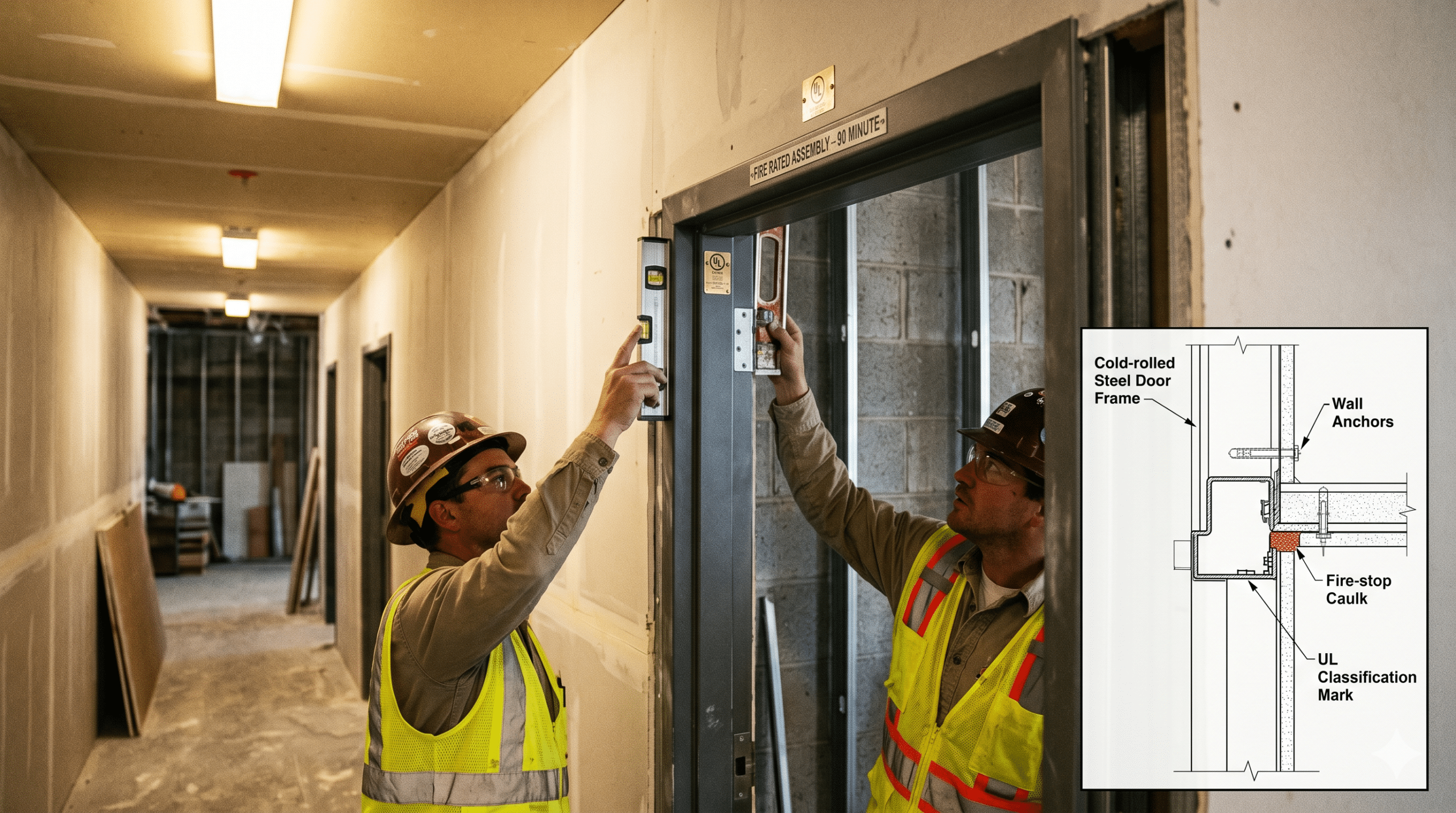
- Ensure the frame is fixed per specification and any gaps between frame and wall are packed and sealed with approved products.
Note any corrective works and assign them before the installer handover package is signed.
6. Access control and alarms
If the door connects to access control or fire detection, test the integration.
- Confirm fail safe or fail secure functions as designed during power loss and alarm conditions.
- Ensure door releases and self closes on fire alarm.
- Label any electromagnetic devices clearly and keep the wiring diagrams with the handover documents.
This step keeps security teams and fire safety teams aligned.
7. Environmental and location checks
Consider the door’s environment.
- External or high moisture areas may need stainless hardware and appropriate finishes.
- High traffic doors might need kick plates and edge guards.
- For car parks or plant rooms, confirm protective bollards or barriers are in place to prevent impact damage.
Document these choices so future replacements match the original intent.
8. Maintenance plan
A great installer handover points the way forward.
- Set the first routine inspection date.
- Include a simple owner’s care guide that spells out what to check monthly, quarterly and annually.
- During installer handover, add common do nots such as no wedges, no screws added to the leaf, and no aftermarket seals without approval.
This reduces accidental non compliance created by well meaning occupants.
9. Training and briefing
People make systems work.
- During installer handover, brief building managers and caretakers on how to recognise an issue and how to log a ticket.
- Show the correct way to test self closing.
- Explain who to call for urgent repairs and what information to provide.
Capture attendance and minutes in your record so there is proof of competency.
10. Final quality review and sign off
Before the keys change hands, complete a final walk through.
- Verify every item in the checklist has evidence attached.
- Ensure the as built drawing is updated with door IDs.
- Confirm the maintenance contractor details are visible to the on site team.
- Obtain signatures from the installer and the responsible building representative.
This creates a clear line of accountability and a smooth start to the door’s service life.
Tips to make your checklist stick
- Keep the language simple and use the same format across all properties.
- During installer handover, store handover packs in a shared folder linked to each building so managers can find them instantly.
- Use photos and short videos to capture door operation and seal locations.
- Add QR codes on the inside of the frame that point to the digital record for that door.
- Review the template every six months with your compliance partner.
Common pitfalls to avoid
- Missing labels or mismatched IDs that break the audit trail.
- Doors that do not self close reliably because closers are underpowered or misadjusted.
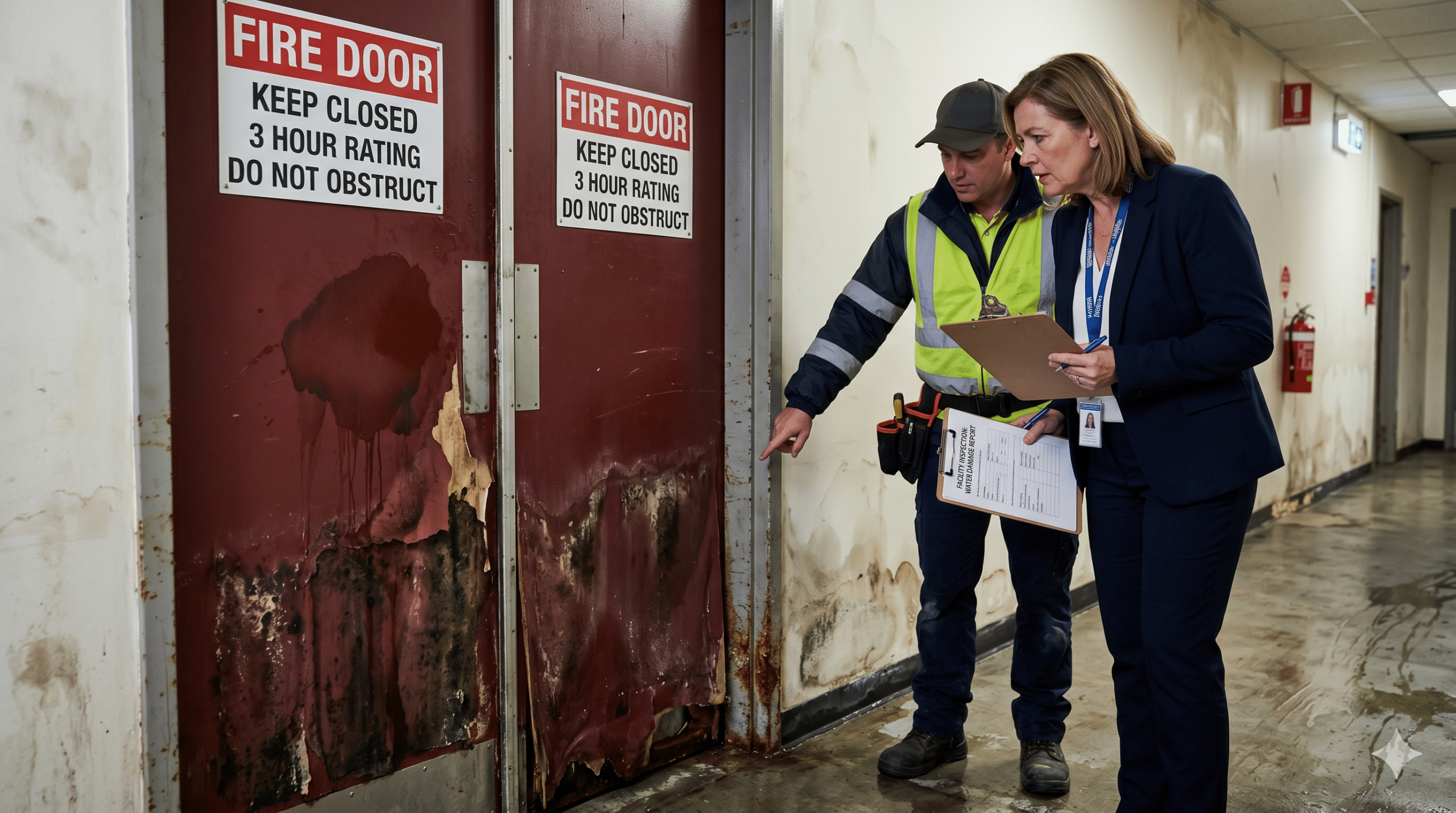
- Damaged or painted over intumescent seals after other trades touch up walls.
- Frames not sealed correctly to the wall, leaving gaps that should be fire stopped.
- Access control devices that keep doors held open during alarms.
Catching these at the installer handover stage saves time and call outs later.
Who benefits from a great handover
Strata managers, building managers and construction teams all gain from a tidy, transparent process. During installer handover, strata and commercial property teams that juggle multiple buildings rely on clear certification, responsive service and long term maintenance support to meet their legal obligations. That is why a service partner who can handle installation, documentation and follow up inspections becomes so valuable over the life of the asset.
How CFS fits into your process
Comprehensive Fire Services is a Sydney based specialist focused on supply, installation, maintenance and compliance inspections for fire doors and related hardware. We work across strata, commercial and industrial properties, provide custom made solutions for non standard openings, and back it all with ongoing testing and reporting to support your AFSS. If you would like a template pack to streamline your installer handover and a team to stand behind it, we are here to help. Call 0418 749 488 or contact us online to organise a site visit and a practical, plain English plan that suits your building.