Lifecycle Costs are the big picture view of what your fire doors will cost from purchase to end of life, not just the upfront invoice. If you manage strata, commercial or industrial sites, this is the metric that lets you budget confidently, avoid nasty surprises and keep your Annual Fire Safety Statements on track. In this guide we break it all down in simple terms so you can plan like a pro and still sleep well at night.
Why lifecycle thinking beats one off pricing
One off pricing can be tempting, especially when approving a large purchase. But when you look at the whole picture you see a different story. When you understand lifecycle costs you factor in purchase price, installation, hardware, routine inspections, compliance reporting, repairs, replacement parts, and disposal. For asset and strata managers juggling multiple buildings, this approach helps you balance safety, compliance and the budget the owners actually approved.
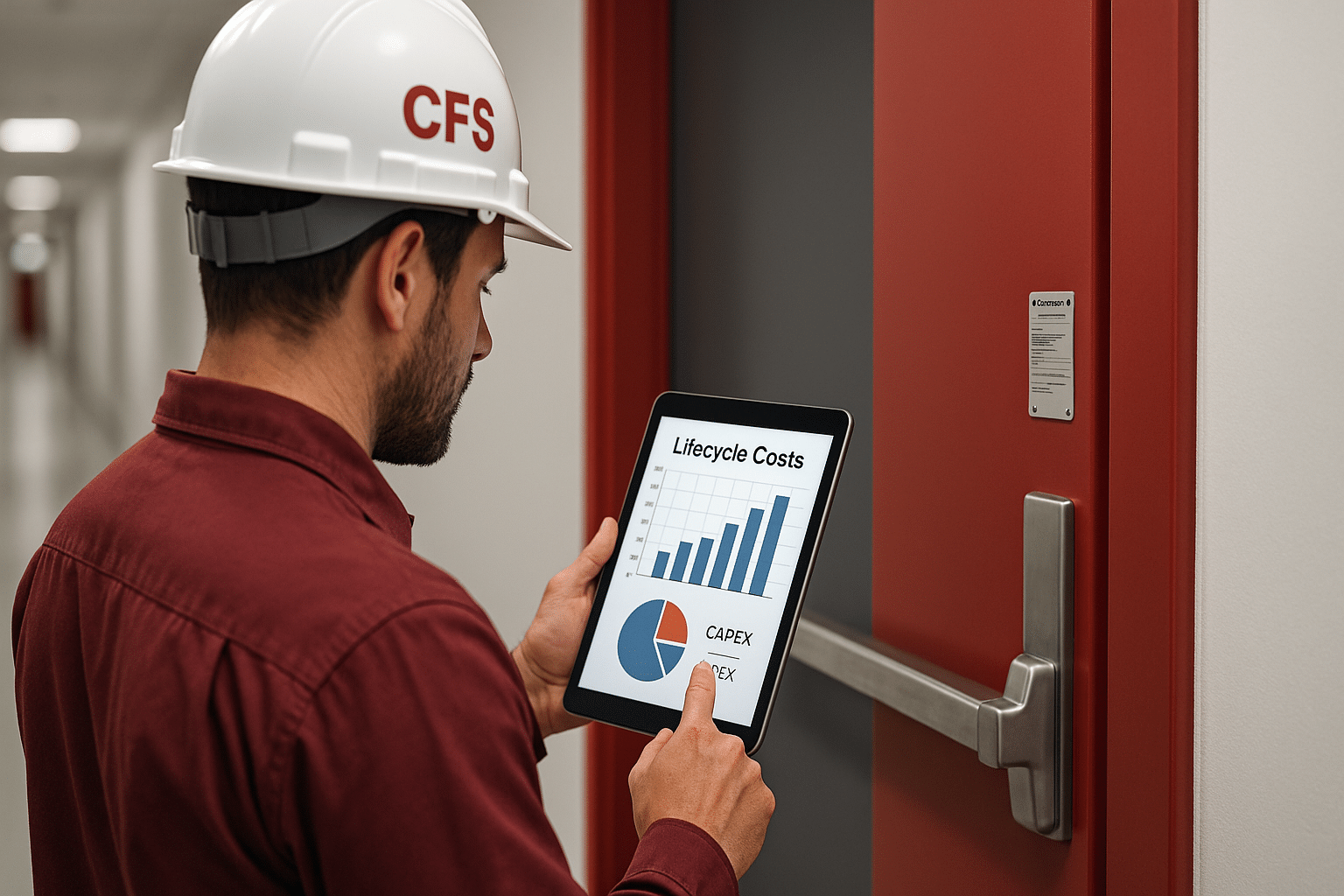
Capex vs opex in plain English
Capital expenditure is the big spend at the beginning. In fire door land that means the door leafs, frames, seals, compliant hardware and installation. Operating expenditure is the ongoing spend that keeps everything compliant and reliable, like scheduled inspections, minor repairs, adjustments and reporting for AFSS.
When you separate these, you can plan the timing of capex projects and set steady opex allowances year to year. Calculating lifecycle costs involves mapping both types to realistic timelines based on your building type and foot traffic.
The fire door lifecycle at a glance
Every fire door passes through predictable stages: specification, supply, installation, commissioning, routine inspection, maintenance and eventual replacement. Break down lifecycle costs into those stages and you can put numbers next to each one.
- Specification and design: Choose certified products that match wall type, door size, hardware needs and rating. Cheap but non compliant gear is not a bargain.
- Supply and installation: Include hardware like closers, latches, vision panels and smoke seals. Poor installation costs more later.
- Commissioning and documentation: Capture certificates and tags so AFSS time is smooth.
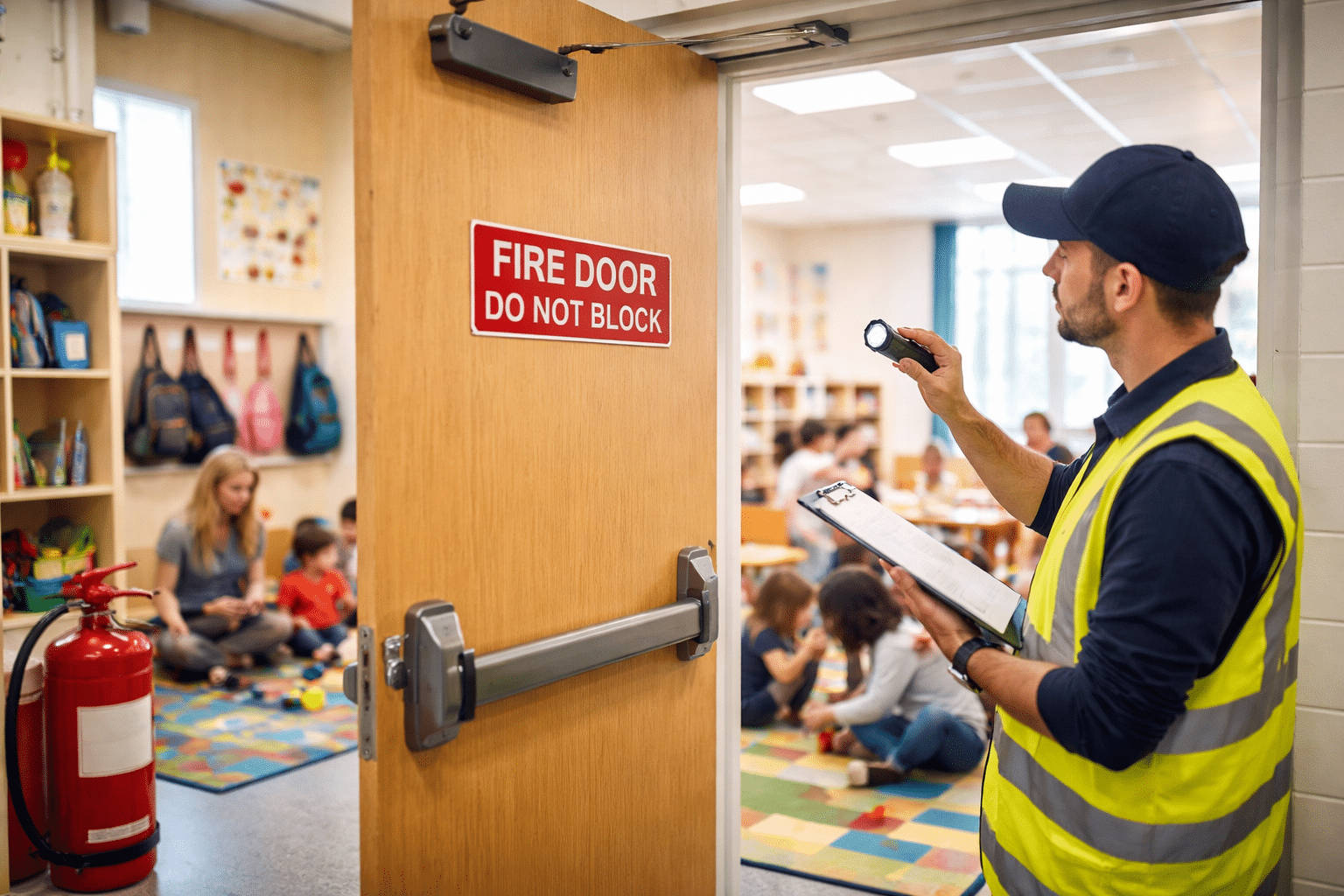
- Routine inspection and maintenance: Keep hinges tight, closers adjusted and seals intact. Small fixes now prevent failures.
- Repair or component replacement: Expect some wear for high traffic doors like plant rooms and car park risers.
- End of life replacement: Plan for eventual renewal so it is not an unplanned emergency.
Typical cost drivers to watch
There are several factors that move the needle on your budget.
- Door size and rating: Oversized leaves, vision panels and higher fire ratings cost more initially but may save on replacement frequency.
- Hardware selection: Closers and locks that are actually certified for fire use are essential. Quality hardware often reduces callouts.
- Traffic level: Doors at main entries and plant rooms see more use, which means more wear and tear.
- Environment: Coastal or humid areas can be tough on steel frames and fixings.
- Compliance regime: If your council or building policy expects more frequent checks, your opex goes up but risk goes down.
Map lifecycle costs to these drivers and you will be closer to the truth than any flat per door guess.
A simple budgeting model you can copy
Here is a plain language model for a single compliant fire door in a typical Sydney commercial building. Adapt the numbers to your rates and building conditions.
- Year 0 capex: Supply, install and commission including certified hardware.
- Years 1 to 5 opex: Routine inspections, minor adjustments, and occasional seal replacement.
- Year 6 mini refresh: Allow for a hinge set or closer replacement if the door is high traffic.
- Years 7 to 10 opex: Continue inspections, touch ups, and AFSS support.
- Year 10 plus: Evaluate condition. Some doors will continue with maintenance, others move to planned renewal.
Track lifecycle costs year by year in your asset register. Add notes on traffic levels and any incidents so you can refine your assumptions each budget cycle.
Portfolio view beats door by door
If you manage multiple buildings, think in groups. Group doors by risk and usage: critical egress, plant room, common area, basement, and low traffic service doors. Budgeting lifecycle costs across a portfolio lets you prioritise high risk doors first and smooth the spend across financial years.
- Critical egress doors: Keep a slightly higher opex allowance for rapid repairs and certified hardware.
- Plant rooms: Expect elevated wear. Plan for closer and latch replacements mid cycle.
- Low traffic areas: Keep steady inspection costs and a smaller repair buffer.
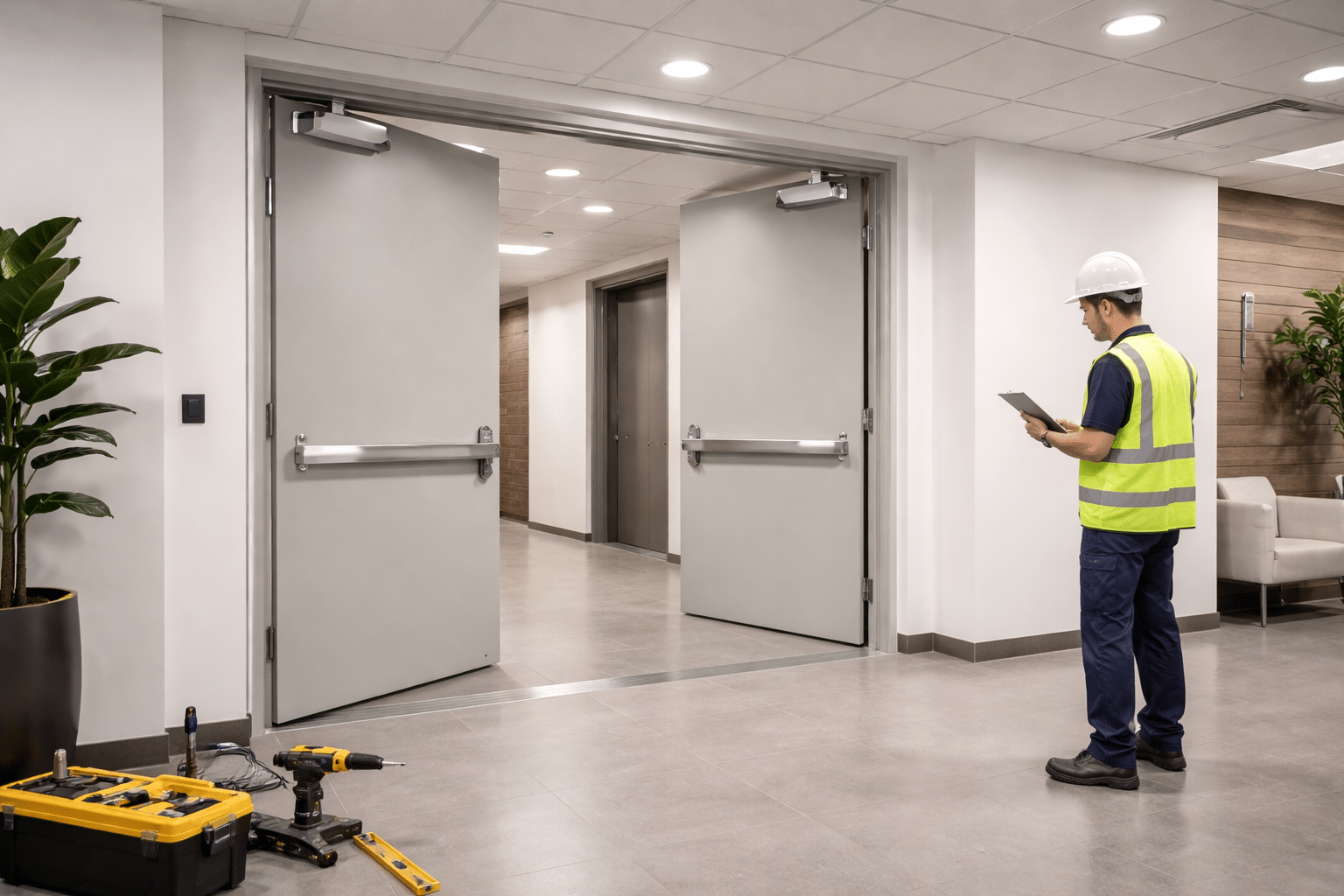
Use lifecycle costs to compare options like standard solid core doors versus sliding fire doors for wide openings. The more complex doors can cost more to install but may save space and reduce damage in high traffic zones.
Five ways to lower whole of life spend
You can meaningfully reduce total spend without cutting safety.
- Choose certified hardware that lasts: Better closers hold adjustment longer, which means fewer revisits.
- Specify the right frame: Steel frames in busy or rough service areas resist damage, reducing repairs.
- Standardise where possible: Fewer hardware variants mean spare parts are always on hand and techs work faster.
- Lock in scheduled inspections: Small fixes before AFSS season avoid premium callout rates later.
- Document everything: Good records make it easier to prove compliance and plan capex renewals.
Optimising lifecycle costs comes down to consistent inspections, quick minor repairs and choosing products that stand up to your site conditions.
How to present the numbers to decision makers
Clear presentation helps approvals fly through. Report lifecycle costs clearly for approvals using three lines per group of doors: initial capex, annual opex and ten year total. Include a short note on compliance risks if work is deferred. A simple chart that shows the peaks and troughs across the next five years will make it obvious which projects should go first.
Common pitfalls that blow the budget
- Buying on price alone: A bargain install can lead to repeat callouts and non compliance.
- Skipping documentation: Missing tags and certificates slow AFSS and may trigger extra visits.
- Letting small issues linger: A loose closer screw becomes a failed self closing test which becomes a compliance breach.
- Ignoring environment: Coastal corrosion or dusty plant rooms will punish the wrong hardware choice.
Use lifecycle costs to set realistic expectations with owners and tenants. It makes conversations calmer and decisions easier.
Where CFS fits into your plan
You do not need to do this alone. CFS supplies, installs and maintains certified fire doors, frames and hardware for Sydney strata, commercial and industrial properties. Our team can baseline your current assets, schedule inspections, and price repairs or renewals so your budgets line up with real world conditions. CFS can help forecast lifecycle costs for your building portfolio and prepare documentation that makes AFSS season painless. If you are ready to tidy up your plan, call 0418 749 488 or contact us at our website to get started.