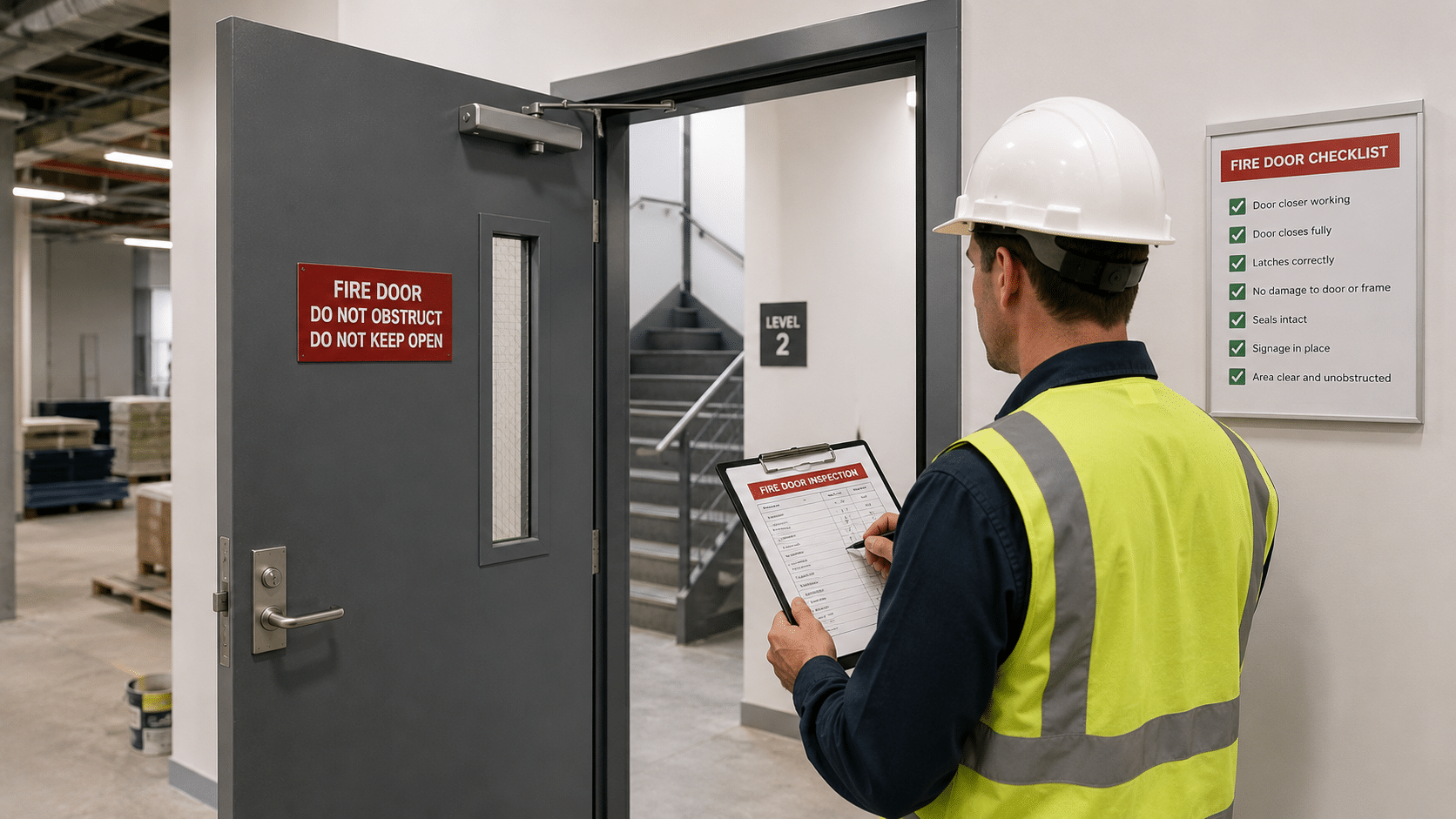
Lift lobbies smoke is a topic that can feel technical, yet it affects how safely your building functions every day. In this guide we break down what actually happens in lift lobbies during a fire, how smoke doors and pressurisation work together, and the practical steps building managers, strata managers and facilities teams in Sydney can take to stay compliant and keep people safe. No jargon. Just clear, useful info.
Why lift lobbies matter
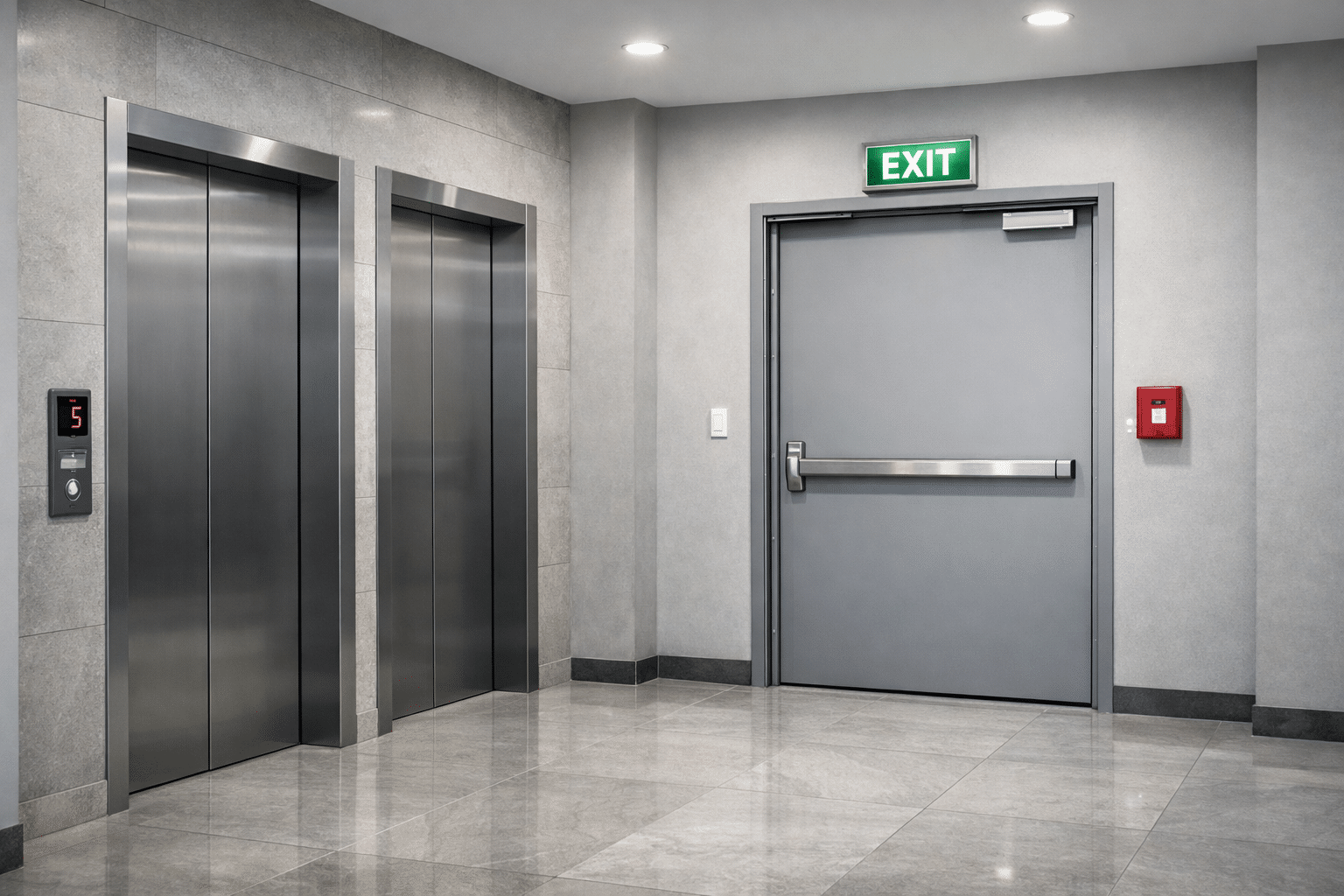
When a fire starts, smoke moves faster than flames. Lift lobbies sit at the heart of vertical transport, which means they can become fast tracks for smoke if they are not designed and maintained well. The aim is simple: stop smoke entering or spreading through the lobby so people can evacuate safely and firefighters can work efficiently. That is where lift lobbies smoke controls, smoke-rated doors, and pressurisation fans come into play.
What is a smoke door and how is it different from a fire door?
A smoke door is designed to limit smoke movement. It may be part of a certified fire door assembly, or it could be a door set with tested smoke seals that specifically address smoke leakage. Fire doors focus on resisting fire for a set time. Smoke doors focus on stopping smoke slipping through gaps. In lift lobbies, you will often see a door that does both jobs, with proper door closers, compliant frames and perimeter and meeting stile seals. This combination supports lift lobbies smoke management where it matters most.
Pressurisation in plain English
Pressurisation uses mechanical fans to gently push clean air into a protected space such as a lift lobby or stairwell. That slight push creates higher air pressure inside the protected area compared to the smoky area outside. Air always tries to move from high pressure to low pressure, so the higher pressure inside helps keep smoke out. Think of it like a soft air cushion behind the lobby doors. Pair that with well fitted doors and seals, and you have a reliable lift lobbies smoke barrier that works even when people are coming and going during an evacuation.
The teamwork: doors, seals and fans
For the system to perform, several parts must work together:
- Door leaf and frame: Correctly rated, properly hung, and free from damage.
- Door closer: Returns the door to closed, every time. If it is sluggish or leaking oil, action it.
- Smoke seals: Intumescent or brush seals around the perimeter and meeting stiles to minimise leakage.
- Thresholds and clearances: Gaps that are too big let smoke sneak through.
- Pressurisation fans and controls: Set up to deliver the right pressure without making doors too hard to open.
If one item fails, the whole lift lobbies smoke strategy weakens. A door that does not latch or a missing seal can undo the benefit of a well tuned fan.
Common real world issues
You do not need a laboratory to spot the usual problems. Walk your lift lobbies and look for:
- Wedge stops or door props. A propped door is a wide open path for smoke.
- Missing or worn seals. If the brush is patchy or the strip is peeling, replace it.
- Damaged frames or misaligned hinges. Even small twists create big gaps.
- Closers set too soft. If the door drifts and does not latch, your lift lobbies smoke line is broken.
- Pressurisation that is too strong. Doors become heavy to open, which is a safety and accessibility issue.
Maintenance made easy
A simple quarterly routine goes a long way:
- Visual check: Doors close and latch, no warping, no holes, no wedges.
- Seal check: Look for continuity, compression and cleanliness. Replace if worn.
- Closer check: Confirm controlled closing and latching from any open position.
- Gap check: Use a feeler gauge or thin card to spot oversize clearances at head, jamb and threshold.
- Fan test: Coordinate with your HVAC contractor to verify setpoints, pressure differentials and alarm interlocks.
Document what you find. Photos with dates and a clear action list make Annual Fire Safety Statements much smoother and keep the lift lobbies smoke protections dependable.
Pressurisation performance without the headaches
Pressurisation should be just enough to resist smoke, not so strong that staff and residents feel like they are pushing against a gym door. If complaints arise about heavy doors, ask your HVAC contractor to check differential pressures at typical wind conditions and with multiple doors cycling. Balancing is not guesswork. The target is a small, steady pressure that complements smoke doors rather than fighting them. Getting this right is key to an effective lift lobbies smoke plan.
Retrofits and small upgrades that punch above their weight
You do not need to rebuild the lobby to see gains:
- Add or upgrade smoke seals rated for your door type.
- Replace tired closers with models that provide reliable closing speed and latching.
- Fit compliant threshold seals where gaps are hard to tame.
- Install door hold-open devices that are linked to the fire system. They keep traffic flowing day to day, then release on alarm so doors close and the lift lobbies smoke control takes over.
- Tune pressurisation controls so the fan ramps up when the fire panel activates and ramps down appropriately after.
Accessibility and user experience
Safety and accessibility must both be respected. Doors should be easy to open for occupants with mobility challenges, yet still close firmly. Consider the whole journey: people step out of the lift, read signage, find the exit and move through the lobby quickly. Good lighting, clear wayfinding and tidy floors all support the lift lobbies smoke objectives by reducing delays and door hold-opens during an emergency.
Compliance and documentation
Strata and facilities teams in Sydney juggle inspections, budgets and tenant expectations. Keep a central log for every lobby door set: installation date, ratings, hardware, seal types, inspection notes and corrective actions. Capture fan tests and pressure readings alongside door maintenance. This is not just paperwork. It proves due diligence, helps forecast budgets and ensures your lift lobbies smoke systems are maintained consistently across multiple buildings.
Training the on site team
A five minute toolbox talk pays back every time. Teach concierges, cleaners and maintenance teams to spot problem signs like wedged doors or frayed seals, and to log a job immediately. The faster a small defect is fixed, the stronger your lift lobbies smoke performance remains.
Quick checklist for your next site walk
- Are lobby doors closing and latching from any open angle?
- Do seals look continuous and undamaged around the full perimeter?
- Are gaps within acceptable limits at head, jamb and threshold?
- Are there any wedges, door stops or magnets not connected to the fire panel?
- Has the pressurisation been tested recently under alarm conditions?
- Are inspection records up to date for AFSS preparation?
If you can confidently tick these items, your lift lobbies smoke controls are likely working as intended.