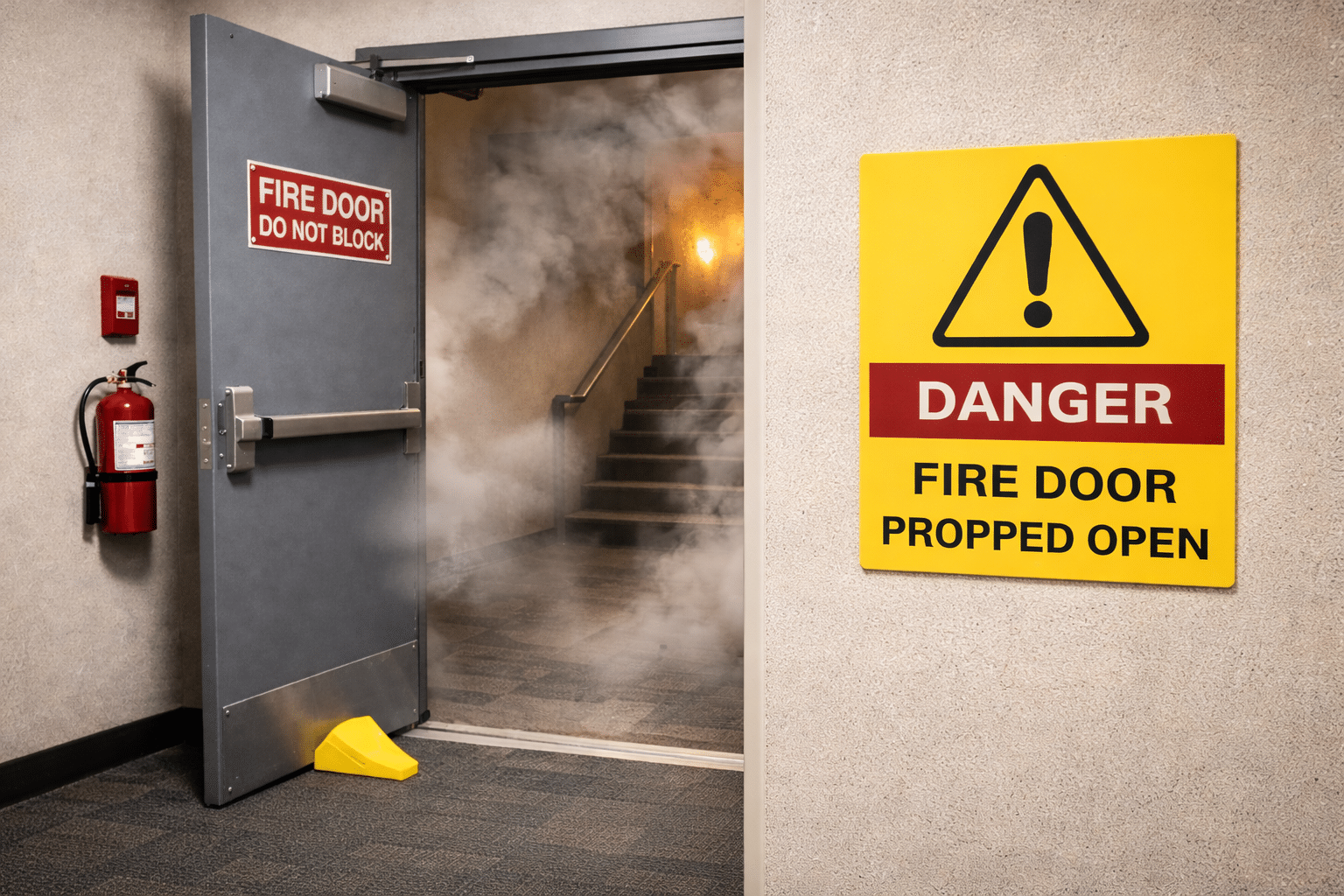
Propped open fire doors might seem harmless during a busy day in a building. Someone wedges the door with a bin, chair, or doorstop to make moving equipment easier or to improve airflow. It feels convenient in the moment, but when a fire door is propped open it quietly undermines one of the most important fire safety features in a building.
Fire doors are designed to close automatically during a fire to stop flames and smoke spreading between different areas of a building. When a fire door is propped open, that protection disappears immediately.
For strata managers, building managers, and property owners responsible for safety and compliance, understanding the risks created when a fire door is propped open is essential.
Why fire doors must stay closed
Fire doors are a critical part of passive fire protection. Their job is simple but extremely important. They slow the spread of fire and smoke so people have more time to evacuate safely and emergency services have more time to respond.
Most fire doors are fitted with a self closing mechanism. This ensures the door closes automatically after being opened. When a fire door is propped open, the door closer cannot perform its intended function.
Instead of acting as a barrier, the doorway becomes a direct pathway for fire and smoke to move rapidly through the building.
This can significantly increase the danger to occupants and property.
How a propped open fire door affects fire safety
When a fire door is propped open, the entire fire safety strategy of the building can be compromised. Fire safety systems rely heavily on compartmentalisation. This means dividing a building into sections designed to contain fire for a specific period of time.
A propped open fire door removes this protective barrier.
If a fire begins in one compartment, flames and smoke can quickly travel through corridors, stairwells, and adjoining rooms. This dramatically reduces the time available for people to evacuate safely.
Smoke is particularly dangerous because it spreads faster than flames and can quickly fill escape routes. In many fire incidents, smoke inhalation is the primary cause of injury or death.
A propped open fire door allows this smoke to move freely throughout the building.
Compliance and legal consequences
Leaving a fire door propped open is not just a safety issue. It can also lead to serious compliance problems.
In Australia, fire doors must meet strict standards including AS1905.1. These standards require fire doors to remain functional and capable of closing fully during a fire.
If a fire door is propped open, the building may fail a fire safety inspection.
For strata managers and property managers, this can create significant challenges when preparing Annual Fire Safety Statements. Non compliant fire doors may require urgent repairs, additional inspections, or corrective work before certification.
There is also the issue of liability. If a fire spreads because a fire door was propped open, building owners or managers may face legal consequences for failing to maintain proper safety measures.
Common reasons fire doors get propped open
Despite the risks, fire doors are often propped open for everyday convenience. In many commercial and residential buildings this occurs more often than people realise.
Common reasons include moving deliveries, improving ventilation, reducing noise from closing doors, or making access easier for staff and tenants.
Although these reasons may appear practical, they highlight a lack of awareness about fire safety responsibilities. Many occupants simply do not realise how dangerous it can be when a fire door is propped open.
Building managers often discover the problem during inspections when they notice a door repeatedly left propped open by occupants.
The impact on evacuation routes
Another major concern when a fire door is propped open is the effect on evacuation routes.
Corridors and stairwells are designed to function as protected escape paths during an emergency. Fire doors help keep these routes clear of smoke and flames.
When a fire door is propped open, smoke can rapidly enter these escape routes.
This makes evacuation far more difficult and dangerous. People may struggle to see clearly, breathe safely, or navigate their way out of the building.
In multi storey buildings the risk becomes even greater. A single propped open fire door can allow smoke to travel vertically through stairwells and corridors, affecting multiple levels of the building.
How to prevent fire doors being propped open
Preventing a propped open fire door often comes down to awareness and good building management practices.
Simple measures can make a significant difference in maintaining fire safety.
Staff and tenant awareness
Many occupants are unaware of the role fire doors play in building safety. Providing clear information about fire door safety can reduce the likelihood of a door being propped open.
Signage, safety briefings, and regular reminders can help reinforce the importance of keeping fire doors closed.
Approved hold open devices
In some buildings there are operational reasons for doors to remain open during normal use. In these situations approved electromagnetic hold open devices may be installed.
These devices keep the door open under normal conditions but automatically release and close when the fire alarm system activates. This allows the door to remain functional without creating a permanently propped open fire door.
Routine fire door inspections
Regular inspections help identify safety issues before they become serious risks. If a door closer fails or a door is frequently found propped open, maintenance teams can address the issue quickly.
Routine inspections also help ensure compliance with Australian fire safety regulations and provide documentation required for safety reporting.
Why fire door maintenance matters
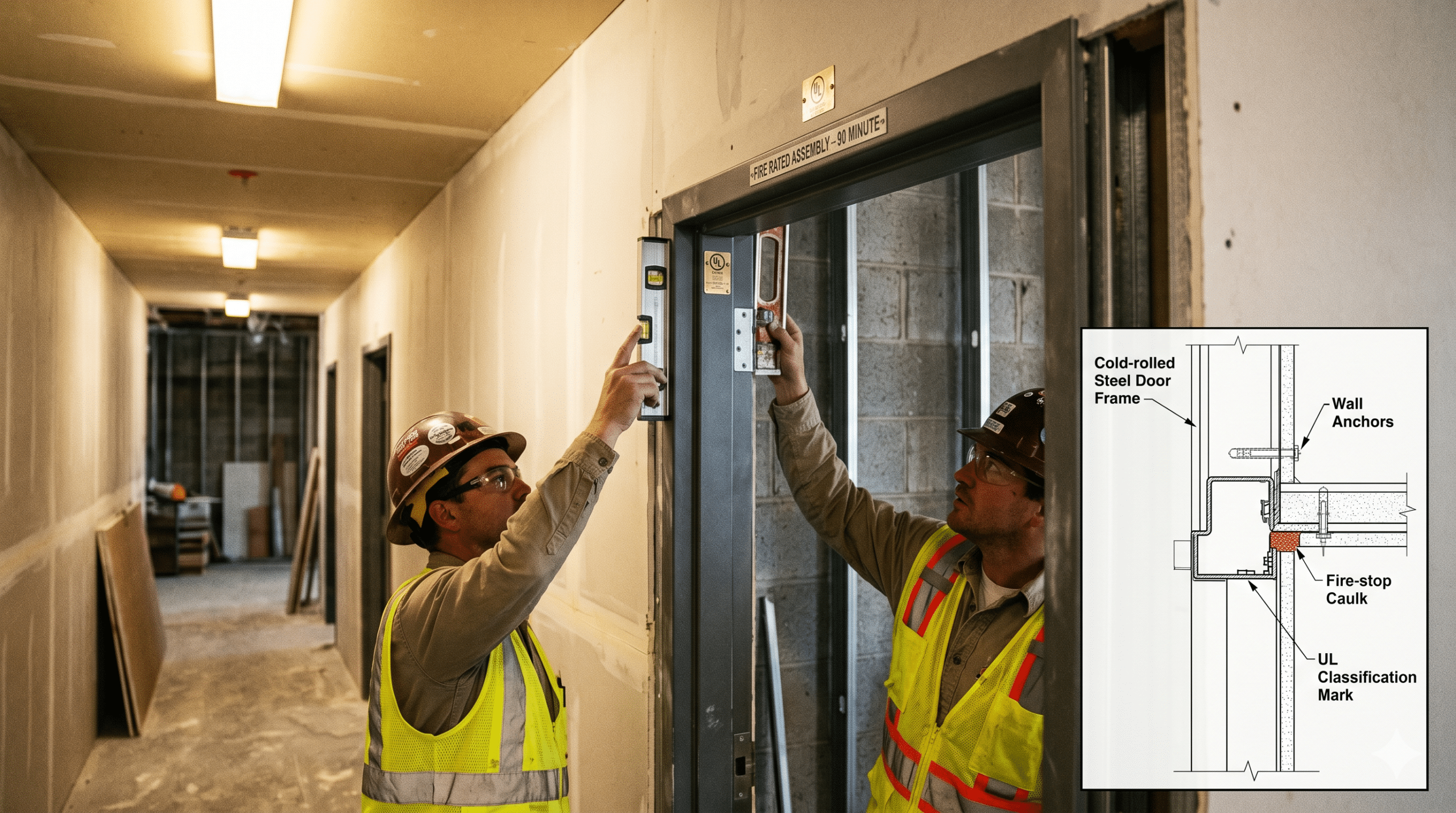
Fire doors are specialised safety systems, not ordinary doors. They are tested and certified to perform under extreme conditions during a fire.
Even small changes can affect how they perform.
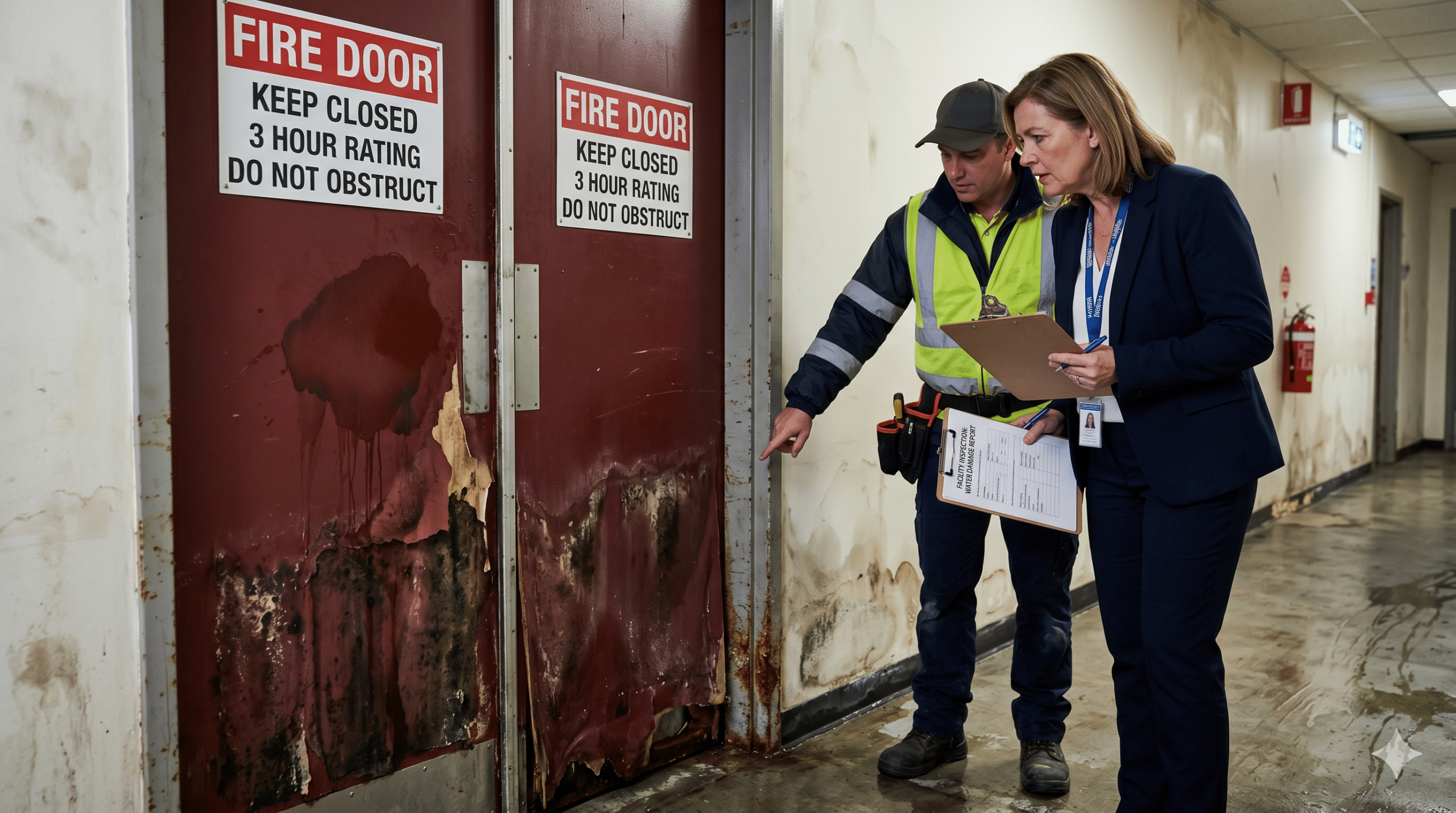
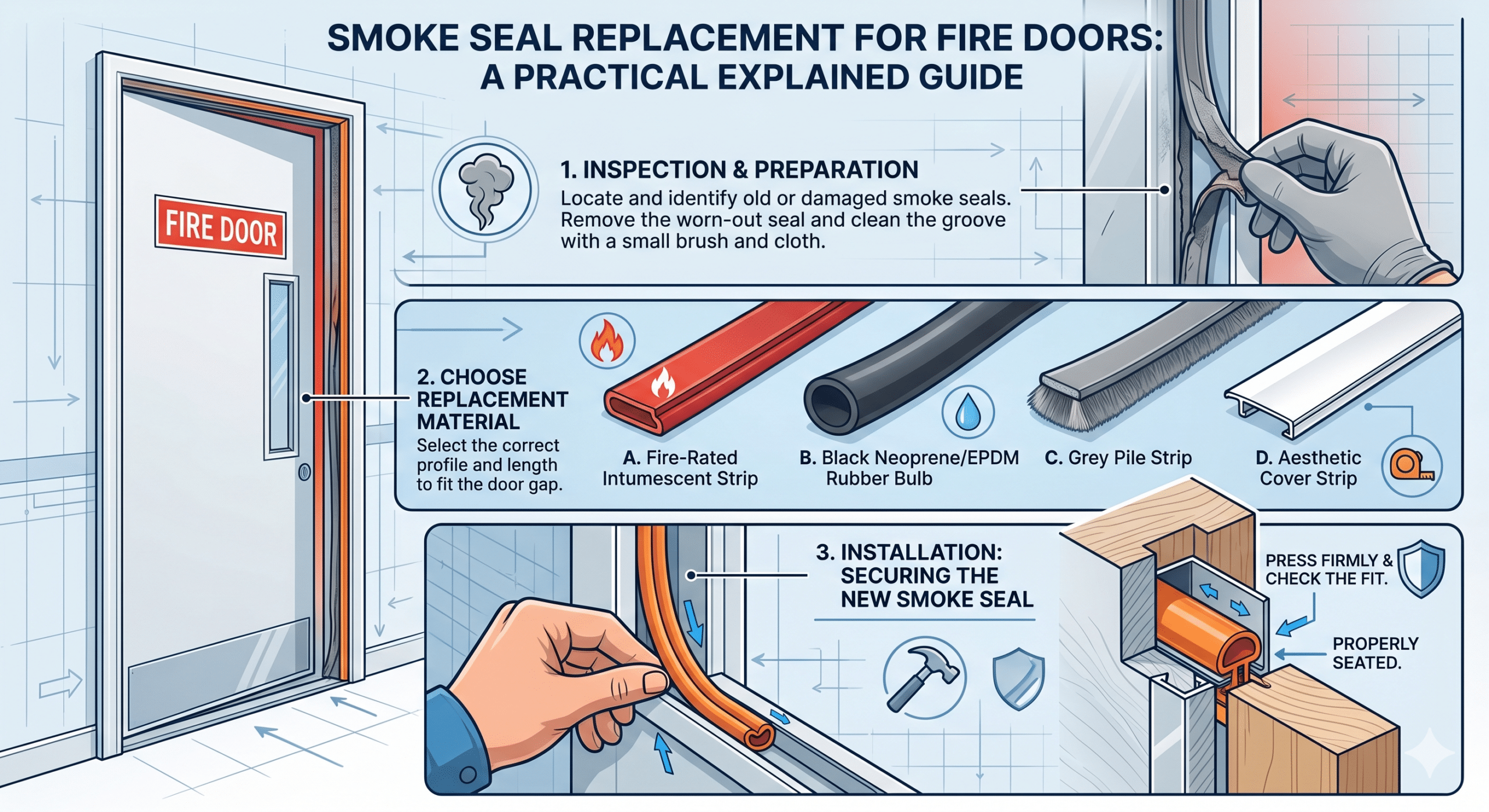
A propped open fire door may also signal other issues such as faulty door closers, damaged seals, or misaligned frames. Without regular maintenance, these issues may go unnoticed until a fire safety inspection occurs.
Consistent servicing ensures fire doors close properly, latch securely, and maintain their certified fire rating.
For property managers responsible for multiple buildings, proactive fire door maintenance is one of the most effective ways to reduce safety risks and maintain compliance.
Final thoughts on propped open fire doors
A fire door propped open may appear to be a minor convenience, but it can have serious consequences for building safety.
Fire doors are designed to contain fire, protect escape routes, and provide valuable time for occupants to evacuate safely during an emergency.
When a fire door is propped open, that protection is lost.
Building managers and property owners should ensure fire doors remain fully functional, educate occupants about fire safety responsibilities, and arrange regular inspections to maintain compliance.
Comprehensive Fire Services helps building managers across Sydney maintain compliant and fully functional fire doors through professional inspections, maintenance, and certification services. If you need support with fire door compliance, expert assistance is only a call away.