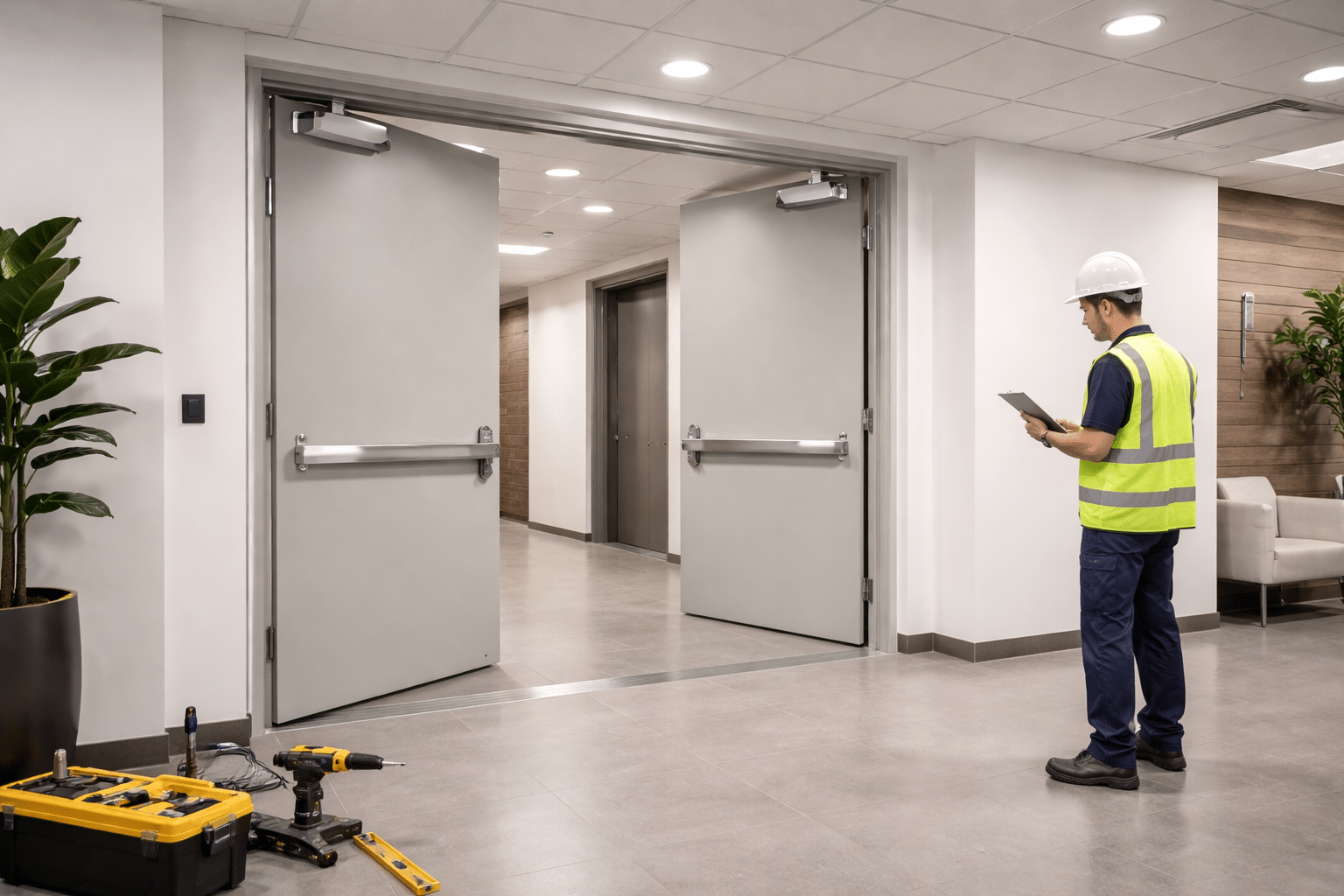
Fire Door Positioning for Full Wall Openings
Fire door positioning plays a bigger role in compliance than many people realise. When a fire door is installed within a full wall opening, the exact location of the door…


Spot fire door damage early to prevent fire safety risks and non-compliance issues. These critical installations serve as a vital barrier against fire and smoke, especially in emergencies. Whether you’re managing an office complex, a high-rise apartment, or a factory in Sydney, keeping your fire doors in top condition is essential.
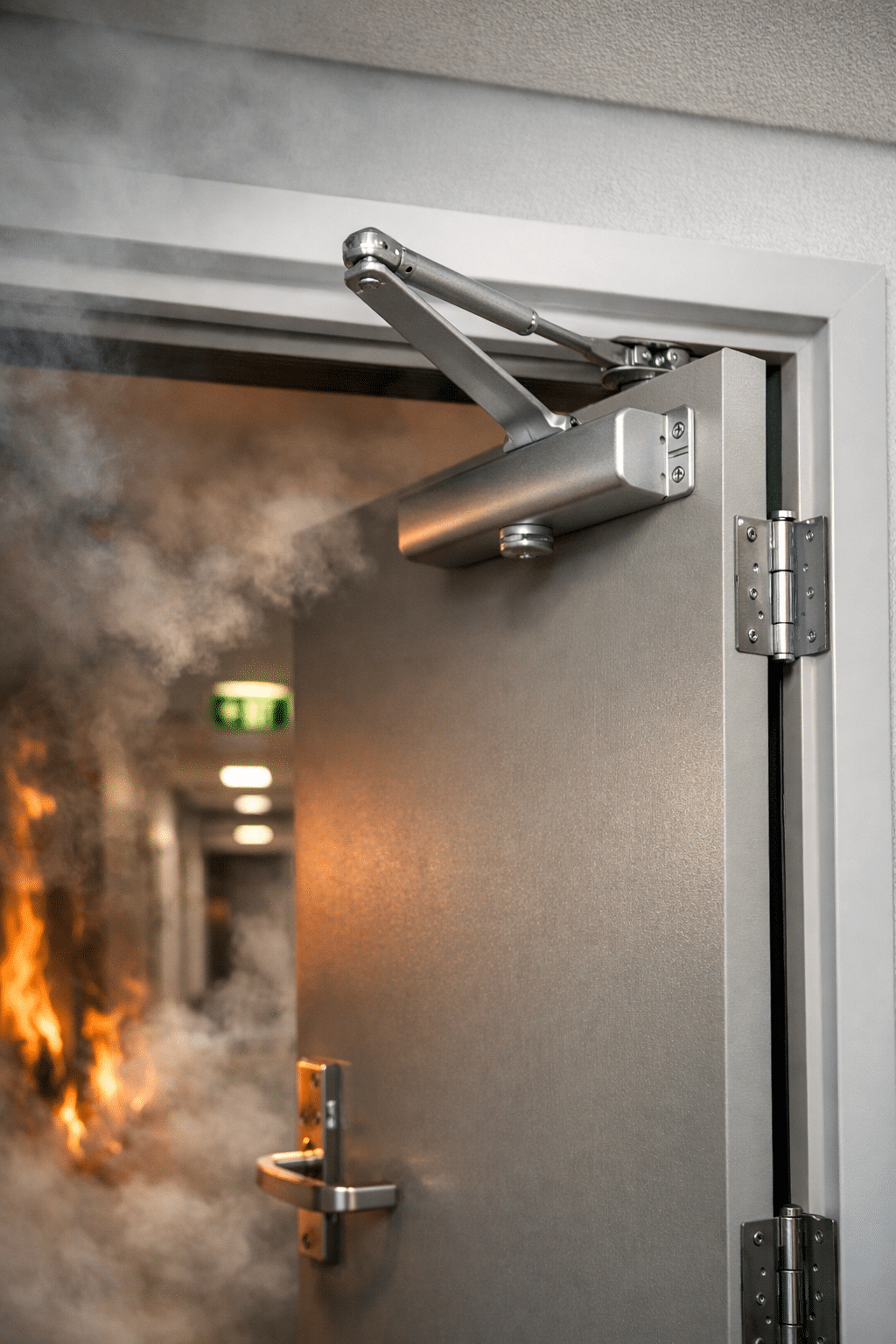
Fire doors are designed to contain fire and smoke, helping to slow the spread and protect escape routes. Their effectiveness depends heavily on their condition. Damaged fire doors might not close properly, seal correctly, or withstand high temperatures, compromising their entire function. This is why knowing how to spot fire door damage is essential for maintaining effective protection.
In Australia, all fire doors must comply with AS1905.1 standards. Regular inspection and maintenance ensure compliance, support your Annual Fire Safety Statement (AFSS), and most importantly, save lives.
Let’s explore how to spot fire door damage and what signs you should be on the lookout for:
Fire doors are built to be solid and robust. However, over time and especially in humid environments, they can warp. A warped door might not latch properly, creating a potential gap through which smoke and fire can travel.
Tip: Open and close each door to ensure smooth operation. If the door drags on the frame or sticks, it could be a sign of warping.
Look closely at the edges of the door and the frame it sits in. Chips, dents, and cracks can weaken the structural integrity of the door. Even minor damage might allow flames or smoke to bypass the barrier.
Tip: Pay attention to corners and areas with frequent traffic. Repeated knocks from trolleys or equipment are common causes of edge damage.
Proper sealing is key to a fire door’s effectiveness. According to standards, the gap between the door and the frame should not exceed 3mm at the top and sides, and 10mm at the bottom.
Tip: If you can see daylight through the gaps or slide a coin easily through, the seal might be inadequate. This is a clear indication of spot fire door damage that needs addressing.
Fire and smoke seals expand in high heat to seal off gaps. If they’re cracked, peeling, or missing, the door won’t perform correctly in a fire.
Tip: Check for continuous seals around the edges. Look for signs of tampering, shrinkage, or deterioration.
Hinges, latches, door closers, and panic bars are all essential parts of a fire door. If any are loose, broken, or missing, the door may fail to close and latch properly.
Tip: Test all moving parts. A fire door must close fully and latch without manual assistance. It’s another way to spot fire door damage early.
A fire door should never be propped open unless it is fitted with an approved hold-open device linked to a fire alarm system. Wedges, hooks, or furniture used to keep doors open defeat their purpose.
Tip: Train staff or tenants on fire door use and monitor areas where misuse is common.
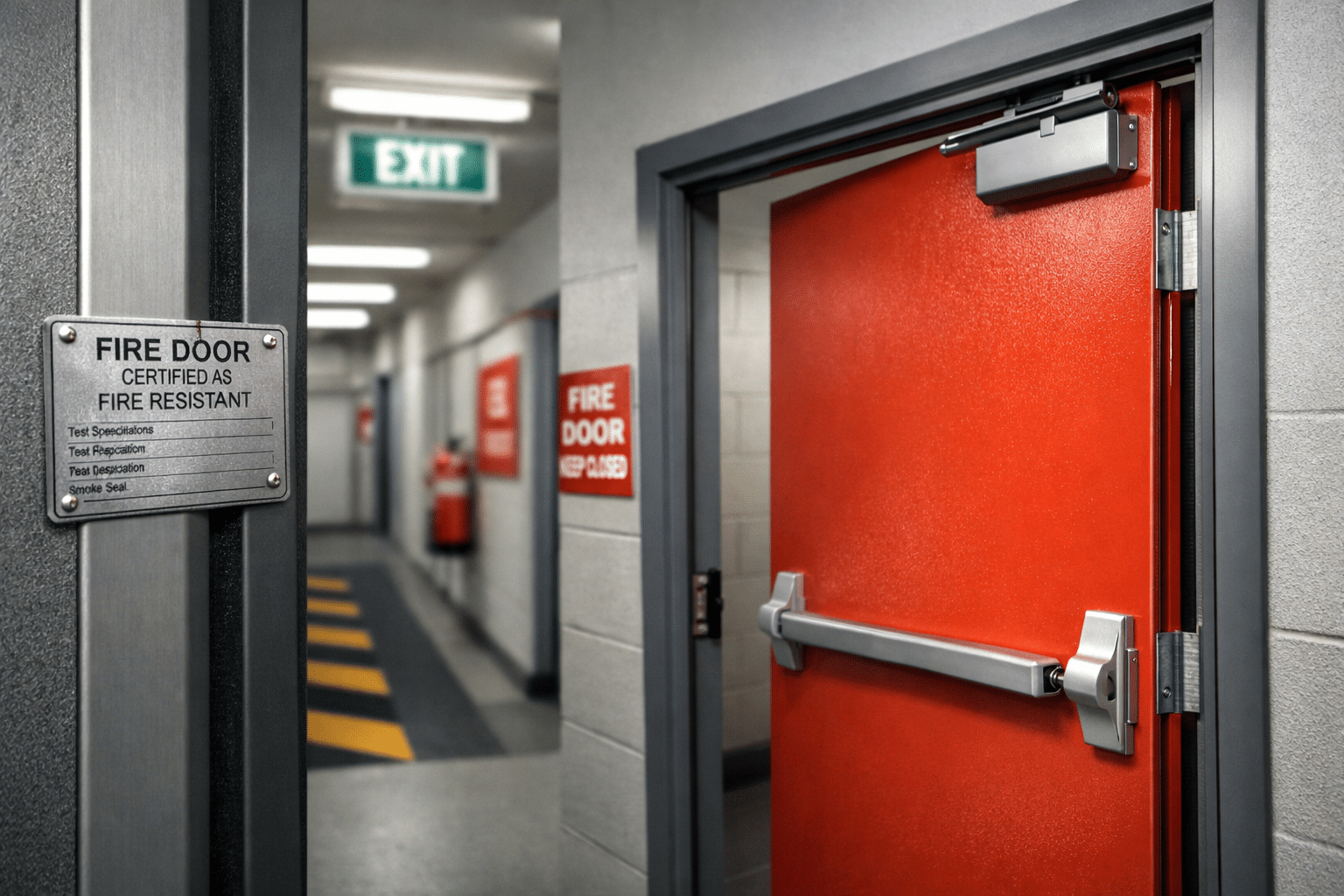
All fire doors should be clearly marked with signage such as “Fire Door – Do Not Obstruct”. If the signage is missing or incorrect, it may indicate that the door isn’t compliant.
Tip: Replace any missing or damaged signs immediately to ensure compliance.
Even if the door itself is in good shape, clutter or obstacles around it can prevent it from closing correctly in an emergency. Always keep the area around fire doors clear.
Tip: Implement regular housekeeping checks, especially in storage-heavy areas.
While you can conduct basic checks, a certified fire door inspector should perform thorough inspections. They’ll assess:
They will also provide official documentation for compliance, particularly for your Annual Fire Safety Statement (AFSS).
Knowing how to spot fire door damage ensures these inspections are more productive and helps you prepare in advance for certification requirements.
Fire doors in commercial or strata-managed properties typically need:
It’s best to make routine checks part of your monthly maintenance schedule so your team learns how to spot fire door damage during their regular rounds.
Neglecting to spot fire door damage isn’t just a safety issue. It can also lead to:
Here are some tips to keep your fire doors in top shape:
A strata manager in Sydney recently discovered that a fire door in a multi-unit complex had been wedged open daily for convenience. During an annual inspection, the inspector found not only a missing seal but also damage to the frame. The door had to be replaced at a cost of over $2,000. Had the issue been spotted and reported earlier, a $150 seal replacement might have been all that was needed.
At Comprehensive Fire Services (CFS), we know the ins and outs of fire door regulations. We offer:
Serving Sydney and surrounds, our technicians help strata managers, building supervisors, and commercial property owners stay compliant and fire-safe.
Need help to spot fire door damage or booking your annual inspection? Contact us now or call 0418 749 488 for peace of mind and professional service.
By staying vigilant and proactive to spot fire door damage, you ensure the safety of your occupants, avoid unnecessary costs, and meet your legal obligations. A small inspection today could prevent a big disaster tomorrow.



FPAS Accreditation Number: F055161A
We are committed to delivering the highest level of professionalism and compliance in the fire protection industry. As part of this commitment, our team holds accreditation under the Fire Protection Accreditation Scheme (FPAS) — the national accreditation framework developed by Fire Protection Association Australia (FPA Australia).

Phone: 0418 749 488
Fax: 02 4648 5386
Email: [email protected]
© 2026 Comprehensive Fire Service - Website by BSharp Tech