Tenant damages a fire door and suddenly a simple building issue becomes a compliance headache, a safety risk, and a paperwork job all at once. For strata managers, building managers, and property professionals, the key is not to panic. It is to act quickly, document everything properly, and make sure the door is assessed by the right people before anyone tries a quick fix.
Why Fire Doors Matter More Than Standard Doors
Fire doors are not like standard doors. They are part of a building’s passive fire protection system, which means they help slow the spread of fire and smoke. That gives people more time to evacuate and helps protect different parts of the building. If a fire door is cracked, drilled into, wedged open, misaligned, or fitted with the wrong hardware after an incident, it may no longer perform the way it should.
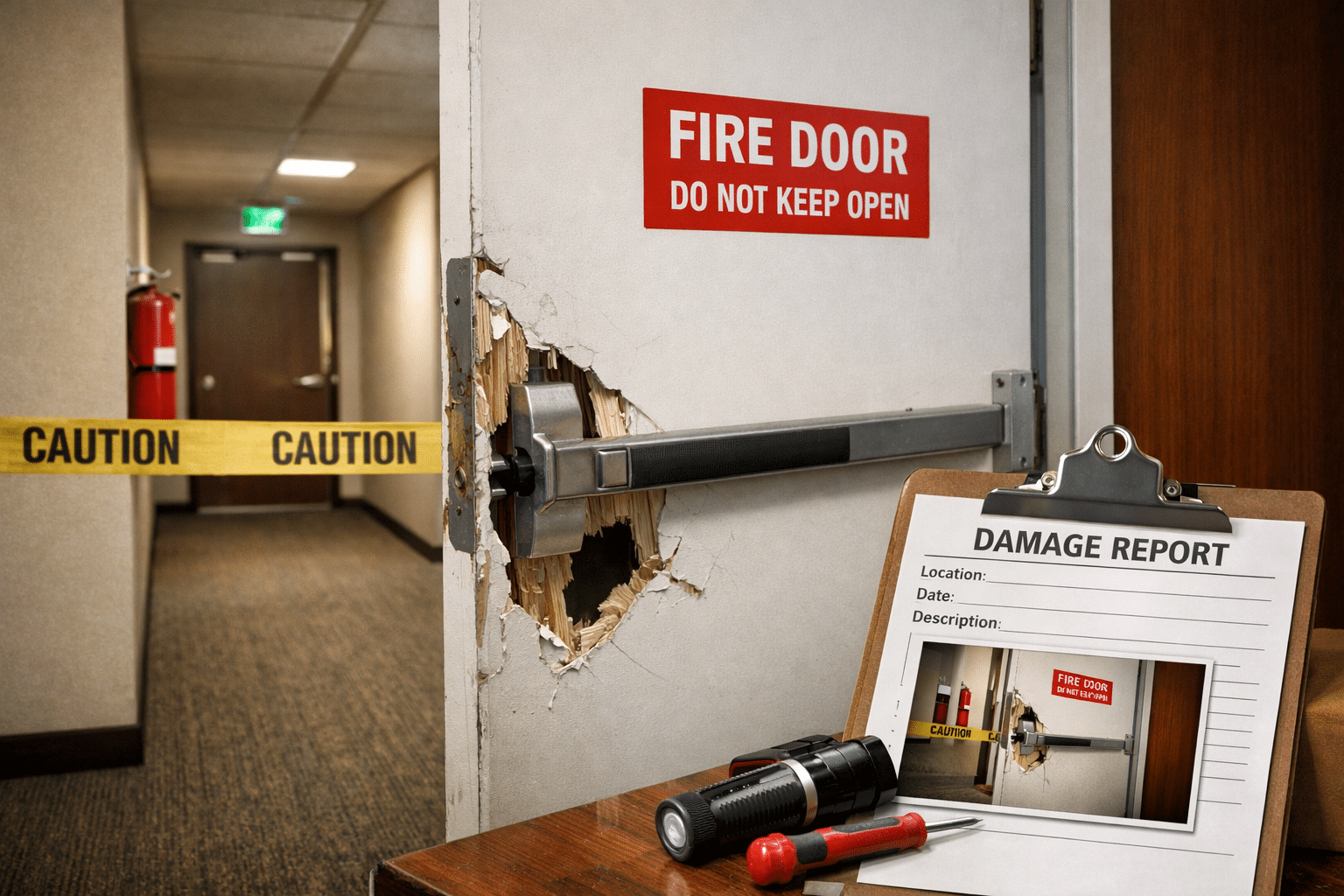
When tenant damages a fire door, the first step is to confirm what has actually happened. Sometimes the damage is obvious, such as a hole in the door leaf, broken hinges, a missing closer, or damaged seals. Other times it is less dramatic but still important, like a door that no longer latches properly or scrapes against the frame after being forced open. Even small changes can affect compliance.
Check the Damage and Secure the Area
The next step is to secure the area and stop the damage from getting worse. If the door still closes and latches, avoid using it unnecessarily until it can be inspected. If it no longer closes properly, treat it as urgent. A damaged fire door can leave a building exposed, particularly in apartment complexes, commercial tenancies, service risers, and common areas where compartmentation matters most.
Document Everything Properly
Once tenant damages a fire door, good documentation becomes your best friend. Take clear photos from several angles. Record the location, date, time, and who reported it. Note whether the damage appears accidental, careless, or deliberate. If there is CCTV, an incident report, or witness statements, keep those with your maintenance records. This does not just help with follow-up. It can also support insurance queries, tenant discussions, and future compliance documentation.
Avoid Quick Repairs That Create Bigger Problems
One common mistake is letting a handyman or general maintenance contractor make a fast repair without checking whether the door is fire-rated and what components form part of the tested door set. That can create a bigger problem than the original damage. When tenant damages a fire door, the fix needs to match the door’s rating, hardware, seals, frame, and installation requirements. A patch-up job may look tidy but still leave the opening non-compliant.
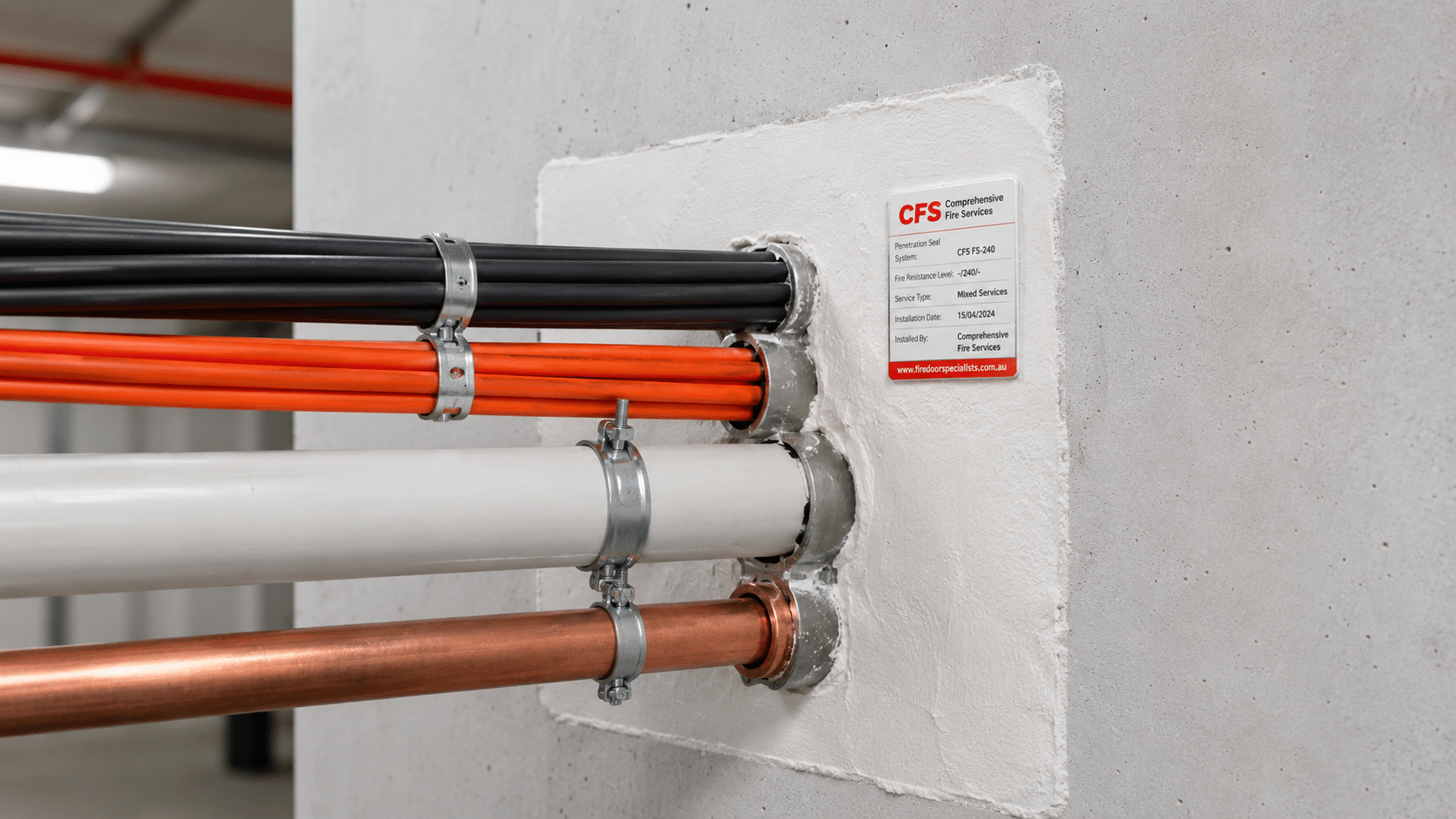
It is also worth checking whether the incident damaged more than the door leaf. Frames, closers, hinges, locks, smoke seals, fire tags, signage, and latch sets can all be affected when a door is slammed, kicked, or forced. In some cases, the surrounding wall or frame anchoring may also need attention. When tenant damages a fire door, the visible mark is not always the full story.
Keep Owners and Stakeholders Informed
From a management point of view, communication matters. Let the owner, strata committee, facilities contact, or relevant site representative know what has happened and what action is underway. If the damaged door affects a common area or an essential path of travel, updates should be prompt and practical. People do not need a lecture. They need to know the risk is being managed and the repair is being handled properly.
Who Pays for Fire Door Repairs?
Many property professionals also wonder who pays. That will depend on the lease, by-laws, tenancy agreement, and the facts of the incident. If tenant damages a fire door inside a tenancy, responsibility may sit with the tenant, the lot owner, or another party depending on the circumstances. The important thing is not to delay rectification while sorting out the financial side. Safety first, recovery of costs second.
Why Fast Action Matters
Another point often overlooked is timing. Fire door issues should not sit on a to-do list for weeks waiting for the next maintenance round. When tenant damages a fire door, delays can create ongoing risk and may become awkward during inspections, audits, or annual compliance checks. Prompt assessment helps you understand whether the door can be repaired, needs replacement, or requires temporary risk controls while parts are ordered.
Why Specialist Fire Door Advice Helps
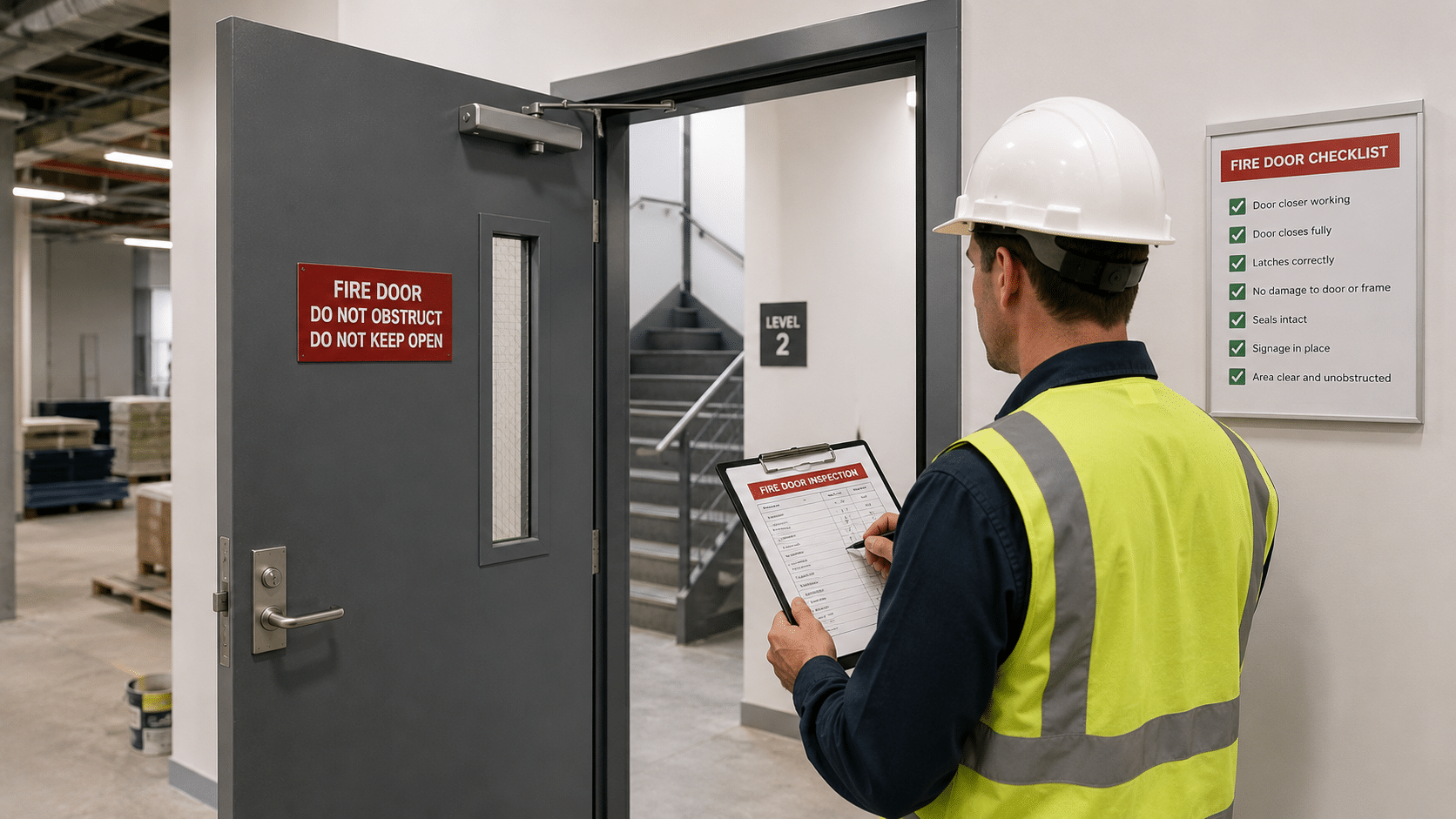
This is also where specialist advice pays off. Fire doors are tested as systems, not just individual pieces of timber, metal, or hardware. A qualified fire door specialist can inspect the opening, identify what has been compromised, and recommend the right path forward. That may include rectification, replacement components, certification steps, or a full door set replacement if the damage is too severe. When tenant damages a fire door, certainty is more useful than guesswork.
How Tenant Damages Can Be Reduced Through Education
For strata and building managers, this type of incident is a good reminder to review tenant communication as well. Many occupants simply do not realise that a fire door is different from an ordinary door. They may prop it open for convenience, remove hardware, install hooks, or force it during move-ins without understanding the consequences. A short, plain-English notice to tenants can go a long way in preventing repeat issues.
You can also reduce future problems by including fire door checks in regular maintenance routines and contractor site inductions. If moving crews, cleaners, trades, and tenants all understand that fire doors must not be altered, wedged, drilled, or slammed, you lower the chance of avoidable damage. When tenant damages a fire door, it is often a sign that awareness on site could be improved.
Think Beyond Cosmetic Damage
It helps to think of a damaged fire door the same way you would think of a damaged smoke alarm or sprinkler head. It is not just cosmetic. It is a building safety item with a specific purpose. That is why records, inspections, and compliant repairs matter. The goal is not just to make the door look normal again. The goal is to make sure it works properly in an emergency.
A Simple Response Plan for Property Managers
If tenant damages a fire door in your building, the practical checklist is simple: document the issue, protect the area, notify the right stakeholders, arrange a specialist inspection, and complete compliant repairs as soon as possible. Keep all records together so the trail is clear if anyone asks what happened and how it was resolved.
When tenant damages a fire door, the best response is calm, fast, and well documented. It protects the building, supports compliance, and gives managers confidence that a frustrating incident has been handled the right way.
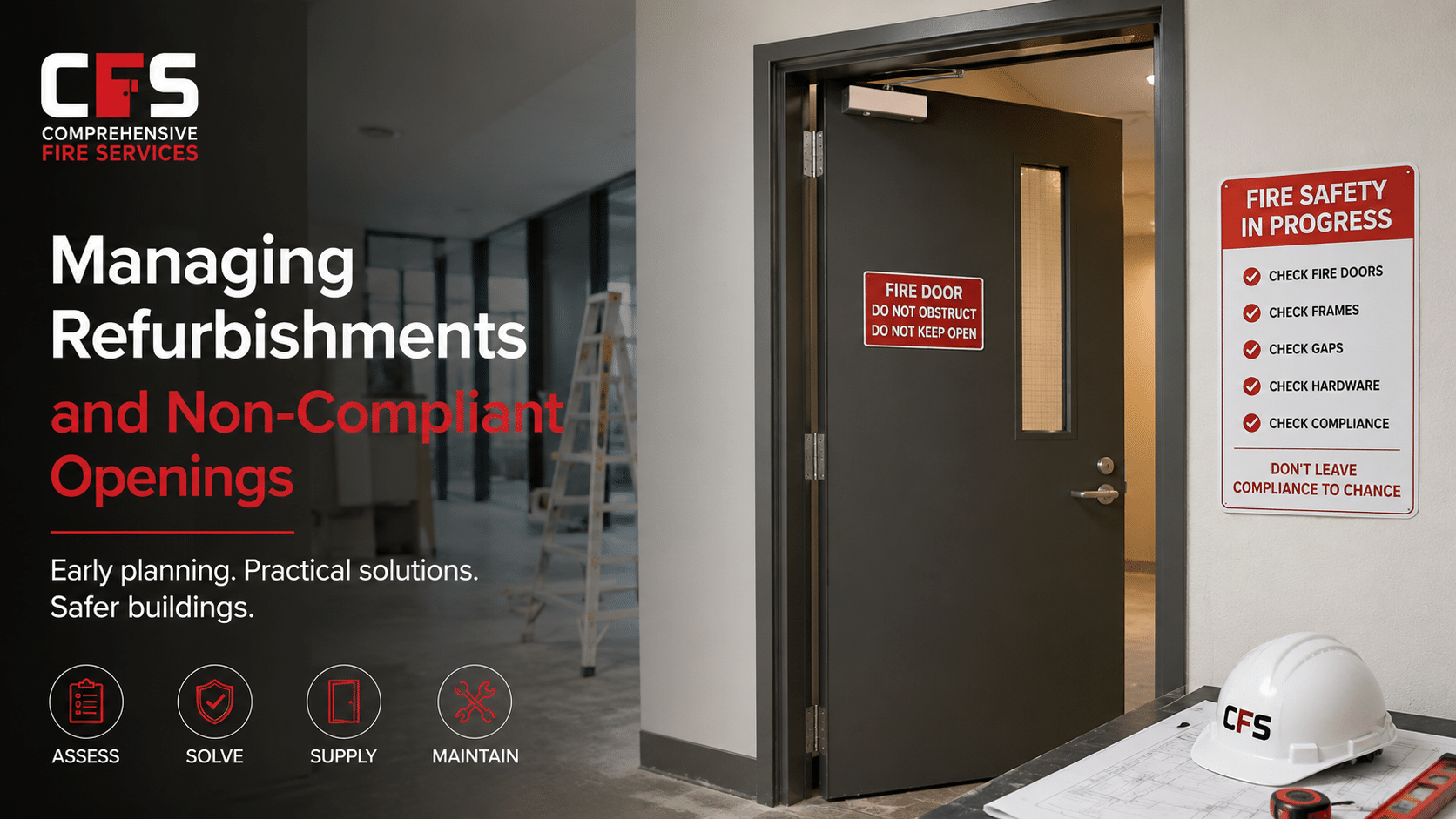
If you need help assessing damaged fire doors, arranging compliant repairs, or keeping your building’s fire doors inspection-ready, Comprehensive Fire Services can help with practical advice, maintenance, and specialist fire door solutions across Sydney.