Balancing security and safe egress is critical when you are designing and maintaining fire doors in any commercial or residential building. Used well, fire doors slow smoke and flames, protect escape routes, and deter unauthorised entry, all at the same time. The challenge is that security measures can sometimes work against safe evacuation, so getting the details right matters.
Security Versus Life Safety
When you think about balancing security with life safety, fire doors often reveal the tension between the two. On one hand, owners want strong locks, access control, and clear separation between public and private areas. On the other hand, building codes require that people can reach an exit quickly, without special knowledge, keys, or complicated steps. Poorly designed or poorly maintained fire doors can easily tip this balance in the wrong direction.
Regulations and Design Framework
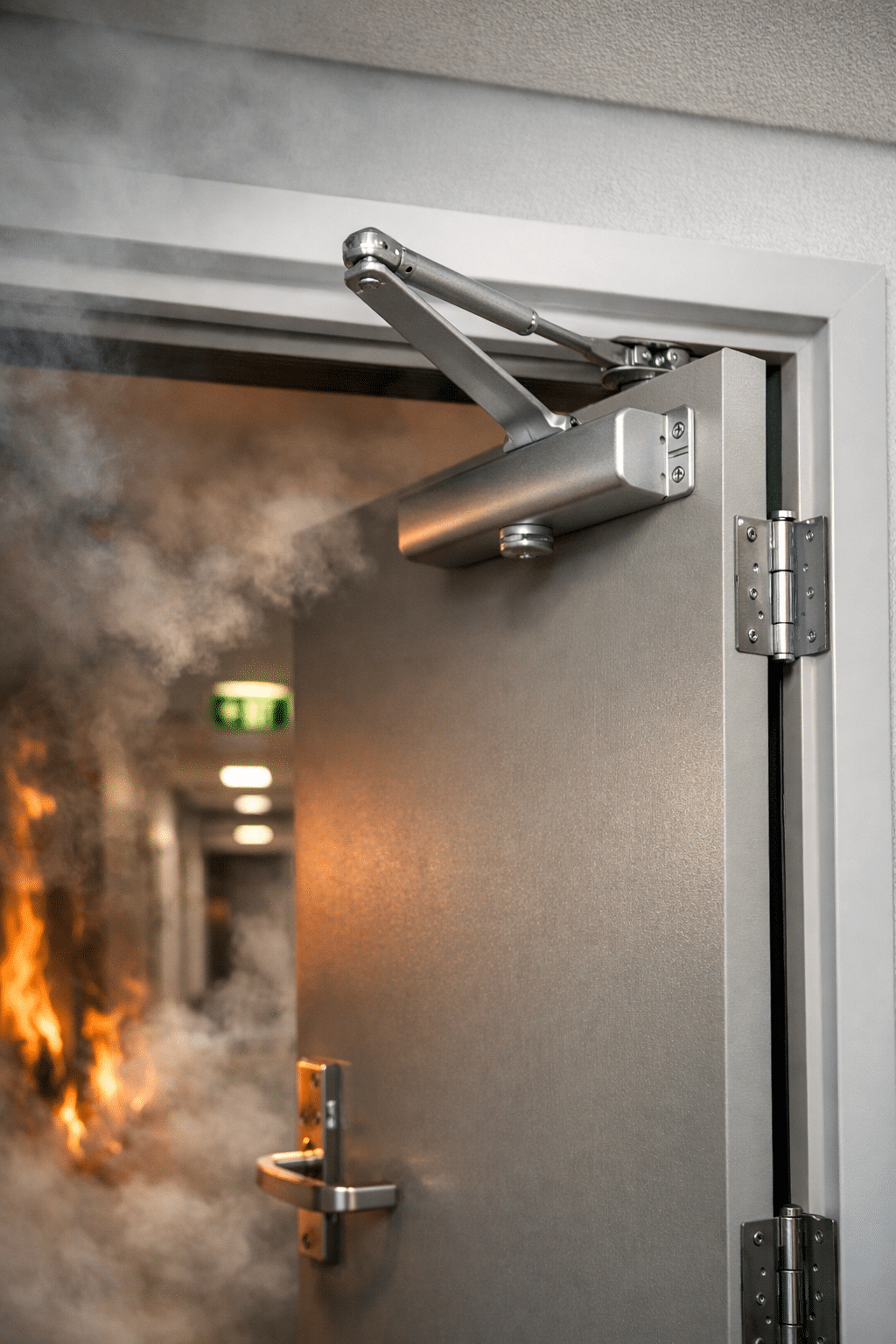
Regulations make the whole picture of balancing security more complex, but they also provide a framework for good decisions. Fire doors are required to stay closed or self closing, to be fitted with appropriate hardware, and to be free from obstructions. At the same time, security requirements might call for card readers, intercoms, automatic locking, and monitored access to certain zones. The trick in Balancing Security and life safety is choosing products and layouts that satisfy both sets of rules at once.
Perimeter Security and Fire Doors
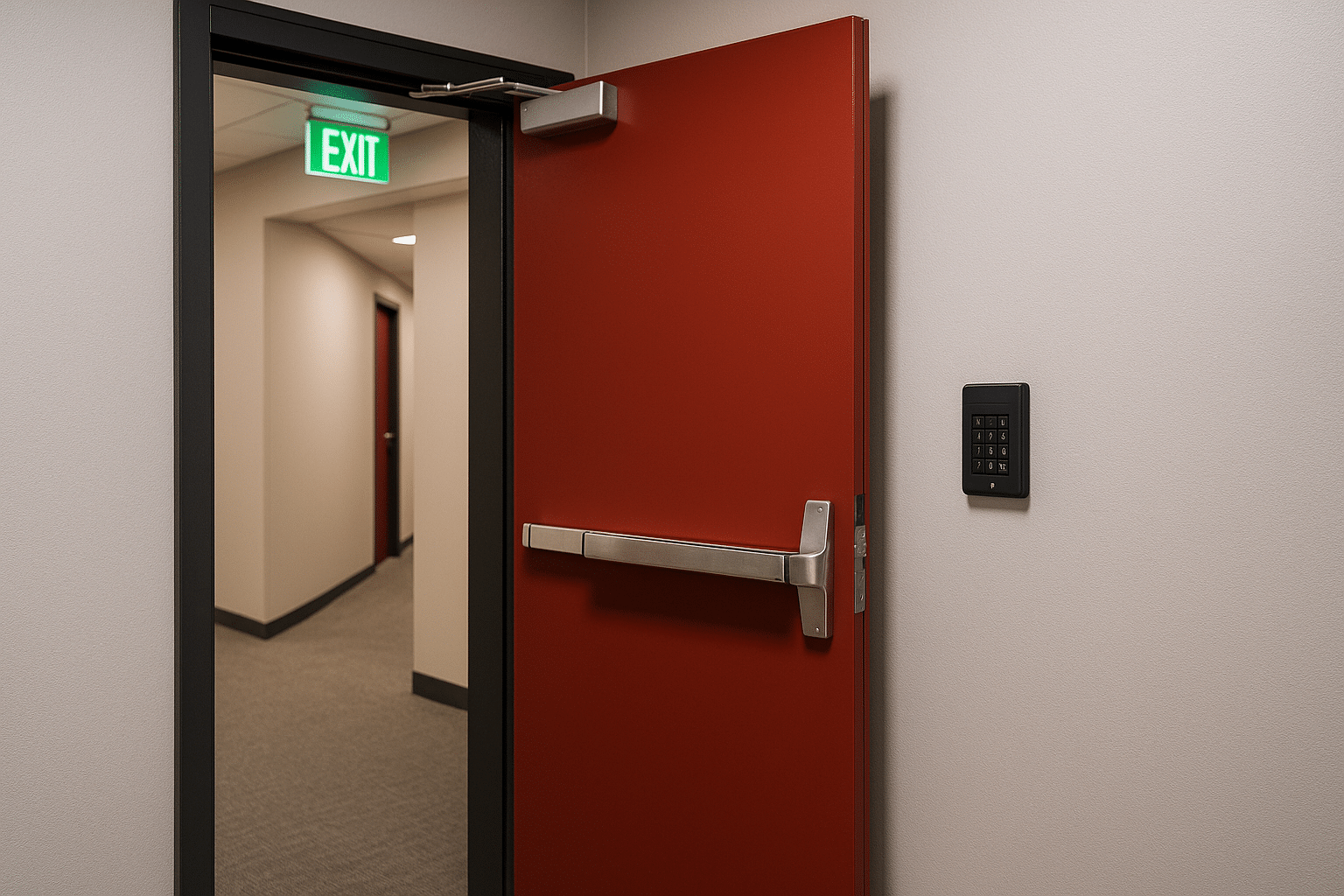
For many buildings, balancing security starts at the perimeter. External fire doors must resist forced entry while still opening easily from the inside with a single action. This is where panic bars, also known as crash bars, offer real value. From the secure side, the door can be locked or tied into an alarm system. From the egress side, a firm push on the bar releases the latch and allows people to flow through quickly, even in low light or heavy smoke.
Internal Doors and Access Control
Inside the building, balancing security continues at corridor doors, stairwells, and doors to plant rooms or storage spaces. Each of these locations might have different risk profiles. For example, a stair door should almost always allow free egress from the floor into the stair, but the stair side might be locked to prevent unauthorised movement back onto office levels. Access control systems can be programmed so that locks release automatically on fire alarm, preserving escape routes without weakening day to day security.
Hardware Selection and System Integration
Hardware selection plays a huge role in balancing security without compromising egress. Tested and certified fire rated hinges, closers, latches, and panic devices are non negotiable. Electric strikes, magnetic locks, and card readers must be selected and installed so they fail safe in the event of power loss or alarm activation. That usually means doors still open from the egress side while remaining as secure as possible against unauthorised entry.
Another important consideration in balancing security and life safety is the way doors interact with fire alarm and building management systems. In a well designed installation, critical doors release or change mode automatically when an alarm is raised. Security doors that are normally locked can switch to free passage for evacuation, while others might close to contain smoke. Clear cause and effect diagrams and thorough commissioning tests help ensure this interaction supports Balancing Security and does not introduce unexpected barriers.
Inspection, Maintenance, and Compliance
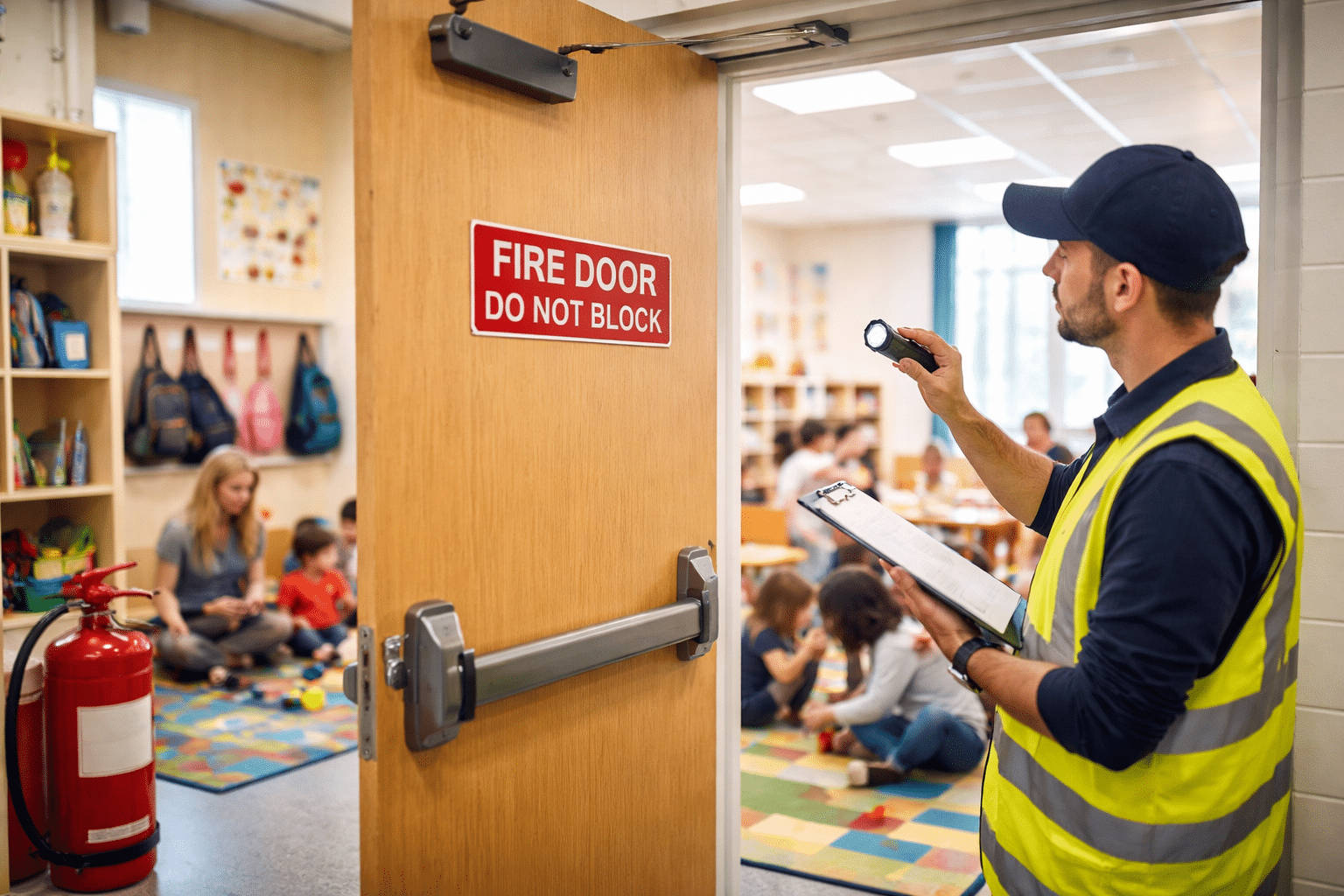
Good design is only the first step in balancing security around fire doors. Ongoing inspection and maintenance are just as important. A simple wedge under a door, a missing closer arm, or a damaged latch can completely undo the intended performance. Regular checks should confirm that doors close fully, latch properly, and operate smoothly with the chosen hardware. Any access control components should be tested in both normal and emergency modes to ensure they behave as expected.
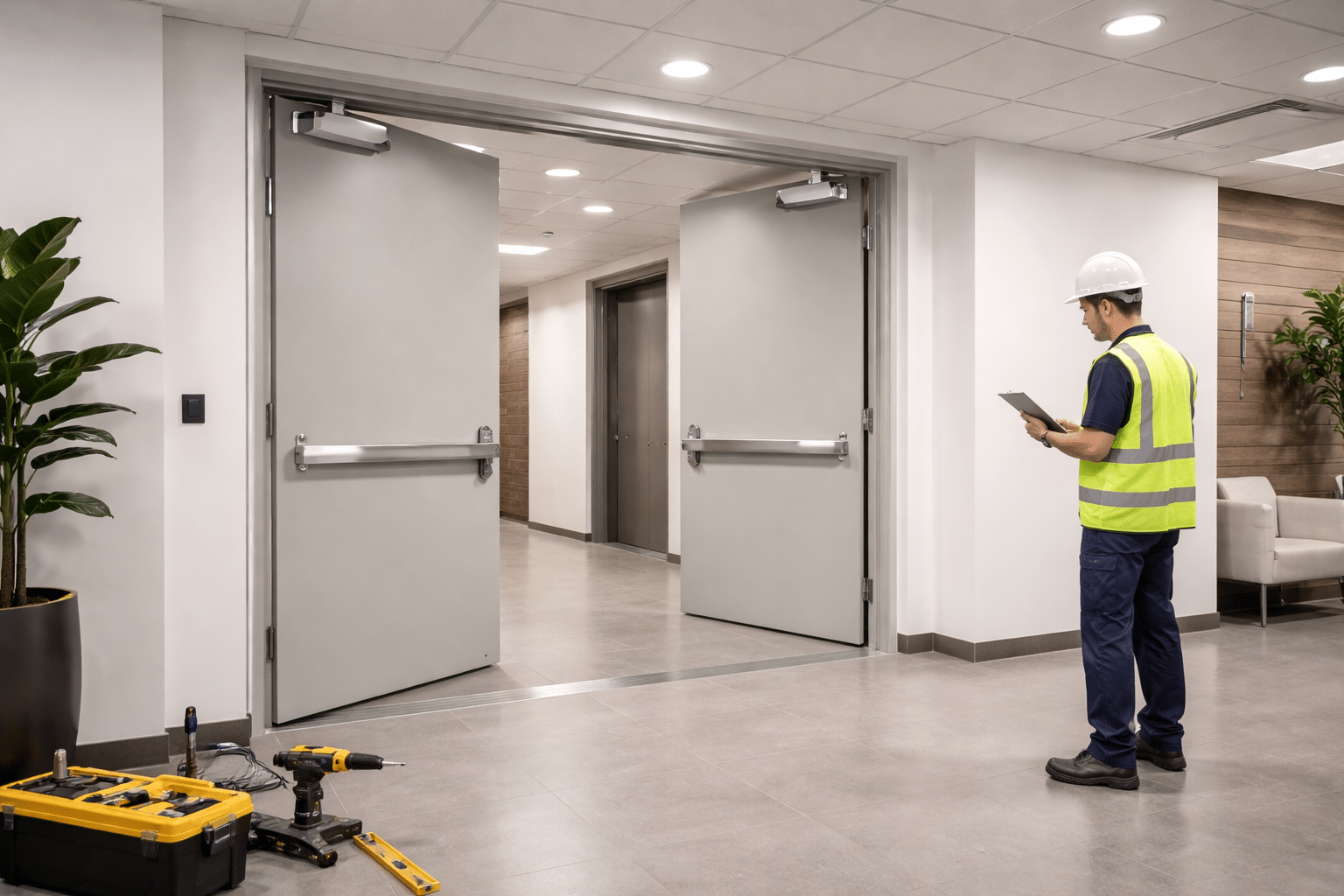
Routine inspections should also look beyond the door leaf itself as part of balancing security and life safety. Frames, seals, vision panels, and thresholds all play a part in performance. Cabling for access control or monitoring equipment must be routed so it does not damage the door or compromise its rating. If adjustments or repairs are needed, they should be carried out by technicians who understand both the fire rating requirements and the security expectations of the site, keeping Balancing Security in focus at all times.
Training, Culture, and Everyday Use
People also matter in balancing security strategies. Even the best door system fails if staff and occupants do not understand how it works. Clear signage, basic training, and simple procedures go a long way. For example, team members should know never to prop open a fire door, never to disable a closer, and never to run unauthorised cabling or hooks through a door leaf or frame. Security staff should understand how to verify that electric locks release on alarm and how to report issues promptly.
Practically, this means that the balance between security and safe egress should feature in induction training, toolbox talks, and regular safety briefings. Short demonstrations of how panic bars operate, how access control readers behave during a drill, and what a compliant fire door looks like in everyday use can build confidence. When people recognise the signs of damage or misuse, they are far more likely to report issues early, which keeps both security and safety performing at their best.
Responsibility, Documentation, and Cost
For building owners, balancing security often comes down to documentation and clear responsibility. Maintenance logs, test records, and hardware schedules create a trail of evidence that systems have been designed, installed, and checked in line with regulations. Assigning a nominated fire door responsible person or team helps ensure issues are captured before they turn into real hazards. Working with qualified fire door inspectors and security integrators provides an extra layer of assurance.
Cost is another factor that influences how decision makers approach this topic. Replacing non compliant doors, paying fines, or facing legal action after an incident can far exceed the investment required for quality components and regular professional checks. Treating this balance as a core part of risk management, not an optional extra, usually proves to be the more economical choice over the life of the building.
An Ongoing Commitment
Finally, true balancing security with safe egress is not a one off project. Buildings change, tenants change, and technology evolves. A refurbishment, a new tenancy fit out, or a change in how a space is used can all affect existing escape routes and security assumptions. Reviewing fire door performance and access control settings whenever the building changes keeps both life safety and security aligned.
When fire doors are treated as part of a joined up approach to balancing security, everyone benefits. Occupants gain confidence that they can exit quickly if something goes wrong. Owners enjoy stronger protection of assets and a clear path to compliance. Most importantly, a thoughtful balance of security and safe egress helps ensure that the very doors designed to protect people in a fire never become an obstacle to escape.