Fire Protection Rules set out in the National Construction Code (NCC) determine how every commercial, residential, and industrial building in Australia must be designed and maintained to contain the spread of fire and smoke. Despite applying to virtually every building type, these rules are widely misunderstood, particularly when it comes to passive fire protection systems, which work silently inside walls, floors, and doorways without any moving parts or electrical components. This article explains the key fire protection rules that building owners, strata managers, and facilities managers in Sydney need to understand in plain language, without the technical jargon that makes the NCC difficult to read.
What Are Fire Protection Rules Under the NCC?
The NCC is published by the Australian Building Codes Board and is adopted into law by each state and territory. In New South Wales, the NCC is given effect through the Environmental Planning and Assessment Act. The fire protection rules within the NCC are contained primarily in Volume One, which governs Class 2 through Class 9 buildings, covering apartments, offices, retail spaces, warehouses, schools, hospitals, and aged care facilities.
The fire protection rules are structured around performance requirements and deemed-to-satisfy (DTS) provisions. A building must either meet the DTS specifications exactly or demonstrate through a performance solution that the same outcome is achieved by another means. For most strata and commercial buildings in Sydney, the DTS path is used, meaning the rules set out specific materials, systems, and dimensions that must be followed without deviation.
How Fire Protection Rules Apply to Passive Systems
The fire protection rules distinguish between active and passive fire protection systems. Active systems take action when a fire occurs: sprinklers discharge water, alarms sound, and smoke doors swing shut automatically. Passive systems, by contrast, are built into the structure of the building itself and work continuously without any trigger or power source. They include fire-rated walls and floors, fire doors, fire-resistant glazing, intumescent seals, penetration fire stops, and cavity barriers.
Passive systems are required to contain fire within a compartment for a specified period, expressed in minutes, to give occupants time to evacuate and emergency services time to respond. The fire resistance level, or FRL, is the way the NCC expresses this requirement. An FRL of 60 minutes means the element must resist the passage of fire for at least one hour. Understanding this concept is the foundation for interpreting all passive fire protection obligations in the NCC.
Fire Protection Rules for Walls, Floors and Ceilings
The fire protection rules require that buildings be divided into fire compartments, which are bounded areas designed to stop fire from moving through a building horizontally or vertically. The size of each compartment and the FRL required for its boundaries depend on the building class, the number of storeys, and the use of the space.
For a Class 2 apartment building in Sydney, the boundary between each sole-occupancy unit and the common area must typically achieve an FRL of 60 or 90 minutes. In a Class 5 commercial office building, the floor assemblies and core walls are usually required to meet 90 to 120 minutes. Any opening made in a fire-rated wall or floor for services, structure, or access must be treated to restore the FRL of the original element. This is why penetration fire stopping is an integral part of compliance, not an optional extra.
Fire Protection Rules for Doors and Openings
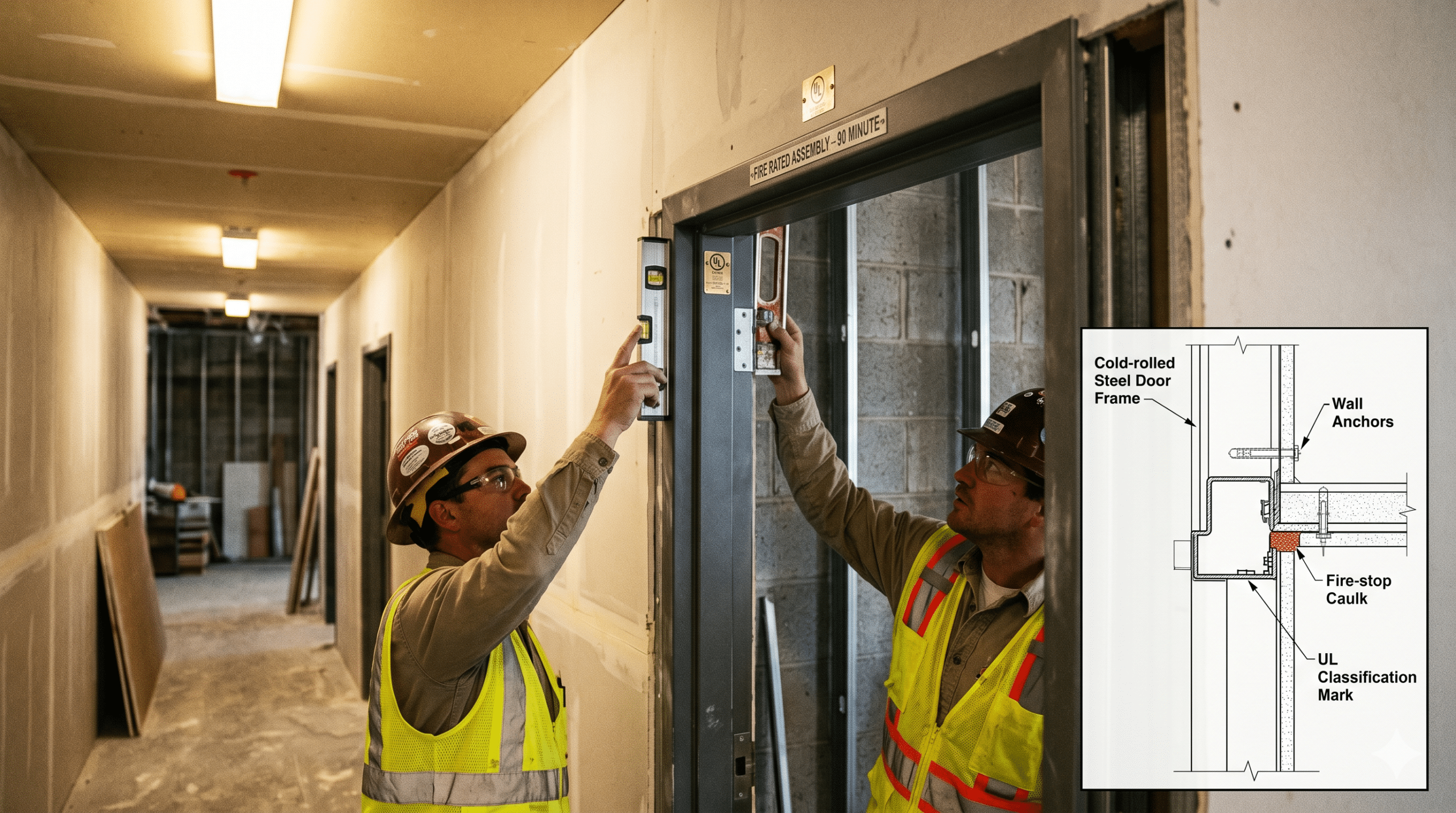
Openings in fire-rated walls must be protected, and the fire protection rules covering doors and openings are detailed and prescriptive. Where a doorway penetrates a fire compartment boundary, a fire door must be installed that achieves a compatible FRL to the surrounding wall. The door, frame, hardware, and seals are all considered part of the doorset assembly, and each component must comply with Australian Standard AS 1905.1.
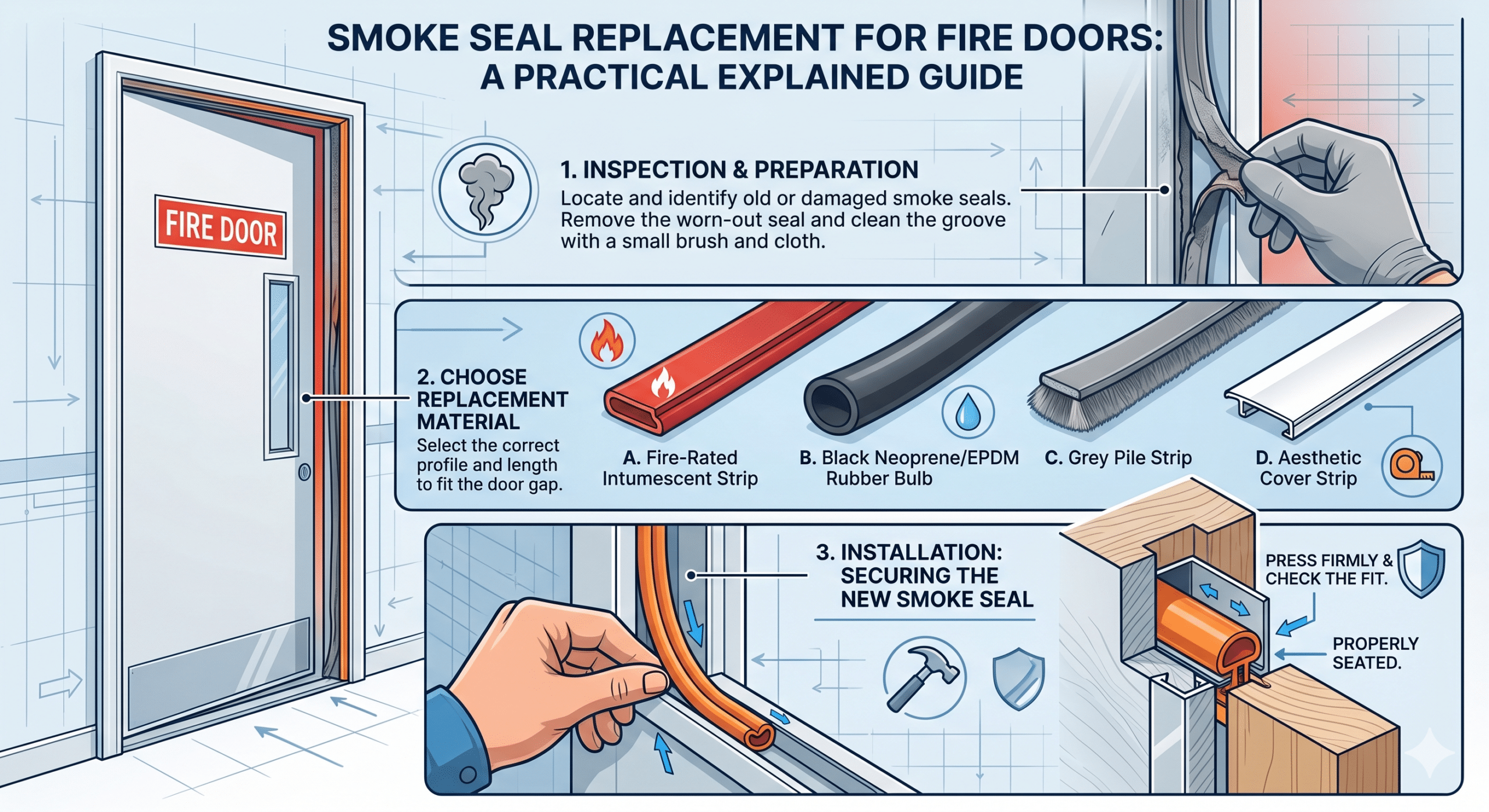
A compliant fire door must be self-closing, positively latching, fitted with intumescent seals on the door leaf and frame, and labelled with a compliant certification tag showing the FRL and the accreditation details of the certifier. The gap tolerances around the door leaf are also prescribed: the gap between the door leaf and the frame must not exceed three millimetres on the sides and top, and the gap at the bottom must not exceed ten millimetres unless a threshold is fitted. These tolerances are checked during every inspection carried out by Comprehensive Fire Services under FPAS accreditation F055161A.
Fire Protection Rules for Penetrations and Services
Every building requires pipes, cables, conduits, and ducts to pass through its structure. The fire protection rules that govern these penetrations are among the most frequently overlooked in Sydney buildings. When a pipe or cable passes through a fire-rated wall or floor, the void around the service must be sealed with a listed and tested fire stopping system that restores the FRL of the element it penetrates.
Depending on the material of the service, different systems are used. PVC pipes require an intumescent fire collar that expands when heated to close off the opening. Metal pipes can be sealed with a fire stopping mortar or a tested wrap system. Cable bundles and conduits require a combination of rated backing rods and sealant. Fire dampers are required where air conditioning or mechanical ventilation ducts penetrate fire-rated walls, to prevent smoke and flame from travelling through ductwork. All of these systems must be installed strictly in accordance with their system listings, and any deviation from the listed installation conditions voids the rating.
Who Is Responsible for Meeting Fire Protection Rules?
Responsibility for meeting fire protection rules sits with different parties depending on the stage of the building’s life. During design and construction, the builder and certifier are responsible for ensuring the building is constructed in accordance with the NCC. After construction, the building owner or owners corporation takes on the ongoing obligation to maintain all fire safety measures in an operational condition.
In New South Wales, this ongoing obligation is formalised through the Annual Fire Safety Statement, or AFSS, which must be submitted to council and the Fire and Rescue NSW commissioner each year. The AFSS requires an accredited practitioner to assess all essential fire safety measures on the premises, including passive elements such as fire doors and penetration fire stops, and certify that each measure is capable of performing to its required standard. For strata buildings, the owners corporation is legally the responsible party, although strata managers typically coordinate the compliance work on their behalf.
Common Breaches of Fire Protection Rules in Sydney Buildings
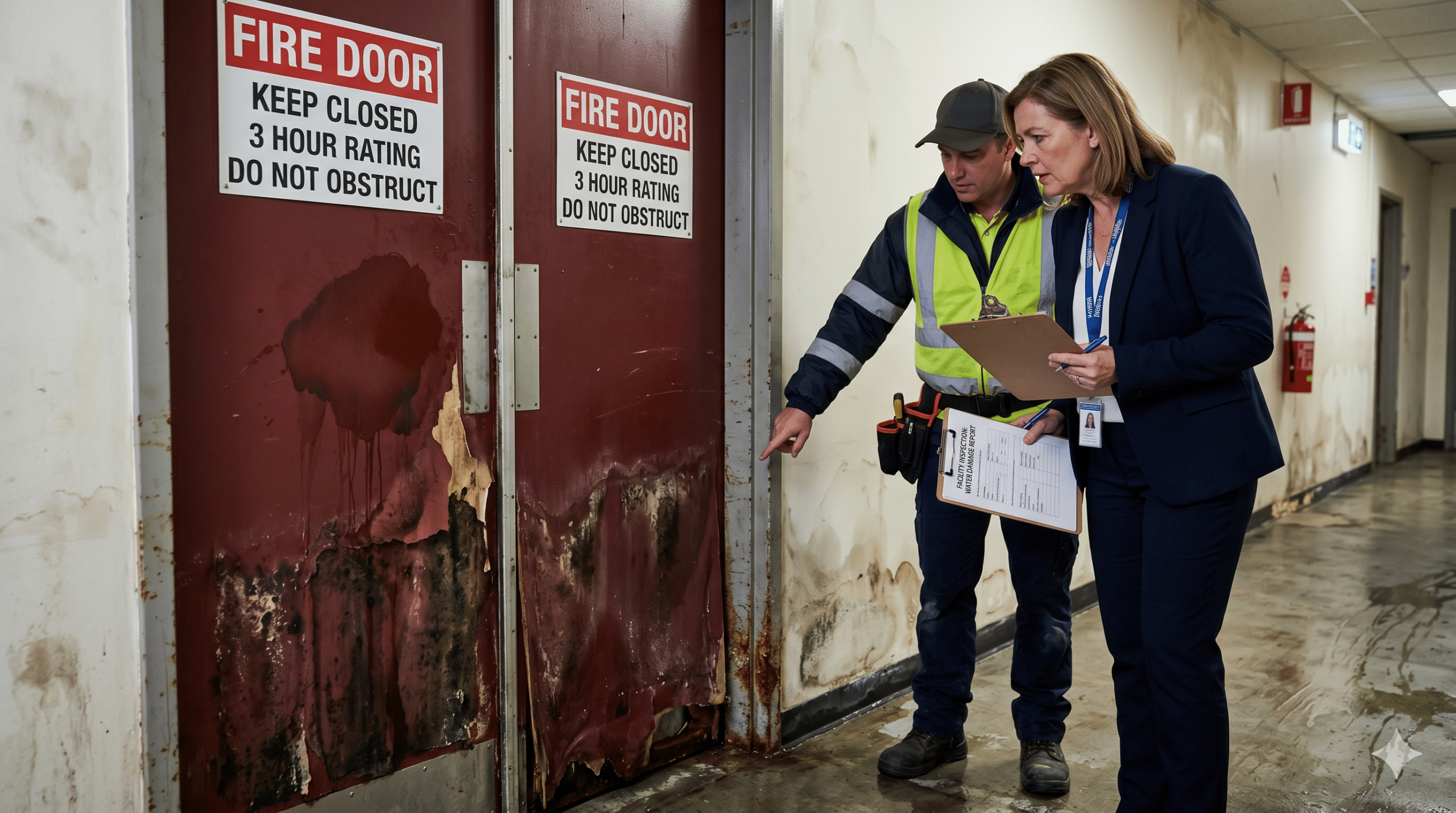
The fire protection rules are most often breached in Sydney buildings not through deliberate non-compliance but through gradual deterioration and unmanaged maintenance. Fire doors are propped open with wedges or door stoppers, removing their ability to contain smoke. Self-closing mechanisms are disconnected or worn out. Door seals are damaged by everyday use or replaced with non-rated products that look similar but provide no fire resistance.
Penetration fire stops are frequently damaged during maintenance works when trades drill new cable runs or replace pipes without reinstating the fire stopping. Cavity barriers in ceiling spaces are removed during fit-outs and not replaced. These issues accumulate over time and often go unnoticed until an annual inspection identifies a long list of defects. Addressing them proactively through a regular maintenance programme is far less disruptive and less costly than rectifying a backlog of non-compliance under pressure from a council deadline.
Comprehensive Fire Services provides inspections, certification, installation, and passive fire stopping work for strata, commercial, and industrial buildings across Greater Sydney. If you would like a plain-language assessment of your building’s compliance with the NCC passive fire requirements, contact CFS to arrange a no-obligation site visit.