Water damaged fire doors are a serious compliance risk that building managers in Sydney cannot afford to overlook. Whether caused by a burst pipe, flooding in a basement carpark, a sprinkler discharge, or sustained exposure to cleaning water at the base of a frame, water damage compromises the structural integrity, seal performance, and fire resistance of the door assembly. A door that looks functional after drying may be concealing internal swelling, delamination, or frame corrosion that renders it non-compliant under AS 1905.1.
This article explains how to identify and assess water damaged fire doors, what the standard requires, when repair is appropriate, when full replacement is the only compliant option, and how to prevent water damage from recurring in your building.
Why Water Damaged Fire Doors Fail Compliance Inspections
Water damaged fire doors fail compliance inspections because water alters the physical properties of the materials in the door assembly. Solid-core fire doors rely on the density and integrity of their infill to resist the passage of fire for the required period. When this material absorbs moisture, swells, dries unevenly, or begins to separate from the door skin, it can no longer perform to the tested fire resistance level. The door may look intact from the surface while the internal structure has been compromised.
Steel frames corrode when exposed to water over time, particularly at the base. Corroded frames lose their ability to support the door leaf correctly, maintain gap tolerances, and anchor the self-closing mechanism under repeated load. All these defects are identified and recorded during Annual Fire Safety Statement inspections carried out by an FPAS-accredited practitioner and must be fully rectified before certification can proceed.
How Water Damaged Fire Doors Are Identified
Water damaged fire doors are identified through visual inspection and physical testing by an FPAS-accredited practitioner. Visual indicators include staining or tide marks on the door leaf or frame, visible swelling that causes the door to bind against the frame, blistering or bubbling of the door skin, surface corrosion on a steel frame, and separation of the door leaf skin from the infill material at the edges or face.
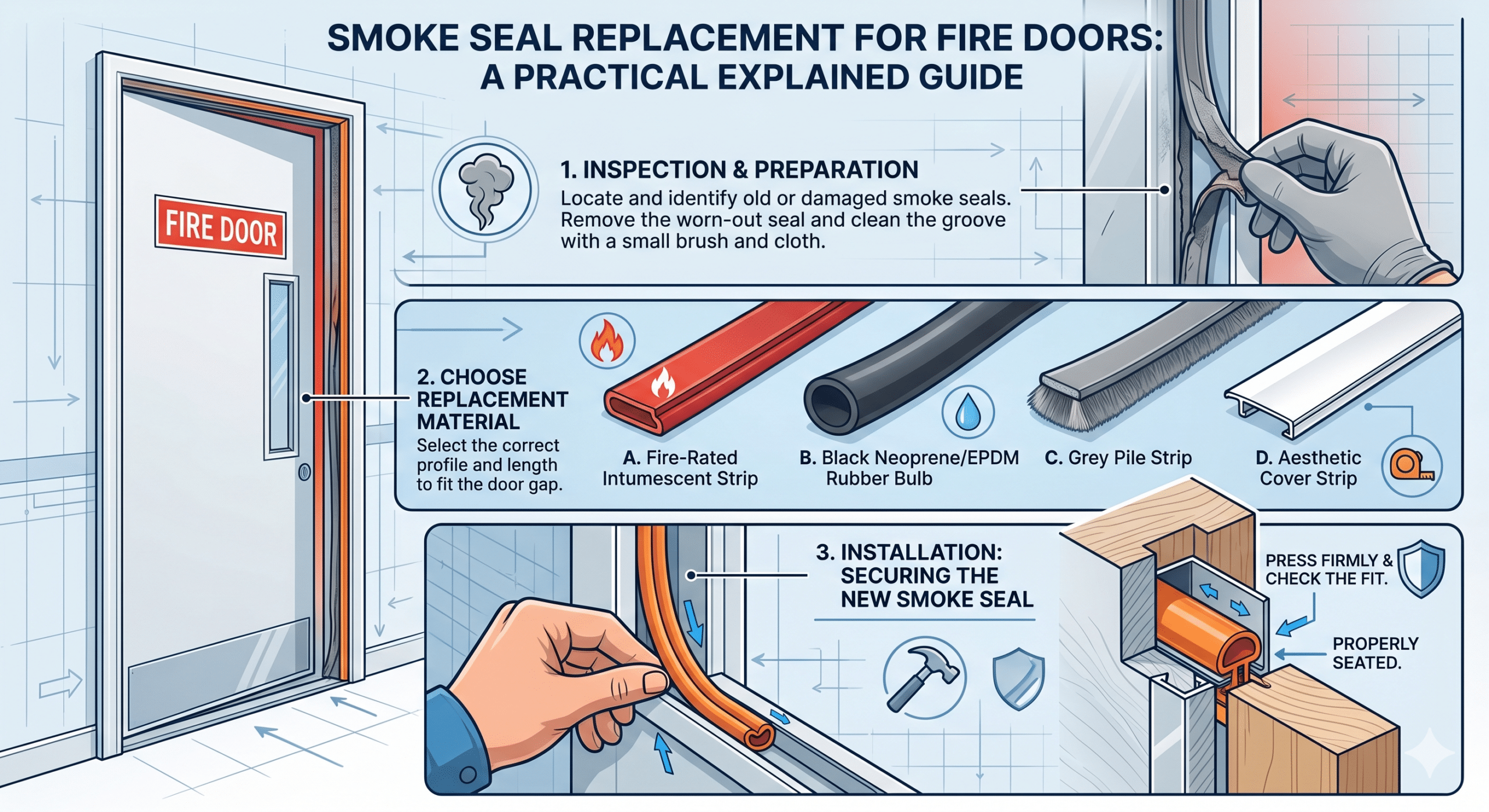
Physical testing reveals problems not immediately visible. A swollen door may close but fail gap tolerance measurements on the sides and top. One that has dried and shrunk may show increased gaps exceeding the permitted maximum. Intumescent and smoke seals may have separated from the door edge through swelling and contraction cycles. CFS assesses each factor individually when inspecting a door following a known water event.
Water Damaged Fire Doors and the AS 1905.1 Standard
Water damaged fire doors are assessed against Australian Standard AS 1905.1, which governs the installation and ongoing maintenance of fire-resistant door sets. The standard requires each door to achieve its specified fire resistance level throughout its service life. Where physical damage, material degradation, or dimensional change caused by water prevents the door from meeting the standard, it must be repaired or replaced to restore compliance.
The standard does not set a specific threshold beyond which a door automatically fails. Assessment is based on whether the door, in its current condition, can be expected to perform to its required fire resistance level. This judgment can only be made by a qualified practitioner. CFS holds FPAS accreditation F055161A and provides written assessments documenting findings and the recommended course of action.
When Water Damaged Fire Doors Can Be Repaired
Water damaged fire doors may be repairable when the damage is limited to surface components that can be replaced without affecting the structural integrity of the door leaf or the dimensional accuracy of the assembly. Replacing seals displaced by swelling, rectifying minor surface corrosion on the frame, rehanging a door shifted on its hinges, and adjusting a self-closer affected by door binding are all repairs that can restore compliance where the underlying door leaf and frame remain structurally sound.
The key test is whether the repaired door can be expected to achieve its required fire resistance level. If the door leaf infill has been compromised, the frame has corroded through at the base, or dimensional changes are too significant to correct through adjustment alone, repair is not a compliant option and replacement must be considered.
When Water Damaged Fire Doors Must Be Replaced
Water damaged fire doors must be replaced when the structural integrity of the door leaf has been compromised by moisture absorption, when delamination of the door skin from the infill is evident, or when the frame has corroded to the point where it can no longer maintain the dimensional accuracy required for compliance. These conditions cannot be remedied through surface repairs, and applying a new certification tag to a structurally defective door is not a compliant outcome.
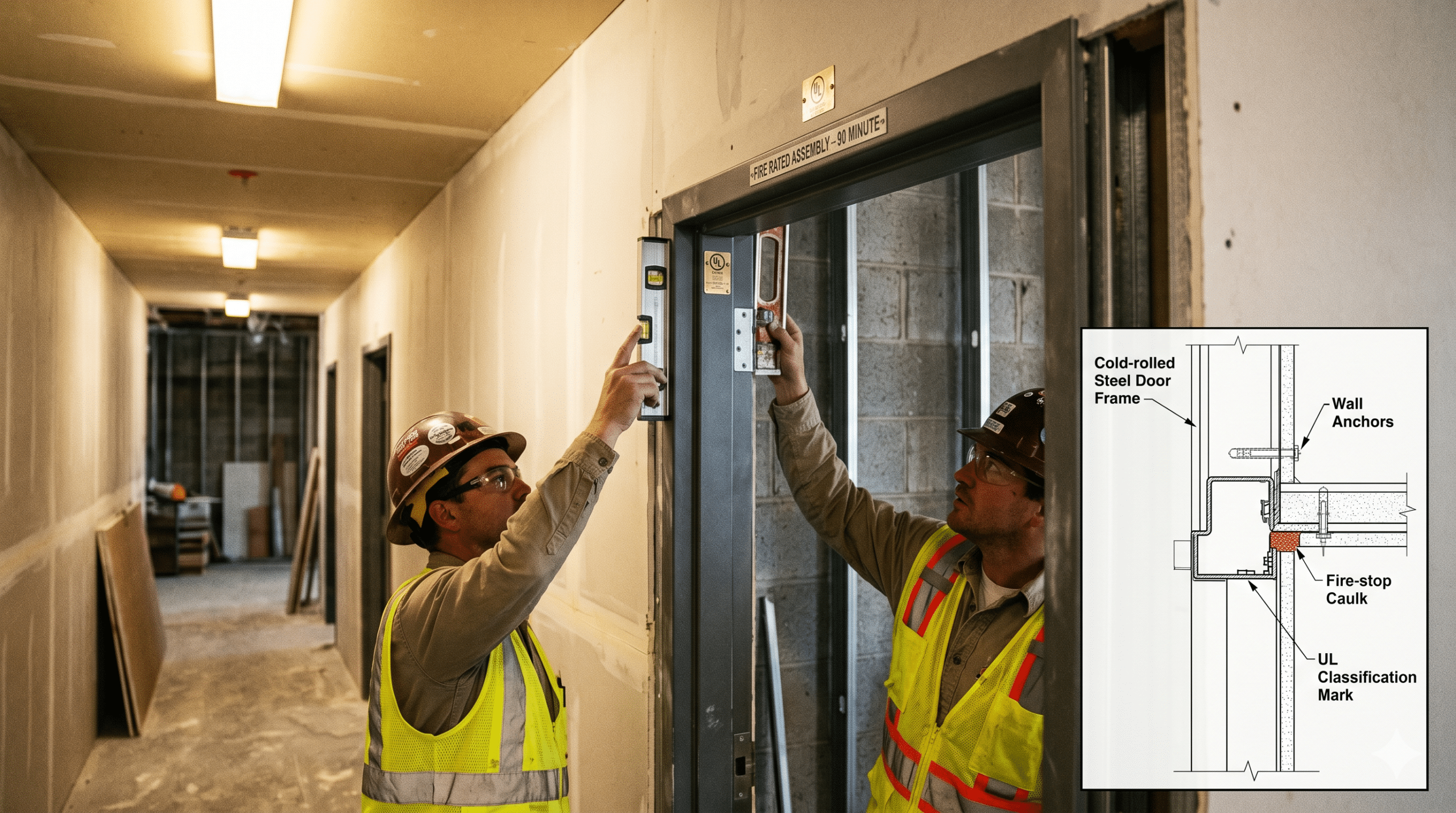
Replacement must use a door leaf and frame combination that carries a current tested system listing for the required fire resistance level of the opening. On completion, the doorset must be assessed and certified by an FPAS-accredited practitioner before a new certification tag is issued. CFS manages the complete replacement process from assessment through to certification for buildings across Greater Sydney.
Water Damaged Fire Doors in Strata and Commercial Buildings
Water damaged fire doors appear most frequently in strata buildings following pipe bursts within unit stacks, roof and gutter failures that allow water into stairwells, or basement flooding after heavy rainfall. Fire stair enclosures and basement carpark entry doors are particularly vulnerable, sitting at the lowest point of the drainage path when a water event occurs. Managers should inspect all fire doors in affected areas immediately after any water event, without waiting for the scheduled AFSS inspection.
In commercial buildings, plant rooms and service corridors are common locations for water-related damage, housing pipe and mechanical systems that can fail and discharge over a sustained period. A prompt inspection by CFS after any water event allows the scope of damage to be documented and a rectification plan developed before the situation deteriorates further.
Preventing Water Damaged Fire Doors in Your Building
Preventing water damaged fire doors requires managing the sources of water exposure that most commonly affect fire door assemblies in Sydney buildings. At the base of steel frames in corridors and stairwells, ensuring cleaning teams do not direct mop water or hose pressure against the frame is one of the simplest preventive steps available. In basements and ground-floor entries, confirming that drainage is adequate and that water does not pond near fire door frames during rain events protects against slow corrosion building over years.
For buildings with a history of pipe bursts or roof leaks, adding a post-event fire door inspection to the incident response procedure ensures damage is identified promptly. Comprehensive Fire Services provides rapid response inspections for Sydney buildings following water events and produces a full condition report and itemised rectification scope within a short timeframe, giving managers the clear documentation they need to maintain compliance with their Annual Fire Safety Statement obligations.