Door frames are a critical and frequently overlooked component of every fire-rated assembly in a commercial, strata, or industrial building. While most building managers focus compliance attention on the door leaf, the frame carries equal importance: it must achieve the same fire resistance level, be installed in a way that preserves the integrity of the surrounding wall, and remain in a condition that supports the door’s self-closing and latching functions year after year. A compliant leaf fitted to a non-compliant or damaged frame provides no meaningful fire protection.
This article explains what building owners and managers in Sydney need to understand about fire rated door frames, from regulatory requirements and frame types through to installation, inspections, and lifecycle management.
Why Door Frames Matter in Fire Rated Assemblies
Door frames are part of the fire-rated doorset assembly, not a separate structural element. Under AS 1905.1 and the National Construction Code, a fire door must be assessed and certified as a complete unit: door leaf, frame, seals, and hardware together achieve the required fire resistance level. Testing one component in isolation does not validate the whole assembly. A frame that is damaged, incorrectly installed, or of a different specification to the leaf renders the entire assembly non-compliant regardless of the leaf’s individual rating.
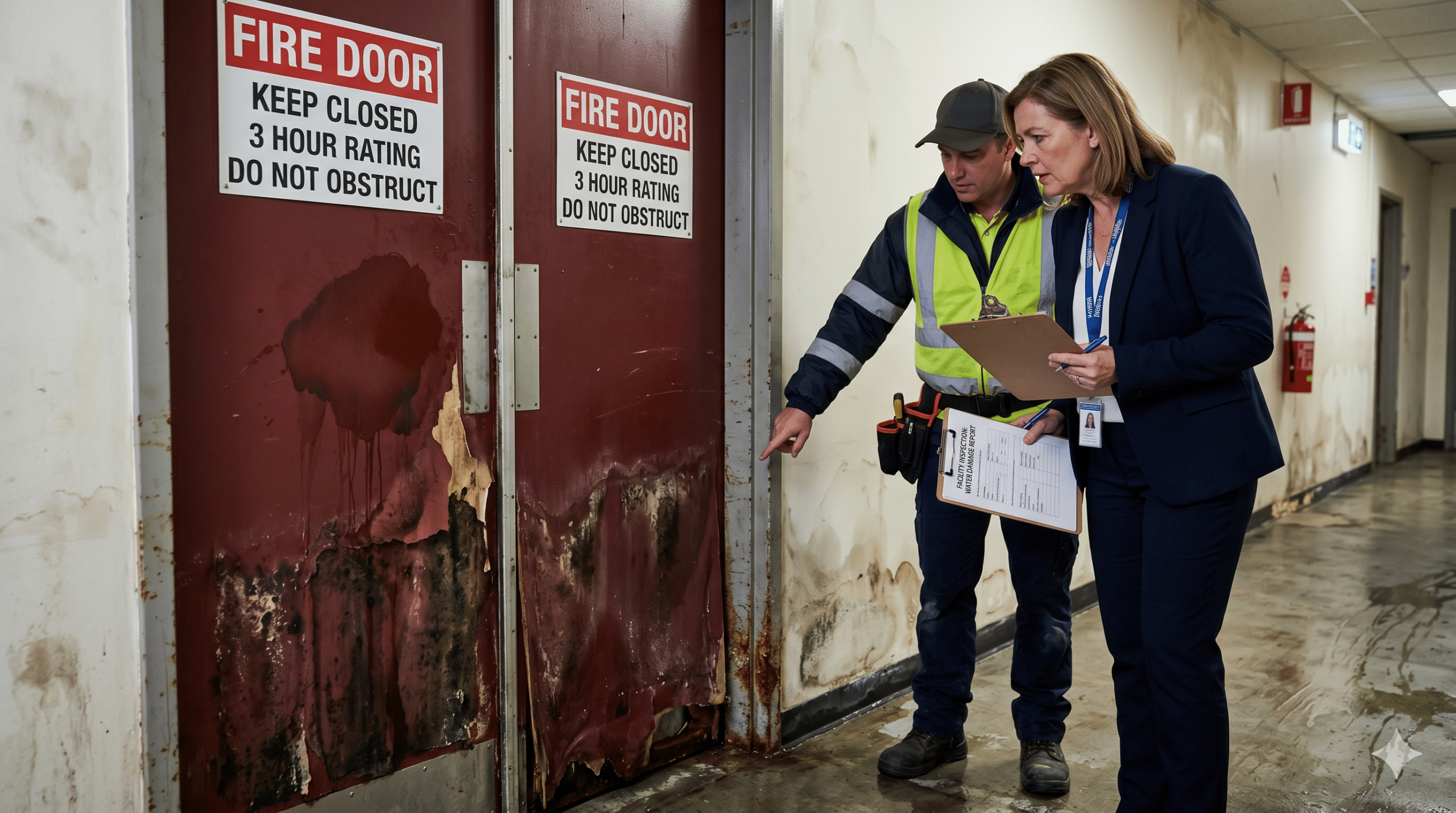
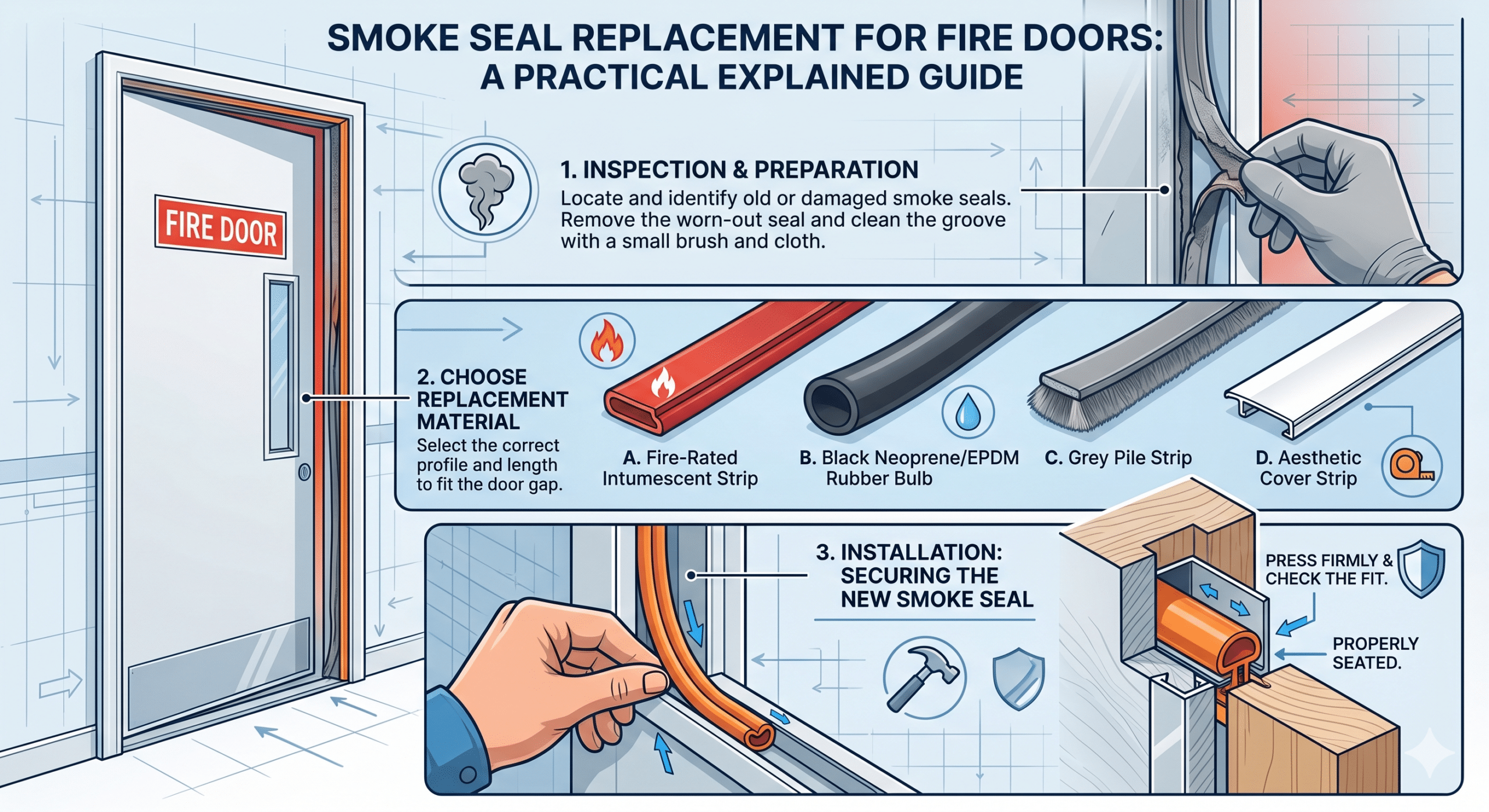
The frame directly affects the door’s ability to latch and seal. The rebate profile, strike plate alignment, and frame face condition all determine whether the door closes flush and whether the intumescent seal reaches its working position. A frame out of square, corroded at the base, or deformed by impact will produce gap tolerance failures recorded at every inspection.
Door Frames and the National Construction Code
Fire rated door frames must comply with the National Construction Code, which specifies the fire resistance level required for each opening based on building class, location within the building, and the FRL of the surrounding wall. The NCC references AS 1905.1, which sets the technical requirements for the doorset assembly including the frame. Only frames tested with the door leaf in an accredited test facility as part of a certified system listing may be used in a rated opening.
Not every steel frame on the market is fire rated. A product may look identical to a compliant frame but carry no tested system listing. Specifying the correct rated product at the outset is far less costly than discovering a non-conforming frame during an AFSS inspection, when rectification must be completed under a compliance deadline.
Types of Fire Rated Door Frames
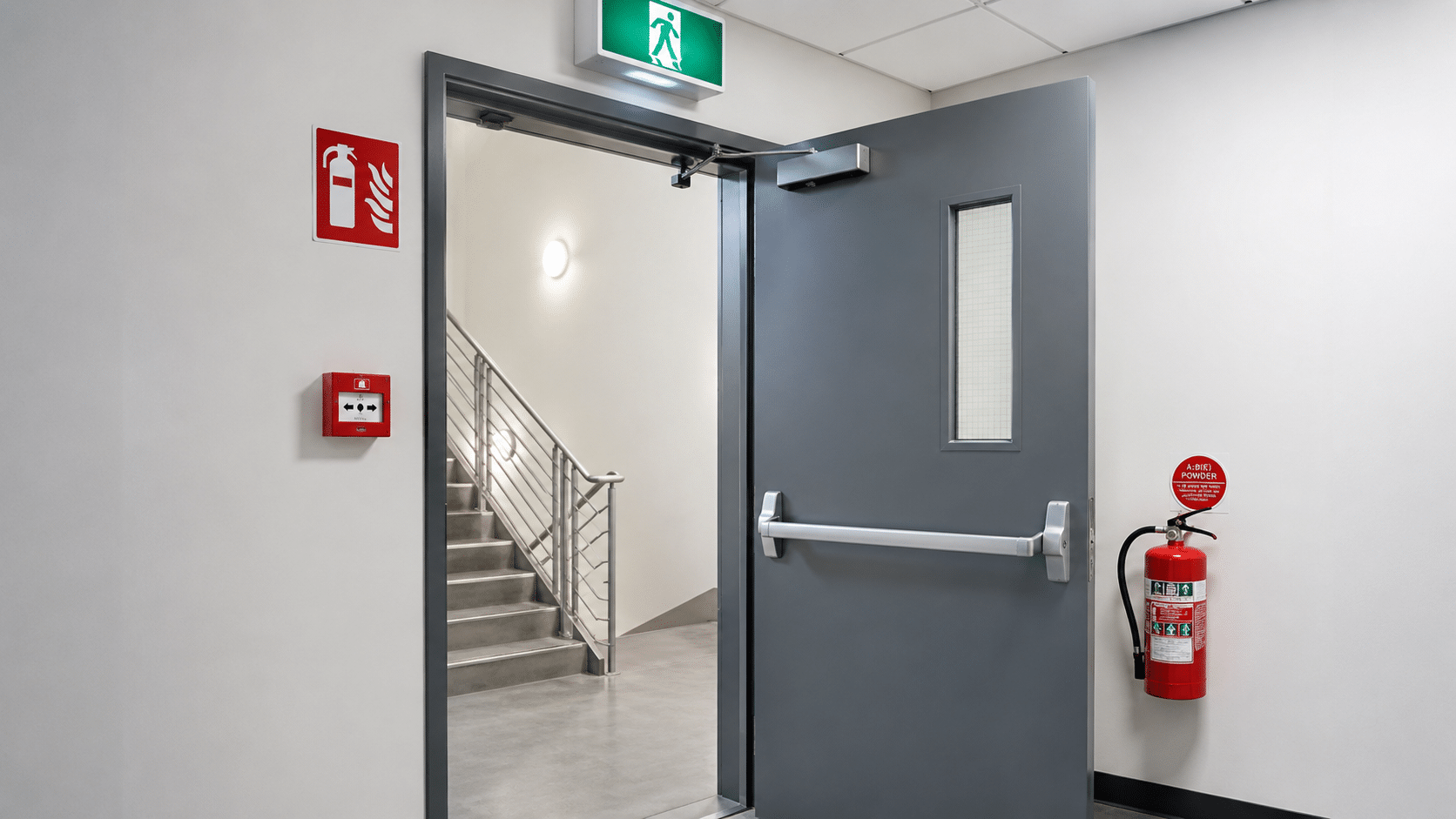
The most common fire rated door frames in Australian commercial and strata construction are pressed steel frames, also called hollow metal frames. Made from cold-rolled steel pressed into a channel profile with a rebate, they are available in a range of face widths and depths to suit different wall thicknesses and door weights. They are supplied primed for site finishing or powder-coated to a specified colour before delivery.
Timber frames are used in residential and some lower-rise strata applications where a tested timber and leaf combination achieves the required FRL. Aluminium frames are specified for fire rated glazed assemblies in commercial interiors. In every case the frame specification must match the tested system listing for the door leaf being installed, as substituting a different profile or material from the one tested with the leaf voids the rating of the assembly.
Door Frames Installation Requirements Under AS 1905.1
Fire rated door frames must be installed in strict accordance with the system listing for the doorset assembly and the requirements of AS 1905.1. The frame must be set plumb, level, and square within the opening. Any distortion will affect gap tolerances around the door leaf and the performance of the self-closing mechanism. The method of fixing the frame to the surrounding wall is also prescribed: the frame must be anchored at intervals and with fixings of the type and size the listing specifies.
Where the frame sits in a masonry wall, the cavity between frame and masonry must be packed with fire-rated mortar or grout to restore the FRL of the wall at the perimeter of the opening. In stud wall construction, the head and jambs must be fully packed and secured to the framing. Any gap remaining around the perimeter, whether from incorrect installation or subsequent building movement, is a penetration in the fire-rated wall that must be remediated before the doorset can be certified compliant.
Door Frames in Strata and Commercial Buildings
Fire rated door frames in strata buildings appear most commonly at apartment entry doors opening onto fire-rated corridors, fire stair enclosures, and lobby and lift lobby openings. In older strata buildings these frames are often corroded from cleaning water ingress at the base, damaged by trolley and furniture impact, or replaced during renovations with non-rated products never properly specified. Each of these conditions is identified during AFSS inspections and must be rectified before certification can be issued.
In commercial buildings, rated frames are found throughout the base-build at fire compartment boundaries, stairwell enclosures, plant room entries, and service corridor openings. Fit-out works that remove and reinstate walls frequently affect frames at those locations, and the reinstated frame may not match the original tested system. CFS can assess all frames in a building before an AFSS inspection to confirm compliance and identify any requiring replacement.
Common Door Frames Defects Found During Inspections
The most frequent door frames defects identified in Sydney buildings are corrosion at the base of the frame, impact damage to the rebate profile, and misalignment from building movement or incorrect original installation. Corrosion is most common in ground-floor and basement openings where cleaning or flood water has been in contact with the steel over time. Once the steel is corroded through, structural integrity is compromised and replacement is the only compliant remedy.
Impact damage to the rebate is common in service corridors and loading areas where trolleys and delivery equipment strike the frame regularly. A bent rebate prevents the door from closing flush, creates gap tolerance failures on the latch side, and may damage the intumescent seal. Filling or grinding impact damage is not a compliant repair for a rated assembly; the damaged section or the entire frame must be replaced with a matching rated product. CFS carries standard frame profiles in stock for prompt replacement across Greater Sydney.
Maintaining and Replacing Door Frames
Fire rated door frames should be included in every building’s fire door maintenance program as a specific inspection item, assessed alongside the door leaf at each visit. A visual check of each frame at least annually, noting corrosion, impact damage, misalignment, or gaps at the perimeter, allows problems to be identified and scheduled for rectification before they become urgent compliance issues. A photographic record of each frame’s condition at each inspection provides a useful baseline for tracking deterioration over time.
When replacement is required, the new frame must match the system listing for the door leaf it will carry. Using a different profile, thickness, or fixing method from the listed specification requires a new test or a formal equivalence assessment. Comprehensive Fire Services supplies and installs fire rated steel frames for buildings across Greater Sydney under FPAS accreditation F055161A, ensuring every completed doorset meets its required fire resistance level and can be certified for your Annual Fire Safety Statement.