Emergency exit fire doors are among the most important safety features in any commercial or residential building, yet they are also among the most commonly mismanaged. These doors must allow occupants to evacuate quickly during a fire while simultaneously containing the spread of flame and smoke to protect the evacuation route. Meeting both requirements means emergency exit fire doors are subject to detailed compliance obligations under the National Construction Code and Australian Standard AS 1905.1.
For building managers and strata committees in Sydney, understanding emergency exit compliance is essential for meeting Annual Fire Safety Statement obligations, passing council inspections, and protecting the people who use the building every day. This article covers the key requirements, from hardware and signage through to inspections and the defects that most commonly cause fire exit doors to fail.
What Makes an Emergency Exit Fire Door Compliant?
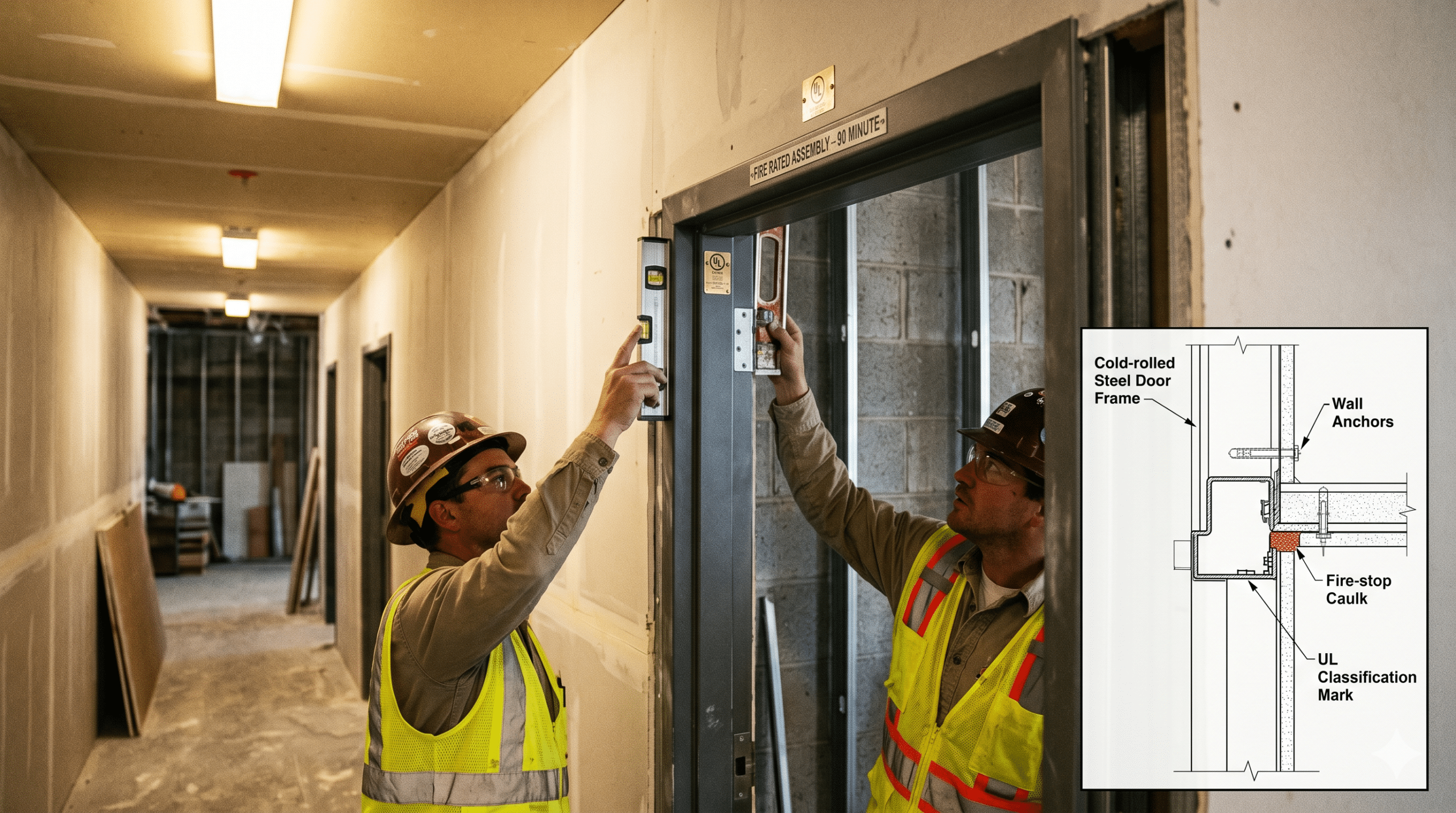
A compliant emergency exit fire door is a tested and certified doorset assembly that includes the door leaf, the frame, all hardware, and the sealing system. Every element must work together to achieve the required fire resistance level, expressed in minutes. For a standard emergency exit in a strata or commercial building, the required FRL is typically 60 minutes, though this varies depending on the building class and the location of the door within the building.
Every compliant fire exit door must be positively latching, self-closing, fitted with intumescent seals on all four sides, and carry a certification label issued by an FPAS-accredited practitioner. The door must also be openable from the egress side without a key or special knowledge, meaning standard deadlocks are not permitted without an emergency release mechanism.
Emergency Exit Hardware Requirements Under AS 1905.1
Hardware fitted to an emergency exit fire door must be tested and rated as part of the doorset assembly. AS 1905.1 specifies the requirements for every component. Using hardware that has not been tested with the specific door and frame is a compliance failure, even if each individual component appears suitable.
Self-closing devices must close the door from any open position and deliver it fully into the latch. Panic bars and push-pad hardware are required in certain building classes, particularly Class 5 through Class 9, to allow rapid evacuation without operating a standard lever handle. Hinges must be rated and installed in the correct quantity for the door weight; most fire doors require a minimum of three. All hardware must be checked at every inspection and replaced when it no longer performs to the required standard.
Emergency Exit Signage and Lighting Obligations
Emergency exit signage is a closely related compliance obligation. Every exit and the path leading to it must be identified with illuminated exit signs that meet Australian Standard AS 2293.1. Signs must remain lit even when the main power supply fails, requiring connection to an emergency lighting circuit with battery backup. They must be positioned so the exit is visible from any point along the evacuation path.
Emergency exit lighting must illuminate the path from occupied spaces to the exit and onward to a safe location outside the building. Light levels, battery backup duration, and luminaire positioning are all prescribed by the standard. Exit signs and lighting are tested separately from fire doors under the AFSS process, but inspectors will note any inconsistency between a door marked as an exit and its associated lighting or opening function.
Emergency Exit Fire Door Inspections: What Gets Checked
An emergency exit fire door inspection by an FPAS-accredited practitioner covers every component of the doorset assembly against the requirements of AS 1905.1. Inspectors check the door leaf and frame for physical damage, warping, holes, or unauthorised modification. Gap tolerances are measured on all four sides: the maximum permitted gap on the sides and top is three millimetres, and the bottom gap must not exceed ten millimetres unless a threshold is fitted.
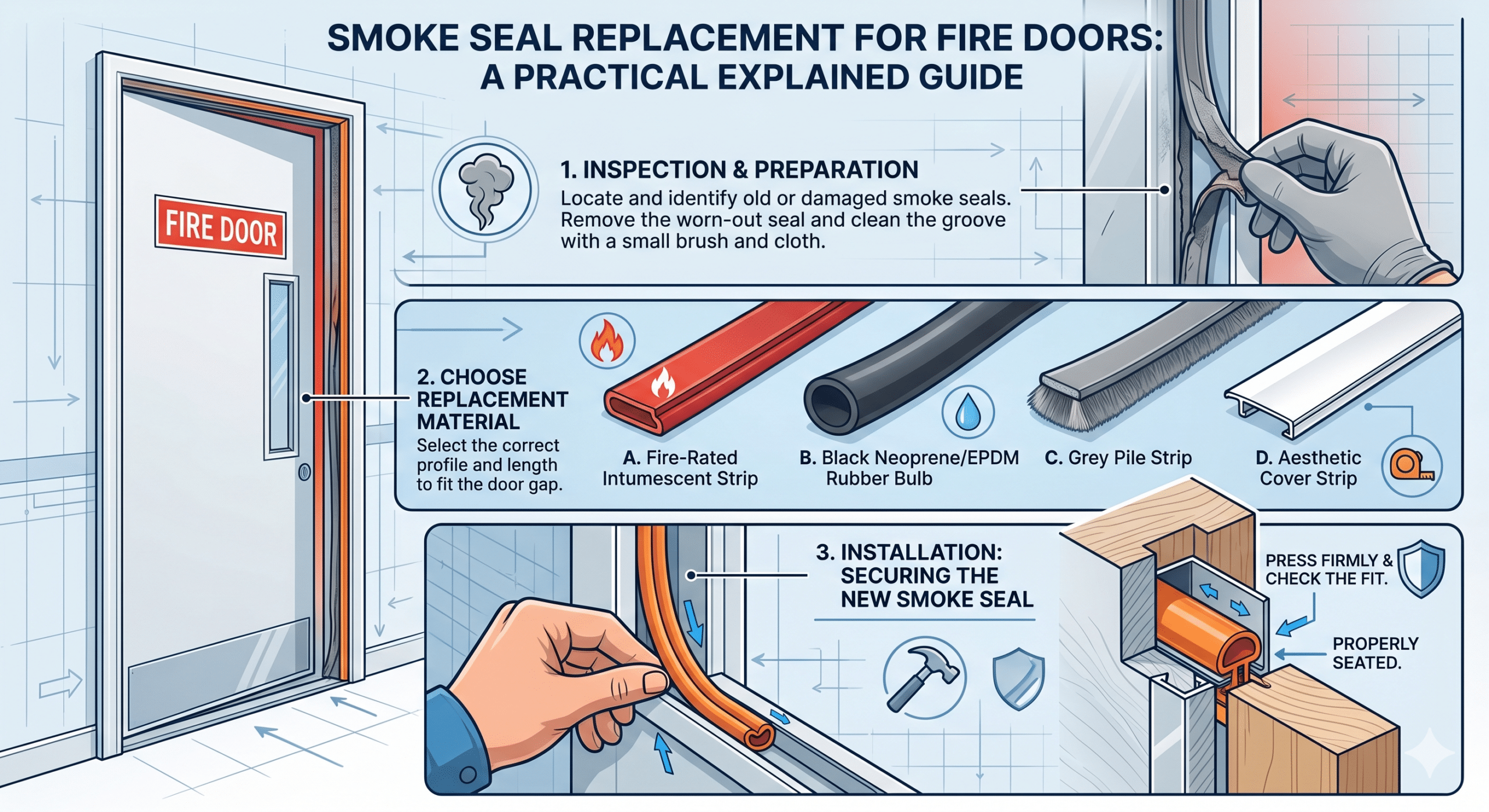
The self-closing mechanism is tested by releasing the door from its widest open position and confirming it closes fully and latches without assistance. Intumescent and smoke seals are checked for continuity, correct installation, and damage. Hardware is assessed for secure fixing, correct operation, and wear. The certification label is verified against the FPAS register. Passing doors receive a new tag; defects on failing doors are documented for rectification before the AFSS can be signed off.
Emergency Exit Compliance for Strata and Commercial Buildings
Emergency exit compliance obligations apply to strata and commercial buildings alike, but the responsible parties differ. In a strata building, the owners corporation is responsible for fire safety measures in common areas, including every fire exit door in corridors, lobbies, and stair enclosures. Individual unit owners are generally not responsible for common-area compliance, though apartment entry doors opening onto a fire-rated corridor may carry specific requirements depending on the building’s compartmentation design.
In commercial buildings, the owner is responsible for base-build emergency exit doors, while tenants may carry responsibility for doors installed as part of a fit-out. Mixed-use buildings must ensure the compliance program covers all emergency exit points, including shared fire stairs and basement access. CFS maps and documents all fire exit doors in a building and allocates compliance responsibility clearly before inspection, preventing coverage gaps at AFSS time.
Common Emergency Exit Defects Found During Inspections
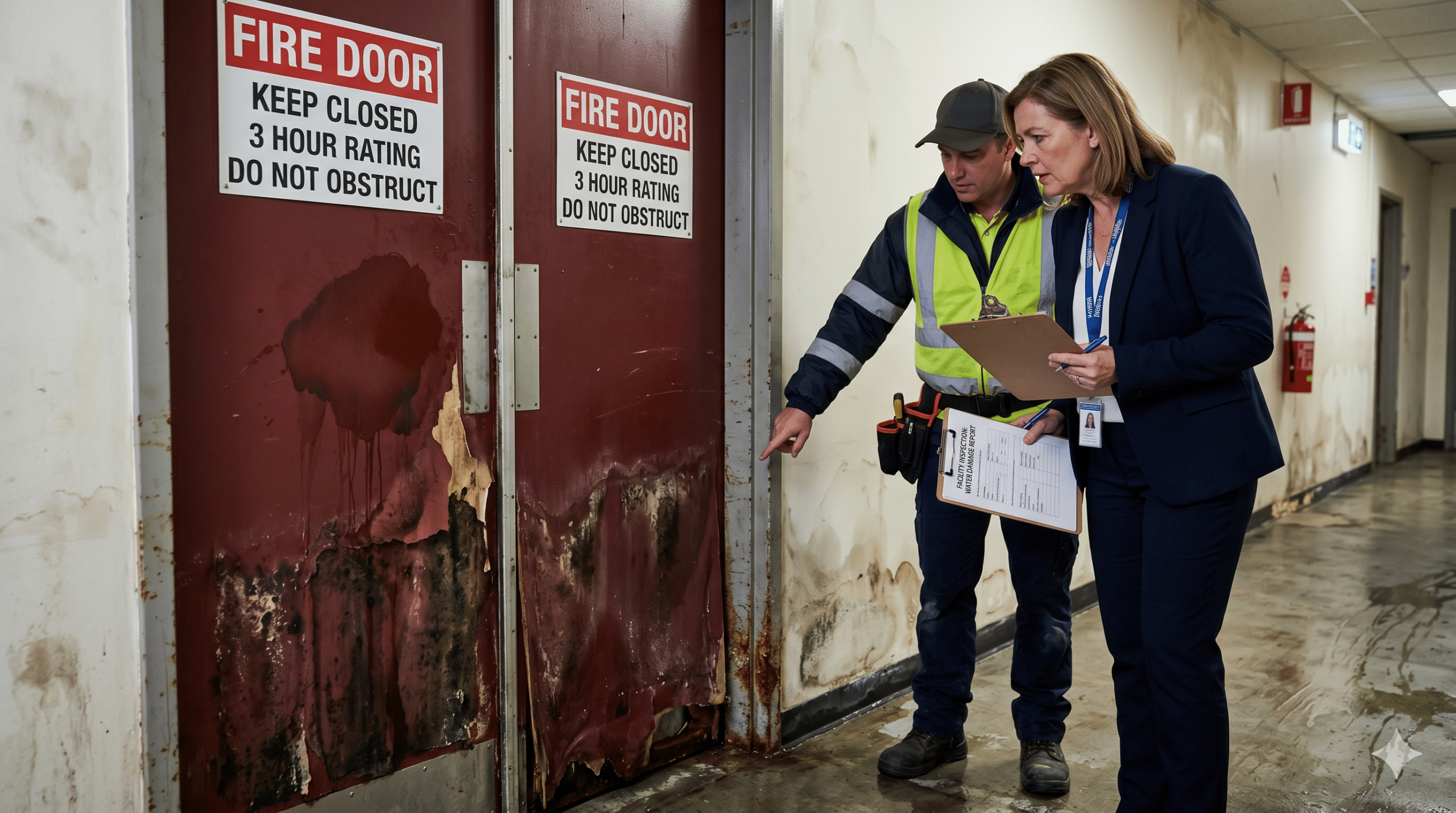
Emergency exit defects in Sydney buildings follow a consistent pattern. The most frequent is a self-closing mechanism that fails to deliver the door into the latch. This can result from a worn closer, an incorrectly adjusted closing speed, or a floor-level obstruction such as a door mat or uneven threshold. Each situation is a compliance failure because a door that does not latch provides no meaningful barrier to fire or smoke.
Propped doors are regularly found, particularly in fire stairs where occupants wedge doors open for convenience during deliveries or maintenance work. Damaged or missing intumescent seals are another frequent finding, often caused by trolley impact in service corridors. In older buildings, seals are sometimes painted over during refurbishments, rendering them non-functional. Gap tolerance failures at the bottom of the door, where the threshold has worn over time, are also commonly recorded.
Maintaining Emergency Exit Compliance Year Round
Sustaining emergency exit compliance between annual inspections requires a simple management routine. Building managers should carry out a visual check of all fire exit doors at least quarterly, looking for obvious defects such as propped doors, visible seal damage, or hardware that feels loose or difficult to operate. Any defect should be logged and reported promptly rather than deferred to the next scheduled inspection.
Occupant education also helps. Notices near emergency exit doors reminding users not to prop them open reduce one of the most common defects with no cost. For buildings with high staff or resident turnover, a brief induction covering fire door responsibilities takes minutes but significantly reduces non-compliance over time. Comprehensive Fire Services provides ongoing maintenance programs for Sydney buildings, covering annual inspections, priority defect rectification, and full AFSS documentation support under a single point of contact.