Smoke seal replacement is one of the most common maintenance tasks identified during fire door inspections in Sydney buildings, yet it is also one of the most frequently deferred. Smoke and intumescent seals are consumable components of the fire door assembly: they degrade through everyday use, physical impact, painting, and exposure to cleaning products. When they fail, the door can no longer prevent the passage of smoke between compartments, which is the first and most deadly hazard in a building fire.
This article explains when smoke seal replacement is required, which types of seals are involved, what the replacement process covers, and how building managers in Sydney can stay ahead of this obligation through a structured maintenance program.
Why Smoke Seal Replacement Is a Compliance Requirement
Smoke seal replacement is a compliance requirement because smoke seals are a listed essential component of the fire door assembly under Australian Standard AS 1905.1. A fire door that carries damaged, missing, or non-functional seals is recorded as non-compliant during an Annual Fire Safety Statement inspection, regardless of the condition of the door leaf, frame, and hardware. The seal must be present and intact on all four edges of the door leaf to meet the standard.
Smoke kills more people in building fires than direct flame exposure. The ability of a fire door to prevent the movement of smoke between floors and compartments depends entirely on the continuity and condition of its seals. A broken or missing seal on a single edge of a door creates a pathway for toxic smoke to move through the opening, even when the door is closed and latched.
Smoke Seal Replacement and Australian Standard AS 1905.1
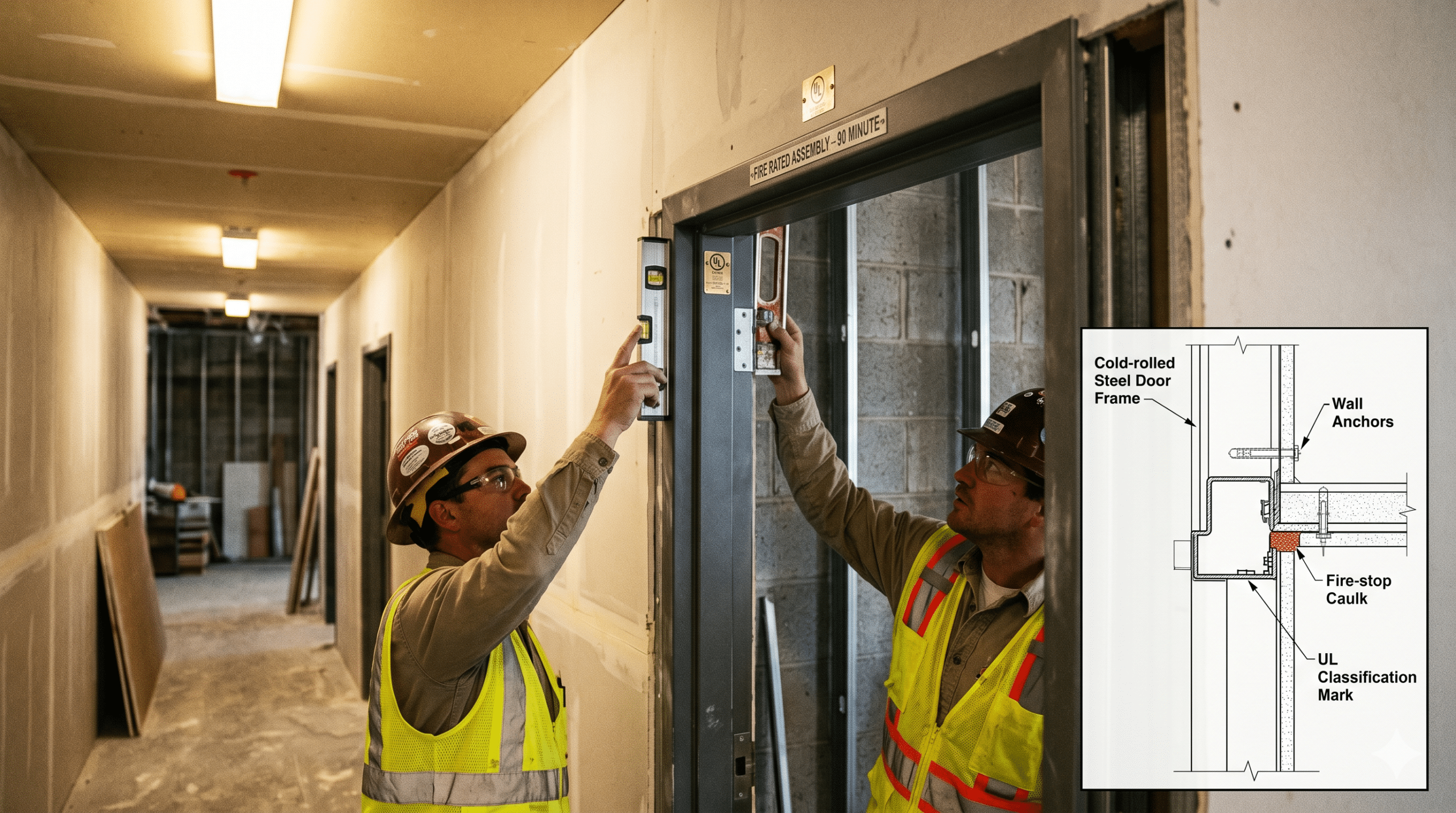
Smoke seal replacement must use products that are compatible with the tested system listing for the specific door and frame assembly. AS 1905.1 requires that seals be installed in accordance with the system listing: the seal profile, dimensions, and fixing method must match those used in the original test. Installing a seal product that has not been tested with the door and frame, even if it looks identical to the original, voids the compliance of the doorset assembly.
When Comprehensive Fire Services carries out seal replacement under FPAS accreditation F055161A, only rated seal products matched to the door assembly’s system listing are used. Following replacement, the door is retested for gap tolerances, self-closing performance, and latch engagement to confirm the full assembly meets the requirements of AS 1905.1 before a new certification tag is applied.
Types of Seals Covered by Smoke Seal Replacement
Smoke seal replacement typically covers two distinct types of sealing product: intumescent seals and cold smoke seals. Intumescent seals are strips of material that expand rapidly when exposed to heat, filling the gap between the door leaf and the frame to block the passage of flame and hot gases. They are usually installed in a rebate cut into the door leaf edge or the frame rebate and are invisible when the door is in its normal closed position.
Cold smoke seals are brush pile or elastomeric seals designed to reduce the movement of cold smoke at ambient temperatures, before the fire is intense enough to activate the intumescent material. They are typically fitted at the door bottom or along the sides of the leaf. Many modern fire door assemblies carry both types to provide protection against smoke at all stages of a fire event. Both products have a finite service life and must be assessed and replaced as needed at each inspection.
When to Schedule Smoke Seal Replacement
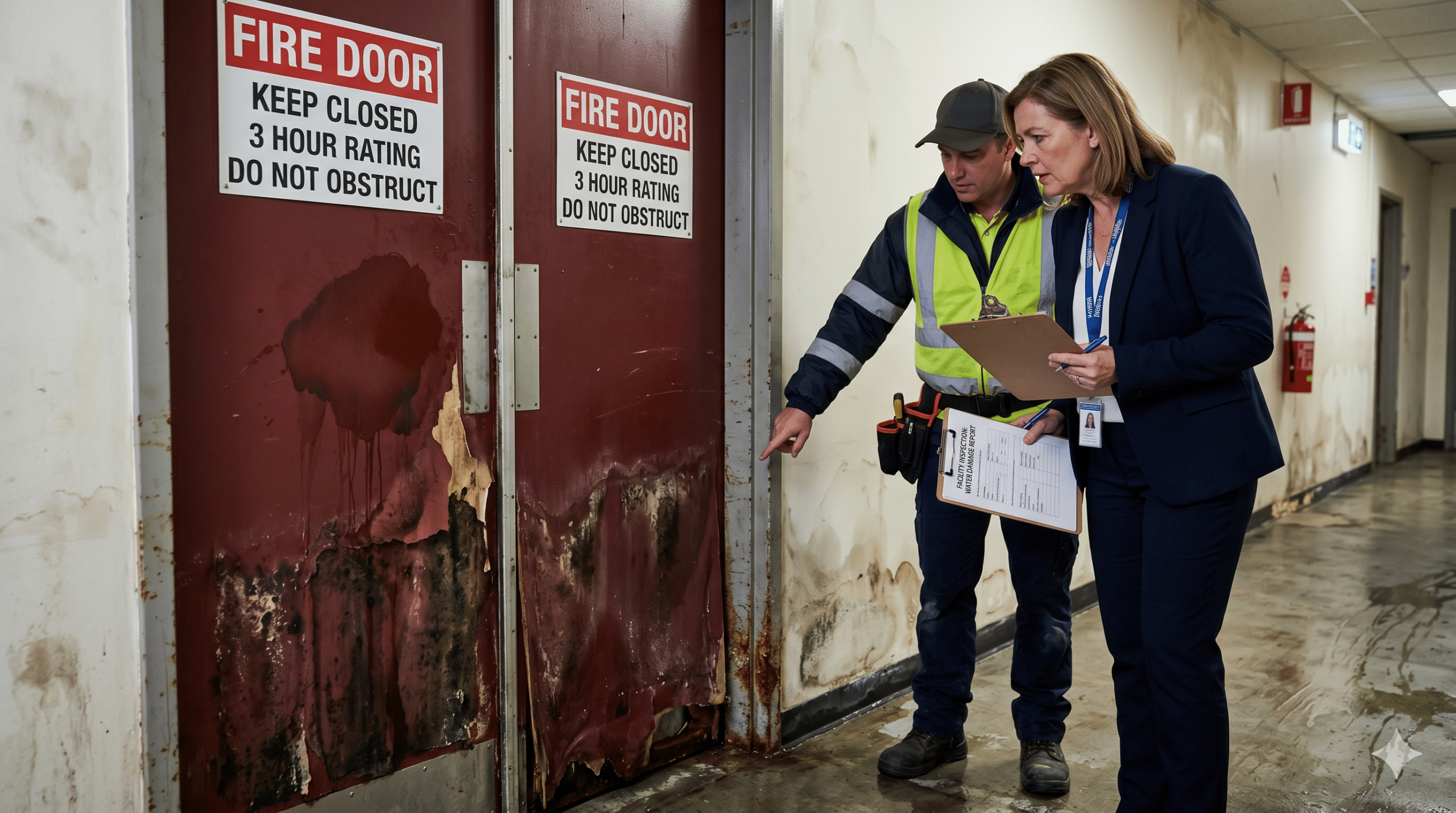
Smoke seal replacement is needed when seals show visible damage, missing sections, compression set from years of door movement, or evidence of having been painted over during an internal refurbishment. Paint coverage is a particularly common finding in strata buildings where corridor and stairwell painting is carried out periodically without adequate protection of the door assembly. Painted-over seals look intact to a casual observer but have lost their ability to expand or seal against smoke movement, making them non-functional for compliance purposes.
Building managers should not wait for a formal inspection to identify seal defects. A quarterly visual check of all fire doors, using the simple test of running a finger along the seal to feel for gaps, brittleness, or loose sections, will identify most obvious defects between annual AFSS inspections. Any door where the seal is visibly damaged, detached, or discoloured from paint contact should be prioritised for maintenance before the next scheduled inspection.
Smoke Seal Replacement in Strata and Commercial Buildings
Smoke seal replacement in strata buildings is driven by the volume of fire doors present and the frequency with which they are used. Apartment entry doors and common-area fire doors in busy strata buildings experience high daily use, and the seals on these doors can reach the end of their effective life within three to five years. The fire stair enclosures and lobby doors in these buildings often see even heavier use and should be treated as a maintenance priority.
In commercial buildings, seal condition varies significantly depending on tenancy activity. High-traffic service corridors, loading dock entries, and plant room doors experience more frequent door cycles and more physical contact than fire doors in lower-use areas. A commercial building manager who understands the traffic patterns in their building can apply a risk-based approach to seal inspection, prioritising the highest-use locations for more frequent checks and earlier intervention.
What the Smoke Seal Replacement Process Involves
Smoke seal replacement begins with removing the existing seal product from its channel or adhesive fixing position. The channel and surrounding door or frame surface are cleaned of any residual adhesive, paint, or debris. The new rated seal is cut to length, fitted into the channel or fixed with the specified adhesive, and seated firmly around the full perimeter of the door edge or frame rebate. Corner joints are treated to eliminate gaps at the meeting points between seal lengths.
Once the seal is installed, the door is rehung and tested for gap tolerances on all four sides. The self-closing mechanism is operated to confirm the door closes fully and latches without the seal creating excessive resistance. Where the replacement has been triggered by a compliance defect noted on a previous inspection report, CFS issues a rectification confirmation that can be retained in the building’s fire safety register as evidence supporting the next AFSS submission.
Smoke Seal Replacement as Part of an Ongoing Program
Smoke seal replacement is most cost-effective when it is carried out as part of a structured annual fire door maintenance program rather than on a reactive basis following a failed inspection. A scheduled maintenance program allows seal condition to be monitored at each visit, with replacement planned in advance rather than ordered under deadline pressure. Combining seal replacement with other minor maintenance tasks such as closer adjustments and hardware checks in a single visit reduces cost and building disruption.
Comprehensive Fire Services provides ongoing fire door maintenance programs for strata, commercial, and industrial buildings across Greater Sydney, combining FPAS-accredited annual inspections with priority response rectification and complete AFSS documentation support. Contact CFS to arrange a seal assessment for your building or to set up a maintenance program that keeps every fire door on your premises compliant through every inspection cycle.