Fire Door Audit preparation is one of the most practical steps a building manager in Sydney can take to protect their Annual Fire Safety Statement, avoid council orders, and ensure the people in their building are genuinely safe. Yet many managers only think about audit readiness in the weeks before an inspection is booked, which is when problems become expensive and stressful to resolve. A proactive approach built into the annual compliance calendar makes the process straightforward.
This guide covers everything a building manager needs to know about fire door audit preparation, from the legal framework and common triggers through to the inspection checklist, audit outcomes, and how to build a program that keeps your building compliant without last-minute pressure.
What a Fire Door Audit Covers
A fire door audit is a formal assessment of every fire-rated door in a building, conducted against the requirements of Australian Standard AS 1905.1 and the National Construction Code. Each door is examined individually for its physical condition, the performance of its self-closing mechanism, the integrity of its seals and hardware, gap tolerances on all four sides, and the presence of a current certification label. Only practitioners holding FPAS accreditation, the scheme administered by the Fire Protection Association Australia, are authorised to conduct the audit and issue compliant certification.
Comprehensive Fire Services holds FPAS accreditation F055161A and carries out audits for strata, commercial, and industrial buildings across Greater Sydney. The audit produces a written report documenting the compliance status of every door on the premises, with a new certification tag applied to each passing door and a specific defect noted for every door that does not meet the required standard.
Fire Door Audit Requirements Under NSW Law
Your fire door audit obligations under NSW law begin with the Environmental Planning and Assessment Act, which requires building owners to assess all essential fire safety measures annually and submit an Annual Fire Safety Statement to their local council and to Fire and Rescue NSW. Fire doors are a listed essential fire safety measure in the vast majority of commercial and strata buildings, meaning every fire door must be certified by an accredited practitioner before the AFSS can be submitted.
Failure to submit the AFSS on time, or submitting it with outstanding defects misrepresented as compliant, can result in a council compliance order, a fine, or both. The obligation rests with the building owner. In strata buildings it falls to the owners corporation as the responsible legal entity for common areas of the property.
Fire Door Audit Triggers: Council, AFSS and Insurance
A fire door audit can be initiated by several different circumstances, not only the annual AFSS cycle. Council inspectors can require an audit following an occupant complaint, a compliance sweep of a local area, or a follow-up inspection after a previous deficiency notice. Insurers increasingly require evidence of fire door compliance before renewing building policies, particularly for older strata blocks and mixed-use commercial properties where fire door conditions have historically varied.
Understanding which triggers apply to your building helps with scheduling. A building that has previously received a council order, or one with an insurer requiring annual certification, may need to schedule its inspection earlier in the year than a building operating purely on the AFSS deadline. CFS can help map the right schedule for your compliance obligations.
How to Prepare for a Fire Door Audit
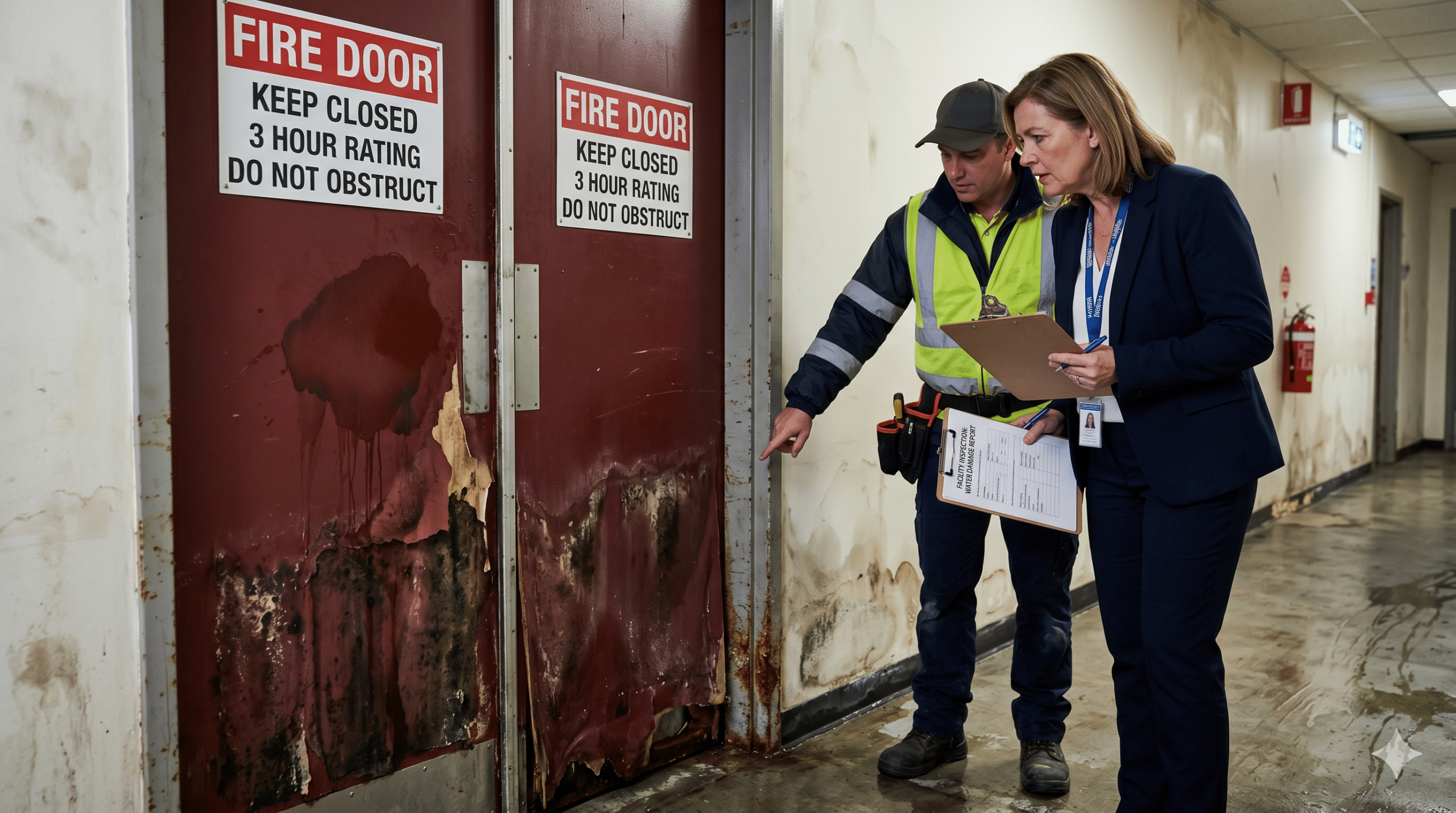
The most effective way to prepare for a fire door audit is to carry out a self-inspection of every fire door before the accredited inspector arrives. Walk each door using the same criteria an inspector will apply. Check that no doors are propped open with wedges or door stoppers. Confirm that each self-closing mechanism operates smoothly and delivers the door fully into the latch. Inspect the intumescent seals for visible damage, missing sections, or paint coverage from a recent internal refurbishment.
Record every issue and arrange rectification before the formal inspection date. Minor defects such as a seal replacement or a closer adjustment can often be resolved in a single maintenance visit. A pre-audit walk-through carried out by CFS is the most thorough way to identify all issues in advance, giving you time to address them before they appear as findings on the formal report.
Fire Door Audit Checklist: What Inspectors Examine
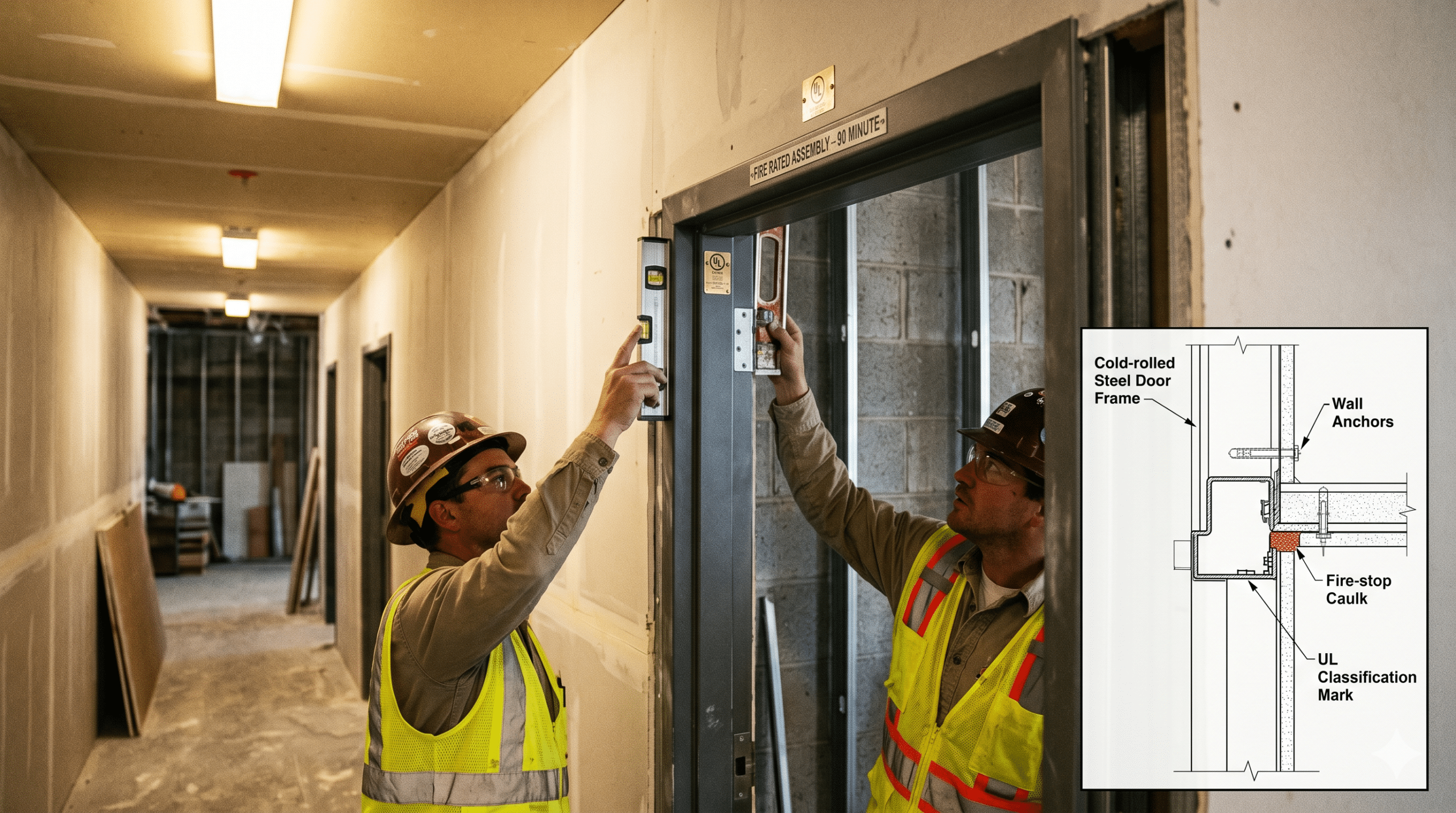
The fire door audit checklist used by FPAS-accredited inspectors covers every component of the door assembly. The door leaf and frame are checked for damage, holes, warping, or any modification that breaks the rated assembly. Gap tolerances are measured on all four sides: three millimetres maximum on the sides and top, and ten millimetres maximum at the bottom unless a threshold seal is fitted. The self-closing device is tested from the widest open position to confirm the door closes and latches without manual assistance.
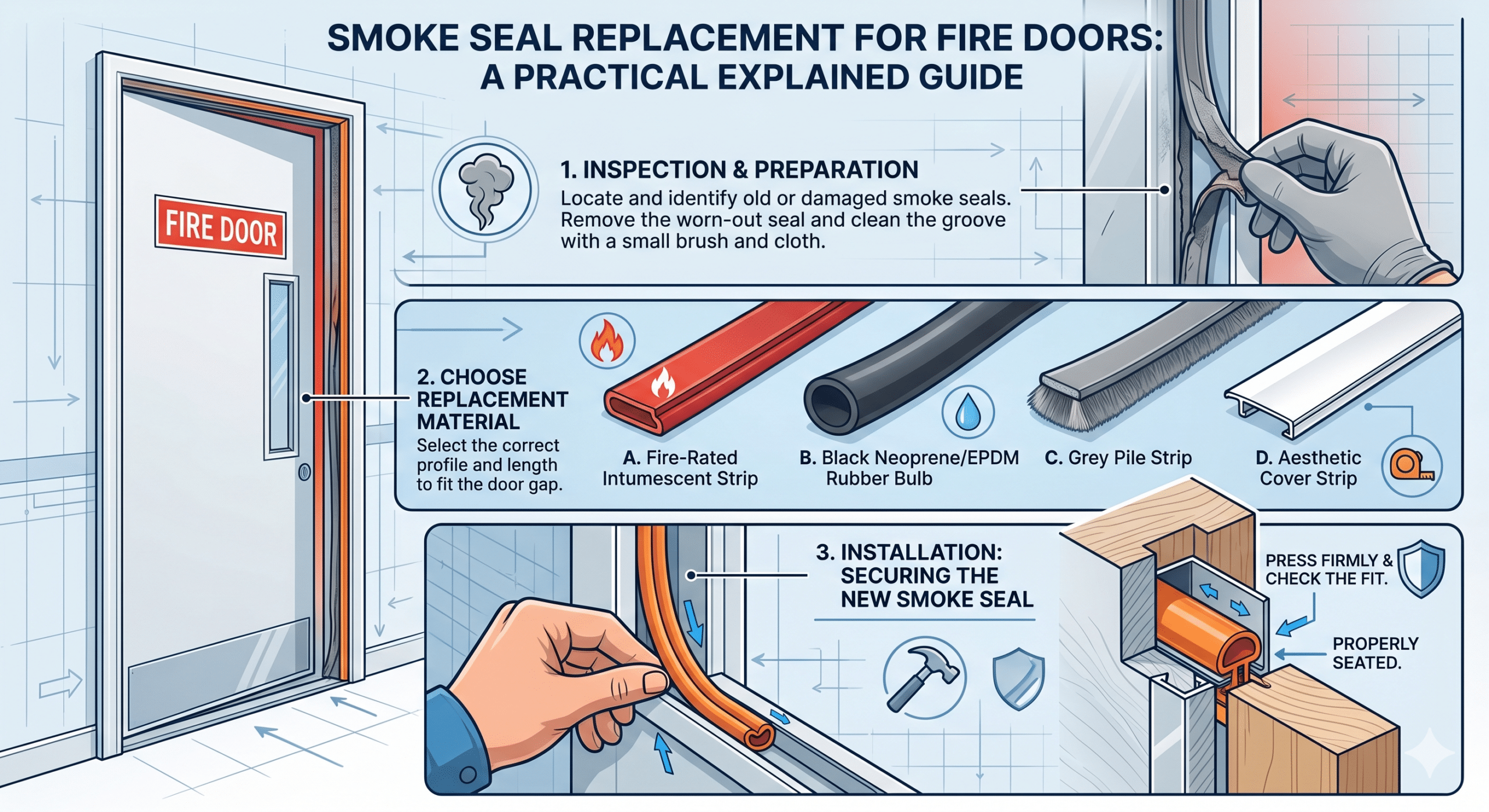
Intumescent and smoke seals are inspected for continuity along all four edges, with attention to corners and the meeting stile where damage most commonly appears. Hardware including hinges, locks, and any hold-open devices is assessed for correct specification, secure fixing, and wear. The certification label is confirmed as present, legible, and current. Doors that pass all checks receive a new FPAS certification tag applied on the day of the inspection.
Fire Door Audit Outcomes and Rectification
Every fire door audit produces one of three outcomes for each door assessed. A door that meets all requirements is certified and tagged as compliant. A door with a minor defect such as a worn seal or a closer requiring adjustment may be remediated on the day and recorded as a pass following on-site rectification. A door with a significant structural or hardware defect that cannot be resolved during the inspection is recorded as non-compliant, with a specific defect note used to scope the rectification work required.
Receiving a rectification list after an audit is not a compliance failure in itself. It is the normal outcome when some doors require attention, and the correct response is to address each item within a reasonable timeframe. The compliance failure occurs when defects are left unresolved and the AFSS is submitted without them being corrected. CFS provides full rectification services as a continuation of every audit engagement.
Building a Fire Door Audit Program That Lasts
Treating the fire door audit as part of a structured annual compliance program rather than a standalone event is the approach that delivers the most consistent outcomes. When fire doors are maintained throughout the year, defects are resolved as they arise, and inspections follow a predictable schedule, the formal audit becomes a confirmation of good practice rather than a test the building may or may not pass on the day.
Comprehensive Fire Services offers ongoing compliance programs for Sydney buildings combining a scheduled FPAS inspection each year, priority rectification response, and a complete AFSS documentation pack prepared for submission. Contact CFS to arrange an audit for your building or to discuss a compliance calendar tailored to your building’s size, occupancy, and annual fire safety obligations.