Fire door ratings such as -/60/30 and -/120/30 are Fire Resistance Levels (FRL). It tells you how long the complete doorset, meaning the door, frame, seals and hardware together, keeps fire out of the next space. The three numbers are structural adequacy, integrity and insulation, in minutes.
How to read fire door ratings
An FRL is written as three figures separated by slashes: structural adequacy / integrity / insulation. A dash means the criterion does not apply.
- Structural adequacy is the ability to carry load. Doors do not carry building loads, so this is almost always a dash.
- Integrity is how long the door stops flames and hot gases passing through. For a -/60/30 door this is 60 minutes.
- Insulation is how long the unexposed face stays below a set temperature rise. For a -/60/30 door this is 30 minutes.
So -/60/30 means no structural requirement, 60 minutes of integrity and 30 minutes of insulation. A -/120/30 door holds integrity for 120 minutes with the same 30 minutes of insulation.
Which fire door ratings does my building need?
The required FRL depends on the building class, where the door sits and the rating of the wall it is installed in. A door generally cannot have a lower rating than the wall around it. The National Construction Code (NCC) sets the requirement, and the approved fire safety schedule or your certifier should confirm it for each opening. The most common fire door ratings you will see on Sydney sites are -/60/30 and -/120/30, but other ratings exist, so do not assume.
Fire door ratings apply to a complete doorset
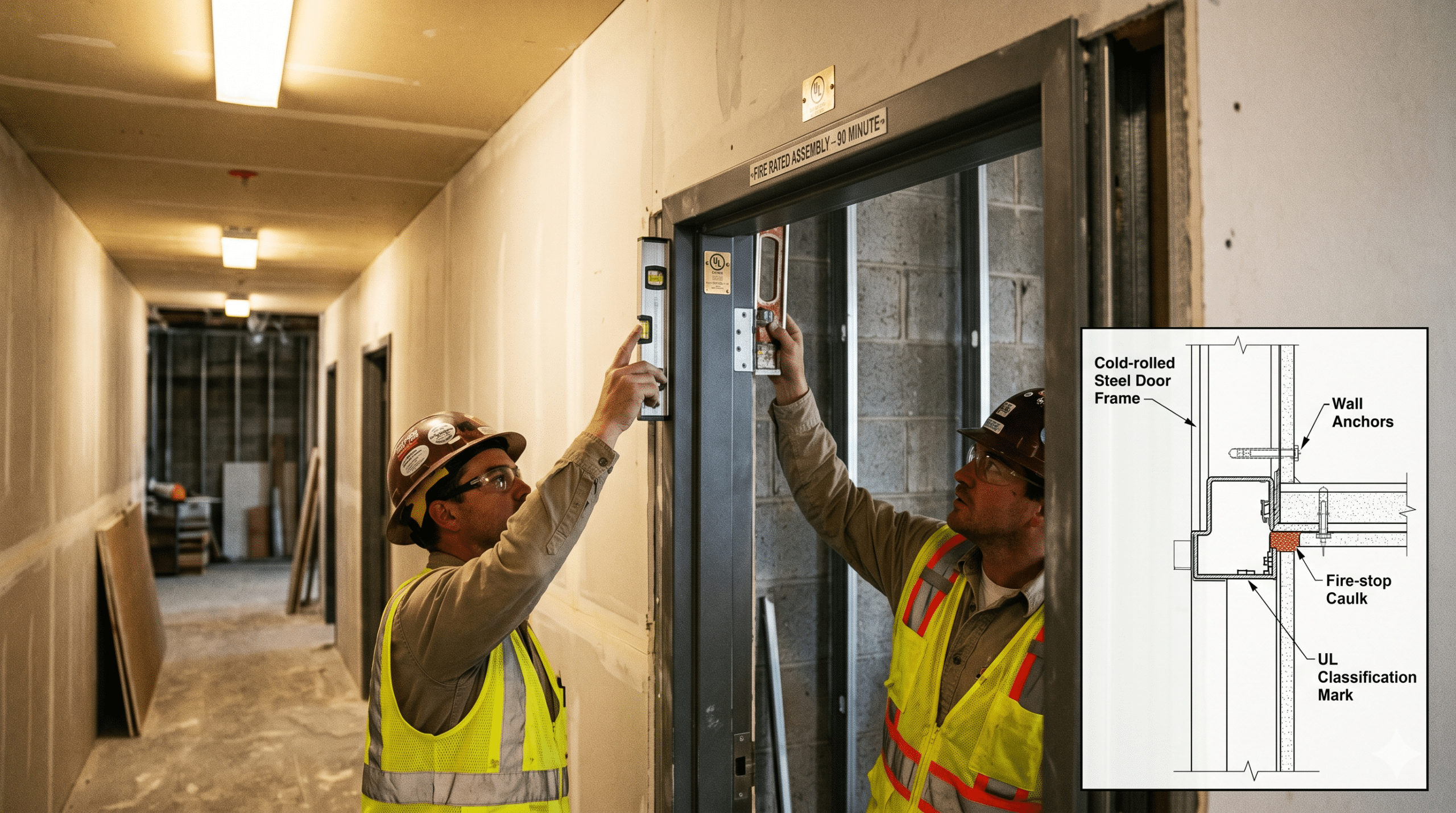
Fire door ratings apply to a tested assembly. Swapping the frame, changing the seals, cutting in a vision panel or fitting different hardware can invalidate it unless the change is covered by the test evidence. The standard that governs construction and testing is covered in our guide to AS 1905.1 fire doors.
Rating is not the same as gap or smoke performance
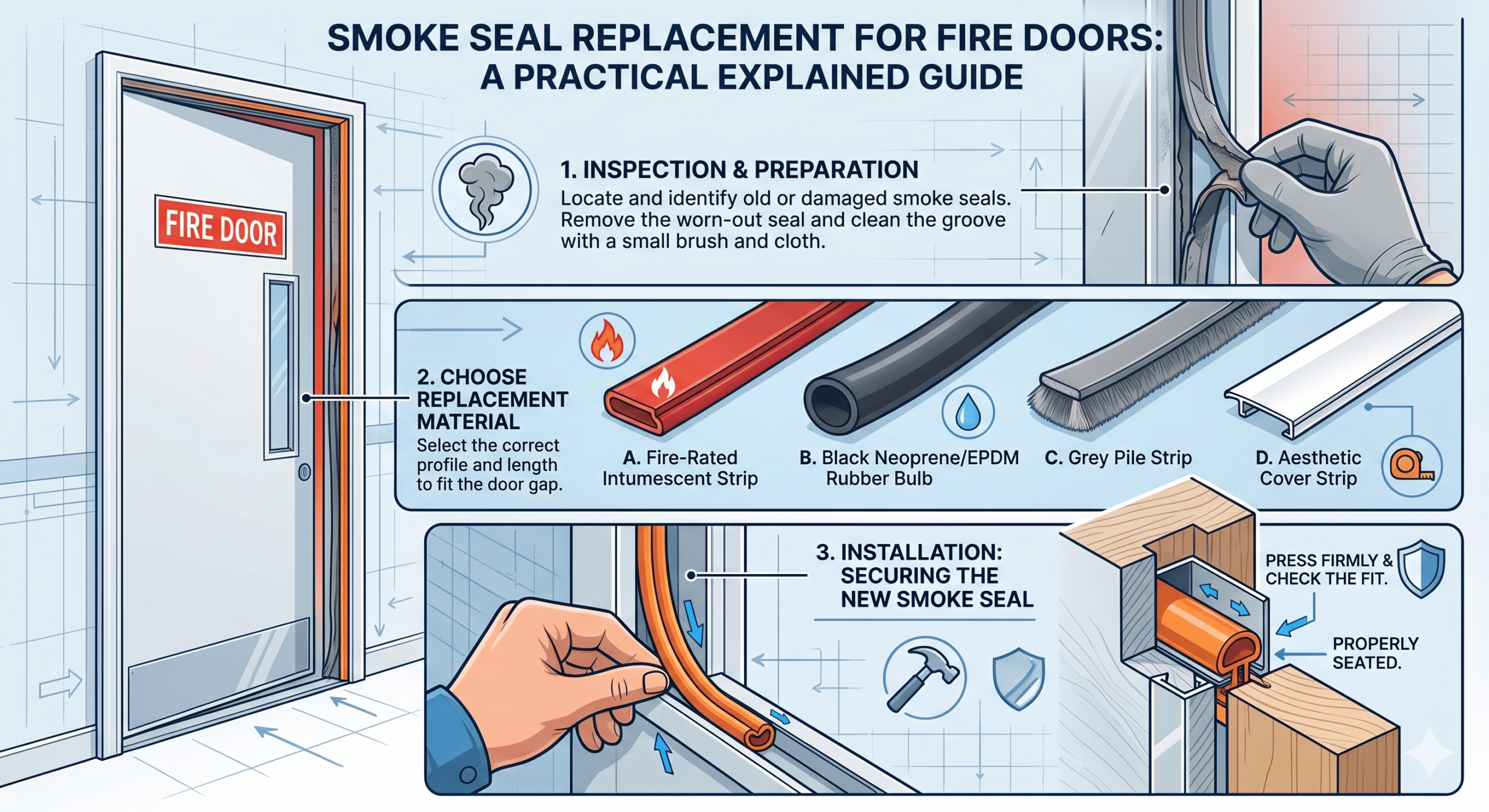
A door can carry the right FRL and still fail an inspection because of excessive gaps, missing seals or a closer that does not latch the door. Gap limits are covered in our gap tolerances guide. Smoke control is a separate performance requirement from fire resistance.
How to check fire door ratings on existing doors
- Look for the compliance label or tag, usually on the hinge edge or top of the door, and note the FRL and manufacturer.
- Check the frame for a matching label or marking.
- Compare the FRL with the fire safety schedule or building documentation.
- If there is no label, or it has been painted over or removed, get a qualified inspector to assess it before you assume it is compliant.
Common examples of each rating
Entry doors to apartments and other sole-occupancy units in many multi-storey residential buildings are commonly required to be -/60/30. Doors in walls with a higher fire resistance, such as some fire walls or service shafts, may need -/120/30 or another rating. These are general examples only. The rating for each opening is set by the building’s approved design, so always confirm it against the fire safety schedule rather than relying on the door type or location.
Why the rating matters at inspection time
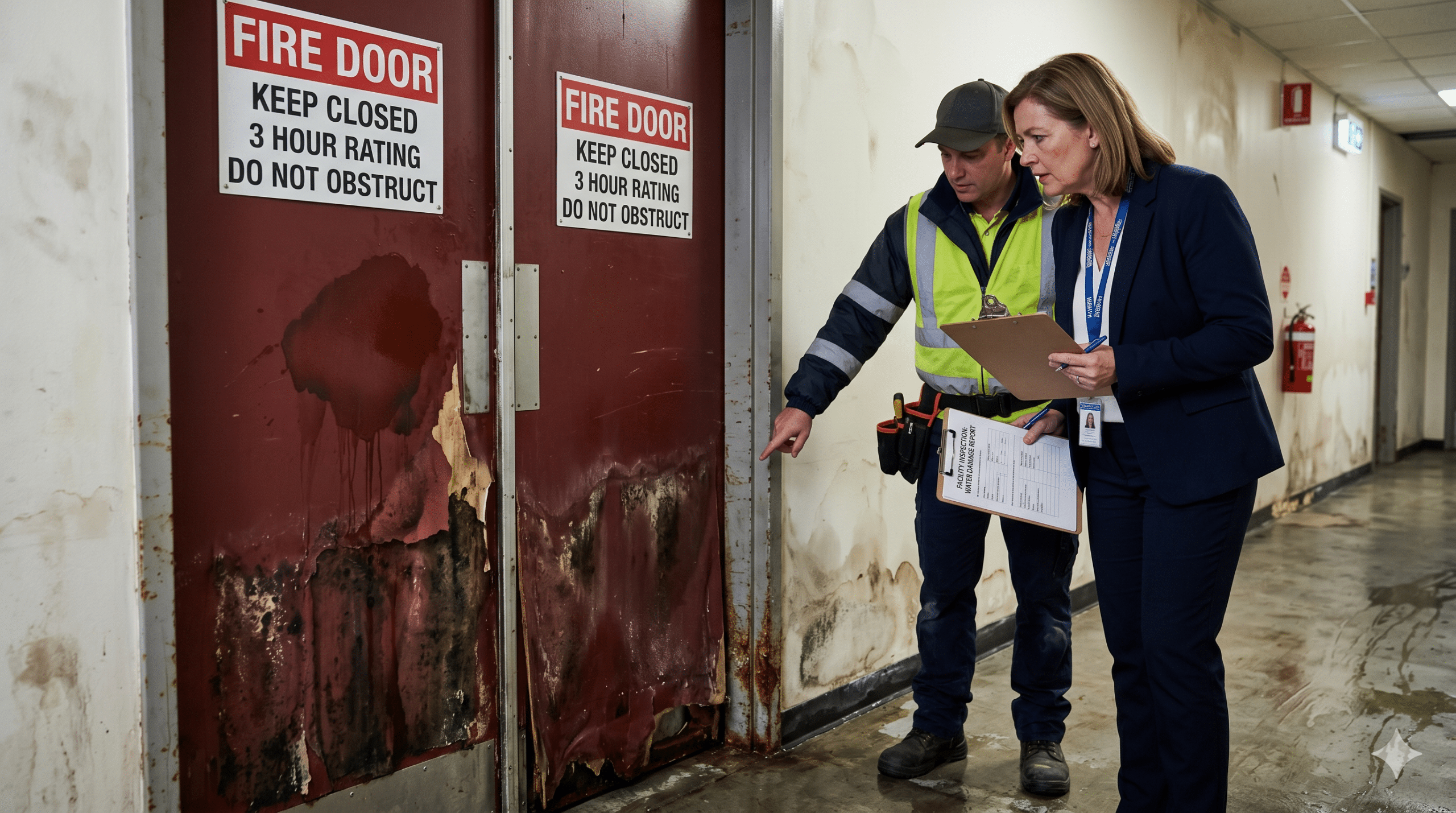
During routine inspections and testing, a fire door is checked against the rating it is supposed to carry. A door with a missing or unreadable label, or one that no longer matches the documented FRL, is a compliance problem even if it looks sound. Keeping labels visible, avoiding paint over tags, and recording each door’s rating in your logbook makes annual checks faster. Our AS1851 compliance guide explains what building owners must keep and when inspections are due.
If a door is damaged, has been modified or cannot be matched to its documentation, treat it as unverified until a qualified person has assessed it. Repairs should use compatible, certified components so the rated system stays intact.
Frequently Asked Questions
What does -/60/30 mean on a fire door?
It means no structural adequacy requirement, 60 minutes of integrity and 30 minutes of insulation.
Is a -/120/30 door better than a -/60/30 door?
It resists fire for longer, but it is only the right choice where the opening requires it. Use the rating the NCC and your certifier specify.
Can I increase the rating of an existing door?
Not by adding components yourself. Rating comes from a tested system, so you would need a certified doorset or evidence that covers the change.
Who decides what rating a door needs?
The NCC sets the requirement and the building’s certifier or fire engineer confirms it for each opening.
Not sure what fire door ratings your doors carry? Our team can inspect, tag and report on your fire doors across Sydney. Get in touch or see our products and services.